Quantcast

Wharton Finance Professor Looks Deeper into June Jobs Data, Outlook Not So Good – Hours Worked Dropped Equivalent to 450,000 Lost Jobs

University of Pennsylvania, Wharton School of Business, Finance Professor Jeremy Siegel, takes a closer look at the June jobs data from the Bureau of Labor Statistics.  Professor Siegel notes a .01% drop in average hours worked is the labor equivalent of losing 450,000 jobs.

With factory demand dropping, and with inventories climbing, and with FTE’s (Full-Time Equivalents) dropping, the jobs report takes on additional context that aligns with the overall decline we feel in Main Street activity.  Essentially, regardless of how many jobs are “created” within the economy, the overall economic activity -as measured by the value of products & services generated- is declining.

Additionally, as noted by Professor Siegal, the current best estimate as reviewed by the several data points, is a current drop in overall GDP in the -2% range.   Seigal points this information out because the Federal Reserve is raising interest rates into an economy that has declining (demand side) consumer activity, which, correctly as he states, only makes the contraction more severe.  WATCH:

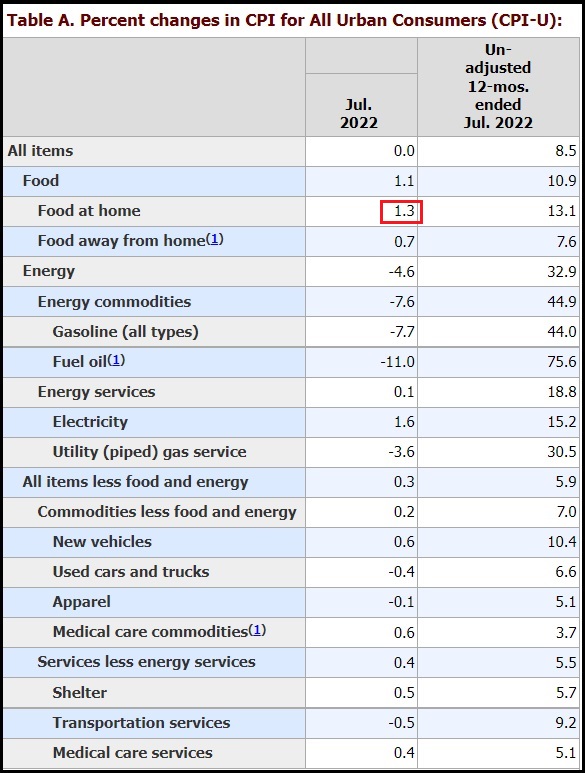
The core supply side costs (all based on energy policy) continue to increase and drive consumer prices upward.  Simultaneously, consumer demand is dropping because the goods and services impacted by the increased costs (most of which are unavoidable) are more expensive.  This creates a downward spiral.  Consumer prices are increasing on housing, energy, food and gasoline (supply side impacts), at the same time discretionary spending contracts.

In this scenario there is no way to avoid a steep recession.  However, the real priority of Joe Biden surrounds whether Jill will allow his favorite pudding, and if the shoes on the pancake mix keeps making sparkly rabbit noises.

(more…)

June Jobs Report Shows Gains of 372,000, April and May Reports Revised Downward by 74,000

The Bureau of Labor Statistics (BLS) has released the June jobs report [Data Here] showing 372,000 job gains on the establishment survey of businesses.  However, the April and May reports were revised downward by 74,000 jobs, and there is an odd disconnect between the survey of businesses and the survey of households.

The survey of businesses (BLS establishment report) shows job gains of 372k for the month of June, but the survey of households (BLS household report) shows that fewer people are working.  The labor-force participation rate slipped to 62.2% from a previous high of 62.4%, fewer people are working.

This odd disconnect has many people wondering what is going on?

Wage growth comes in at 5.1% on an annual basis, which is far below the current BLS calculated rate of inflation at 8.6%. Meaning wage growth is not keeping up with inflation despite workers entering the labor force at a higher entry level wage.

Economists overall are flummoxed as job gains would indicate a strong economy. However, the actual economic activity, the creation of goods and services, is not growing.  Quite the opposite appears.  Orders for factory goods have dropped, inventories of currently available goods are climbing, and sales figures across a broad spectrum of companies are negative.  The economy as measured by the creation of goods and services is stalled, but the economy as a measure of employment is firm.

(more…)

Oil and Gasoline Prices Start Moderating as Economy and Consumer Demand Drops

The Energy Information Agency has finally updated “on road” diesel prices after a month of frozen data [SEE HERE].  Conspicuously, the technical “glitch” correction is resolved [statement here] as the price for diesel starts to drop a little.

Oil prices are showing a drop in price, and subsequently gasoline prices are starting to moderate.  Unfortunately, as noted at The Hill, the drop in price is not related to an increase in production, but rather a decline in consumer demand.

WASHINGTON – The price of U.S. crude oil was hovering around $98 per barrel on Wednesday afternoon, down from about $108 late last week. Brent crude fell to about $101 per barrel, down from about $111 late last week. 

[…] “We’re on the cusp of seeing more savings,” said Patrick De Haan, head of petroleum analysis at gas price tracking site GasBuddy. “I’m trying to be a little bit optimistic here that this relief could make its entire way to the pump in the weeks ahead.” 

[…]  “The average price per gallon could fall 40 to 65 cents over the coming weeks,” he said, adding that the drop could be over a three- to six-week period. 

(more…)

Steve Bannon Interviews Michael Yon from The Netherlands as Protesting Dutch Farmers Surround Police Station Demanding Release of Farm Teen Who Was Shot at by Police

Things in the Netherlands are remaining spicy after Dutch police attempted to stop one farmer protest by shooting at one of the teenage farm tractor drivers.

A summary of the background story is HERE.  Independent journalist Michael Yon has now travelled to the Netherlands to document the protest as western interest in the conflict starts to increase.  Steve Bannon interviewed Yon earlier today. {Direct Rumble Link}, Video Below:

.

After the Dutch police shot at one of the protesting farmers last night, they took the tractor driver -a teenage boy- to a local police station.   The farmers responded earlier today by surrounding the police station and demanding his release.  The Dutch farmers are not backing down, they have doubled-down and are now blocking airports.

(more…)

German Chancellor Olaf Scholz Proactively Blames Russia for Pending Global Food Shortage

Step back for a minute and elevate the discussion to a bigger review.  In the past several months every single institution of policy making has stated, many emphatically, that a looming global food crisis is imminent.   No one is hedging on this point; everyone in the geopolitical system is in alignment saying there will be food shortages.

Joe Biden, NATO, the G7, the European Union, the World Bank, USAID, and every western leader in the United States and Europe has stated there will be food shortages.

They are not saying there might be shortages; their statements are emphatic, there will be shortages.

Accept this basic cornerstone.  Then ask why not a single proactive step has been taken by any of the aforementioned institutions or governments to alleviate what they declare is a certainty.  Why?

Simple question, “why?”

If all of the western nations, non-govt organizations and heads of state, are aware of a coming food crisis, why is there no proactive response?

It is a question that even the most hardcore leftists will not answer, because there is only one answer.  No action is being taken because they do not want to take action.  No effort to avoid the crisis is being done, because they do not want the crisis avoided.

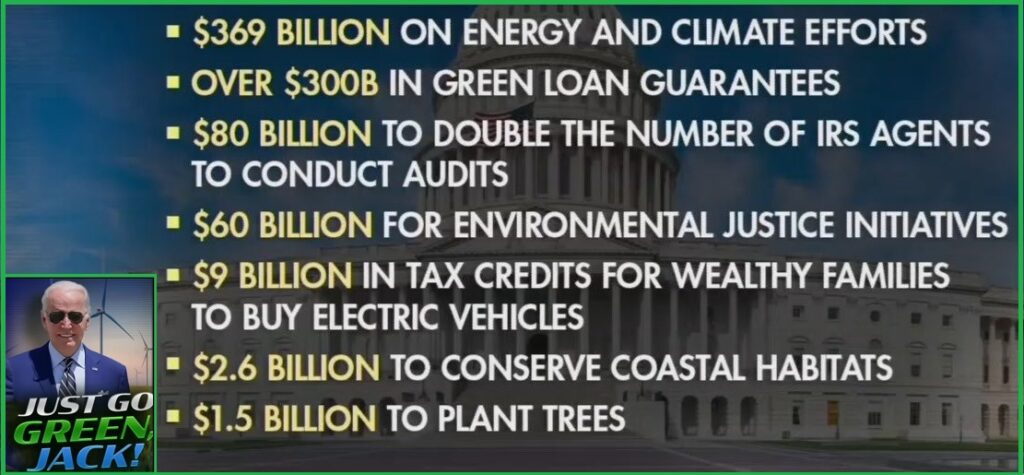
Peel all the layers of obfuscation and causation away, and what we find is the epicenter of the food shortage is directly the result of the Build Back Better agenda.  A post-pandemic western government deliberate decision to radically change global energy development.  In succinct terms, the climate change agenda.

However, regardless of how you feel about the validity of “climate change,” the cause of diminished food supplies is purposeful.  It is not climate change causing food shortages. It is the purposeful action taken under the guise of mitigating climate change that is causing the shortage of food.

(more…)

Monmouth Poll Compiles Top 22 Priorities of American People, Ukraine v Russia and J6 Committee Outcome Does Not Appear on List

Monmouth University conducted another political poll of U.S respondents [SEE Survey HERE].  In addition to the plummeting approval of Joe Biden, the worst yet approval at 36% according to the survey, the respondents were asked to list their top concerns (Question #7).

The responses were recorded but did not come from a list presented by Monmouth.  They just compiled the results.  As stated, “what is the biggest concern facing your family right now?”  The results show the top priorities of Americans and the disconnect between the priorities of congress and the American people are stark.

(Source, Question #7)

Nowhere on the expressed concerns did anyone identify supporting Ukraine or the Russia -v- Ukraine conflict, as a priority; yet, Ukraine has taken up almost all of the legislative effort from congress.  The total taxpayer-funded congressional spending is nearing $100 billion.  Additionally absent from the concerns of the American people, is any mention of the January 6th committee; again, another time wasted political exercise by a congress detached from the priorities of the electorate.

The top priorities are what we would expect to see, economic issues.  Inflation, Gas Prices, the Economy and the ability to pay everyday bills (groceries) are the priorities of the American people.  All of these issues are directly caused by Joe Biden and the policy of his administration.  Climate change, the #1 focus of the administration, is not even in the top ten.  We are in an abusive relationship with our own government.

(more…)

Biden Energy Agency Quietly Starts Manipulating Weekly “On Highway Diesel Fuel Prices”, Looks Like an Effort to Block Higher Fuel Surcharges and Control Transportation Inflation

[Hat Tip Mailroom] This is a very interesting little bureaucratic energy issue with big downstream ramifications.

Almost every transportation and manufacturing company uses the U.S. Energy Information Administration (EIA) “weekly publication of average diesel prices” in order to calculate shipping costs.  According to people in the industry, “this national average is what almost every trucking and logistics company bases their fuel surcharges on.”

However, on June 13th the U.S. Department of Energy, Energy Information Administration, stopped reporting the average weekly diesel price.  For almost a month companies have been using an outdated average price in order to calculate shipping costs and fuel surcharges. [See Screengrab]

Originally the EIA said, “We are implementing new methodology to estimate weekly on-highway diesel fuel prices. On June 13, we started conducting the On-Highway Diesel Fuel Price Survey using new statistical methodologies.” {LINK} However, the EIA has not updated anything since that announcement.

As a result, all of the transportation charges and fuel surcharges have been underestimated and priced for almost a full month.  The political motive for this move is transparent, it stops higher diesel prices from being passed along in the supply chain… which gives an artificial pause on inflation that comes as an outcome of higher diesel transportation costs (specifically trucking).  As explained to CTH:

(more…)

Sunday Talks, John Kirby Defends White House Energy and Economic Policy

John Kirby is the former Pentagon spokesperson who is now the National Security Council Coordinator for Strategic Communications.  The people in/around the White House have shifted Kirby, a very good spinner of parseltongue, into a place where he can give the media an impression of White House competency.

The LGBTQ, racially inclusive and woke checkbox hires are not up to the task of their positions.  Incompetence is running amok.  As a result, it is somewhat ironic and representative the Biden hypocrisy, that Kirby is needed to take the pressure away from administration checkbox hires.  In this interview Kirby defends the White House policy on the Russia-Ukraine war, interventionist and dependent foreign policy, and the energy policy that has resulted in high gas prices.

Video prompted to 04:05, where the topic of Biden’s upcoming visit to Saudi Arabia is discussed.  WATCH:

(more…)

Biden Plan to Cap Russian Oil Prices Could Seriously Backfire, Which Means It’s Likely to Happen

The G7 plan to create another economic sanction against Russia by capping the price anyone could pay for Russian oil has a serious downside.  If Russia slows down the export of oil, global oil prices will jump dramatically.   That policy outcome would mean a massive increase in the price of gasoline for U.S. consumers.

Because the consequences are horrible, that’s precisely the reason Joe Biden might push to have the Russian price cap.  Every policy Joe Biden has historically supported, has been the exact opposite of what should have been done.  Biden has a profound and innate ability to screw up anything.

[Bloomberg] – Global oil prices could reach a “stratospheric” $380 a barrel if US and European penalties prompt Russia to inflict retaliatory crude-output cuts, JPMorgan Chase & Co. analysts warned.

The Group of Seven nations are hammering out a complicated mechanism to cap the price fetched by Russian oil in a bid to tighten the screws on Vladimir Putin’s war machine in Ukraine. But given Moscow’s robust fiscal position, the nation can afford to slash daily crude production by 5 million barrels without excessively damaging the economy, JPMorgan analysts including Natasha Kaneva wrote in a note to clients.

For much of the rest of the world, however, the results could be disastrous. A 3 million-barrel cut to daily supplies would push benchmark London crude prices to $190, while the worst-case scenario of 5 million could mean “stratospheric” $380 crude, the analysts wrote.

(more…)

Fed Chair Ignores Impact of Build Back Better Energy Policy on Supply Side of Inflation

Much has been made of comments by Federal Reserve Chairman Jerome Powell in his brief explanation of what the Fed got wrong.  Last week Powell made comments during a European Central Bank forum on bank policy, implying the absence of unvaccinated workers returning to the labor force is part of the US inflation problem.

Powell’s comments seem to align with the government vaccine mandate position which ignored the rights of the worker. Considering the responsibility of the Fed to anticipate price and labor issues, Powell’s sense of credulity toward those workers who dropped out of the labor force rather than inject an untested vaccine into their body is quite remarkable.  Inartful and arrogant are soft terms for his commentary.

However, there’s a bigger “tell” in the segment of what the Fed got wrong, when you listen to Powell talk about the supply side issues and how the Fed Reserve had no model to predict the mandated lockdowns, economic activity stoppages and consequences.   Notice how Powell completely dismisses the structural energy policy, the Build Back Better agenda, that lies at the heart of the current supply side inflation issue.  Video Prompted to 01:03:34, WATCH:

.

Throughout the discussion the primary focus to control inflation is reliant on a demand side cause.   The goal to reduce demand is seen as a way to mitigate and reduce inflation.  Thus, this worldview, as mistaken as it was/is, explains the justification for why the Fed waited to increase interest rates.  They never saw the radical energy policy as a structural driver of supply side inflation.

According to Powell, they thought the supply side issues would moderate quickly, without giving any consideration at all to how a radically new energy policy would embed.  He just ignores the issue completely; again, pretending not to know.  But perhaps it’s actually worse.  Perhaps he really doesn’t see a radical new energy policy as a driving force behind current inflation.  If that’s true, and he genuinely does not see it, then Fed policy in the future is going to make the recession much worse.

If you ignore massive energy price impacts, the FED will keep interest rates high despite demand dropping, and then eventually get to a place where demand has dropped so low the recession is deep, while turning toward each other and asking why are prices still so high?

Keep that disconnect in mind.

(more…)