Quantcast

Foreboding Data, Second Quarter Credit Card Balances Jump 13 Percent, Largest Increase in Twenty Years

It’s not just the scale of the increase that is surprising; it’s the history of how long it has been since this scale of debt increase happened in a single quarter.

(CNBC) – […] Although average hourly earnings are up 5.1% from a year ago, prices have been rising much faster. The Consumer Price Index, which measures the average change in prices for consumer goods and services, jumped a higher-than-expected 9.1% in June, the fastest pace in over four decades.

To bridge the gap, more consumers are relying on credit cards to get by, which has helped propel total credit card debt to $890 billion.

Overall, credit card balances rose 13% in the second quarter of 2022, notching the largest year-over-year increase in more than 20 years, according to a report from the Federal Reserve Bank of New York. (read more)

This doesn’t sound like a good economic omen.

(more…)

Smooth Operator, Senator Joe Manchin Answers Questions About His Energy Deal with Senator Chuck Schumer

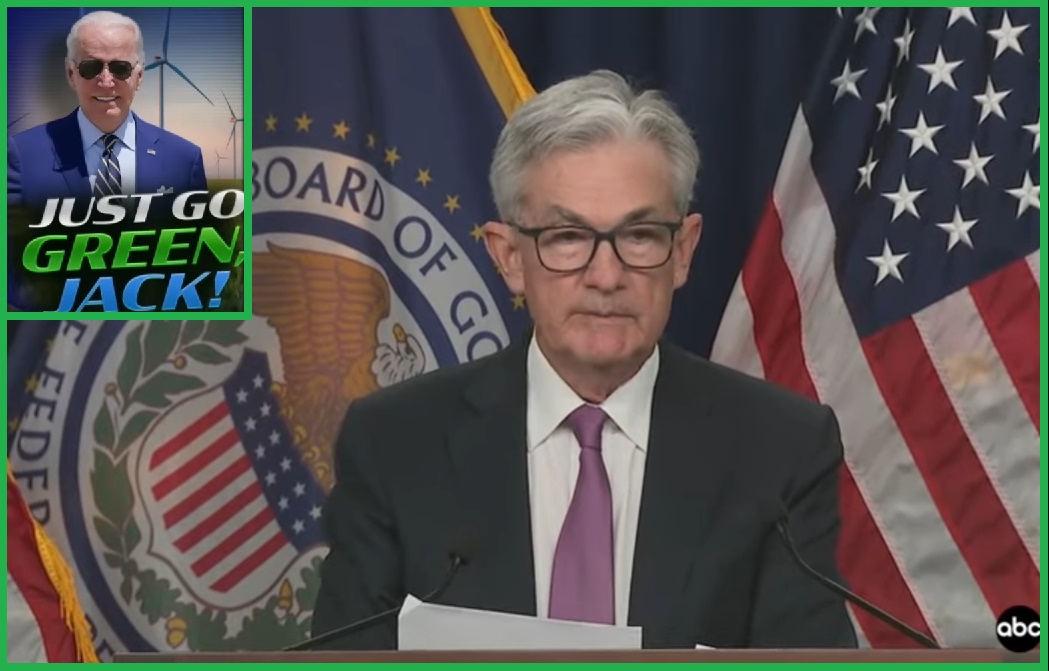
Democrat Senator Joe Manchin wears the purple tie today as he answers questions from the DC legislative narrative engineers.  There are two videos below.  The first is a general presser with multiple members of the DC media (print journos) about the Green New Deal energy bill he negotiated with Senator Chuck Schumer. The second video is an interview between Manchin and Fox News host Harris Faulkner.

Unfortunately, in both the presser and the direct interview no one pins Manchin down on where “expanded energy production” of the bill is located.  Manchin claims there is legislative language in the deal that supports the fast domestic production of oil, coal and natural gas to meet the immediate issue of skyrocketing energy prices.  However, Manchin is a smooth operator, and he states confidence that rapid and expanded development of oil, coal and gas is part of the deal.  WATCH:

(more…)

Global Recession, South Korea Manufacturing Output Shrinks in July, First Time in Two Years

We are seeing the cascading impacts of the energy-driven inflation starting to ripple throughout the globe, specifically worsening economies who are dependent on the export of non-essential durable goods.  South Korea manufacturing is the latest example.

The first quarter of 2022 started with a drop in U.S. consumer spending on non-essential durable goods like electronics.  The net result of contracted consumer spending was a 1.6% negative GDP.

Inventories of goods started to build and by April/May of 2022 the Consumer Price Index (CPI) showed negative inflation in those sectors as discounts to move inventory were offered.

In June major manufacturer Samsung, headquartered in South Korea, announced they had told suppliers to stop sending component manufacturing parts for finished goods. (link)

By the end of July, the second quarter GDP in the U.S. again showed a contraction of 0.9%. Energy inflation was now creating a consumer spending recession, demand for non-essential goods dropped fast over the first half of the year.

Today, South Korea announces July manufacturing output contracted for the first time in two years, matching the prior announcement by Samsung:

(more…)

Did Joe Manchin Threaten to Switch Political Parties? Chuck Todd Seems to Know He Did

West Virginia Senator Joe Manchin was on every Sunday talk show today (CNN, NBC, ABC, CBS and Fox) responding to his reversal of position on the Build Back Better legislative package (Green New Deal spending) that is part of the senate budget reconciliation bill.  There is something very interesting in his justification. [Do not skim read this, all citations included]

Fox News Brett Bair does the best job challenging Manchin on his prior statements saying there would be no spending deal without first seeing the August inflation data. [LINK].  Manchin never answered that hypocrisy directly but says there are two components of the deal, two parts of a new future legislative bill, that brought him to the agreement on the $370 billion current spend.

The current Senate bill is a reconciliation bill, meaning it involves taxes and spending – AND ONLY taxes and spending, because the bill originated in the House.

The constitutional framework for taxes & spending requires the House to originate all spending bills.  If a desired additional measure does not involve taxes and spending (a budgetary impact) it cannot be added to a reconciliation bill.  The senate must originate a new bill and then send it to the House.

According to Manchin the deal between himself, Chuck Schumer, Nancy Pelosi and Joe Biden includes his support for the current green energy spending, in exchange for two new items in future legislation: 1) Streamlined energy permitting/regulation; and 2) Increased development of Oil, Coal, Gas.  Both of these pieces of legislation have to be handled in a separate Senate bill.

According to Manchin, his agreement to the current spending bill was contingent upon a promise that: (A) Senate Majority Leader Chuck Schumer will generate a new bill for streamlined energy permitting and increased oil, gas and coal development; (B) House Speaker Nancy Pelosi will take up the Senate bill and whip enough of her House Democrat membership to join with Republicans in support of that Senate bill; and (C) Joe Biden will sign that increased energy production bill.

Here’s the important part.  Senator Manchin claims he has leverage over Biden, Pelosi and Schumer to ensure a new bill with those priorities is created and advanced.  Manchin further claims there are “consequences” for Biden, Pelosi and Schumer if they were to renege on the deal.  He is quite emphatic about that point if you listen to the NBC interview.

(more…)

Sunday Talks, Fed Chief Kashkari Says High Inflation Spreading More Broadly Throughout Entire Economy

The pretending from the federal reserve chairs continues.  In this interview, Neel Kashkari, the head of the Federal Reserve Bank of Minneapolis, says “we keep getting surprised” by data on inflation, which continues to be “higher than we expect, across the broad range of the economy.”  Yet, notice that Kashkari refuses to outline the single cause of the broad inflation is the intentional lack of energy production. [Transcript]

Kashkari continues the selling point that demand side inflation is being targeted because demand still exceeds supply.  That’s essentially true, however, it is the supply of energy that is fundamentally disrupted by Joe Biden energy policy.  It is not consumer demand for goods and services, it is the structural need for consumers to have consistent, affordable energy resources.

The collapse of energy production from domestic coal, oil and gas development is the problem.  Everything else is ancillary to the origination problem.  However, in order to support the climate agenda, the Federal Reserve must pretend not to know this. WATCH:

Kashkari notes a serious problem can arise when wage inflation starts to catch up with inflation overall.  THAT just happened last month.  The combination of wage inflation to match the high consumer inflation then drives an even higher cost for goods and services.  This is the inflation storm that leads to hyper-inflation, structurally high inflation that cannot be controlled by any monetary measure, and unfortunately, we just entered the first outer bands of this inflation hurricane last month.

A personal sidenote: when we were going through the pandemic crisis and response in 2020/2021, CTH took heat for saying the real objective at the end of the pandemic path was the global climate change agenda.  Well, here we are.  At the end of this climate change path is full control over human activity using digital currency.  Hunger games.

(more…)

Sunday Talks, Senator Manchin Says His Energy Deal Will Bring Windmills to West Virginia Faster, With Batteries Made in Mexico and Canada

In a remarkable interview attempting to justify his agreement with the senate Build Back Better climate change bill (fraudulently labeled ‘inflation reduction act’), West Virginia Democrat Senator Joe Manchin says the massive energy spending and tax bill will bring green renewable energy much quicker.  In essence, the windmills and solar panels for West Virginia will arrive faster now, and that will improve energy production.  [Transcript Here]

When discussing the new energy origination provisions, Senator Manchin catches himself mid-sentence saying, “the battery better be made in America.”  He quickly corrected himself knowing the claim was false and followed up with, “better be sourced in North America, it better be processed,” because he is well aware the largest employment and investment beneficiaries for his deal will be Mexico and Canada, not American workers.  WATCH:

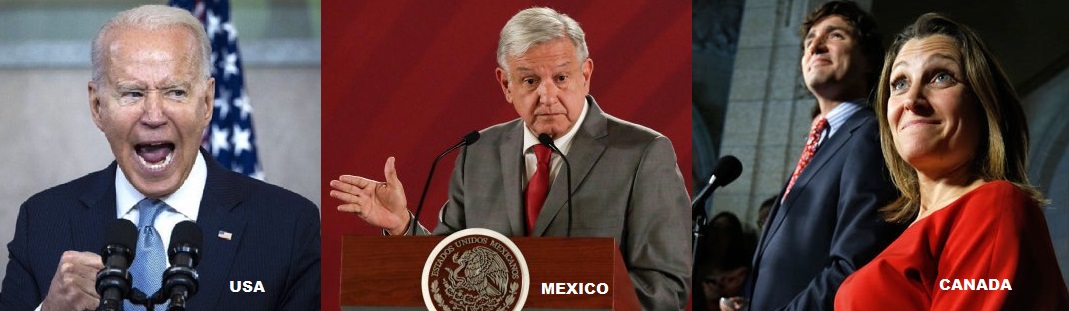
BRASS TACKS – Canadian Prime Minister Justin Trudeau was gleeful last week promoting Manchin’s new green energy proposal because, with steel and aluminum tariffs removed, Canada will be one the biggest beneficiaries of $370 billion congressional spending package.  Canada has no heavy industry left, they are the assembly economy for foreign manufacturing that uses loopholes, and the senate bill creates a USMCA loophole for this exact purpose.

The West Virginia windmills and solar panels will be shipped as raw materials from China and the EU into Canada.  Canada will assemble the parts and ship the finished goods into the United States for placement by illegal alien workers employed by the contractors.  The batteries to store the solar and windmill power will come from Mexico, after they receive the raw materials from Africa and Asia.

Canadian workers, Mexican workers, Chinese Workers, African workers and ASEAN workers will all benefit from the generous Joe Manchin spending package.

Unemployed West Virginia coal miners will watch Joe Manchin run for office in 2024 on Japanese televisions powered by China, while eating cheese puff flavored cricket snacks sourced from Canada.  Brilliant plan, Joe.

(more…)

The Biggest Problem

People often wonder why few solutions are presented for the significant challenges we face.  Perhaps it is worth reminding everyone what the biggest challenge really is, and it has nothing to do with Joe Biden or our political system abusers.

The biggest problem we face as a nation is our unwillingness to admit our current condition is the result of purposeful action.

Cue example # [you_fill_in_the_ blank], a visual demonstration:

The central banks did not “fail to spot” the source of inflation.  The monetary policy makers did not make mistakes. The hands that guide the economic system did not screw it up, make mistakes or fail to recognize the consequences of the policy they put into place.

When they meet together at Davos for collective discussions around opportunities presented by the pandemic, the guidebook known as Build Back Better did not just organically materialize.  Nor did all the western governing central bankers make the same mistakes when they followed the agreed consensus.  They knew from the outset the climate change agenda would be a radical transformation of the global energy system, and as a result, the global economy.

The central banks did not collectively “fail to spot” the inflation they were creating by lowering energy production, disincentivizing energy investment, limiting energy development, shifting policy away from new production, and generally breaking the traditional energy system finances.  They knew precisely what they were doing, and they did it -and continue to do it- with forethought and purpose.

This is where people mistakenly view ‘prior justifications‘ as ‘mistakes.’  When they said inflation was transitory, they were not lying about what they created. They were, however, obfuscating the length of the term “transitory.”   Inflation is transitory, from where and when it started in 2021, all the way to where and when windmills, solar panels and clean energy will take over on (fill_in_date_).  That is the “transition.”

(more…)

Tucker Carlson Outlines the Great Pretending Around the Biden Economic Policy

Tucker Carlson used his monologue tonight to outline how intentional Joe Biden economic policies are destroying the lifestyle of the average American citizen.  As Carlson notes none of this is accidental, all of these policies are being done with intent. Yet almost the entire media system and financial class, are denying the resulting outcomes.

The administration and media are not redefining a recession, they are denying one exists in order to make all of the policies permanent. WATCH:

(more…)

Shrinking the Economy is a Feature, Not a Flaw – Massive Layoffs and Unemployment Likely Hits in September

The distance between Wall Street and Main Street has never been as brutally obvious as it is today.  It is simply stunning to watch the cheerleading and casual nature of the economic and financial pundits as they speak esoterically about how policies intended to reduce the U.S. economy are so wonderful.

Seriously, the disconnect in life impact has never been as stark.  At least in previous times of economic contraction there was a smidgen of appreciation for the pain that unemployment and rising costs bring to the blue collar and middle-income working class.  In this new era, the financial stress and visible outcomes of destroyed families are simply shrugged aside as if these are abstract consequences.

In this segment former Federal Reserve vice-chair Randal Quarles, notes with a casual flippance how the economic policies of the Biden administration are simply doing what needs to be done in order to intentionally reduce the U.S. economy.  Sure, massive unemployment, in direct correlation to the scale of the inflation that precedes it, is almost certain, but hey…. the economy must be collapsed if the Build Back Better, Green New Deal, agenda is to be fully implemented. WATCH:

Maybe this flippancy seems starker because those who consider themselves outside the collateral damage impact zone were not visible in prior generations.  Perhaps it is because modern technology and the information era allows us to see conversations that were previously only described in print newspapers and journals.  Whatever it is, the shameless disconnect between the unaffected rulers and the proles who have to live with the consequences are far more visible today than before.

Smiling while describing a future where working men are emasculated by their inability to support their families. Smiling and shrugging while explaining a landscape where moms are worried about how to feed their children, as the checkbook in the household creates a type of stress these ‘betters’ have likely never experienced, is almost psychotic in its detachment.

Desperation is not a good situation for any society.

Worse yet, laughing in the face of desperation leads to the type of outcomes that eventually hits the ‘betters.’

(more…)

Fed Preferred Inflation Index Jumps 6.8% in June, Largest Increase in Four Decades

The federal reserve looks carefully at the Personal Consumption Expenditures (PCE) price index when weighting inflation data.  The Bureau of Economic Analysis just released the PCE index for June [DATA HERE] and the results show a 6.8% increase in June from a year ago, the largest jump in four decades.

Wage growth in the second quarter (April, May, June) was generally strong, rising 1.6%.  However, it now looks like the consumption index and the wage indexes are creating their own inflationary spiral.  In addition to supply-side inflation, driven by Joe Biden’s energy costs, the labor costs are now increasing substantially which adds costs on the production side of the economy.

As wages go up to keep pace with supply side inflation, the prices of goods and services produced/handled by those workers also increases.  This is the inflation spiral that can get out of hand quickly.  The major concern (not necessarily expressed by pundits) is the inability of any institutional economic response to offset the originating inflation caused by the energy policy.  The economic team is pretending supply-side inflation created by energy policy doesn’t exist. They are only directing attention to demand side inflation.

As long as energy policy keeps driving the price of electricity, gasoline and petroleum products higher, workers need higher wages.  Those wage increases, while significant in scale, still lag the rising originating prices of the goods; and the wage growth adds to the final costs. Inflation then becomes structurally embedded, hyper-inflation begins.  This looks like the current situation.

(more…)