Chopper Pressers are the best pressers. This morning as President Trump departs the White House for a trip to Scotland, the most transparent president in history stops to take questions and deliver remarks to the assembled press pool.
.
President Trump states he is anticipating meeting with British Prime Minister Keir Starmer during his visit to Turnberry, Scotland, and takes questions on a variety of subjects including, trade, dollar value, EU trade agreement, Russia/Ukraine, Iran nuclear ambitions, Gaza, Hamas, the Federal Reserve, the economy, President Obama’s immunity status, the ongoing review and investigation by DNI Tulsi Gabbard and more.
The Federal Reserve is spending $2.5 billion to renovate existing buildings for the agency. The cost overruns so far exceed $700 million in taxpayer money. Both President Trump and OMB Director Russ Vought are furious at the costs.
The $2.5bn refurbishment of the FED headquarters is at the center of focus by the White House, looking specifically at Jay Powell the central bank’s chair. Russell Vought has compared the ridiculous renovation cost to the building of the Palace of Versailles and described cost overruns as “outrageous”.
President Trump, a builder who knows the price of all things in the construction sector, takes matters into his own hands and grabs a hard hat to tour the facility that is not expected to be finished for another two years. Here are his initial remarks (prompted):
Following an oval office meeting and later discussion with Philippine President Ferdinand Marcos, President Trump announced a trade agreement has been reached.
President Ferdinand Marcos, of the Philippines, is just leaving the White House, with all of his many Representatives. It was a beautiful visit, and we concluded our Trade Deal, whereby The Philippines is going OPEN MARKET with the United States, and ZERO Tariffs. The Philippines will pay a 19% Tariff. In addition, we will work together Militarily. It was a Great Honor to be with the President. He is Highly Respected in his Country, as he should be. He is also a very good, and tough, negotiator. We extend our warmest regards to the wonderful people of The Philippines! (link)
Additionally, the White House has announced a trade agreement with Indonesia for a similar 19% tariff rate.
White House Trade and Economic Advisor Peter Navarro takes a well deserved victory lap on the latest U.S. consumer sales news. The Census Bureau report, yesterday, highlighted that consumer sales remain strong at +0.6% – significantly higher than all economists forecast [DATA HERE].
Retail sales growth is important, because approximately two-thirds of the U.S. GDP growth is driven by consumer sales. With inflation low, retail sales high, and with a previously reported drop in U.S. imports, the ¹second quarter GDP is likely to be much stronger than anyone previously predicted. Thus, Peter Navarro is leaning forward against the naysayers.
This is essentially a repeat of the 2017/2018 economic outcome from President Trump’s first term in office. The tariffs, which are applied to the ‘cost’ side of the dynamic, are mostly being absorbed by major producing nations who are reliant upon export to the U.S. market. Simultaneously, the tariffs are generating income – essentially exfiltrating foreign wealth and returning those funds to the USA; a complete reversal of the rust-belt dynamic. WATCH:
What Peter Navarro outlines is the core of MAGAnomics. This is also the baseline for our CTH assembly in support of economic nationalism, which is why we ended up in conflict with the Chamber of Commerce Republicans.
Tariffs are a tool to leverage reciprocal trade, and as long as nations like China continue taking measures to subsidize their exports, the tariffs simultaneously take wealth (those subsidies) from Beijing and return it to the USA.
This reality has always been the model we predicted would be successful for Americans, and I will remind everyone that ONLY DONALD TRUMP could deliver this MAGAnomic program. Everything else, Epstein, Musk, etc. is chaff and countermeasures deployed by both Democrats and Republicans in an effort to take back control of the money flow.
Well, what do you know? An interesting article about Canada suddenly proposing to put limits on the amount of Chinese steel and aluminum they import. Although missing in the article is a reference to what this means about the prior process that did not have such limits.
Essentially, if you drop the pretending within the Wall Street Journal/MSM narrative, the decision by Mark Carney to limit Chinese Steel is a direct admission of their knowledge to a preexisting level of imports that violated the USMCA and all previous demands to block imports of Chinese steel.
Trump always said Canada was a transnational shipper and entry into the USA. Trudeau and Carney previously denied this was the reality. Well, if that wasn’t the reality, then why the need to change? I digress.
OTTAWA—Canada introduced limits on how much foreign steel produced in countries other than the U.S. and Mexico can be imported, as the Liberal government tries to help a domestic sector reeling from President Trump’s 50% tariffs on Canadian steel.
Prime Minister Mark Carney said Wednesday that the series of import limits and the tariffs targeting steel products with Chinese links are required because the Canadian economy has been too reliant on foreign steel to meet the needs of the construction and manufacturing sectors. He cited data indicating that two-thirds of total steel consumption in Canada comes from abroad, compared with one-third for the U.S. and one-sixth in Europe.
President Trump announced on Truth Social a baseline tariff rate of 30% for both the European Union and Mexico. Other sector specific tariffs still apply.
The EU rate is interesting in that the 30% rate is lower than the Canadian rate of 35%, yet the EU rate exceeds the current ‘chicken tax’ rate historically applied to imported SUVs and Trucks. Strategically, the 30% tariff rate on Europe is a major incentive for various EU sectors to shift manufacturing into the USA.
Without a formal declaration of the end of the Marshall Plan, the reciprocity rate of 30% for all EU imports also equalizes the transatlantic trade benefit. It will be interesting to see how the EU responds, given any retaliation could be added to the existing baseline.
Canada is currently trying to organize a trade agreement with the EU, in the hopes of positioning themselves toward the transatlantic group as they were toward the transpacific group (vis-a-vis China).
President Donald Trump has announced a 35% baseline tariff rate for Canada on all imported goods not currently covered under the soon-to-expire USMCA trade agreement.
“Instead of working with the United States, Canada retaliated with its own Tariffs,” President Trump shared on Truth Social. “Starting August 1, 2025, we will charge Canada a Tariff of 35% on Canadian products sent into the United States, separate from all Sectoral Tariffs.”
As noted by President Trump in his remarks during Prime Minister Mark Carney’s visit to the White House, Trump plans to renegotiate the USMCA and end the trilateral agreement in favor of two bilateral trade deals.
During the oval office meeting President Trump said, “as you know [USMCA] terminates fairly shortly. It gets renegotiated fairly shortly.” Then the biggest statement, “this was a transitional deal, and we’ll see what happens, we’re going to start renegotiating that”… “I don’t know if it serves a purpose anymore.” …. “And the biggest purpose it served was, we got rid of NAFTA.”
President Trump is going to exit the trilateral USMCA in favor of two distinctly different bilateral trade agreements between the U.S and Mexico; and the U.S and Canada. The only consideration now is the timing. President Trump is 100% focused on the BIG ECONOMIC PICTURE; it’s not about the politics, it’s all about the economics.
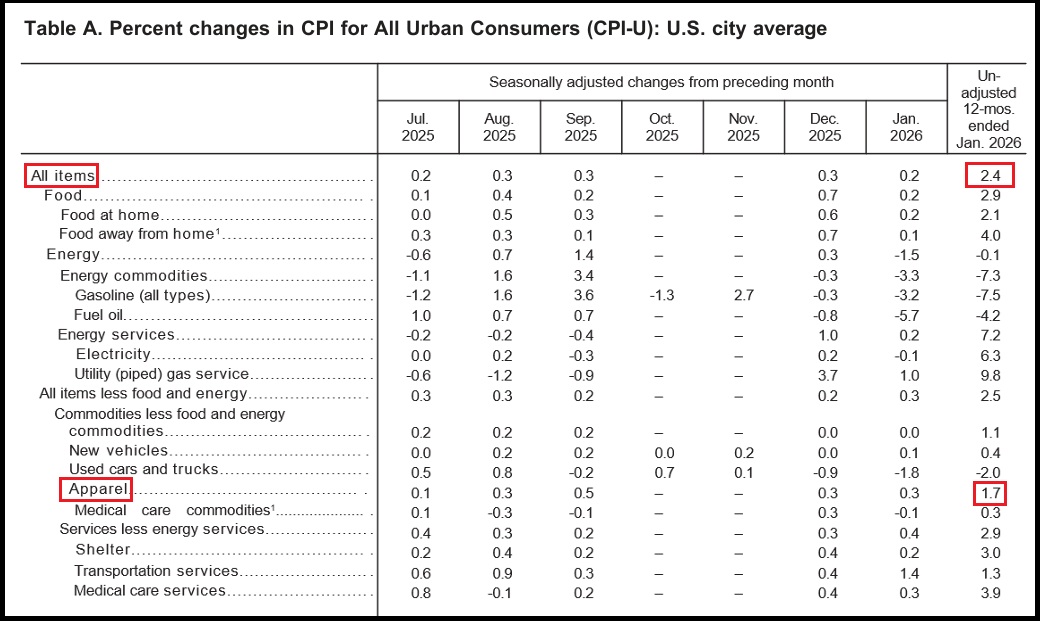
The Term-1 effect of deflation created by tariff policy is resurfacing in Term-2 even with larger tariff impacts across the network of global manufacturing exports. [DATA SOURCE]
In essence, there is little to no end result in price increases in the final price of consumer goods (Consumer Price Index). In fact, there is a slight deflationary aspect on CPI data from imported durable goods. The lower price of arriving imported durable goods is effectively putting downward pressure on US consumer prices. This is identical to the Term-1 result. A pattern is repeating. [PCE personal consumption expenditure / CPI consumer price index]
It sounds counterintuitive, but tariffs do not impact the final price of goods to USA consumers; there are just too many factors, too many elements within the Total Cost of Goods (TCG) within supply chain. Global energy prices, domestic energy prices, currency evaluations and fluctuations, state/govt subsidies to manufacturers, labor negotiations and production profit offsets are only a few of the components.
Additionally, and this is where U.S. consumers do not get a fulsome explanation from corporate media analysts, the tariff rate is applied to the ‘cost’ the exporter pays, not the final consumer price. A pair of jeans from China may be sold to the import company for $5 per pair. A 30% tariff raises the price of the jeans by $1.50 to $6.50. The tariff rate does not apply to the retail price of $50 paid by the consumer.
White House Trade and Manufacturing Advisor Peter Navarro talks about how the Fed monetary position is lagging with the intent of Trump’s MAGAnomic policy. In the short review, Chairman Jerome Powell is approximately 0.50% in rate cuts behind the growth plan of President Trump.
Peter Navarro notes this disconnect is politically motivated when viewed through the window of hindsight. Navarro is correct. CTH has been outlining this economic policy and monetary policy disconnect, specifically as it pertains to President Trump’s Main Street focused agenda, for almost a decade {GO DEEP}.
Additionally, in many ways the Trump tariffs are the reverse of decades of ‘exfiltration’ of American wealth. Just as there was a shift when the value of the Wall Street economy surpassed the value of the U.S. Main Street economy, the politicians began responding to their new donors, so too is the Fed reluctant in reverse focus and advance the agenda of Main Street. WATCH:
Here’s the key – The DC challenges are not overwhelming when you take a non-traditional approach toward finding solutions.
Appearing on CNBC to explain the big picture economics, Treasury Secretary Scott Bessent outlines how debt and deficit hawks are seemingly blind to the need for GDP growth to deal with federal spending.
From the outset of President Trump’s MAGAnomic policies in his T-1 and T-2 platform, growing the U.S. economy, expanding the size of the GDP is a key facet to dealing with debt and deficits. President Trump has always promoted economic policy that expands the size of the pie rather than focus on making smaller portions of each spending slice.
Secretary Bessent also explains the current status of the tariffs as delivered by the Trump administration. The next few days are exceptionally busy with incoming requests to renegotiate trade terms, and avoid countervailing duties. WATCH:
.
Big picture: Trump, Lutnick and Greer are now transmitting 1. Baseline tariffs (10-20%), 2. Reciprocity tariffs (trade imbalance) and 3. Section 232 tariffs (ex. Steel and Aluminum). Countries are notified and their tariff rate begins on August 1st.