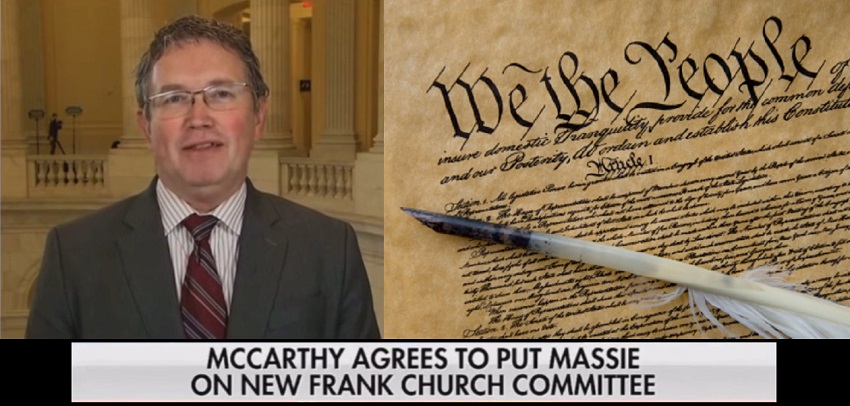
As previously noted, the 118th Congress is expected to authorize a “Select Subcommittee on the Weaponization of the Federal Government.” The subcommittee will fall under the jurisdiction of the House Judiciary Committee led by Chairman Jim Jordan. Additionally, Thomas Massie (R-KY) is being reported as a representative under consideration for the chairmanship the House subcommittee.
In order to avoid another complete waste of time; and considering the background of the current political dynamic which will surround this subcommittee; and considering my accurate predictions for all other special committees and House investigations; and considering that I have ZERO optimism that this committee will generate anything any different than the prior investigative sub and select-committees that preceded it (Fast and Furious, IRS Targeting, Benghazi, etc.); and with full understanding of the complexity of the daunting challenge such an undertaking would require; I have been asked to outline an actual roadmap for success in this noble endeavor.
So, I will…. Even if I believe it is futile.
Let me also say up front that many readers will not like this approach, and most professionally Republican along with media in/around Washington DC will absolutely hate the ideas as they are presented.
Assuming Jim Jordan and Thomas Massie have some grasp of the scale and scope of the opposition they are about to face; and assuming they have a fully prepared staff to support them – willing to take on the most consequential investigation in our lifetimes; then we begin by first defining who will oppose any effort to investigate the “weaponization of government“. Which is to say everyone!
The entire apparatus of the DC political system will do everything in their power, individually and with collective assistance, to ensure this committee fails. The stakes are basically for all the marbles. DC politics is a system of compartmentalized silos. A collection of weaponized institutions that view their common enemy as the American people not within them.
Specifically, the Senate Select Committee on Intelligence (SSCI), and every Republican member therein, including SSCI Vice-Chairman Marco Rubio, will make it their priority mission to block any investigation that touches on how the intelligence apparatus of the United States government is weaponized against the people. The SSCI facilitated the creation of the National Security State, and any effort to investigate the outcome will make the House investigators mortal enemies to the Senate.