Senior White House Officials Taylor Budowich, Stephen Miller, and Karoline Leavitt have a discussion on Tariffs with U.S. Trade Representative Jamieson Greer.
President Trump’s trade and tariff policy is a complete restructuring and reset of the U.S. economy and manufacturing base. The former presidential administrations (both parties) from Jimmy Carter to Ronald Reagan, to George HW Bush, to Bill Clinton, to George W Bush, to Barack Obama and forward to Joe Biden, all of them purposefully and with specific intent taking apart the U.S. manufacturing base through trade and economic policy.
The discussion below is familiar to those who have watched the MAGAnomic policy unfold. However, for those who are only beginning to understand just how impactful these policies will have on the life of your family, this conversation begins the journey. WATCH:
President Trump delivers a speech at the White House outlining a global trade reset established on the principle of trade and tariff reciprocity. [Primary Executive Order Here] – [Executive Order Here]
“The post-war international economic system was based upon three incorrect assumptions: first, that if the United States led the world in liberalizing tariff and non-tariff barriers the rest of the world would follow; second, that such liberalization would ultimately result in more economic convergence and increased domestic consumption among U.S. trading partners converging towards the share in the United States; and third, that as a result, the United States would not accrue large and persistent goods trade deficits.”
“Put simply, while World Trade Organization (WTO) Members agreed to bind their tariff rates on a most-favored-nation (MFN) basis and thereby provide their best tariff rates to all WTO Members, they did not agree to bind their tariff rates at similarly low levels or to apply tariff rates on a reciprocal basis. Consequently, according to the WTO, the United States has among the lowest simple average MFN tariff rates in the world at 3.3 percent, while many of our key trading partners like Brazil (11.2 percent), China (7.5 percent), the European Union (EU) (5 percent), India (17 percent), and Vietnam (9.4 percent) have simple average MFN tariff rates that are significantly higher.”
.
Country-specific ad valorem rates of duty as specified in Annex I to the main Executive Order.
The tariffs generally target completed goods, not the imported chemical or component materials needed to by industry to manufacture the products domestically. Annex II are the exemptions to the Executive Order.
I have been going through the details and will have much more soon.
Wall Street, the Bankers, the Hedge Funds, the multinational corporations, K-Street Lobbying firms, Democrats, Republicans, leftists, globalists, and every other segment of the financial media who define themselves through the prism of their bank accounts, need someone else to blame for the Trump tariffs; because Trump doesn’t care.
It looks like the professional political class have decided to focus all financial firepower against Commerce Secretary Howard Lutnick.
With the anticipated reciprocal tariffs announcement tomorrow, Liberty Day as President Trump calls it, the high-finance multinationals and Wall Street crowd are going bananas. Here come the hits against Lutnick.
(Politico) -‘I don’t know anyone that isn’t pissed off at him’: Trump world turns on Lutnick. As ‘Liberation Day’ nears, patience for the Commerce secretary is wearing thin across the Trump administration. (read more)
(New York Post) – Frustration grows with Commerce Secretary Howard Lutnick ahead of Trump tariff announcement: ‘Loose cannon with half-baked ideas’ (read more)
President Donald Trump holds an impromptu presser aboard Air Force One en route back to Washington DC. Most of the conversation centers around the upcoming “Liberty Day” tariffs, and the Ukraine-Russia conflict.
According to National Economic Council Chairman Kevin Hassett, our President now has all the assembled data from the full review and analysis of the combined research of the MAGAnomic agencies within the White House. The analysis combines both tariff and non-tariff trade barriers to determine exactly what costs are put upon the U.S. export companies for goods that arrive in various countries.
All of those combined costs, by country, will determine the reciprocal amount of the tariff levied by President Trump. The announcement of tariff rates will likely come this week, with President Trump previously saying April 2nd and April 3rd being the beginning of the implementation dates.
President Trump also puts context on the headline quotes promoted by NBC news and Kirsten Welker about his consideration toward Vladimir Putin. A COMPLETELY DIFFERENT CONTEXT! President Trump simply noted that while President Putin doesn’t like Zelenskyy, and factually calls him illegitimate, Trump needs Putin to accept Zelenskyy in order to have the other chair at the peace table filled. That’s it. Pragmatic toward peace! WATCH:
.
President Trump notes that after his warning of secondary tariffs against any nation who imports oil from Venezuela, Chinese ships pulled up anchor and left Venezuelan ports empty. Additionally, regarding Zelenskyy, President Trump notes the Ukraine President is going to face “a lot of trouble” if he backs out of the previously agreed minerals deal.
Appearing on Fox New with Maria Bartiromo, National Economic Council Director Kevin Hassett walks through the intent of the upcoming April 2nd ‘liberation day’ tariffs.
Hassett notes the auto tariffs are likely to generationally change the dynamic of car manufacturing in the USA. Additionally, the stock market disruption is entirely predictable against the dynamic of Wall Street -vs- Main Street. WATCH:
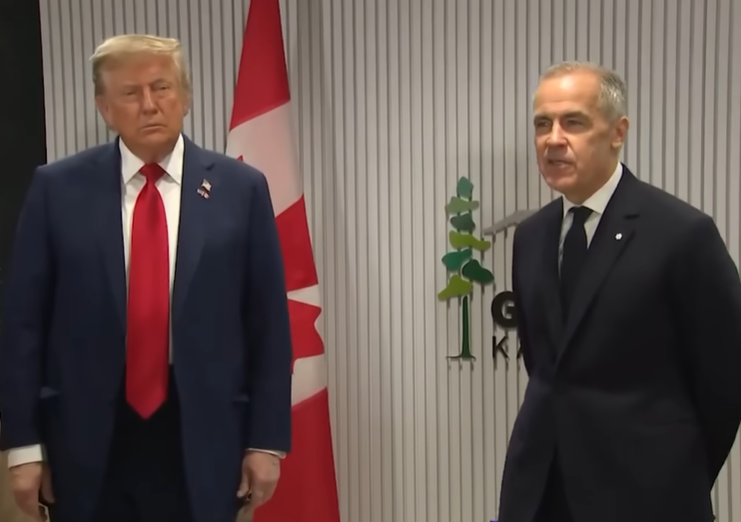
Canada Prime Minister Mark Carney delivers a speech to the nation notifying the Canadian people that the era of an economic and military collaborative relationship between the United States and Canada is over.
As the majority of Canadians cheer, the Prime Minister said that Canada as a free independent and sovereign nation will now embrace its connections to the United Kingdon and European Union and seek to replace their national dependency on the United States by severing ties in North America and entering a new era of close relations with Great Britain and Europe.
When questioned if Canada would join the European Union, a seemingly natural fit for the ideologically aligned country, Prime Minister Carney said, “nothing is off the table.” In a rather remarkable end to the confrontation, the Carney says the economic and military ties between the USA and Canada are officially declared severed. WATCH:
“We as Canadians, have agency”… What does that even mean?
.
President Trump asked Prime Minister Trudeau and the Canadian government to close the border to narcotraffickers and shutdown the pipeline of Chinese fentanyl. The Canadian govt chose not to and Prime Minister Mark Carney continues the refusal.
The entire Canadian border enforcement system, agents, support personnel, the entire operation for 5,000-mile border consists of 300 people. Not exactly a strong commitment to border security.
The atomic sledgehammer that President Trump just delivered to the German auto industry simply cannot be overemphasized. A 25% tariff on imported cars and car parts completely negates hundreds of billions in pre-positioned investment dollars by German auto companies in Mexico. [Executive Order Here]
To give scale to the impact on Germany, consider that German automakers currently have 330 automotive suppliers in Mexico according to information from VDA. Audi (a subsidiary of Volkswagen) has no U.S. production sites; every Audi sold in America will be subject to a 25% tariff. The Audi brand access to the U.S. market was/is 100% dependent on Mexico, including for manufacturing the Q5 SUV, its top-selling U.S. model.
According to prior reporting from Politico, “Volkswagen’s most popular model for American consumers is the Tiguan, an SUV that is entirely manufactured in Mexico. The German automaker sold over 30,000 of the vehicles in the final quarter of last year, a nearly 50 percent year-over-year increase.” But wait, it gets worse….
Wealthy nations will attempt to maintain exports against President Trump tariffs by subsidizing their industries. Corporations have deeper pockets, and the politicians are used to the bribes, we call it “lobbying.” Therefore, the government responds by subsidizing the corporations [ie. the WEF business model].
Canada will subsidize their export industries, Germany will subsidize their auto industry, the EU will provide subsidies to their manufacturing powerhouses, and China will once again start subsidizing their manufacturing industry. Each of these nations will in turn devalue their currency.
However, poorer nations will be faster to lower import tariffs on USA goods because they have lower lobbying (bribe) income from corporations to govt. That’s what we should expect to see.
VIETNAM – Vietnam said it plans to cut import duties on a range of goods including cars, liquified natural gas and agricultural products.
[…] The announcement on the finance ministry’s website late Tuesday came less than two weeks after Prime Minister Pham Minh Chinh said the country was reviewing duties in order to encourage increased imports from the United States.
Vietnam represents the United States’s third-highest trade deficit, behind China and Mexico.
According to the finance ministry statement, import duties on some cars will be cut by half and the tax rate for liquified natural gas will drop from five percent to just two percent. Duties will also be cut for a number of other products including frozen chicken thighs, almonds, sweet cherries, raisins and wood. (more)
During President Trump’s first term, many companies proactively moved manufacturing operations from China to other nations in Southeast Asia. Vietnam was a big benefactor of the manufacturing shift. It is smart for them to respond to the reciprocal tariffs coming April 2nd by lowering their tariff rate.
During an executive order signing session in the White House today, President Trump announced a major change in tariffs on the auto industry. [Full Executive Order Here]
The 25% import duty applies on top of any preexisting tariff for cars and light trucks. The 25% tariff also applies to imported car parts. The USMCA trade agreement between the U.S. Canada and Mexico still applies.
If the content of a car assembled in Mexico/Canada contains 50 percent component parts from the USA, the 25% tariff only applies to the final value of the imported components. In this example the tariff rate would be 12.5% of the total value.
The tariff applies to all imported cars and light trucks. Approximately half of all cars sold in the USA are currently American made, the other half are import vehicles from mainly Mexico, Japan, South Korea, Canada and Germany.
This is a very big kick in the teeth to Germany. Previously in a long-term strategy to avoid U.S. tariffs, German automakers invested billions in auto assembly plants in Mexico. Ex. the BMW parts were shipped from Germany and the cars assembled in Mexico. Now that investment is worthless as the vehicle will be taxed at a rate of 25% regardless of whether it is assembled in Germany or Mexico.
Ex.2 High end auto Mercedes currently builds SUVs in the USA in order to avoid the previous 25% tariff; however, they still build cars outside the USA and export them into the USA market. This will likely change quickly, and Mercedes will begin building all cars and SUVs in the USA.
Following a cabinet meeting, President Donald Trump and the various cabinet members hold a public press availability to outline fraud discovered within the budgets and spending of the agencies they head. Several examples of demonstrable fraud were highlighted by DOGE team lead Elon Musk, the Small Business Administration, the Environmental Protection Agency, the Dept of Energy, the Dept of Veterans Affairs and others.
President Trump explains that targeting the governmental spending “fraud” is critical as his administration focuses on growing the economy and bringing in major U.S. investment. Most of the spending being highlighted is fraud within the business model of U.S. politics. As noted by President Trump, it is not waste or abuse, it is simply fraud.
Commerce Secretary Howard Lutnick outlines his expectations in advance of April 2nd, economic liberation day. HHS Secretary RFK Jr outlined how the DOGE team is helping to streamline the goals and objectives of the healthcare system. President Trump guides the MAGAnomic conversation around the various cabinet secretaries.
Dept of Homeland Security Secretary Kristi Noem outlined how border patrol now has almost complete control over the U.S. border, and how the deportation operation is now removing record numbers of illegal aliens.
The Q&A session with media begins at 23:14 of the video above.
President Trump asks for Secretary Marco Rubio [24:57 of video] to review foreign policy and the Ukraine-Russia negotiations that are underway in Saudi Arabia. President Trump also notes the mid-east policy program is restarting the Abraham Accords to bring more nations into the alliance to stop regional hatred and create peace.
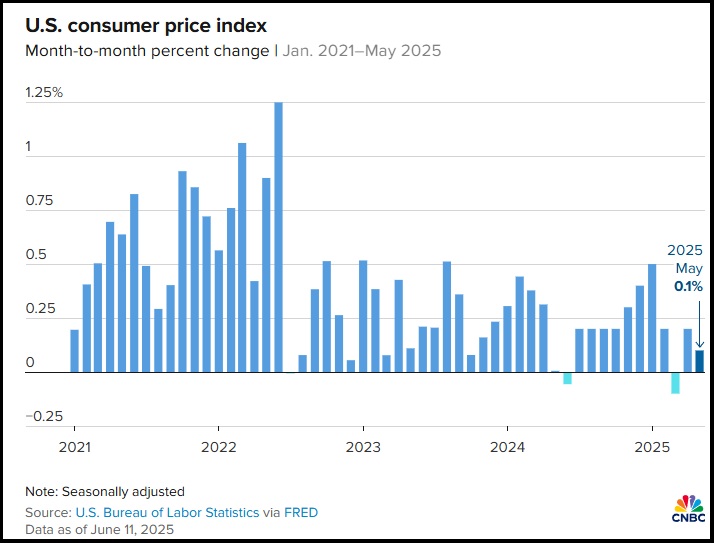
Around the 28:00 moment, President Trump notes the MAGAnomic policy initiatives that are starting to reduce prices. The price of energy input products is dropping rapidly along with gasoline and core food ingredients. Around 31:30 Treasury Secretary Scott Bessent outlines how Treasury is positioning policy to assist in economic growth.
At approximately the 34:00-minute mark, President Trump asks Transportation Secretary Sean Duffy about air safety and the goal of a new Air Traffic Control system. Secretary Duffy outlines the importance of DOGE to deliver solutions and assist with identifying problems.
Attorney General Pam Bondi who is primarily in position to keep the administration -and Trump himself- defended from Lawfare attacks, outlines how the DOJ is taking investigative referrals from the various cabinet members and will review identified instances of fraud for prosecution when warranted.
President Trump concludes the press availability by defending Elon Musk and his DOGE team from the attacks against him and his companies.