The current White House Press Secretary, Karine Jeanne-Pierre, is hopelessly over her head and does not possess the intellectual or professional skills to articulate clear policy or answer questions. Her professional inability is brutally obvious, yet political correctness dictates everyone is supposed to pretend not to notice. In a weird way she is a perfect representation of the Biden White House. Jeanne-Pierre is the Kamala Harris of Hank ‘tippy guam’ Johnsons.
That said, the White House is using former Pentagon spokesperson, and current National Security Council Coordinator for Strategic Communications, John Kirby, as a crutch to support Jeanne-Pierre until enough time passes and the permanent switch can take place without backlash from the media and left-wing cultural police. Narrative engineering is a tenuous business and relies upon media pretense to continue.
With the shortage of infant formula still visible as an example of Biden incompetence, today the White House began selling a proactive strategic communication message in advance of looming food shortages. {Direct Rumble Link} Yes, you guess it, the advanced position of the Biden administration is that the future U.S. food shortages are Vladimir Putin’s fault.
Apparently, Russian President Vladimir Putin has the ability to drive up U.S. inflation, explode U.S. energy costs, increase gasoline prices, influence global agriculture, weaken U.S. oil refining capability, disrupt availability of diesel fuel, impede the transportation of U.S. goods, force municipal energy companies to raise prices, cancel airline flights, stop the manufacturing of infant formula and now block the production -and increase the cost- of food in North America.
It’s worth noting how John Kirby says NATO and the western allies can deliver thousands of tons of heavy weapons and arms into Ukraine from western Europe without issue; however, the western allies cannot get thousands of tons of grain and foodstuffs out of Ukraine. I digress. The propaganda around World War Reddit is remarkable.
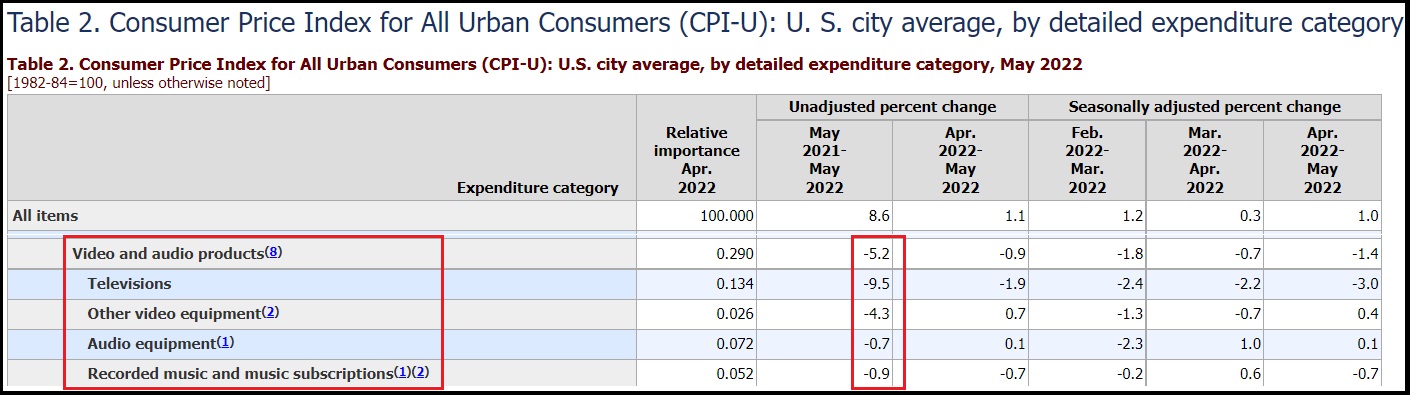
 White House
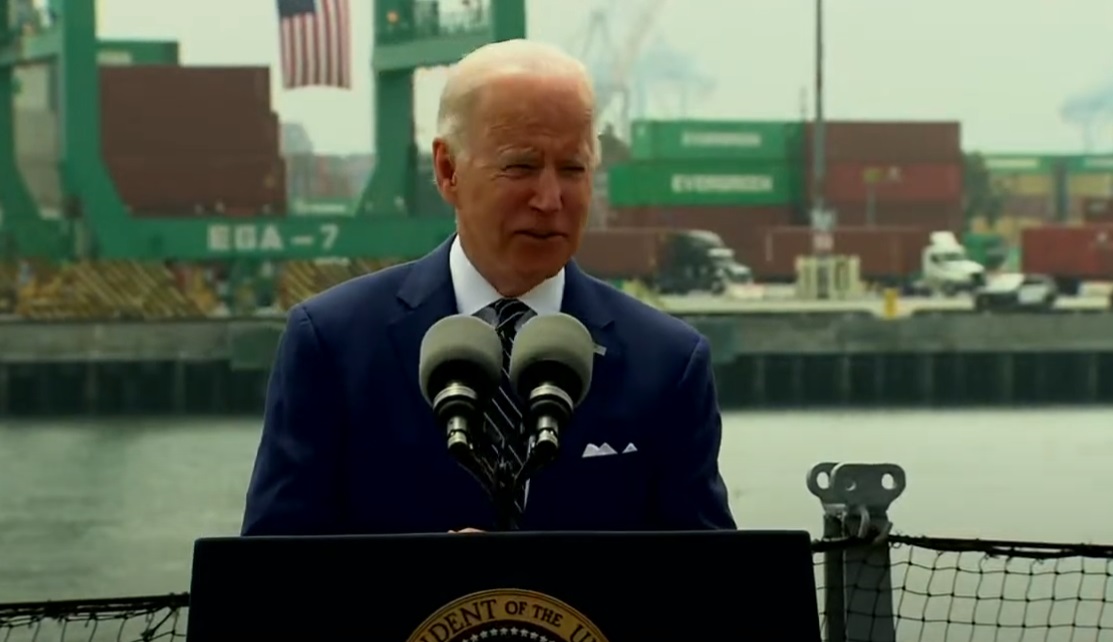 Do not let it go unnoticed that it’s June, the last month of the second quarter for economic data. Do not let it pass your reference that Joe Biden is speaking from the Port of Los Angeles (POLA) as he spins his nonsense about the inflation, he alone is responsible for. And do not overlook the attendee mentioned in this
  Latin-America leaders are not stupid. It doesn’t matter whether the self-interested bully comes from the east or the west, they are not blind to the parasitic self-interest contained within the blackmail of any larger nations on the geopolitical stage; especially as the cleaving of the west and east is taking place with increased ferocity.