Many of us are watching the story of a woman, Lindsay Clancy, who is accused of murdering her three young children in 2023 in their Massachusetts home. The widely discussed case is being tried in Plymouth Superior Court, and after five days of jury deliberations the jury has again told the judge they are hopelessly deadlocked.
Clancy killed her three children [Cora (5), Callan (8 months), and Dawson (3)], that aspect is not in question; she strangled them with an exercise band. However, the defense has argued that Clancy was suffering from postpartum psychosis, and she is not criminally responsible. Prosecutors argued Clancy knew right from wrong and acted deliberately, pointing to evidence of her planning, and the fact she hid her thoughts of harming the children from doctors because she knew they were wrong.
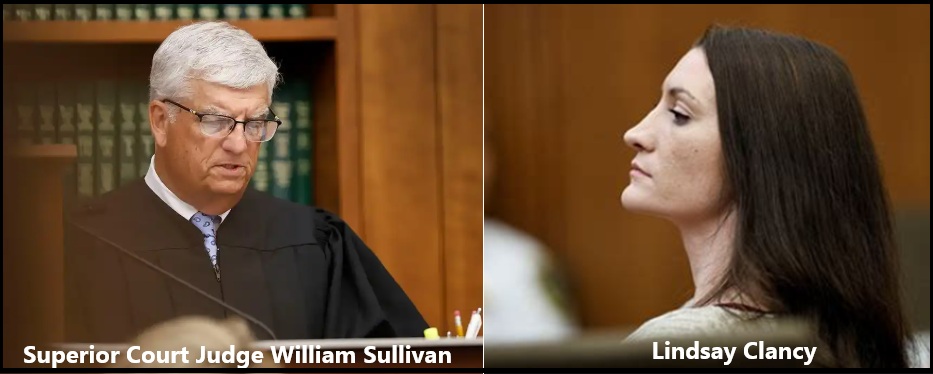
The jury is made up of nine women and three men. The jury cannot decide if Clancy is criminally responsible for killing her children. The jury has deliberated for five days and has reported twice before they are deadlocked. Superior Court Judge William Sullivan responded with a Tuey-Rodriguez charge, an instruction that urges deadlocked jurors to keep working toward a verdict while reminding them not to abandon their own honestly held views.
Rather than declaring a mistrial, the judge allowed the jurors to go home for the day. It looks like tomorrow a mistrial will be declared.
(Via Fox News) – The instruction that Judge William Sullivan gave to the Lindsay Clancy jury on Wednesday takes its name from two Massachusetts Supreme Judicial Court decisions.
In Commonwealth v. Tuey (1851), the court approved an instruction encouraging deadlocked jurors to re-examine their views with an open mind. More than a century later, in Commonwealth v. Rodriguez (1973), the state’s highest court revised that language to remove pressure on minority or holdout jurors, creating a neutral instruction that asks all jurors to carefully consider one another’s views while maintaining their own honestly held convictions.
(more…)