Joe Biden sought counsel today from New Zealand Prime Minister Jacinda Ardern about how best to remove firearms from Americans and force the U.S. economy to a dependency on renewable energy. Prime Minister Ardern took the top spot in the global progressive movement after the retirement of German Chancellor Angela Merkel.
PM Ardern, a remarkable smiley-faced fascist, now represents the face of modern global leftism and boned-up her progressive bona fides with the totalitarian New Zealand COVID policy. The corporate fascists within the World Economic Forum love the government compliance model represented by Ardern to the collective global society they are creating.
New Zealand has a population of 5 million people, and a GDP of $205 billion (about the same as Nevada). By comparison the U.S. has a population exceeding 350 million and a GDP exceeding $21 trillion. That said, during their White House meeting today, Joe Biden emphasized that he welcomes the assistance of PM Ardern in helping to guide U.S. efforts for firearm regulation and a comprehensive climate change driven renewable energy economy.
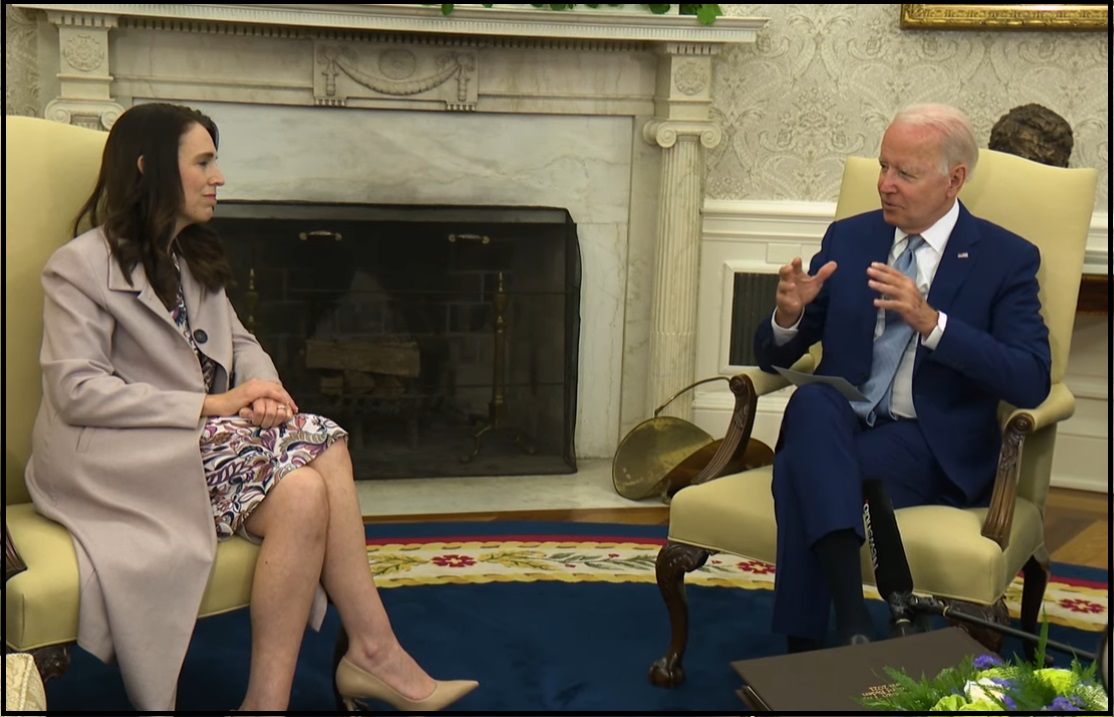
[Transcript] – […] You understand that your leadership has taken on a critical role in this global stage — and it really has — galvanizing action on climate change; the global effort to curb violence, extremism, and online, like happened in Christchurch.
And — you know, we want to be — I want to work with you on that effort. And I want to talk to you about what those conversations were like, if you’re willing.