Quantcast

Chairman Xi Jinping Pressures Hedge Position in Vietnam with Increased Trade Agreements

Three months ago, I was in Vietnam reviewing just how expansive the positioning of Chinese investment was in the concurrent communist nation.  The short version is Beijing’s footprint in Vietnam was already huge.

As an outcome of the 2018 tariffs against China, which coincided with a President Trump visit to southeast Asia, multiple companies shifted manufacturing operations from China to Vietnam.

Beijing saw the move and slowly increased their own strategic footprint.

In the subsequent years as COVID-19 took attention from all other matters, and with Trump removed from the equation in 2020, China increased the scale of their investment and the outcomes in 2025 are very visible.

China even built this massive Disney type village in Phu Quõc (it’s nearly empty).

The people who live in Vietnam do not have money, they are a very poor nation.  The baseline poverty level, in combination with their communist regime politics, essentially eliminates their consumer power to purchase western goods and makes trade agreements between the U.S and Vietnam somewhat moot.  However, as a proxy manufacturing nation Vietnam is a valuable resource for China.

Essentially what can be seen in Vietnam is how Beijing spends money there for influence.  The U.S footprint is negligible in comparison to the visible influence of China.

Chinese Chairman Xi Jinping is in Vietnam right now making trade deals with the allied communist government.  At this point with so much Beijing influence money already in place, China can request very strategic terms.

(more…)

Stephen Miller Reiterates Tariff Strategy Around Section 232 National Security Products

In addition to Howard Lutnick, Peter Navarro and Kevin Hassett explaining the nuances of Section 232 tariff exemptions, White House Senior Policy Advisor, Stephen Miller, appears on Fox News to deliver the same message.

Steel, Aluminum, Automobiles, Pharmaceuticals and components for semiconductor manufacturing all fall under the Section 232 “National Security” tariff umbrella. Meaning, the products within each of those sectors of manufacturing are handled ¹differently from all other tariffs as executed.  WATCH:

[¹NOTE: This approach could present a problem in future lawsuits, because the administration is now beginning to define what is classified as a ‘national security’ product. Lawfare operatives will likely say in court that all other tariff sectors (not 232) are controlled by congress, not the President; at least that will be their predictable argument. The administration will counter by arguing all other sector tariffs are directed in response to the Fentanyl crisis, which is again described as a “national security” threat.]

President Trump released the following statement on Truth Social:

NOBODY is getting “off the hook” for the unfair Trade Balances, and Non-Monetary Tariff Barriers, that other Countries have used against us, especially not China which, by far, treats us the worst! There was no Tariff “exception” announced on Friday.

(more…)

Sunday Talks: Economic Council Director Kevin Hassett Explains China and Global Tariff Distinctions

You can watch Jake Tapper’s brow grow increasingly furrowed in real time as White House Economic Council Director, Kevin Hassett, smiles through the narratives and talks clearly about what is happening with President Trump’s tariff agenda.

This is a REALLY good interview.  Kevin “quokka” Hassett just keeps outlining clear examples of what regional tariffs are happening and why there are distinctions.  The interviewer Jake Tapper keeps trying to throw confusion at Hassett, who smiles and explains the reason why Tapper’s framework is silly. WATCH:

.

(more…)

Sunday Talks: Secretary of Commerce Outlines Purpose of Tariff “Exemptions” – Sector Specific Tariffs Coming Soon

Commerce Secretary Howard Lutnick appears on ABC This Week, to explain and clarify the purpose of the recently announced tariff exceptions.

According to the explanation, there are two “sector specific” tariffs in Semiconductors and Pharmaceuticals that will be announced in the next few months.  The recently announced “exemptions” are products that will be included in the sector specific tariffs that are also identified as “non-negotiable” tariffs.

Semiconductor items, automobiles, steel and aluminum as well as pharmaceutical products will fall under categories or ‘sectors’ of products that will be non-negotiable in all trade agreements for the tariff levy applied.  Any nation who enters negotiations for new Free Trade Agreements (FTAs) will not be permitted to negotiate trade on semiconductor products, automobiles, steel, aluminum and medications.  WATCH:

.

(more…)

President Trump Exempts Most Chinese Consumer Electronics, Tech Products and Components from Reciprocal Tariffs

The baseline tariffs remain, specifically as they pertain to China.  However, in a move to diminish public backlash President Trump has now exempted the majority of consumer electronics from the 125% reciprocal tariff levy.

The types of electronic and computer systems exempted, as announced by U.S Customs & Border Protection, Cargo Systems Messaging Service [DATA HERE], is extensive.  The machines used to make semiconductors will also be exempt.

All of the following products are now exempt from the larger global tariffs, including the tariffs in place against China:

•Computers (laptops, desktops, servers) •Workstations •Computer systems •Keyboards •Mice •Hard drives •Memory modules (RAM) •Power supplies •Computer motherboards •Graphic cards •Semiconductor manufacturing equipment: •Photolithography machines •Etching and doping machines •Wafer handling robots •Cleanroom systems used in chip fabrication Used by companies like TSMC, Intel, and Samsung in chip production. •Smartphones •Mobile phones with data transmission capabilities •Devices like iPhones, Android phones, and similar mobile communication devices •Wireless routers •Network switches •Modems (cable, DSL, etc.) •VoIP equipment •Communication hubs •Internet gateway devices •USB flash drives •SSDs (solid-state drives) •Memory cards (like SD, microSD) •Other flash storage devices used in everything from laptops to cameras and game consoles. •Individual solar cells, unassembled •Photovoltaic cells assembled into modules or panels, with or without bypass diodes •Custom or specialty solar panels •Microprocessors (CPUs, SoCs) •Memory chips (RAM, Flash, etc.) •Logic ICs, analog ICs, mixed-signal ICs •Specialized application chips (ASICs, GPUs, AI chips) •Widely used in all electronics: smartphones, laptops, vehicles, appliances, industrial controls •All types of LEDs [SOURCE]

The exemption announced April 11th is retroactive back to April 5th.  According to the announcement, companies who imported during the window of tariffs may request a refund due to changes in the Harmonized Tariff Schedule of the United States (HTSUS).

This is a major appeasement move to both the Communist Party of China (Beijing) and corporate tech titans like Apple.

There is no other honest framework to view this, other than President Trump retreated fearing backlash from corporate donors, Silicon Valley allies and the broader system of adverse politics.  The administration will try to spin this, but it is a really bad look.

Elon Musk won the argument, defeating Peter Navarro, Howard Lutnick, Scott Bessent and Stephen Miller.  I was wrong.  Obviously, Elon Musk has the most power and influence in the administration.

(more…)

President Trump Wallops China with Massive de minimis Tariff Increases – Mail Order Product Costs from China Will Skyrocket

Within the Executive Order modifying the April 2nd global reciprocal tariffs [SEE HERE] section #4, we note a massive increase in the duty fees for mailed products from China formerly shipped under ‘de minimis’ rules.

REMINDER: The de minimis loophole comes from back in the 1930s. The idea back then was, say you went on a vacation to Paris, you shouldn’t have to file customs paperwork or pay taxes if you decided to ship some little Eiffel Tower statues to your friends back home.

Congress in 2015 then raised the de minimis threshold from $200 to $800. However, the e-commerce world exploded, and Chinese companies began using the de minimis loophole to ship cheap goods (ex. Temu and Shein) into the USA direct to consumers without paying any customs duty.

On April 2nd, as part of the global trade reset and tariff structure, President Trump revoked authorization for Chinese goods to transfer to the USA using the de minimis rule. The de minimis exemption was cancelled for all products coming out of China. The rule change only targeted China and Chinese shippers. No one else. [XO HERE]

Yesterday, as part of the modification to Executive Order #14257, President Trump has increased the baseline tariff for product mailed from China [de minimis tariff] from 30 90 percent to 120%.

Mailed products from China now face a 120% tariff.  Additionally, minimum tariff amounts increased from $75 to $100 effective May 1st, and from $150 to $2oo effective June 1st.  [See Section #4]

Example: If you order a $20 shirt from China effective June 1st, you will pay $220.  $20 for the shirt, and $200 minimum tariff.

There is no way Chinese E-Commerce can survive this level of tariff/duty fees.

(more…)

Background Details of Trump Global Trade Reset Highlight Secretary Bessent as Key, For Now

When President Trump announced the 90-day pause in combination with the increase in tariffs against China, there was a background element missed by many.

At the moment President Trump triggered the public announcement, U.S. Trade Representative Jamison Greer was testifying to congress.

President Trump is not a jerk.  Donald Trump would not put a top executive Greer in that optically vulnerable position if USTR Greer was the tip of the spear, it’s just bad business form.

The timing and background indicate something more substantial.  For what we are calling ‘the BIG UGLY’ Treasury Secretary Scott Bessent is the point, Greer is a functionary.  It’s a shift from the Term-1 approach, because the global trade reset is magnitudes bigger and more substantive.

This approach would also explain why Robert Lighthizer was not reenlisted in Term-2.  If Lighthizer was in Greer’s chair in front of congress at the moment of the public announcement, he would have been furious and rightly so.  Lighthizer and Wilbur Ross were the tip of the spear in term-1, Lighthizer facing the region of Asia and Ross facing Europe; but the same strategy is not present in term-2.

In the Term-2 trade reset, the entire globe is being targeted simultaneously.  Enter, the U.S. Treasury Secretary in a bigger, more substantive, and much more prominent role due to the scale of the trade reset.

This trade approach is much bigger, obviously. As the nuclear-level trade detonation takes place, Secretary Bessent is in control of both the financial market response and the core finances of the USA as it relates to the reverberations.

(more…)

Treasury Secretary Scott Bessent Provides Clarity and Details Surrounding 90-Day Pause, Baseline 10% Tariffs and Chinese Tariffs at 125%

White House Press Secretary Karoline Leavitt and Treasury Secretary Scott Bessent hold press gaggle outside the White House. US Treasury Secretary Scott Bessent gives details on the China tariff increase and the 90- day tariff pause on other countries.

As outlined in the press remarks, 75 countries have contacted the White House to renegotiate their access to the U.S. consumer market.  Secretary Bessent noted, each of these new trade agreements needs to be handled independently and “President Trump wants to be personally involved in each one. That’s why there is a 90-day pause.”

Bessent revisited his prior comments and warning to global trade partners about not retaliating to last week’s announcement.  The hostile response from China was the triggering mechanism for the tariff increase. WATCH:

.

(more…)

President Trump Raises Chinese Tariff Rate to 125%, Triggers 90-Day Pause and Baseline 10% For all Other Nations

The first part of this announcement is clear, Chinese tariffs are now raised to 125% effective immediately.  The latter part of this announcement is less clear; however, it appears that all other trading nations have their reciprocal tariffs lowered to 10% for a period of 90-days.

“Based on the lack of respect that China has shown to the World’s Markets, I am hereby raising the Tariff charged to China by the United States of America to 125%, effective immediately. At some point, hopefully in the near future, China will realize that the days of ripping off the U.S.A., and other Countries, is no longer sustainable or acceptable.

Conversely, and based on the fact that more than 75 Countries have called Representatives of the United States, including the Departments of Commerce, Treasury, and the USTR, to negotiate a solution to the subjects being discussed relative to Trade, Trade Barriers, Tariffs, Currency Manipulation, and Non Monetary Tariffs, and that these Countries have not, at my strong suggestion, retaliated in any way, shape, or form against the United States, I have authorized a 90 day PAUSE, and a substantially lowered Reciprocal Tariff during this period, of 10%, also effective immediately. Thank you for your attention to this matter!”  [SOURCE]

♦ Steel and Aluminum tariffs of 25% remain for all.

♦ Auto tariffs of 25% remain for all.

♦ Reciprocal tariffs 10% for all, 125% for China.

(more…)

Kevin O’Leary Wants President Trump to Increase Tariffs on China to 400%

“Shark Tank” star and investor Kevin O’Leary says President Trump’s tariffs on China aren’t high enough and calls for a 400% tariff on the country. “It’s time to squeeze Chinese heads into the wall.”

O’Leary wants President Trump to go full wolverine. Awesome.  WATCH:

Full Segment Below:

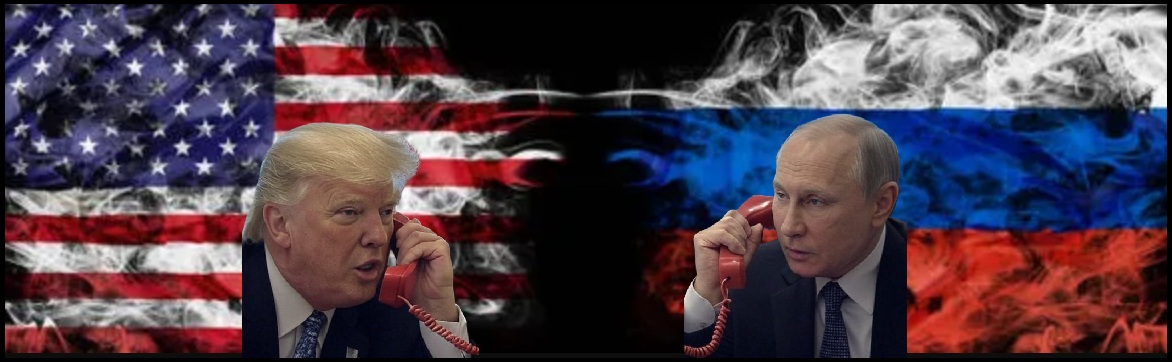
My thoughts: Replace the Tech Bro regiment with union Democrats.  We were always destined to lose Silicon Valley, lets control the timeline of departure. The self-interest dynamic has now shifted. Ship the Tech Bros to China, then invite Vladimir Putin to a State Dinner.

We are at a very important inflection point. If we are going to face The Big Ugly with China, we cannot afford divided loyalties. We cannot afford conflicted interests.

Pull in the knuckle-draggers, the pipefitters, the hardcore unions and even the sketchy elements of the criminal underground who at least love America more than all else.  The core weapons we now need are brutal power, economic nationalism and industrial patriotism.

We are now at the moment when we need Whiskey to replace Soy. It’s time to get mean, brutally, harshly mean. Delicate sensibilities must be dispatched like a feather in a hurricane.

(more…)