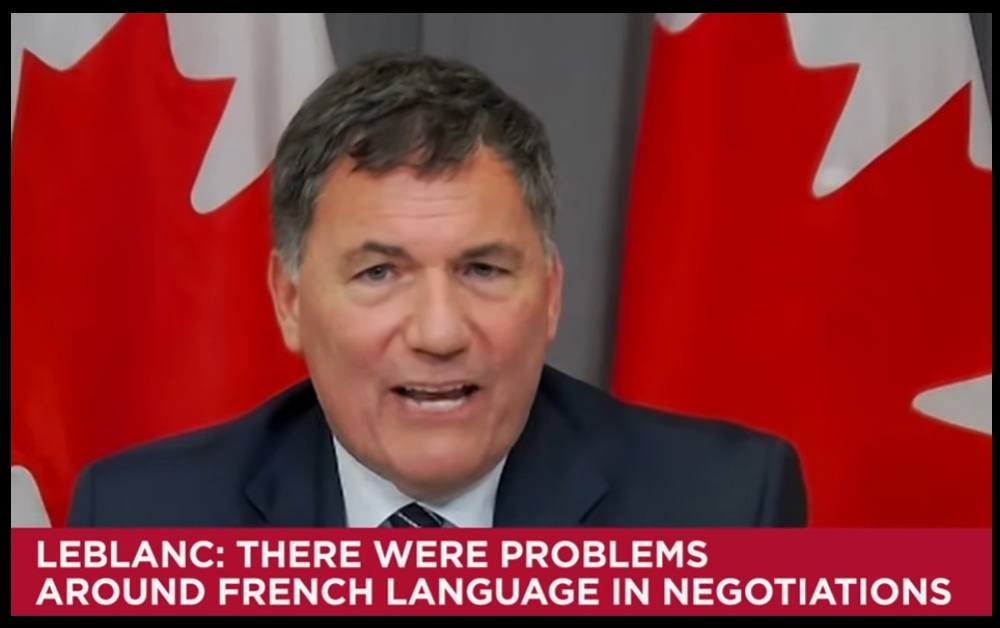
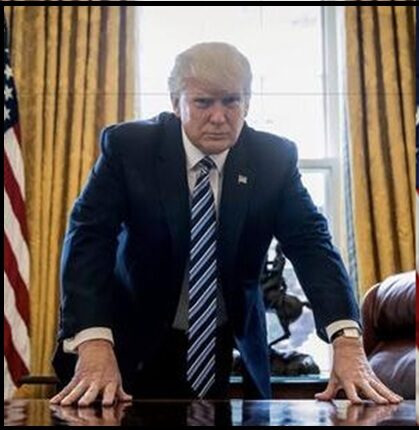
In 2018, Canadian Prime Minister Justin Trudeau relied heavily on House Speaker Nancy Pelosi for assistance when the U.S. and Mexico constructed the majority of the USMCA trade pact. Today, Canadian Prime Minister Mark Carney takes the same approach.
PRESS RELEASE – “Today, the Prime Minister, Mark Carney, met with a bipartisan delegation of United States senators in Ottawa. The Senator for Oregon, Ron Wyden, the Senator for Alaska, Lisa Murkowski, the Senator for New Hampshire, Maggie Hassan, and the Senator for Nevada, Catherine Cortez Masto, were present.” (more)
The 35% tariffs against Canada are scheduled to go into effect on August 1st.
Well, what do you know? An interesting article about Canada suddenly proposing to put limits on the amount of Chinese steel and aluminum they import. Although missing in the article is a reference to what this means about the prior process that did not have such limits.
Essentially, if you drop the pretending within the Wall Street Journal/MSM narrative, the decision by Mark Carney to limit Chinese Steel is a direct admission of their knowledge to a preexisting level of imports that violated the USMCA and all previous demands to block imports of Chinese steel.
Trump always said Canada was a transnational shipper and entry into the USA. Trudeau and Carney previously denied this was the reality. Well, if that wasn’t the reality, then why the need to change? I digress.
OTTAWA—Canada introduced limits on how much foreign steel produced in countries other than the U.S. and Mexico can be imported, as the Liberal government tries to help a domestic sector reeling from President Trump’s 50% tariffs on Canadian steel.
Prime Minister Mark Carney said Wednesday that the series of import limits and the tariffs targeting steel products with Chinese links are required because the Canadian economy has been too reliant on foreign steel to meet the needs of the construction and manufacturing sectors. He cited data indicating that two-thirds of total steel consumption in Canada comes from abroad, compared with one-third for the U.S. and one-sixth in Europe.
President Donald Trump has announced a 35% baseline tariff rate for Canada on all imported goods not currently covered under the soon-to-expire USMCA trade agreement.
“Instead of working with the United States, Canada retaliated with its own Tariffs,” President Trump shared on Truth Social. “Starting August 1, 2025, we will charge Canada a Tariff of 35% on Canadian products sent into the United States, separate from all Sectoral Tariffs.”
As noted by President Trump in his remarks during Prime Minister Mark Carney’s visit to the White House, Trump plans to renegotiate the USMCA and end the trilateral agreement in favor of two bilateral trade deals.
During the oval office meeting President Trump said, “as you know [USMCA] terminates fairly shortly. It gets renegotiated fairly shortly.” Then the biggest statement, “this was a transitional deal, and we’ll see what happens, we’re going to start renegotiating that”… “I don’t know if it serves a purpose anymore.” …. “And the biggest purpose it served was, we got rid of NAFTA.”
President Trump is going to exit the trilateral USMCA in favor of two distinctly different bilateral trade agreements between the U.S and Mexico; and the U.S and Canada. The only consideration now is the timing. President Trump is 100% focused on the BIG ECONOMIC PICTURE; it’s not about the politics, it’s all about the economics.
“Elbows up” and knees bent. As expected given the nature of their dependency, the Canadian government has rescinded the digital services tax against U.S. tech companies.
The June 30th collection is halted and the Canadian government led by Mark Carney will be bringing legislation to rescind the tax entirely.
CANADA – […] Minister of Finance and National Revenue, the Honourable François-Philippe Champagne, announced today that Canada would rescind the Digital Services Tax (DST) in anticipation of a mutually beneficial comprehensive trade arrangement with the United States. Consistent with this action, Prime Minister Carney and President Trump have agreed that parties will resume negotiations with a view towards agreeing on a deal by July 21, 2025.
The DST was announced in 2020 to address the fact that many large technology companies operating in Canada may not otherwise pay tax on revenues generated from Canadians. Canada’s preference has always been a multilateral agreement related to digital services taxation. While Canada was working with international partners, including the United States, on a multilateral agreement that would replace national digital services taxes, the DST was enacted to address the aforementioned taxation gap.
The June 30, 2025 collection will be halted, and Minister Champagne will soon bring forward legislation to rescind the Digital Services Tax Act. (LINK)
In the bigger picture Canada has a serious problem.
CTH has continually said that almost no one in Canada has any grasp of what is about to happen within their economy, specifically because only a handful of people realize what President Trump intends to do.
This interview with Kevin O’Leary is a case study in what I have been warning about. If you have any financial affiliation with O’Leary Ventures or ancillary investments that touch on a dependency therein, be forewarned.
O’Leary is only a few months away from exploding against President Trump in a manner that will make the Elon Musk statements about Epstein and Trump seem small by comparison. As yet another Canadian financial voice that just doesn’t get it, O’Leary has no idea the USMCA is about to end. And when it does, oh boy… he will go bananas.
I was unaware until this interview the July 1st digital services tax that Canada is going to apply to U.S. tech companies is retroactive in application. Over a billion dollars will be due on Monday as a result of Canada’s targeting. Duplicitous Snow Mexicans.
Treasury Secretary Scott Bessent outlines the details of what Canada did and why President Trump is responding so forcefully. Bessent also explains that the EU doesn’t have a digital services tax, but some European countries do. President Trump is factoring in those targeted tariffs against our tech industry as he seeks to execute new trade agreements with the EU. WATCH:
As we have noted from the beginning, the overwhelming majority of the Canadian people genuinely have no idea what the final goal is for President Trump; this includes Prime Minister Mark Carney. A few Canadians can see the big picture, but only a very few.
Today, President Trump announces that all trade negotiations with Canada are halted, effective immediately, because Mark Carney and his team are trying to target the USA with a Digital Services Tax. When you know the end-game for Trump, you can clearly see how this positioning from Canada once again plays directly into his hands.
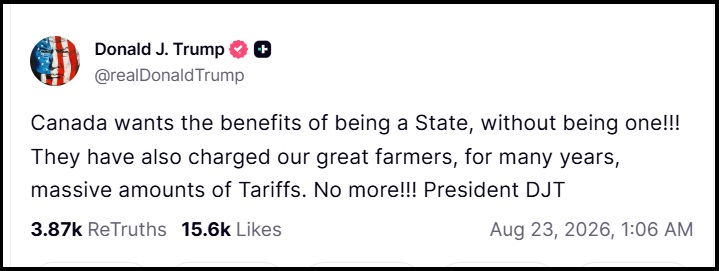
PRESIDENT TRUMP – “We have just been informed that Canada, a very difficult Country to TRADE with, including the fact that they have charged our Farmers as much as 400% Tariffs, for years, on Dairy Products, has just announced that they are putting a Digital Services Tax on our American Technology Companies, which is a direct and blatant attack on our Country. They are obviously copying the European Union, which has done the same thing, and is currently under discussion with us, also.
Based on this egregious Tax, we are hereby terminating ALL discussions on Trade with Canada, effective immediately. We will let Canada know the Tariff that they will be paying to do business with the United States of America within the next seven day period. Thank you for your attention to this matter!
President Trump and Secretary of State/Nat Sec Advisor Marco Rubio left the G7 in Canada late last night following dinner with the G7 leaders. When asked by reporters about his early departure President Trump said, “for obvious reasons.”
President Trump is quickly assembling his national security, defense and intelligence apparatus to work throughout the day Tuesday from the situation room of the White House where real-time video feeds and interfaces with regional players are immediate. President Trump announces his departure during the G7 group photo session.
.
President Trump left behind Treasury Secretary Scott Bessent to represent our U.S. interests as the G7 completes without him.
Canadian Prime Minister Mark Carney welcomes President Donald Trump at the beginning of the working sessions for the G7 assembly in Canada.
During the press availability President Trump notes the G7 used to be the G8, however following the Crimea referendum and President Putin’s response to accept the outcome of the vote, the NATO alliance led by President Barack Obama took Russia out of the group. President Trump says he “agreed” with Putin’s reaction to the decision.
The G7 speak about Russia consistently at almost every meeting, without a willingness to listen to the voice or opinion of Russia in context to their protestations. Quite simply it is easier for Italy, Canada, the U.K, France, Germany, Japan and the USA to exist inside an echo-chamber without having their multilateral arguments challenged. President Trump does not fear the debate of ideas with Russia present in the room, another point of distinction between Trump and the assembly.
Wrong is wrong even if everybody does it; and right is right even if nobody does it. It takes strong confidence to assert a position counter to popular opinion, this is what makes President Donald Trump a transformative political influence.
In the background, President Vladimir Putin is undoubtedly paying attention.
Also, read carefully what President of the European Council António Costa said today:
The current Canadian Prime Minister is genuinely a walking meme of a Canadian Prime Minister parody.
During his remarks to parliament today, Prime Minister Carney waxed gleefully about the U.S. federal trade court ruling against President Trump’s tariffs, just moments before the federal appeals court stayed the opinion of the lower court. It’s a little funny.
PM Carney doesn’t seem to recognize the reality of the economic landscape before him. He complains about blocked access to the U.S. consumer base with a level of entitlement that’s genuinely humorous. Meanwhile, the Canadian economy around him is collapsing. WATCH:
♦ BACKGROUND – Following the 2024 presidential election, Prime Minister Justin Trudeau traveled to Mar-a-Lago and said if President Trump was to make the Canadian government face reciprocal tariffs, open the USMCA trade agreements to force reciprocity, and/or balance economic relations on non-tariff issues, then Canada would collapse upon itself economically and cease to exist. In essence, in addition to the NATO defense shortfall, Canada cannot survive as a free and independent north American nation, without receiving all the one-way benefits from the U.S. economy.
To wit, President Trump then said, if Canada cannot survive in a balanced rules environment, including putting together their own military and defenses and meeting their NATO obligations, then Canada should become the 51st U.S state. It was following this meeting that President Trump started emphasizing this point and shocking everyone in the process. However, in the emotional reaction to Trump’s statements, no-one looked at the core issues outlined by Trudeau that framed President Trump’s opinion.