Barack Obama and Eric Holder did not create a weaponized DOJ and FBI; the institutions were already weaponized by the Patriot Act. What Obama and Holder did was take the preexisting system and retool it, so the weapons of government only targeted one side of the political continuum.
This point is where many people understandably get confused.
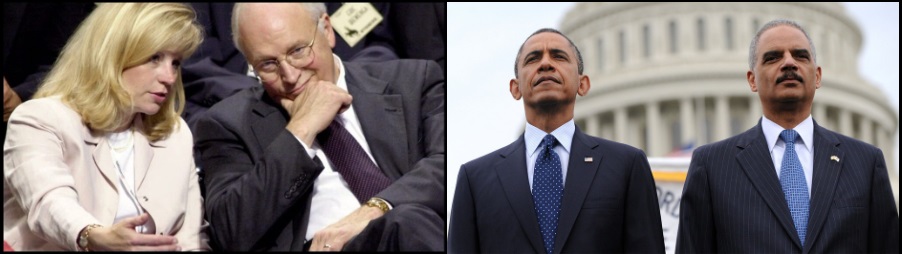
In the era shortly after 9/11 the DC national security apparatus, instructed by Vice President Dick Cheney, was constructed to preserve continuity of government and simultaneously view all Americans as potential threats. The Department of Homeland Security (DHS) and the Office of the Director of National Intelligence (ODNI) were created specifically for this purpose.
After 9/11/01 the electronic surveillance system that was originally created to monitor threats from abroad was retooled to monitor threats inside our country. That is when all of our electronic ‘metadata’ came under federal surveillance.
That inflection point, and the process that followed, was exactly what Edward Snowden tried to point out.
What Barack Obama and Eric Holder did with that new construct was refine the internal targeting mechanisms so that only their political opposition became the target of this new national security system.
The problems we face now as a country are directly an outcome of two very distinct points that were merged by Barack Obama. (1) The post 9/11 monitoring of electronic communication of American citizens; and (2) Obama’s team creating a fine-tuning knob that it focused on the politics of the targets. This is very important to understand as you dig deeper into this research outline.

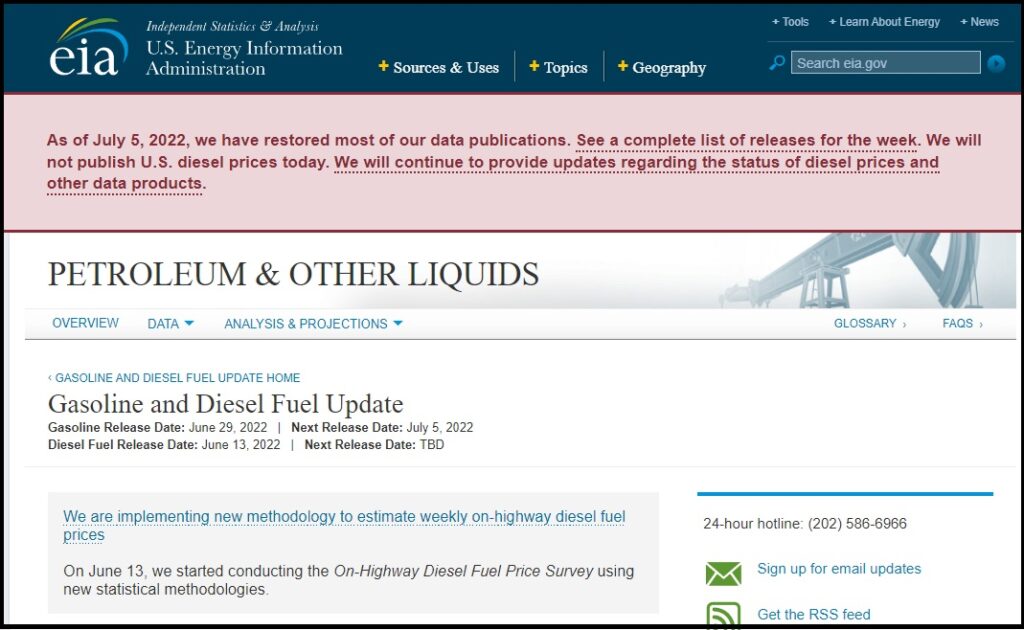
 In a very weird economic scenario, the Biden administration actually benefits from a port stoppage as imports are a deduction to GDP and the U.S. economy is presumably on the “zero” growth bubble. If the Bureau of Economic Analysis (BEA) calculates a negative GDP in the second quarter (not likely for political reasons), the Biden administration would officially be responsible for a recession. [Any delay in import quantification helps shape the economic statistics; however, Q2 ended yesterday.]
 The demand side argument/justification for inflation was always false. However, it was/is still the claim made by members of the Biden administration and almost every board member of the federal reserve.