While President Trump visits his golf courses in Scotland, he will also be conducting business on behalf of the USA by meeting with trade partners from both Great Britain and Europe.
This morning USA time, President Trump is scheduled to meet with EU Commission President Ursula von der Leyen, at approximately 11:30am ET. Livestream Links Below:
The Japanese essentially did not want to face a 25% tariff on automobiles exported to the USA. At the same time, they did not want to permit full USA access to several sectors of their market. The solution is quite remarkable.
Japan agrees to be the bank, to essentially finance any national security priority of President Trump to the tune of $55o billion. In return, Japan gets a 15% tariff on automobiles, and 10% return on the profit of the ¹business they finance in the U.S. Japan is essentially purchasing a lower tariff rate.
PRESIDENT TRUMP – “We just completed a massive Deal with Japan, perhaps the largest Deal ever made. Japan will invest, at my direction, $550 Billion Dollars into the United States, which will receive 90% of the Profits. This Deal will create Hundreds of Thousands of Jobs — There has never been anything like it. Perhaps most importantly, Japan will open their Country to Trade including Cars and Trucks, Rice and certain other Agricultural Products, and other things. Japan will pay Reciprocal Tariffs to the United States of 15%. This is a very exciting time for the United States of America, and especially for the fact that we will continue to always have a great relationship with the Country of Japan. Thank you for your attention to this matter!”
Commerce Secretary Howard Lutnick explains:
EXAMPLE: President Trump wants generic drug manufacturing in the USA. U.S. company ‘Main Street Drugs’ agrees to build a $100 billion manufacturing plant. Japan finances the building and company creation. Main Street Drugs owns and operates the business, keeps 90% of the profits, Japan gets 10%.
Trump (USA) has $450 billion in financing left to spend on the next priority, perhaps a railroad connection or transit system.
I’ll repeat it as much as needed, until it sinks in.
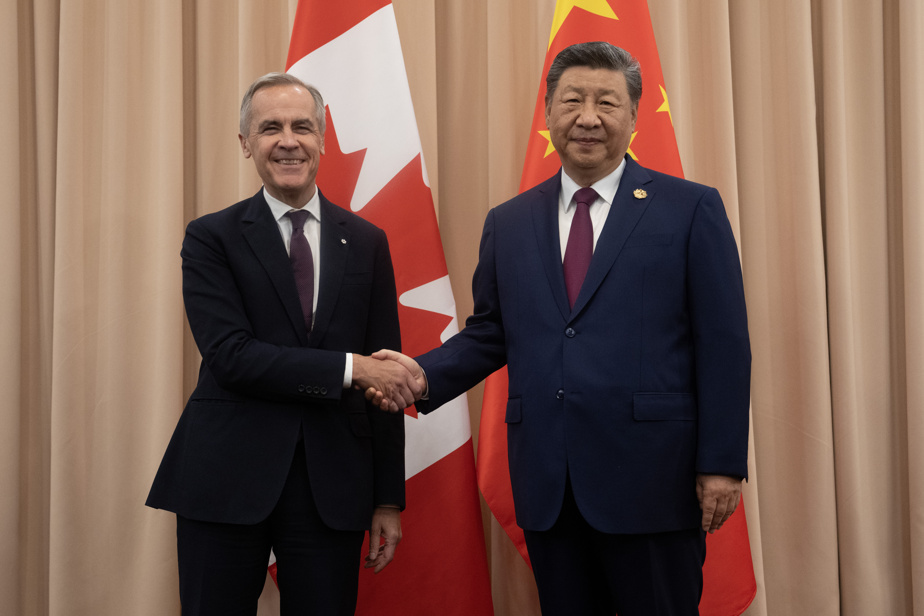
The U.S-Canada trade deal status is simply a no-brainer. President Trump will answer questions about Canada and tariffs, he’ll put people into seats to discuss trade with the Canadian delegation, and he’ll give every outward appearance of being favorable to Prime Minister Mark Carney…. BUT…
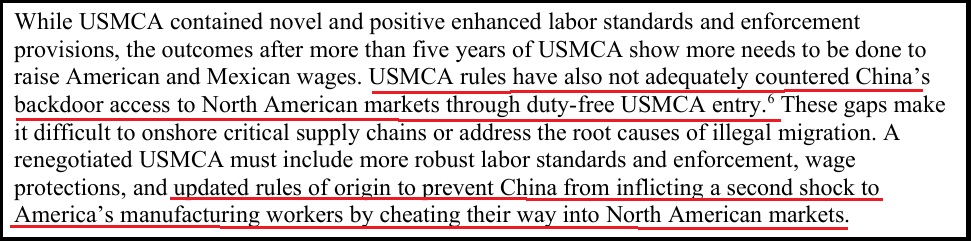
In the background, Trump is simply waiting for the USMCA timeline to trigger a renegotiation. President Donald Trump is ambivalent to the trade partnership with Canada. This moot-status reality is why there’s no substantive engagement.
‘No deal’ -until USMCA redo- is a win for President Trump.
For some bizarre reason that I simply cannot fathom, almost every Canadian politician seems entirely oblivious to this reality. Instead, Canadian Trade Minister Dominic LeBlanc and Mark Carney’s chief-of-staff, Marc-André Blanchard are once again coming to DC to ride their bicycles in slow circles at the bottom of the White House driveway while staring in the windows.
An article in Politico notes the Canadian premiers are now accepting the August 1st deadline will pass without any agreement, and the 35% reciprocal tariffs on non-USMCA products (meaning a lot of stuff) is going to trigger.
Literally, everything from Canada that has a non-USMCA component is going to be tariffed. Think about all the stuff from China, Asia (writ large) and Europe that Canada assembles for finished goods. All of that stuff will be subject to the tariffs.
In 2018, Canadian Prime Minister Justin Trudeau relied heavily on House Speaker Nancy Pelosi for assistance when the U.S. and Mexico constructed the majority of the USMCA trade pact. Today, Canadian Prime Minister Mark Carney takes the same approach.
PRESS RELEASE – “Today, the Prime Minister, Mark Carney, met with a bipartisan delegation of United States senators in Ottawa. The Senator for Oregon, Ron Wyden, the Senator for Alaska, Lisa Murkowski, the Senator for New Hampshire, Maggie Hassan, and the Senator for Nevada, Catherine Cortez Masto, were present.” (more)
The 35% tariffs against Canada are scheduled to go into effect on August 1st.
Well, what do you know? An interesting article about Canada suddenly proposing to put limits on the amount of Chinese steel and aluminum they import. Although missing in the article is a reference to what this means about the prior process that did not have such limits.
Essentially, if you drop the pretending within the Wall Street Journal/MSM narrative, the decision by Mark Carney to limit Chinese Steel is a direct admission of their knowledge to a preexisting level of imports that violated the USMCA and all previous demands to block imports of Chinese steel.
Trump always said Canada was a transnational shipper and entry into the USA. Trudeau and Carney previously denied this was the reality. Well, if that wasn’t the reality, then why the need to change? I digress.
OTTAWA—Canada introduced limits on how much foreign steel produced in countries other than the U.S. and Mexico can be imported, as the Liberal government tries to help a domestic sector reeling from President Trump’s 50% tariffs on Canadian steel.
Prime Minister Mark Carney said Wednesday that the series of import limits and the tariffs targeting steel products with Chinese links are required because the Canadian economy has been too reliant on foreign steel to meet the needs of the construction and manufacturing sectors. He cited data indicating that two-thirds of total steel consumption in Canada comes from abroad, compared with one-third for the U.S. and one-sixth in Europe.
President Trump announced on Truth Social a baseline tariff rate of 30% for both the European Union and Mexico. Other sector specific tariffs still apply.
The EU rate is interesting in that the 30% rate is lower than the Canadian rate of 35%, yet the EU rate exceeds the current ‘chicken tax’ rate historically applied to imported SUVs and Trucks. Strategically, the 30% tariff rate on Europe is a major incentive for various EU sectors to shift manufacturing into the USA.
Without a formal declaration of the end of the Marshall Plan, the reciprocity rate of 30% for all EU imports also equalizes the transatlantic trade benefit. It will be interesting to see how the EU responds, given any retaliation could be added to the existing baseline.
Canada is currently trying to organize a trade agreement with the EU, in the hopes of positioning themselves toward the transatlantic group as they were toward the transpacific group (vis-a-vis China).
President Donald Trump has announced a 35% baseline tariff rate for Canada on all imported goods not currently covered under the soon-to-expire USMCA trade agreement.
“Instead of working with the United States, Canada retaliated with its own Tariffs,” President Trump shared on Truth Social. “Starting August 1, 2025, we will charge Canada a Tariff of 35% on Canadian products sent into the United States, separate from all Sectoral Tariffs.”
As noted by President Trump in his remarks during Prime Minister Mark Carney’s visit to the White House, Trump plans to renegotiate the USMCA and end the trilateral agreement in favor of two bilateral trade deals.
During the oval office meeting President Trump said, “as you know [USMCA] terminates fairly shortly. It gets renegotiated fairly shortly.” Then the biggest statement, “this was a transitional deal, and we’ll see what happens, we’re going to start renegotiating that”… “I don’t know if it serves a purpose anymore.” …. “And the biggest purpose it served was, we got rid of NAFTA.”
President Trump is going to exit the trilateral USMCA in favor of two distinctly different bilateral trade agreements between the U.S and Mexico; and the U.S and Canada. The only consideration now is the timing. President Trump is 100% focused on the BIG ECONOMIC PICTURE; it’s not about the politics, it’s all about the economics.
It’s the reverse rustbelt issue. In order to retain their market share, Japanese automakers are slashing the prices of their export vehicles to the USA. However, simultaneous with the anticipated drop in profits, the Japanese economists are worrying what impact this will have on autoworker wages.
Not accidentally this is exactly the problem U.S. workers suffered through during the era of offshoring our manufacturing. Apparently, Japan is heading into the dynamic the U.S. rustbelt previously suffered. Imagine that.
The Straits Times – TOKYO – Japan’s automakers slashed the price of products exported to the United States at record pace, in a sign that companies are sacrificing profits to remain competitive as President Donald Trump’s tariffs hit cars.
In June, the export price index for vehicles shipped to North America plunged 19.4 per cent from a year earlier on a contract currency basis, the biggest drop in records going back to 2016, according to the Bank of Japan’s (BOJ) corporate goods price report on July 10.
The data adds to signs that Japanese automakers are trying to avoid a major price increase to remain competitive in the US, even after Mr Trump began to impose 25 per cent auto tariffs in early April. The flip side of the move is it raises concerns over companies’ profitability and whether they can continue to keep raising wages – a key component of the Bank of Japan’s sustainable inflation goal.
President Donald Trump has begun posting the country specific tariff rate announcements on his Truth Social account.
Beginning with Japan and South Korea, President Trump is sending letters to each nation not currently in direct negotiations with the USA. Japan example below:
Both Japan and South Korea are assigned 25% baseline tariff rates “separate from all Sectoral Tariffs.” Additionally, if the nation participates in transnational shipping, the rate attempting to be avoided will be applied to the country violating the trade position.
Example: South Korea (25%) acts as a passthrough for a country with a higher tariff rate like Vietnam, 40%. If South Korea is caught engaging in transnational shipping then the applied tariff rate on the South Korean goods is 40%.
Appearing on CNBC to explain the big picture economics, Treasury Secretary Scott Bessent outlines how debt and deficit hawks are seemingly blind to the need for GDP growth to deal with federal spending.
From the outset of President Trump’s MAGAnomic policies in his T-1 and T-2 platform, growing the U.S. economy, expanding the size of the GDP is a key facet to dealing with debt and deficits. President Trump has always promoted economic policy that expands the size of the pie rather than focus on making smaller portions of each spending slice.
Secretary Bessent also explains the current status of the tariffs as delivered by the Trump administration. The next few days are exceptionally busy with incoming requests to renegotiate trade terms, and avoid countervailing duties. WATCH:
.
Big picture: Trump, Lutnick and Greer are now transmitting 1. Baseline tariffs (10-20%), 2. Reciprocity tariffs (trade imbalance) and 3. Section 232 tariffs (ex. Steel and Aluminum). Countries are notified and their tariff rate begins on August 1st.