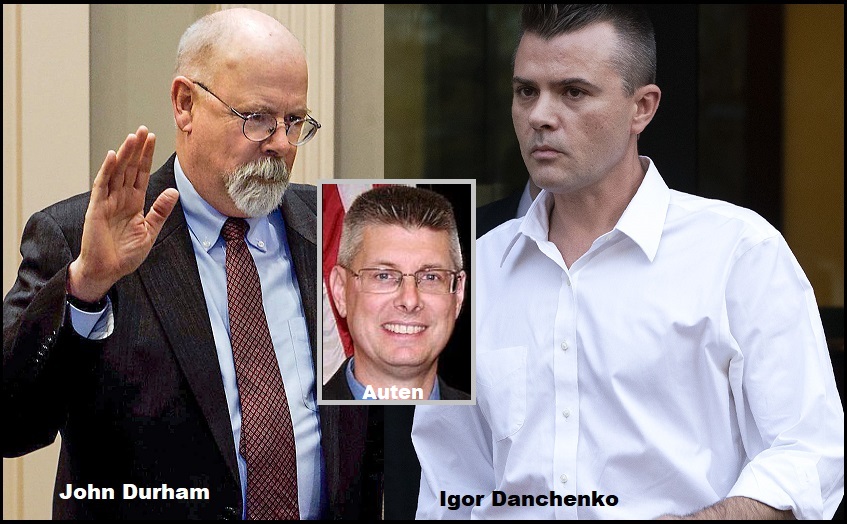
This might be the most important outline to understand this whole sordid mess…
During the Friday testimony of witnesses put on the stand by Special Counsel John Durham, there were two key witnesses, FBI Analyst Brittany Hertzog and FBI Special Agent Amy Anderson. Both witnesses testified they were part of the Mueller investigative team with a primary mission to investigate the claims in/around the Christopher Steele dossier. [See Technofog Substack for transcript excerpts HERE]
The testimony of FBI agent Anderson and FBI analyst Hertzog (about their role in the Mueller probe) leads to one inescapable conclusion, Robert Mueller lied to congress when he testified the special counsel did not investigate Chris Steele, the Steele Dossier, Fusion GPS and/or Glenn Simpson. Mueller claimed it was “outside my purview.”
While Anderson and Hertzog are tied to the case against Igor Danchenko, it appears the primary purpose of their being called as witnesses in the trial is not about Danchenko. It appears John Durham presented them for testimony to ‘gently‘ and ‘diplomatically‘ expose the corrupt intent of the two-year Robert Mueller investigation. However, before getting all excited about Durham exposing Mueller be aware: There’s an outrage trap in here!
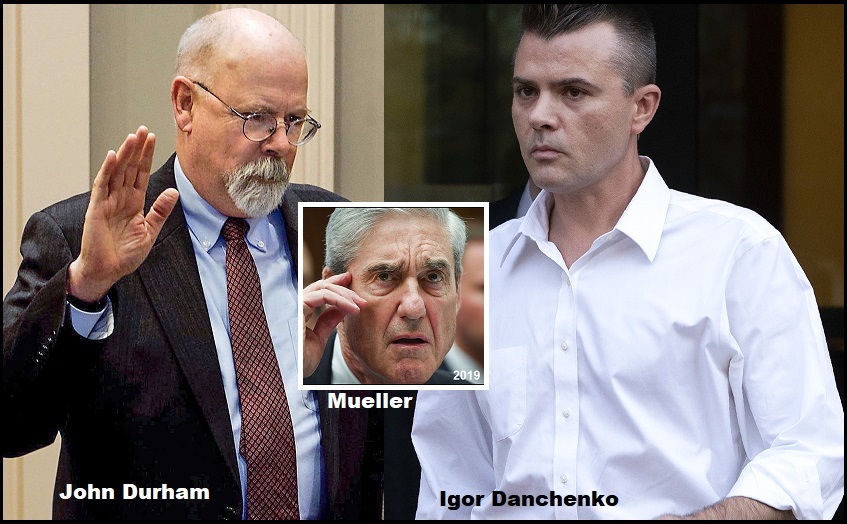
To fully comprehend the dynamic, we first need a background context, then a review of the witness statements, then an understanding of the outrage trap.
(1) Background Context:
AFTER originally interviewing Danchenko in January and February 2017, in March the DOJ/FBI then reinterviewed him before refiling the second FISA renewal in April. With Danchenko on their payroll they FBI did not need to worry about him undermining the Trump-Russia narrative or speaking the truth about the dossier. This approach protected the fraudulently obtained title-1 surveillance warrant. The surveillance warrant was renewed in April.
AFTER Robert Mueller is appointed special counsel in May 2017, with Danchenko on the FBI payroll and under control. When Danchenko is interviewed on June 15, 2017, he is being interviewed as part of the Mueller operation. Special Counsel Robert Mueller and Andrew Weissmann now submit the FISA application for another renewal on June 29, 2017. The fraudulently obtained title-1 surveillance warrant was again renewed.
(more…)
Posted in Big Government,
Big Stupid Government,
Conspiracy ?,
Decepticons,
Deep State,
Dept Of Justice,
Donald Trump,
Donald Trump Transition,
Election 2022,
Fabian Socialists - Modern Progressives,
FBI,
Joe Biden,
Lawfare,
media bias,
Notorious Liars,
Professional Idiots,
propaganda,
Russia,
Spygate,
Spying,
THE BIG UGLY,
Uncategorized,
White House Coverup

 At the conclusion of the summit, he confirmed the intent of Saudi Arabia to join the BRICS economic coalition, which should not come as a surprise given the