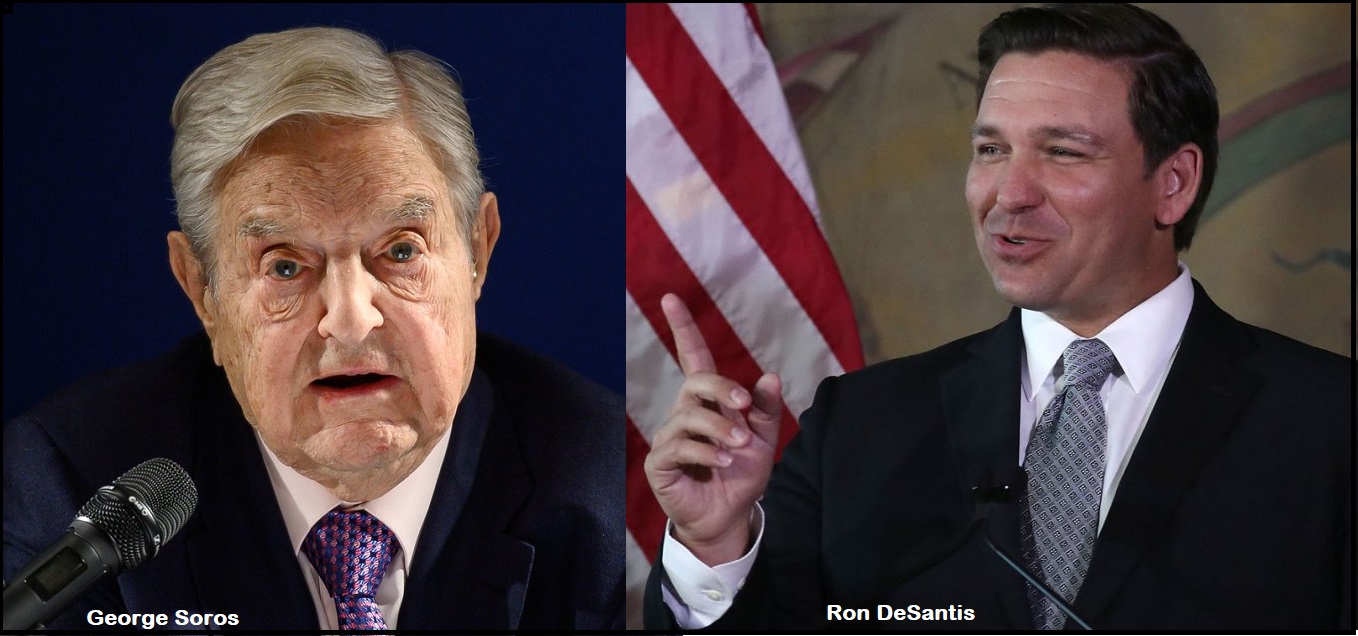
Keeping up the coy and deliberately managed strategy of not running for 2024 while running for 2024, Florida Governor Ron DeSantis will embark on a multi-state promotional effort to showcase his pro law enforcement outlook.
 DeSantis starts Monday in Staten Island, New York, and the managers are counting on being able to do the ’24 run for office without angering the base Republican voters who see duplicity and deception in the construct.
As George Soros said of DeSantis personality, he’s “shrewd, ruthless, and ambitious,” the perfect blend of characteristics to operate as a pliable vessel operating on behalf of his Machiavellian management team.
NEW YORK – Florida Gov. Ron DeSantis will visit New York City Monday for a pro-law enforcement rally at a catering hall in Staten Island – a holiday incursion into one of former President Trump’s most loyal strongholds.
The 7:30 a.m. President’s Day speech at Privé will be the governor’s first stop on a multi-city tour to showcase his pro-cop bona fides as he gears up for an expected 2024 White House campaign, insiders said.
“On Staten Island, we are proud to support our law enforcement,” said Assemblyman Mike Tannousis, the Staten Island GOP chairman. “I’m happy that our law enforcement community will get some recognition and support.”
The city’s reddest borough is packed with Trump backers, who gave him 57% of the island’s vote in 2020 – making Monday’s foray a crucial test of DeSantis’s chances among the former president’s remaining devotees. (read more)