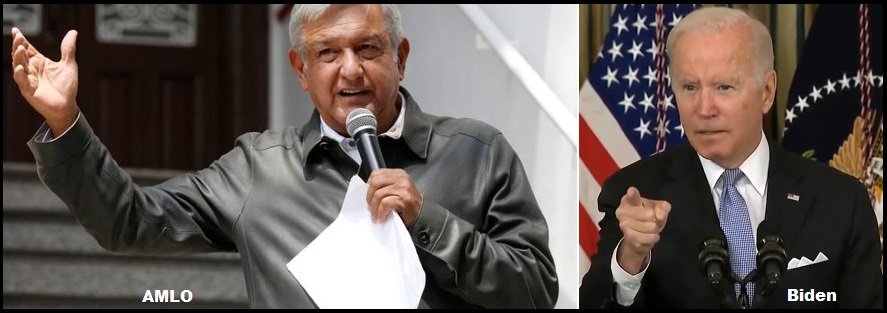
Interesting timing here as the North American Summit is scheduled to take place in Mexico City, Mexico, on January 10th. Joe Biden, Justin Trudeau and Mexican President Andres Manuel Lopez-Obrador (AMLO) are scheduled to have several meetings to discuss trade, economic and energy policies.
President Trump releases a video {Direct Rumble Link} and outline for a proposal to eliminate drug Cartels.
Mar-a-Lago, FL – As Joe Biden prepares to make his first-ever trip to the southern border that he deliberately erased, President Trump announced that when he is president again, it will be the official policy of the United States to take down the drug cartels just as we took down ISIS.
The Republican battle for Speaker of the House of Representatives continues with multiple factions competing for influence. The sausage making inside the GOPe conference is doing what that sausage makers in the GOPe conference always do. There’s a lot of opposition to Kevin McCarthy and the vast majority of it is well deserved.
Yes, the swamp is doing swampy things, and yes, it’s a hot mess. But that’s also what happens in a two-party congress within a constitutional republic where members from very different states end up arguing for position based on an ideology that varies wildly. Notice that if you get rid of the two-party system, all of this stuff seemingly evaporates. Funny how the people who construct the two-party system don’t want us to notice that.
In this video, Marjorie Taylor Greene, a representative who supports the MAGA agenda and Kevin McCarthy for speaker, calls out some of the well-known voices in the GOPe apparatus who are doing swampy things. WATCH:
.
I would suggest not getting emotionally invested in any of this internecine arguing. If you have let your congressional representative know your expectation, the only thing we can do is watch it play out.
It’s almost painful to go to the grocery store today, not just because the prices for everything are so high, but also because seeing the stress amid the working-class shopping is palpable. Unfortunately, while we may have a momentary plateau on current pricing, there’s a strong possibility another wave of higher prices is yet to come.
At the core of the issue are energy prices which continue to rise. The immediate cycle of energy price hikes, a direct consequence of political policy, has lessened somewhat and we are now in that slow tick upward as the pressure on oil, gas, heating and electricity prices continues.
Michael Burry, famous for his predictions in/around the U.S. housing market, is noticing the same thing as CTH. “Inflation peaked. But it is not the last peak of this cycle,”he said. “We are likely to see CPI lower, possibly negative in 2H 2023, and the US in recession by any definition. Fed will cut and government will stimulate. And we will have another inflation spike. It’s not hard.”
Peak demand side inflation is long in the rearview mirror, but the peak of supply side inflation is questionable at best – I would say it’s a plateau, not a peak.
The price of goods, including industrialized and processed raw materials from China are going to increase again – and simultaneously become less consistent in availability. This is going to make prices extremely volatile in 2023.
Essentially, everything around price is tenuous as the western economies absorb the full impact of this Build Back Better energy policy, and into this foray comes China with production and processing challenges as a result of COVID bubbles being removed. We are seeing this problem right now in the pharmaceutical industry and with ordinary medicines becoming scarcer on store shelves.
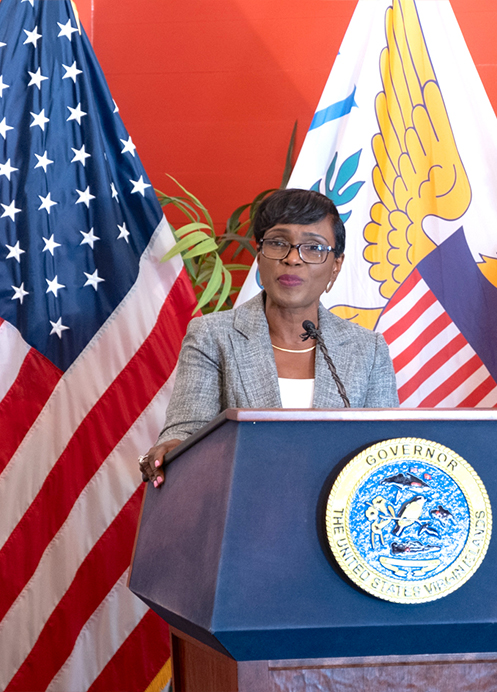
After successfully settling a $105 million lawsuit against the estate of Jeffrey Epstein in early December, U.S. Virgin Islands Attorney General Denise N. George then filed a lawsuit against JPMorgan Chase saying the “bank knowingly provided and pulled the levers through which recruiters and victims were paid.”
(US Virgin Islands) – Attorney General Denise George was terminated on Saturday after serving four years with the Bryan administration, the Consortium can confirm.
The decision by Governor Albert Bryan to fire the A.G. came just days after Bloomberg News revealed that Ms. George in her capacity as V.I. attorney general had filed a lawsuit against JPMorgan Chase — the largest bank in the United States and the world’s largest bank by market capitalization — without first informing Governor Bryan of such a major action, said a person with knowledge of the matter.
The lawsuit claims JPMorgan Chase facilitated convicted felon Jeffrey Epstein’s abuse of women and girls, alleging that the bank should have known about Epstein’s illegal activity and as part of its anti-money laundering procedures, should have reported their client to authorities.
George accused the bank of turning a blind eye to the sex trafficking operations that went on on Epstein’s private island in the USVI, Little St. James. (read more)
AG George is fired from her position as USVI AG after filing a lawsuit against JPMorgan. Where did Joe Biden go on vacation? The U.S. Virgin Islands.
Abraham Lincoln once said, “No man has a good enough memory to make him a successful liar.” Lincoln somewhat underestimated the Mike Morell types of the world, who have become liars as a profession. {Direct Rumble Link}
Mike Morell was the former acting CIA director in the aftermath of Benghazi when General David Petraeus was removed from the position. Morell is a Clinton crony who not only constructed the infamously fabricated talking points used by Susan Rice to blame the Benghazi attack on a YouTube video, Morell was also the guy moved into position to protect Clinton in the aftermath of the terrorist attack, and then years later in July 2016 the same Mike Morell penned the first Trump-Russia thesis in the New York Times.
After successfully doing his job to protect Clinton in the aftermath of Benghazi, Mike Morell was hired by CBS President David Rhodes. Obama’s Deputy National Security Advisor Ben Rhodes is David’s brother. Mike Morell now continues to work for CBS and today he declared a likelihood that a “U.S. or western interest” is likely to be attacked by an al-Qaeda affiliate in 2023.
This is an interesting interview in that International Monetary Fund Globalist Director Kristalina Georgieva seems to be laying the landscape for some truthful economic news to surface on the geopolitical level; albeit keeping up the globalist pretenses around western collective energy policy.
One of the more important points Mrs. Georgieva hits on is the reopening of China, from district level COVID bubbles as a containment feature, and the likely impact it will have on global supply chains. Mrs. Georgieva is correct on this issue.
China continued operating their industrial manufacturing base (despite COVID) because they built strict covid isolation bubbles around their industrial sectors geographically. However, with China lifting those isolation bubbles, there is a great potential for the manufacturing sectors to be hit hard by short to medium term virus outbreaks. This could/will have the potential ripple effect of global supply disruptions.
In an ironic twist, ‘deglobalization’ is now a 2023 catchphrase as various nations realize having their supply chains both dependent and interconnected is not good when there are interruptions. A new discussion centering around being dependent on China is the specific issue now being raised. However, the globalists are isolating their viewpoints only to raw material resourcing and development. WATCH:
[Transcript] -MARGARET BRENNAN: I want you to take us around the world and kind of us give us that global view. Let’s start in China. China has been this hub of cheap manufacturing for the world, we are all so dependent on it but right now it looks like COVID cases are exploding as they start pulling back those zero COVID restrictions. What will that mean for the global economy Longterm and short-term?
GEORGIEVA: In the short term, bad news. China has slowed down dramatically in 2022 because of this tight zero COVID policy. For the first time in 40 years China’s growth in 2022 is likely to be at or below global growth. That has never happened before. And looking into next year for three, four, five, six months the relaxation of COVID restrictions will mean bush fire COVID cases throughout China. I was in China last week, in a bubble in the city where there is zero COVID. But that is not going to last once the Chinese people start traveling.
The New Year brings a look of forward-looking economic perspectives from major financial institutions. Unfortunately, if the perspective of Bank of America Chief Economist Michael Gapen is reflective of the larger institutional analysis, the financial pretending is anticipated to continue.
[Side Note: Notice how they will all start talking about ‘deglobalization’ in 2023. There’s a reason for that that I will touch on in the IMF interview to follow]
Appearing on Face the Nation Gapen accurately indicates the U.S. housing market is already in a steep economic recession, housing prices falling rapidly with a considerable amount of distance to go (-30% range), and the overall housing market will likely be in this situation for around two years. On a macro level the Bank of America indicators line up with the general housing trajectory. From a lending standpoint, Gapen would have specific insight.
Beyond the housing sector, Mr. Gapen starts to get sketchy. He anticipates inflation taking 24 to 36 months to lower to the norm 2% range. That is generally in line with CTH expectations; however, nowhere in the analysis does Gapen even mention energy costs and the overall impact to the economy from energy policy. You will note this absence will be present in almost all financial punditries. Mentioning “energy policy’ as a cause of economic pain is a third rail amid his peer group; it is simply not permitted.
Astute readers will note the great financial and economic pretending that surrounds the Build Back Better and Green New Deal climate change agenda will not be discussed by anyone, ever. The massive price impacts, the supply side inflation pressures, are baked into the western global economic outlooks. It is strictly verboten to talk about climate change policy being stopped, modified, reversed or even, well, gasp, removed. WATCH:
[TRANSCRIPT] – […] BANK OF AMERICA CHIEF ECONOMIST MICHAEL GAPEN: Happy New Year as well. Thank you for having me on.
MARGARET BRENNAN: You know, a majority of voters polled by The Wall Street Journal say that the economy is going to look and feel worse in 2023. What is your forecast?
GAPEN: So I think that’s probably true. I think we’re in a situation where the risk of recession is high, may not be a deep and prolonged one. But we’re in a situation where the economy has recovered very rapidly from- from COVID, and it’s come with a lot of inflation. And the Federal Reserve is trying to slow down the economy, to bring inflation down. And in the past, more often than not, that’s coincided with some sort of recession in the US economy and the U.S. labor market. It’s not baked in. It’s not for certain. We may be able to avoid it, but I would agree that the outlook by most people who sit in the position that I do think 2023 could be a difficult year for the U.S..
MARGARET BRENNAN: So we may be able to avoid recession?
Underreported and essentially invisible within the mainstream news cycles, a critical shortage of ordinary U.S. medicine has been growing and becoming an emergency situation for many families. If rationing kicks in fully, be careful about what you post on social media. Determining allowances based on political ideology is a real concern.
In a general sense the issue is mostly an outcome of the U.S. outsourcing drug ingredient procurement and manufacture to China and India. Many companies in both of those countries have been struggling with operational interruptions as a result of COVID-19. As supplies in the U.S. rapidly dwindle, local news media outlets are now starting to pick up on the issue. WATCH:
(Via Fox Business) – The nationwide shortage of basic antibiotics and critical medications that treat chronic conditions and bacterial infections has become the latest issue to hit the medical world. Consequently, it is forcing many doctors to rely on alternative medicines to treat patients.
According to recent media reports the $1.7 trillion omnibus budget and legislative bill was sent to the White House late Wednesday night. However, Joe Biden and his familial entourage had already departed DC for their holiday vacation in the U.S. Virgin Islands.
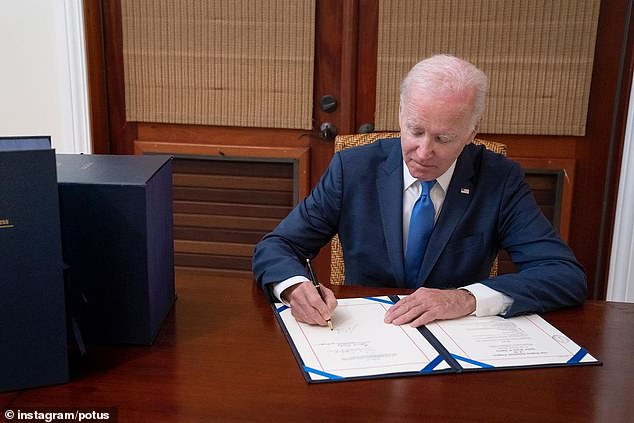
However, the continuing resolution/omnibus spending bill needed to be signed by December 30th in order to fund government without technical interruption, so the White House sent the bill all the way to St. Croix for signature via Spirit Airlines.
(Via Daily Mail) – The White House flew the federal budget to St Croix for President Joe Biden to sign into law ahead of the December 30 deadline, so the government didn’t shut down over New Year’s Eve.
The 4,000-page, $1.7 trillion omnibus package to fund the government through September 2023 arrived at the White House on Wednesday evening, after it completed the legislative enrollment process. On Thursday, it was flown to St Croix, where Biden is spending the holiday week in a luxury villa owned by a billionaire Democratic donor.
The bill arrived in the US Virgin Islands via Spirit Airlines on Thursday evening around 5:30 pm Eastern time. A little over an hour later, Biden’s POTUS Instagram account posted a picture of the president signing the bill.
The caption of the Instagram post read: ‘Today, I signed the bipartisan omnibus bill, ending a year of historic progress. It’ll invest in medical research, safety, veteran health care, disaster recovery, VAWA funding – and gets crucial assistance to Ukraine. Looking forward to more in 2023.’
As we’ve been saying for seven months, keep watching how the globalists respond to Mexico. AMLO doesn’t want to join the economic suicide pact known as Build Back Better, or the North American version “Green New Deal.” This puts him in a precarious place.
This sentence from a recent financial analysis article in Reuters is telling, “concerns about a U.S. recession and a trade spat Mexico is embroiled in with the United States and Canada over Lopez Obrador’s energy policy, which critics call nationalist, muddy the outlook for the peso.” A “nationalist energy policy”?
What exactly is a “nationalist energy policy,” and why would international financial people be having fits about it?
In the past year the Mexican peso has outperformed the U.S. dollar, in part because Mexico is not following the economic roadmap, a World Economic Forum inspired united inflationary malaise as an outcome of unified energy policy. [Side Note: The Brazilian currency was also outperforming the western bloc and dollar; but that situation has been rectified now, Bolsonaro removed, and the central bank will start contracting the economy.]
The global financial control mechanisms now start to look at the Mexican non-compliance:
(Reuters) – Mexico’s peso, which is ending 2022 with one of its strongest performances in a decade, could have its gains wiped out in 2023 after an expected end to the Bank of Mexico’s rate hikes cycle and a possible recession in top trade partner the United States.

 However, the continuing resolution/omnibus spending bill needed to be signed by December 30th in order to fund government without technical interruption, so the White House sent the bill all the way to St. Croix for signature via Spirit Airlines.