This is a topic we have covered extensively, and it is great to see Tucker Carlson questioning the sudden alignment of various elements that are creating a very real food insecurity problem.
The #1 factor in the shortage of food production is the newly emboldened ‘western energy policy‘ and the impact energy has on everything from field (fertilizer) to fork (distribution). Other factors include government policy that blocks food development (Dutch, Irish and Sri Lanka Farmers), a sudden uptick in food facilities having major fires and damage, and a series of issues with the feed that goes into the production of proteins.
This is all happening as the advancement of insects as a more “sustainable” protein replacement is being advanced by the same western governments. However, if you happen to notice that all of the issues travel in the same direction, you are a conspiracy theorist, or something. WATCH:
We have been watching the predictable outcomes surrounding the western government shift to change energy policy for almost two years. Approximately a year ago we first said, “the absence of food will change things.”
Several people have sent this video interview requesting opinion. The video reflects an interview between two Australians. The interviewer is a podcaster the person being interviewed explains his background on the ground in Ukraine as “officially” an “aid worker,” however, what he describes is more like a mercenary.
The interview is rather lengthy and starts at 02:13 with a question about what is happening in Bakhmut in the Eastern Ukraine fighting battlefield. The unknown Australian merc in the interview describes the Russians overwhelming the Ukraine forces in most battles. The Ukrainian military units have made several strategic mistakes that have played into the hands of the more capable Russian forces.
The main Russian element being described is the Wagner group who are well known to be brutal and strategic special force fighters. The interview is from a pro-Ukraine, pro-western alliance perspective. However, in the bigger picture the Ukraine military units are being ground down by attrition, despite the massive amount of aid being delivered by NATO allies. The description is a rather brutal assessment of the devastation created by horrific modern warfare. WATCH:
.
Summary: Ukraine not winning. Wagner PMC/Russian tactics and technology vs. Ukraine. Chinese tech advisors helping Russians. Non-existant Medi-vac. Western Military Aid Stolen 60% off the top 40% sold on black market. Russian Artillery Domination. Ukrainian Officers Incompetence. Ukrainian Soldiers Lack Basic Equipment.
U.K. pundit Neil Oliver used his weekend monologue to outline the great pretending being deliberately pushed by the groups of western leaders who attend meetings at the World Economic Forum.
The pretending outlined in the context used by Oliver is the classic ‘bait and switch.’ The people are baited into believing the purpose of policy or advocacy is one thing, but the true goal is something completely different. What Oliver encapsulates as the ‘bait and switch’ is the underline for the modern ‘pretending’, where government officials pretend the end goal is something completely different than it is.
Oliver walks through examples of the ‘bait and switch’ as it is currently being deployed, and using those examples he culminates the discussion with the reality hidden behind the digital identity. Once everyone can be assigned a digital id, then government can transfer income to a digital currency; then that same government can start introducing the restrictions on what may be purchased in order to ‘save the planet’, which is to say the real goal of total control surfaces. WATCH:
Col. Doug MacGregor appears with Judge Andrew Napolitano to explain the complexity of the tanks Biden has pledged to Ukraine. Additionally, MacGregor gives a different perspective than western media about the status of the war in Ukraine, the position and motive of the Russians and the overall status of the EU and NATO coalition.
MacGregor emphasizes that what the western public are told about the war is not consistent with the reality what is taking place on the ground in Ukraine. The term ‘hybrid warfare,’ which includes the U.S. State Dept. pushing a very specific propaganda message to the media, eventually runs into the reality of actual war fighting on the ground that is far more conventional.
The U.S. led NATO alliance may be winning the narrative, as outlined by media; however, the Russians are winning the actual fighting on the ground in Ukraine. In addition to noting the Russian cultural aspects of the conflict, Col MacGregor gives some somber analysis about how dangerous this is becoming as the U.S. political voices are not willing to concede or admit anything that runs counter to their promoted narrative. WATCH (prompted):
The Biden administration is pushing the United States into war against Russia to protect Washington DC’s political and financial interests in Ukraine. None of this is a surprise as both Republican and Democrat politicians in DC continue to use Ukraine as a money laundering operation for key U.S. stakeholders.
Today Joe Biden announced he is sending 31 ‘Abram Tanks’ from the U.S. arsenal into Ukraine to further push the United States into direct conflict with Russia. The potential for direct U.S. military engagement in Ukraine is now just a matter of formality, as the Abram’s tanks will be accompanied by military advisors, trainers, and the processes to sustain and maintain them on the battlefield. WATCH:
[Transcript] – […] “today, I’m announcing that the United States will be sending 31 Abram tanks to Ukraine, the equivalent of one Ukrainian battalion.
Secretary Austin has recommended this step because it will enhance the Ukraine’s capacity to defend its territory and achieve its strategic objectives.
While Volodymyr Zelenskyy was on tour banging his tin cup for NATO donations, apparently his top government officials were skimming the books and building an extravagant life on the backs of the U.S. taxpayers. Slava Ukraini! However, on a brutally obvious note, I mean the wife of Zelenskyy went Christmas shopping in Paris and spent over €40,000 in a few hours on ritzy Avenue Montaigne. Where did people think she got that money?
In an effort to stop the embarrassing revelations of internal corruption from weakening support for the inbound flows of cash from corrupt U.S. officials, the government of Zelenskyy has begun getting rid of the officials who were stealing the war money.
But hey, don’t worry, remember, President Zelenskyy decreed rules making it illegal for any political opposition to exist; so, there’s nothing to worry about – just a seating rotation of the same corrupt group.
KYIV, Ukraine (AP) — Several senior Ukrainian officials, including five front-line governors, lost their jobs Tuesday in a corruption scandal plaguing President Volodymyr Zelenskyy’s government as it grapples with the nearly 11-month-old Russian invasion.
Ukraine’s biggest government shake-up since the war began came as Poland formally requested permission from Germany to transfer a modest number of its Leopard 2 battle tanks to Ukraine. Germany builds the high-tech armor, and Warsaw needs Berlin’s permission to send them to a non-NATO country.
The European Union is hopping mad that Joe Biden was able to pass the “Green New Deal” (aka Inflation Reduction Act) and generate hundreds of billions in government subsidies for climate friendly initiatives. Essentially, this is an economic war over who can do socialism better.
Fearing the EU may lose their green position, the European Union is now promising to fight back by spending even more, bigger, sums of taxpayer funds to subsidize their green ‘climate change’ energy economy.
If Biden plans to transfer hundreds of billions to corporations as structural enhancements for permanent energy changes, the EU will meet or beat that subsidy scheme. So sayeth, EU Commission President Ursula von der Leyen.
(Via Reuters) – The European Union responded on Tuesday to U.S. moves to boost its energy transition with its own plans to make life easier for green industry, saying it would mobilize state aid and a sovereignty fund to keep firms from moving to the United States.
European Commission head Ursula von der Leyen told the World Economic Forum (WEF) annual meeting in Davos that the moves would be part of the EU’s Green Deal industrial plan to make Europe a centre for clean technology and innovation.
This is an interesting interview in that International Monetary Fund Globalist Director Kristalina Georgieva seems to be laying the landscape for some truthful economic news to surface on the geopolitical level; albeit keeping up the globalist pretenses around western collective energy policy.
One of the more important points Mrs. Georgieva hits on is the reopening of China, from district level COVID bubbles as a containment feature, and the likely impact it will have on global supply chains. Mrs. Georgieva is correct on this issue.
China continued operating their industrial manufacturing base (despite COVID) because they built strict covid isolation bubbles around their industrial sectors geographically. However, with China lifting those isolation bubbles, there is a great potential for the manufacturing sectors to be hit hard by short to medium term virus outbreaks. This could/will have the potential ripple effect of global supply disruptions.
In an ironic twist, ‘deglobalization’ is now a 2023 catchphrase as various nations realize having their supply chains both dependent and interconnected is not good when there are interruptions. A new discussion centering around being dependent on China is the specific issue now being raised. However, the globalists are isolating their viewpoints only to raw material resourcing and development. WATCH:
[Transcript] -MARGARET BRENNAN: I want you to take us around the world and kind of us give us that global view. Let’s start in China. China has been this hub of cheap manufacturing for the world, we are all so dependent on it but right now it looks like COVID cases are exploding as they start pulling back those zero COVID restrictions. What will that mean for the global economy Longterm and short-term?
GEORGIEVA: In the short term, bad news. China has slowed down dramatically in 2022 because of this tight zero COVID policy. For the first time in 40 years China’s growth in 2022 is likely to be at or below global growth. That has never happened before. And looking into next year for three, four, five, six months the relaxation of COVID restrictions will mean bush fire COVID cases throughout China. I was in China last week, in a bubble in the city where there is zero COVID. But that is not going to last once the Chinese people start traveling.
The ideology of these elitist minded control officers is really remarkable. The president of the European Central Bank, Christine Lagarde, has given several statements to media saying policy measures must be put into place in order to stop wage growth from fueling inflation.
Think about this in the most practical of terms. Western politicians have created massive inflation through their collective ‘Build Back Better’ energy policy. The central banks have raised interest rates, an effort to shrink the economy by lowering energy demand, to offset the skyrocketing costs of the energy problem the politicians created.
With workers demanding pay raises to help afford the skyrocketing costs of energy, the central EU bank is now worried that wage increases will fuel inflation.
There’s a truckload of pretending needed to avoid seeing the insufferable dynamic of reality.
Political policy drives up energy costs. Central banks try to drive down energy demand. Workers unable to afford the energy prices created by politicians, are then blamed for the inflation the political policy creates.
Sooner or later ordinary people are going to figure out this abusive cycle.
(Via Reuters) – Euro zone wages are growing quicker than earlier thought and the European Central Bank must prevent this from adding to already high inflation, ECB President Christine Lagarde told a Croatian newspaper.
The G7 leaders have been debating the problem of African farming for quite a while. The issue surrounds the conflicts between the G7 climate change agenda and the need for Africa to develop fertilizer production to enhance their farming and crop yields.
As noted in a Reuters article from June, “the European Union is divided on how to help poorer nations fight a growing food crisis and address shortages of fertilisers caused by the war in Ukraine, with some fearing a plan to invest in plants in Africa would clash with EU green goals.” As the argument unfolded, “the EU Commission explicitly opposed” any effort to enhance African fertilizer development, “warning that supporting fertilizer production in developing nations would be inconsistent with the EU energy and environment policies.”
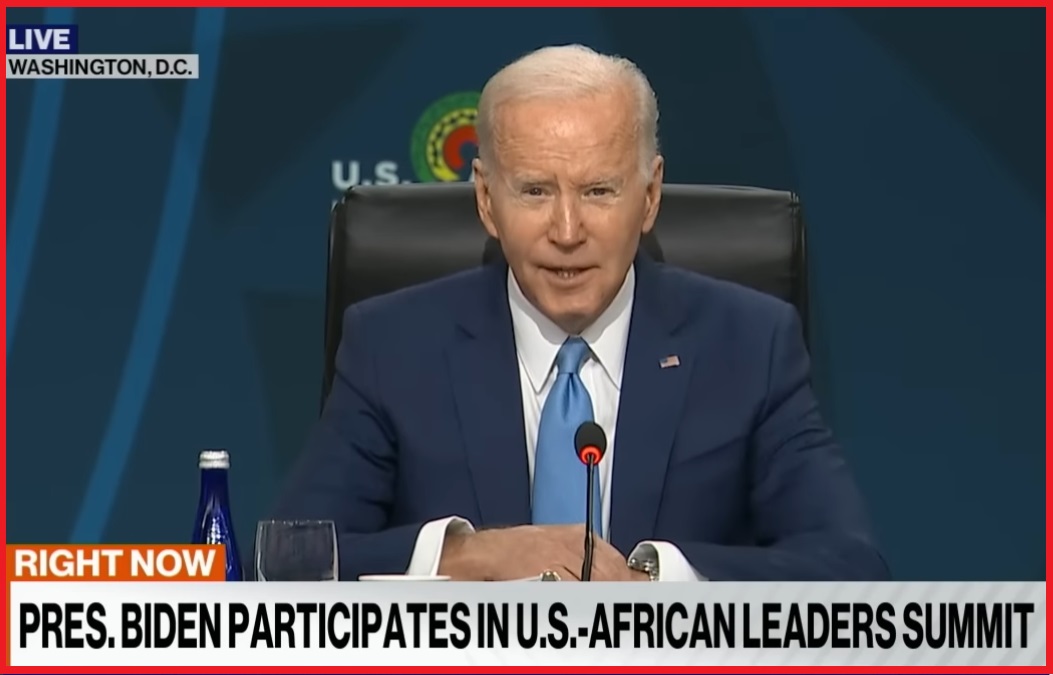
The energy development corporations, the source industry needed to create the components for nitrogen-based fertilizer, have been waiting to invest in African energy production pending the approval of western government decisions. Addressing the issue today, Joe Biden told the African Union the United States would send an emergency $2.5 billion in food crisis aid to offset the inability of Africa to feed itself.
In essence, instead of Western government policy supporting energy production in Africa that would lead to a greater farm yield, and by extension a greater level of food independence, the Biden administration would rather restrict energy/food development in Africa and send them food subsidies; because, climate change.
(White House) – […] President Biden announced an additional $2.5 billion in emergency aid and medium to long-term food security assistance for resilient African food systems and supply markets, which builds upon over $11 billion in U.S. humanitarian and food security assistance for this year alone. President Biden also launched a new strategic partnership on food security between the United States and the African Union.


 With workers demanding pay raises to help afford the skyrocketing costs of energy, the central EU bank is now worried that wage increases will fuel inflation.