John Kirby is the former Pentagon spokesperson who is now the National Security Council Coordinator for Strategic Communications. The people in/around the White House have shifted Kirby, a very good spinner of parseltongue, into a place where he can give the media an impression of White House competency.
The LGBTQ, racially inclusive and woke checkbox hires are not up to the task of their positions. Incompetence is running amok. As a result, it is somewhat ironic and representative the Biden hypocrisy, that Kirby is needed to take the pressure away from administration checkbox hires. In this interview Kirby defends the White House policy on the Russia-Ukraine war, interventionist and dependent foreign policy, and the energy policy that has resulted in high gas prices.
Video prompted to 04:05, where the topic of Biden’s upcoming visit to Saudi Arabia is discussed. WATCH:
The G7 plan to create another economic sanction against Russia by capping the price anyone could pay for Russian oil has a serious downside. If Russia slows down the export of oil, global oil prices will jump dramatically. That policy outcome would mean a massive increase in the price of gasoline for U.S. consumers.
Because the consequences are horrible, that’s precisely the reason Joe Biden might push to have the Russian price cap. Every policy Joe Biden has historically supported, has been the exact opposite of what should have been done. Biden has a profound and innate ability to screw up anything.
[Bloomberg] – Global oil prices could reach a “stratospheric” $380 a barrel if US and European penalties prompt Russia to inflict retaliatory crude-output cuts, JPMorgan Chase & Co. analysts warned.
The Group of Seven nations are hammering out a complicated mechanism to cap the price fetched by Russian oil in a bid to tighten the screws on Vladimir Putin’s war machine in Ukraine. But given Moscow’s robust fiscal position, the nation can afford to slash daily crude production by 5 million barrels without excessively damaging the economy, JPMorgan analysts including Natasha Kaneva wrote in a note to clients.
For much of the rest of the world, however, the results could be disastrous. A 3 million-barrel cut to daily supplies would push benchmark London crude prices to $190, while the worst-case scenario of 5 million could mean “stratospheric” $380 crude, the analysts wrote.
Much has been made of comments by Federal Reserve Chairman Jerome Powell in his brief explanation of what the Fed got wrong. Last week Powell made comments during a European Central Bank forum on bank policy, implying the absence of unvaccinated workers returning to the labor force is part of the US inflation problem.
Powell’s comments seem to align with the government vaccine mandate position which ignored the rights of the worker. Considering the responsibility of the Fed to anticipate price and labor issues, Powell’s sense of credulity toward those workers who dropped out of the labor force rather than inject an untested vaccine into their body is quite remarkable. Inartful and arrogant are soft terms for his commentary.
However, there’s a bigger “tell” in the segment of what the Fed got wrong, when you listen to Powell talk about the supply side issues and how the Fed Reserve had no model to predict the mandated lockdowns, economic activity stoppages and consequences. Notice how Powell completely dismisses the structural energy policy, the Build Back Better agenda, that lies at the heart of the current supply side inflation issue. Video Prompted to 01:03:34, WATCH:
.
Throughout the discussion the primary focus to control inflation is reliant on a demand side cause. The goal to reduce demand is seen as a way to mitigate and reduce inflation. Thus, this worldview, as mistaken as it was/is, explains the justification for why the Fed waited to increase interest rates. They never saw the radical energy policy as a structural driver of supply side inflation.
According to Powell, they thought the supply side issues would moderate quickly, without giving any consideration at all to how a radically new energy policy would embed. He just ignores the issue completely; again, pretending not to know. But perhaps it’s actually worse. Perhaps he really doesn’t see a radical new energy policy as a driving force behind current inflation. If that’s true, and he genuinely does not see it, then Fed policy in the future is going to make the recession much worse.
If you ignore massive energy price impacts, the FED will keep interest rates high despite demand dropping, and then eventually get to a place where demand has dropped so low the recession is deep, while turning toward each other and asking why are prices still so high?
This week Neil Oliver talks about the new Utopia we are being instructed to accept. A world in which there are no rights, only permissions.
Everything including the modification of diets and the eating of bugs and fake meat; to the type of carbon footprint home we are permitted, to the energy we may use or the acceptable car we must drive; permissions, assuming of course, our social media profile and accompanying score is in line with regulatory inspection.
Nope. Not happening. There are more of us than them. We will not eat the bugs. WATCH:
[Transcript] – What’s being done to us, or tried on us at least, isn’t working … and it isn’t working and won’t work because what we’re being pushed to accept as the new world makes no sense. The supposed utopia we’re being promised – or, rather, having rammed down our throats – is one in which there is no universal truth, no absolute and trusted truth, but only personal truth that trumps all else.
There are to be no facts like those observed by biologists, just as a for instance, and only feelings based on personal preferences that change from day to day. It will be a world in which we might have no inalienable rights, rights we are born with – just permissions granted one by one by the state … and then only if we do as we are told and do without cars and warm homes and eat our bugs and fake meat and take our medicine on demand. It is a world in which 2+2 might equal 5 if some faceless, unelected bureaucrat says it does – and if any of us says no, 2+2 always and only equals 4, then our bank accounts won’t give us any money until we accept our arithmetical and moral error.
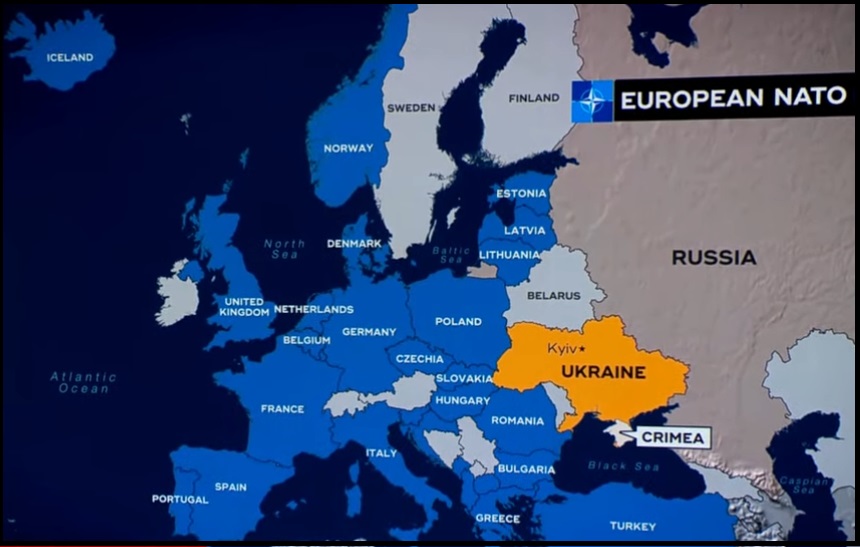
Two weeks ago, a NATO blockade of Kaliningrad, an outpost of Russia, was triggered when Lithuania blocked the transport of goods through Suwalki corridor. According to the Lithuanian justification they were following through on NATO sanctions against Russian goods. However, the escalation was very provocative toward Russia and discussions between Russia and NATO countries were tense.
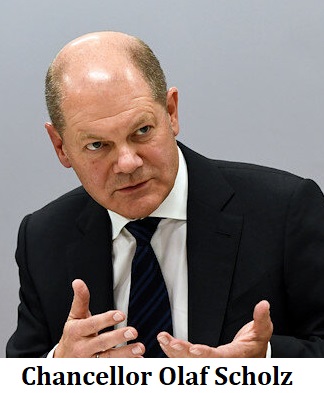
Apparently, Germany was increasingly concerned the blockade was creating a scenario where Russian military were going to escort the transport of railroad goods to Kaliningrad, and that would lead to escalated military conflict with Russia. “German Chancellor Olaf Scholz is eager to avoid unnecessary provocations of Russia. He has repeatedly emphasized that he would do everything in his power to ensure that NATO does not become a party to the war between Russia and Ukraine. German soldiers are stationed in Lithuania and could become involved in a possible conflict.” {link}
The EU has now dropped the blockade and the transport of goods between Kaliningrad and Russia will resume. The EU decision was made before the NATO meeting in Madrid concluded; however, it looks like NATO postponed the announcement until after Biden left in order to save face on the reversal of position.
GERMANY – The European Commission plans to issue a clarification that will allow Russia to resume sending supplies to the exclave of Kaliningrad via Lithuania. Berlin supports the idea, but some in Vilnius are not pleased.
[…] The move will put an end to a disagreement that had not only been a significant source of tension between Russia and Brussels – but also exposed deep rifts within the EU regarding the correct approach to Moscow.
It is very curious timing in this article from Newsweek, containing massive geopolitical implications, using identified Saudi Arabia sources, would come in advance of Joe Biden’s visit to the Kingdom of Saudi Arabia.
Is this strategic geopolitical pressure from Saudi leader Mohamed Bin Salman (MbS) ahead of the meeting with Biden; or is this a genuine possibility that looms as likely? If the former, then Joe Biden is being geopolitically slow roasted by Saudi Arabia for his previous disparagements and ideological hypocrisy in his visit. If it is the latter, well, then the tectonic plates of international trade, banking and economics are about to shift directly under our American feet.
We have been closely monitoring the signs of a global cleaving around the energy sector taking place. Essentially, western governments’ following the “Build Back Better” climate change agenda which stops using coal, oil and gas to power their economic engine, while the rest of the growing economic world continues using the more efficient and traditional forms of energy to power their economies.
This article from Newsweek is exactly about this dynamic with Saudi Arabia now potentially joining the BRICS team.
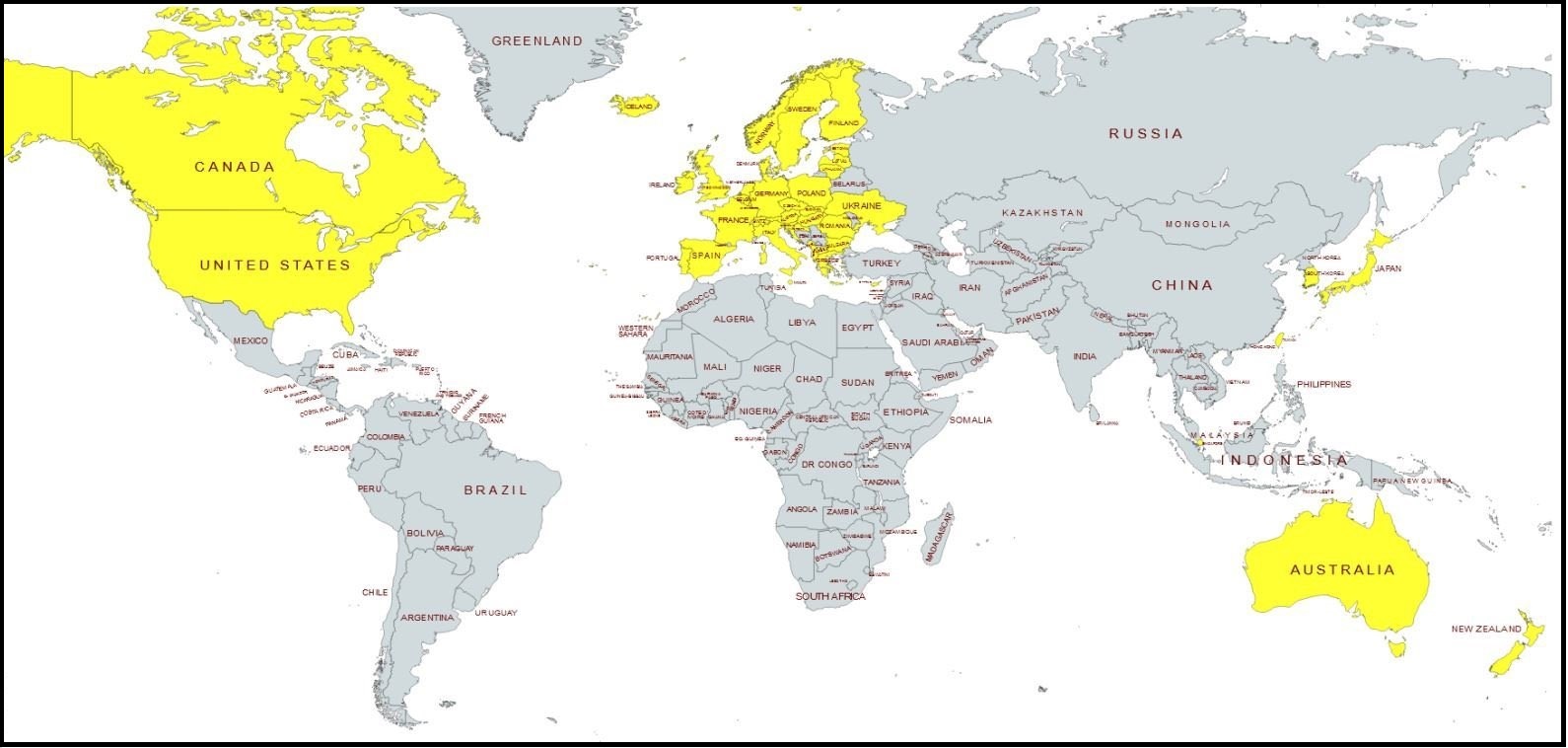
NEWSWEEK – Finland and Sweden’s green light to join NATO is set to bring about the U.S.-led Western military alliance’s largest expansion in decades. Meanwhile, the G7, consisting of NATO states and fellow U.S. ally Japan, has adopted a tougher line against Russia and China.
In the East, however, security and economy-focused blocs led by Beijing and Moscow are looking to take on new members of their own, including Iran and Saudi Arabia, two influential Middle Eastern rivals whose interest in shoring up cooperation on this new front could have a significant impact on global geopolitical balance.
The two bodies in question are the Shanghai Cooperation Organization (SCO) and BRICS. The former was established in 2001 as a six-member political, economic and military coalition including China, Russia and the Central Asian states of Kazakhstan, Kyrgyzstan and Tajikistan before recruiting South Asian nemeses India and Pakistan in 2017, while the latter is a grouping of emerging economic powers originally consisting of Brazil, Russia, India and China (BRIC) upon its inception 2006, and including South Africa in 2010.
It is interesting to remember the recent comments from Christine Lagarde, the president of the European Central Bank, who outlined the EU energy crisis as the heart of the current inflation rate in the eurozone. Lagarde discussed inflation in Europe while drawing a distinction in COVID-19 spending between the EU and U.S.
Essentially, according to Legarde, the EU subsidized businesses to maintain employment; the EU covered payroll expenses during lockdowns, while the U.S. sent direct payments to the American people who were impacted by the lack of work (basically everyone).
Lagarde outlined this difference in spending approach to explain why the Eurozone inflation was less than U.S. inflation.
How long did that EU Central Bank explanation hold up? Approximately two months.
The U.S. inflation rate is currently estimated at 8.6%, and today the eurozone inflation rate just reached,…. wait for it,… Yep, an exact match at 8.6%.
LONDON (AP) — Inflation in countries using the euro set another eye-watering record, pushed higher by a huge increase in energy costs fueled partly by Russia’s war in Ukraine.
Annual inflation in the eurozone’s 19 countries hit 8.6% in June, surging past the 8.1% recorded in May, according to the latest numbers published Friday by the European Union statistics agency, Eurostat. Inflation is at its highest level since recordkeeping for the euro began in 1997.
There it is folks. I hope people can see the natural arc of this self-fulfilling prophecy now. This also is why you should make sure you have potassium iodide tablets in your prep kit.
During a NATO press conference in Madrid [Transcript Here], today Joe Biden specifically attributed the upcoming global food shortage to Russian President Vladimir Putin. Biden was emphatic when responding to a question about oil costs, western nation energy development and the pending food shortage.
BIDEN…”I think there’s a lot of things we can do and we will do. But the bottom line is: Ultimately, the reason why gas prices are up is because of Russia. Russia, Russia, Russia. The reason why the food crisis exist is because of Russia — Russia not allowing grain to get out of Ukraine.” WATCH:
Please understand… The food shortage is a done deal. We are beyond the point where current action could impact what is coming. The timeframe to mitigate any global food shortage is in the rear-view. Efforts to mitigate the food crisis should have been done months ago. Nothing was or is being done.
The Western Alliance now needs a scapegoat, a justification for a food crisis that is almost certain to surface. We do not know the scale of the shortage, but we do know global food supplies are going to be less than needed to feed the world population.
The direct cause of the food shortage is the Western government decision to prioritize climate change over food production. The Build Back Better climate change agenda has created massive disruption with energy products (biofuel, fertilizer, diesel, natural gas etc) which are critical for the efficient production of food. However, the western alliance cannot and will not take responsibility for the food crisis. Instead, as you are seeing above, their plan is to blame Russia.
Stopping Russia from starving the world will be the justification for a physical escalation of conflict between NATO and Russia. All of the signs and indicators point in this direction. None of the geopolitical or global economic signs point away from this direction. A NATO led war with Russia is not a matter of “if”, it is a question of “when?”
In March of this year Finland President Sauli Niinistö traveled to the White House [link]. In April reports first surfaced of Finland and Sweden joining the NATO alliance [link]. In mid-May of this year President Sauli Niinistö stated his decision for his country to join NATO was a matter of needing to choose sides, “what we see now, Europe, the world, is more divided. There’s not very much room for ‘non-aligned,’ in-between. So that was also what we are thinking,” he said [link]
The next day, May 16th, Turkish President Recep Erdogan, a preexisting NATO member, said Turkey would block the application of Sweden and Finland from joining NATO until their conditions and terms were accepted [link]. Two days later, May 19th, Joe Biden, flanked by Finnish President Sauli Niinisto and Swedish Prime Minister Magdalena Andersson (again at the White House), said the two countries would “make NATO stronger.” [link]
On Tuesday of this week Turkey removed their block of Sweden and Finland from joining NATO, and on Wednesday Joe Biden agreed to sell Turkey 40 Lockheed Martin-made F-16 fighters and nearly 80 modernization kits for its existing warplanes:
Newsmax – The Biden administration threw its support on Wednesday behind the potential sale of F-16 fighter jets to Turkey, a day after Ankara lifted a veto of NATO membership for Finland and Sweden.
There is a slow-motion buildup to a hot war with Russia happening. The NATO and western alliance motive for the war is clear {Go Deep}. The question is rapidly moving from “if” to “when.”
In this outline we will update on the troop and military movements and then explain why the war with Russia is becoming a self-fulfilling prophecy. In many ways this will be the “Climate Change War,” you will see why below.
First, the U.S. is moving troops from the 101st Airborne ‘screaming eagles’ into NATO allied countries on the western border of Ukraine. This is the first deployment of the Army’s 101st Airborne Division from Fort Campbell, Kentucky, to Europe in 80 years. As noted by base reporting, “Elements of 2nd Brigade Combat Team, and 101st Headquarters and Headquarters Battalion, 101st Airborne Division, have been assigned to carry out the mission.” [source]
“We’re going to check the Russian influence and we’re going to impact the Russians’ decision-making for probably the next 10-20 years,” said Col. John Lubas, deputy commanding officer for operations, 101st Airborne Division, in a pre-deployment briefing. “We’re going to do this with all our partners in NATO, the European Union and the West, and this is an incredibly important mission.”