It is important to remember the ultimate goal of the ‘climate change’ promotors (World Economic Forum) is not an energy system that changes the global climate. The goal of the ‘climate change’ group is to create a carbon trading system; a new financial mechanism (a global tax program) to control human activity on a world-wide basis. This system also needs a digital identity in order to work {hint-hint}.
You cannot tax or trade things you cannot track. As a result, there was always going to be a need for an individual tracking and monitoring system that would connect to the global digital identity and determine the carbon footprint. The carbon taxing and trading system will be more financially lucrative than any stock exchange or monetary banking system. It is the ultimate human control mechanism, and the preferred way to redistribute wealth under the guise of global equity.
Of course, the system will beta test as a consumer demand product until the government steps in to take over the allocation and distribution equity part. In this video segment, Alibaba Group president J. Michael Evans boasts at the 2022 World Economic Forum about the development of an “individual carbon footprint tracker” to monitor what you buy, what you eat, and where/how you travel. WATCH:
The individual carbon tracker is the baseline for a global carbon trading system that involves everyone; at least, everyone connected to the outlook of western government.
Carbon allocation creates the financial metric that replaces currency. You buy and sell carbon credits allowing you to engage in specific functions within society, like dining, traveling, home ownership and type, vehicle or transportation type, even the clothes you can purchase. Hence, “carbon trading” is the term most people are familiar with.
In essence, you are a parasite to earth; therefore, you must offset your derogatory footprint on the planet by paying a fee to exist. If you cannot pay for the carbon credits needed to engage in the transaction (travel, home ownership, cooling, heating, etc.) you cannot engage in the regulated activity.
The carbon exchange process is at the end of the slippery slope created by a digital identity. The 5G telecommunications network is designed to use geolocation and behavioral tracking that will connect your digital identity to your individual behavior and facilitate the carbon footprint tracing process. We are already passed the “if” stage.
 Australia has replaced Morrison with Labour party candidate Anthony Albanese. The COVID dictator is out, and the Climate-Change dictator is now installed. Good luck Australia.
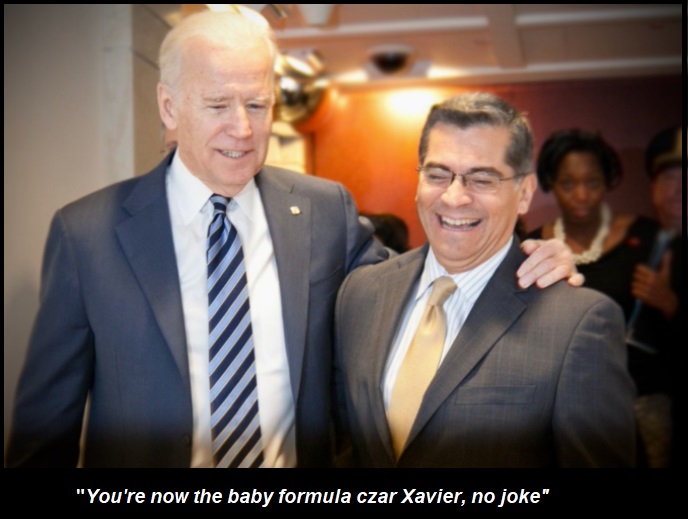 This afternoon Joe Biden invoked the Defense Production Act (DPA) giving Health and Human Services (HHS) the legal authority to control the supplies needed for the creation of baby formula (how it is made), and the authority to determine distribution equity (who gets it). Emphasis mine: