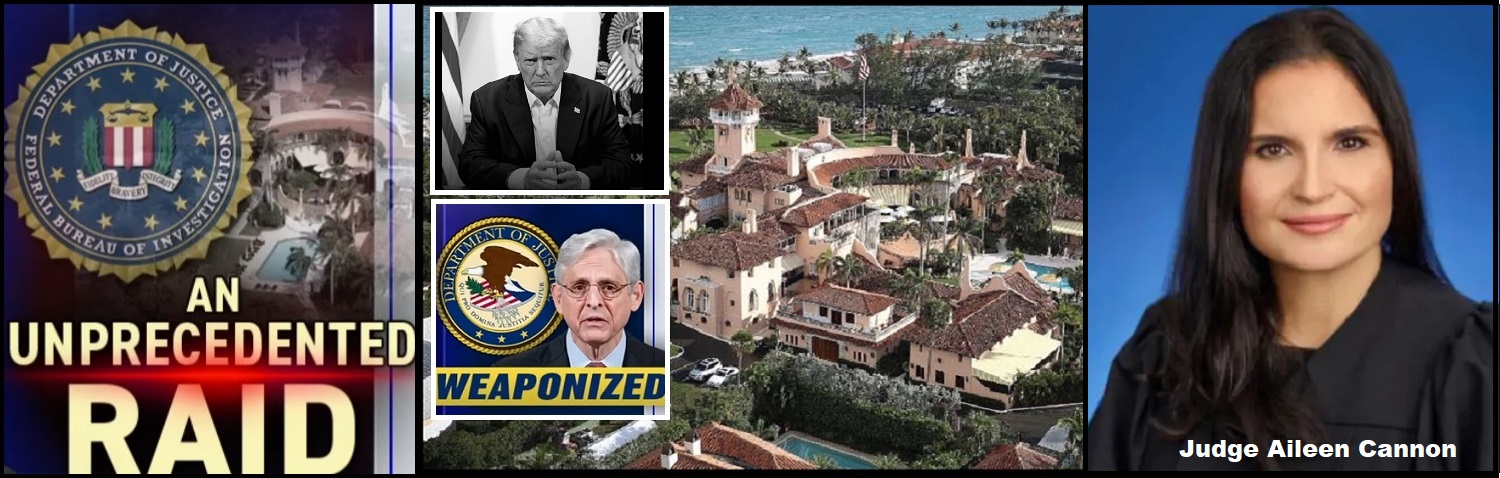
First, a follow-up. In further support of CTH view of the Trump legal strategy, a bolstering prior media notation is worthy. In regard to the intent of the Trump -v- Clinton lawsuit a lawyer for President Trump told media: “Habba later said she might appeal the decision, and also that Trump had told her that the case would ultimately not be a winner and she should just drop it. “I said no. We have to fight. It’s not right what happened. And you know, he was right.” {source} This expressed perspective from Trump -via a member of his legal team- supports our contention that creating the lawsuit as a vehicle to legally share documentary evidence and establish a silo (attny-client privilege) was the goal, not the actual outcome of the lawsuit itself.
Remember, the DOJ National Security Division (DOJ-NSD) was created by Barack Obama and Eric Holder to weaponize a relationship between Main Justice (DOJ) and the Intelligence Community (IC). Within this structure, the Office of the Director of National Intelligence (ODNI) now used their newly created agency to monitor domestic political opposition under the guise of domestic threat surveillance. [The Eye of Sauron]

Within the system they created, the DOJ-NSD collaborates with the newly established authorities of the DNI, which includes their unilateral authority to define documents they consider “classified.” The intent is to conduct lawfare against the domestic target while both agencies shield their efforts under claims of national security.
That is the encapsulated modern mission and relationship between the DOJ-NSD and the Intelligence Community (ODNI). These are the two main pillars of the corrupt national surveillance state that exist based on collapsed oversight, as a result of ideological support from the Senate Select Committee on Intelligence. This is the weaponized fourth branch of government.
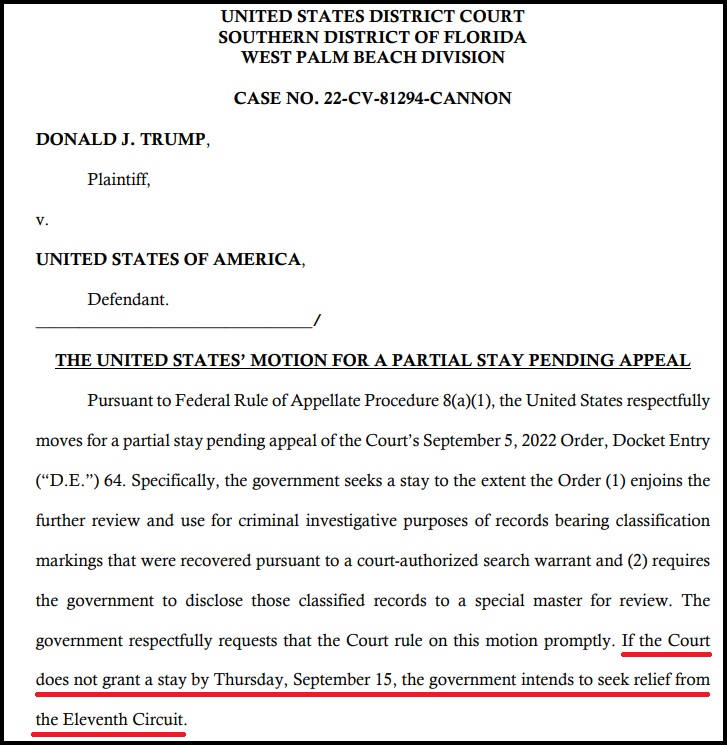
Now we turn to today. Lawyers for President Trump submit a responsive filing to counter the DOJ effort to stay court order for a ‘special master.’ [Motion pdf Here].
The position of the DOJ-NSD, a position that should be considered in alignment with the ODNI, is that no outsider should be permitted to review their work product. The DOJ does not want a court appointed special master to review what they are unilaterally declaring as “classified national security documents.”