Quantcast

Biden Puts His Economic Credibility On The Line Ahead of Thursday BEA Report, I Do Not Think We Will See a Recession

The White House is expending a tremendous amount of communication effort over the past 48 hours trying to convince the American public that the economy is good, and we are not in a recession.

Yesterday it was Treasury Secretary Janet Yellen. Today National Economic Council Chairman Brian Deese, White House Economist Jared Bernstein and even Joe Biden himself, all declaring that despite the economic contraction you may feel, see and even quantify, we are not in a recession.  WATCH:

.

The action of the recession deniers reminds me of the famous Ralph Waldo Emmerson quote:

The louder he spoke of his honor, the faster we counted our spoons.”

(more…)

Pretending Has Consequences – Western Media and Western Govt Continue Saying, Falsely, Global Food Crisis Caused by Russia

As oft repeated, in order for severe ideologues to retain their insufferably bad policy they must pretend not to know things.  However, in the case of food shortages, the pretending about the origin of the problem has severe consequences.

Vladimir Putin’s military action against eastern Ukraine had nothing to do with the severe food shortages and inflation in Sri Lanka {link}.  Nor does Putin have any influence over the Dutch government trying to stop food production {link}.  Additionally, Putin has no control over Justin Trudeau’s decision to limit harvest yields by blocking the use of nitrogen-based fertilizer {link}. More importantly, it was not Vladimir Putin who forced all the western politicians to sign up for a new ‘climate friendly’ energy program that is destroying the ability of western farms to generate higher yield crops.

You do not need to be a farmer to understand that nitrogen/phosphorus-based industrial fertilizer has been the reason why farm yields have generated massive amounts of food on a global basis.  The United States, Canada, the U.K. and places like the Netherlands have massively increased their ability to generate food for export, in large part due to the success of improved fertilizer and crop saving modern pesticides.  Take those farming advancements away under the guise of climate change and you get a global Sri Lanka.

Those western climate and energy policies create downstream consequences.  The decision to chase a new global energy policy under the name “Build Back Better,” in combination with short-sighted EU sanctions against Russia, and you get food shortages. And boy howdy are they trying to avoid taking responsibility for it.

It was not Vladimir Putin who told British Prime Minister Boris Johnson and German Chancellor Olaf Scholz their proactive recommendation to switch from crop-based biofuels to human food would be blocked.  That G7 decision was made by Justin Trudeau and Joe Biden. {link} Even more significantly, it was not Russia who threatened the multinational energy companies about investing in Africa for expanded natural gas supplies for their fertilizer needs. That threat came from the same western government alliance, per their instructions from the World Economic Forum group {link}.

(more…)

Sunday Talks, Treasury Secretary Yellen Declares Lower Economic Activity and Higher Energy Prices are Good During Our Transition to Windmills

Until people understand what is happening, we cannot correct things or even respond to them accurately.  Many people don’t want to accept what is happening.  Even more still believe in the Schoolhouse Rock civics they were taught in grade school and cannot accept how these ideologues operate.  As long as denial remains a survival mechanism, correction is difficult.

All of the people on the monetary policy side of the economic equation are working earnestly to manage the global economy into a decline thereby slowing the need for energy production. The bankers are supporting the Build Back Better policy makers by putting the western economies into an intended contraction.  Slowing the western economies helps to lower energy use and moderate/offset the extreme increases in cost (coal, oil, gas, electricity, fuel etc) the policies are creating.

Lower economic activity means less income, job security and wealth for the working class. Simultaneously, increased energy costs mean more expenses for the same workers who are losing income and wealth.  This is the ‘managing’ part of their collectively “managed transition.”  They are monitoring and managing the pitchforks.

In this Meet the Press segment with Treasury Secretary Janet Yellen, you will note she says “lower economic activity during this transition” is good.  She also happily says businesses are taking “appropriate” action to lower their activity, because that is exactly what the central planners want.  They want businesses to do less, create less, sell less, even employ less, because ultimately, they want businesses to help advance the cause of climate change by consuming less energy resources.  WATCH:

The central bankers are trying to support western government policy.  Unfortunately, the government policy they are under obligation to support is the fundamental energy shift, or what the World Economic Forum (Davos Group) has called the “Build Back Better” climate change agenda.

(more…)

When is a Recession not a Recession? When The Financial Media Need to Protect Joe Biden

The Bureau of Economic Analysis (BEA) is scheduled to deliver their calculation for the second quarter (Apr, May, June) Gross Domestic Product (GDP) on July 28, next week.   The calculation is essentially the total value of all goods and services generated within the U.S. economy, minus the value of exports received.

CTH has predicted the people within the BEA research group [SEE HERE], ie those who make the determinations of GDP, will circle the statistical wagons and generate something akin to a positive 0.5% GDP figure for Q2.

The reason is simple… As with all other highly political institutions in U.S. government, the BEA is driven by political ideology.

With the Biden administration’s Green New Deal energy policy driving the U.S. economy into the ground; and with the BEA statisticians worshipping at the same governmental altar as all other climate change ideologues; they will do everything in their power to defend what the people behind Joe Biden are doing.

[For the greater good and all things that are associated with that line of elitist thinking.]

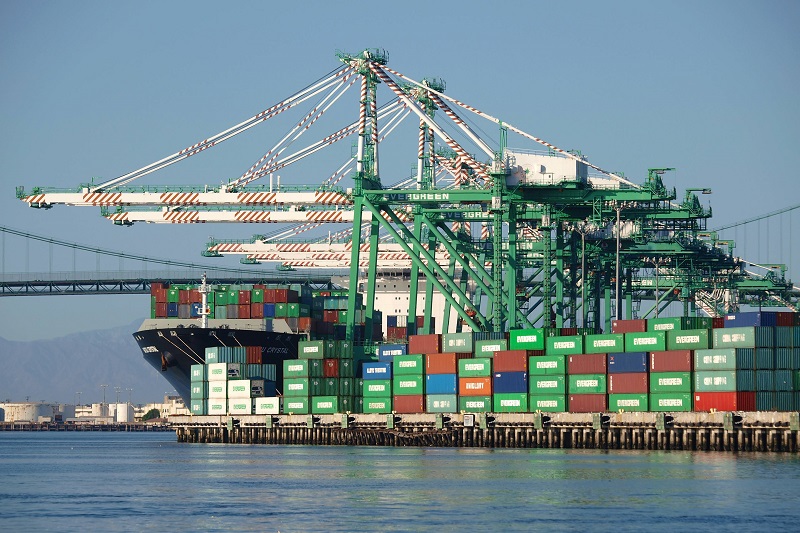
The BEA data team will first play with the statistics by underestimating the rate of inflation in their value calculations.  If that effort doesn’t yield the desired result, the BEA will likely move to avoid calculating import data from the West coast (Port of LA, Port of Long Beach, and/or Port of Oakland) for the month of June.  The current labor union and trucker issues within the ports will help create the noise to justify any interim data that is false.  [Whoops, we’ll catch it in the updates, etc]

That’s just how this BEA crew rolls.  If they can save the planet by fudging the statistics, well, they will have done their part.  This approach, the expression of ‘their truth‘, is just an outcome of this great new era of pretending in our modern ideological banana republic. Hey, Wall Street is built upon a foundation of lies, insider trades on proprietary information and manipulation of values, so why shouldn’t everything else – including govt economic data?  Fair’s fair, right?

(more…)

Canada Joins the Netherlands in Operation Eat Bugs, Justin Trudeau Demands 30% Reduction in Nitrogen Farm Emissions

You will switch to bugs, and you will like it.  After using government incentives and subsidies to build a new facility in London, Ontario, to manufacturer 9,000 metric tons of crickets for human consumption to replace cows, pigs and chickens, Canadian Prime Minister Justin Trudeau now triggers a series of nitrogen emission reduction regulations to target traditional farming.

Prime Minister Justin Trudeau is following the same roadmap as his political friend in the Netherlands, Dutch Prime Minister Mark Rutte, and the Canadian farmers are not happy about it.

CANADA – Saskatchewan and Alberta Ministers of Agriculture are expressing profound disappointment in the federal government’s fertilizer emissions reduction target.

“We’re really concerned with this arbitrary goal,” Saskatchewan Minister of Agriculture David Marit said. “The Trudeau government has apparently moved on from their attack on the oil and gas industry and set their sights on Saskatchewan farmers.”

“This has been the most expensive crop anyone has put in, following a very difficult year on the prairies,” Alberta Minister of Agriculture Nate Horner said. “The world is looking for Canada to increase production and be a solution to global food shortages. The Federal government needs to display that they understand this. They owe it to our producers.”

(more…)

Mysterious Missiles Strike Grain Facility at Ukraine Port One Day After Russia and Ukraine Sign Grain Export Deal

Let me say from the outset, with a degree of specific assurance we generally reserve for other matters, Russia had nothing to do with the targeting of a grain facility in the port city of Odesa.  Geopolitically and strategically, such an action would be against their interests.  These events have the smell of the U.S. State Dept and CIA all over them.

Start by first reviewing the agreement between Russia and Ukraine that was announced yesterday. July 22 (Reuters) – Russia and Ukraine signed a landmark deal on Friday to reopen Ukrainian Black Sea ports for grain exports, raising hopes that an international food crisis … can be eased.”   NATO country Turkey, specifically Recep Erdogan, brokered the deal between Russia and Ukraine.  Ignore the narrative engineering and WATCH:

Russia was particularly a geopolitical beneficiary from the agreement itself.  No longer could NATO and the western alliance blame Russia for the void in gobal food markets associated with the conflict in Ukraine.

From the perspective of Russian President Putin, the grain movement through the port city of Odesa was a net benefit.  “Russia has taken on the obligations that are clearly spelled out in this document. We will not take advantage of the fact that the ports will be cleared and opened. We have made this commitment,” said Russian Defense Minister Sergei Shoigu.

However, from the perspective of the Western alliance, the agreement mooted one of their biggest justifications for the upcoming global food shortage.   If Ukraine and Russia are exporting food, and yet food costs are still rising…. well, the food shortage impact from western energy disruption, the Build Back Better agenda, starts to become increasingly visible.

Suddenly, within hours of the trade agreement, the grain transportation system and the port city of Odesa come under fire from mysterious cruise missiles.

(more…)

It’s Not Just What Energy Secretary Granholm Says, It’s How She Says It That Should Alarm Everyone

Energy Secretary Jennifer Granholm couldn’t tell you the difference between electromagnetic or nuclear energy if her life depended on it.  Then again, there’s not a single “climate change” ideologue in the Biden administration who has any concept of science at all.  None of them.  To them, everything is politics.

As you watch this brief soundbite from remarks Energy Secretary Granholm made to the Global Clean Energy Action Forum, pay attention to what she says and the way she says it.  The pantomime of how she says it. [11 seconds] WATCH:

.

What state elected her governor?  Oh yeah, she’s from Hunger Games district 5.

(more…)

EU Commission Asks all Member Nations to Reduce Natural Gas Use by 15 Percent to Help Germany and Energy Dependent States

EU Commission President Ursula von der Leyen, a woman of notoriously bureaucratic disposition, has proposed that all member nations to reduce their use of natural gas by 15% in order to subsidize and protect the larger member nations -specifically Germany- who are more dependent on Russian energy.

Spain, Portugal and Greece are balking at the idea of voluntary cuts in order to spread the energy resources to the larger economies.

Things amid the EU could get spicy again, with the league of nations in Brussels taking control of economic wealth distribution.

BRUSSELS, July 20 (Reuters) – The European Union set out emergency plans on Wednesday for countries to cut their gas use by 15% until March, warning them that without deep cuts now they could struggle for fuel during winter if Russia cuts off supply.

Europe is racing to fill its gas storage ahead of winter and build a buffer in case Moscow further restricts supplies in retaliation for European support for Ukraine following Russia’s invasion.

[…] The regulation needs approval from a reinforced majority of EU countries. Country diplomats are set to discuss it on Friday, with the aim of approving it at an emergency meeting of their energy ministers on July 26.

(more…)

Subtle as a Brick Through a Window, U.S. Media Starts Reshaping Corrupt Ukraine Narrative

From the CTH perspective, if we accept the scale of the approaching U.S. economic pain that is clearly visible on the horizon, this narrative shift from the Associated Press and NPR, about a balancing act for U.S. policy and a corrupt Ukraine government, seems very predictable.

The average U.S. worker, and the middle class in general, is in trouble.  The visible reference of bailing out the people of Ukraine to the tune of $60+ billion is legislative salt in an open economic wound caused by Biden policy.  A shift is needed.

Pivoting away from Ukraine to focus on financial subsidies for Americans requires using a particular arm-distancing toward Zelenskyy from the politicians.   Look, corruption.

Here we go:

WASHINGTON (AP) — Ukrainian President Volodymyr Zelenskyy’s dismissal of senior officials is casting an inconvenient light on an issue that the Biden administration has largely ignored since the outbreak of war with Russia: Ukraine’s history of rampant corruption and shaky governance.

As it presses ahead with providing tens of billions of dollars in military, economic and direct financial support aid to Ukraine and encourages its allies to do the same, the Biden administration is now once again grappling with longstanding worries about Ukraine’s suitability as a recipient of massive infusions of American aid.

(more…)

What Exactly Do the Officials Mean by “Managing the Transition”, Here is What They Will Not Say Openly

The goal of this outline is to answer a frequent question about what the alignment of government and private sector officials mean when they say, “managing the transition.”  Some of this is self-explanatory, some of this has been astutely explained by others (with specific reference points), yet much of this is what they cannot say publicly.  So here we go.

As you are well aware the various western nation central banks including the U.S. Federal Reserve, are raising interest rates into a global economic contraction, a drop in demand.  Raising interest rates into a contracting economy is counterintuitive, it runs against the expressed interest of government to grow economic conditions.  However, there is a purposeful design to the contradiction.  [A TLDR Version Here]

I will further expand, and hopefully this will provide information so that you can make decisions on how to protect your interests.

The central bankers are trying to support western government policy.  Unfortunately, the government policy they are under obligation to support is the fundamental energy shift, or what the World Economic Forum (Davos Group) has called the “Build Back Better” climate change agenda.

Monetary policy can only impact one side of the inflation challenge.  The western bankers (EU central bank, U.S. federal reserve bank, and various banking groups) are raising interest rates in order to “tame inflation” by “taming demand.”  However, as you know the global economic demand has been declining for several quarters.  Raising interest rates into an already contracting economy only does one thing, it speeds up the rate of economic contraction.

Economic contraction is the lowering of economic activity.  Raise interest rates -in a general sense- and businesses invest less, borrowers borrow less, consumers purchase less, employers expand less, and the economy overall slows down. When the economy turns negative, meaning less products and services are produced, we enter a recession. Some businesses and employers do not survive a recession and subsequently unemployment rises.

During recessionary periods people buy less stuff, people have less income stability, and economic activity drops.  When the banks raise interest rates into an economy that is already stalled or contracting, unemployment and general pain on Main Street increases.  Workers are laid-off, incomes shrink, consumer spending drops and that leads to less employment.  Recessions are bad for middle-class and working-class people.

However, that said, there is one benefit from a recession…. Energy use drops.

(more…)