Quantcast

DeSantis Beats Trump on Fundraising – However, Donor Financials Highlight Corporate Version vs Grassroots Version of The Republican Party

A solid dive by Law.Com and Daily Business Review into the background of who is financing Donald Trump versus who is financing Ron DeSantis should help to clarify the nature of the difference between them.

President Trump is funded primarily from massive amounts of small contributions from small donors, the MAGA base.

Governor Ron DeSantis is funded primarily by a small group of exclusive Wall Street corporations, billionaires and hedge fund managers, and almost no small donors.

Essentially, if you are thinking about MAGA populism -vs- corporate republicanism; well, there’s the issue in easiest to understand data form.

Additionally, the new managers of DeSantis have recently noticed the vulnerability and hired firms to try and stimulate small donor amounts in an effort to avoid the jaw dropping difference in average donation.  A strategy deployed by Jeb Bush in 2015.    Pay attention to the names giving large donations to DeSantis and you will see: (a) where the economic policy distinction comes from; and (b) where the RDS branding and consulting image is coming from.

Business Daily Review – Republican Florida Gov. Ron DeSantis has raised more money than Donald Trump since the former president left office, relying on deep-pocketed donors rather than the small-dollar contributors he’ll need if he seeks the White House in 2024.

DeSantis … has amassed $142 million from the start of 2021 through Aug. 5 this year from donors such as the hedge fund billionaires Ken Griffin and Paul Tudor Jones.  That tops the $136 million Trump collected over a slightly shorter period.

Unlike Trump, who relies largely on a network of small-dollar donors to fund his postpresidential political operations, DeSantis has raised the bulk of his money from a small number of wealthy donors writing him giant checks. That gives him plenty of money for his reelection effort in Florida, where laws allow unlimited contributions.

(more…)

Horrific Biden Consequence, 20 Million American Households Behind on Electricity Bills, Pending Shutoff

Long-term CTH readers might remember in 2014 when President Obama claimed U.S. families had been paying too little for electricity for too long.  As soon as Joe Biden took office, he began implementing the Green New Deal energy policy that, (a) directly forces higher costs for energy; and (b) is now creating massive problems.

In July I noted my own electricity bill had jumped 28% in a single month.  That bill was followed by another almost identical increase this month.  A review of the Consumer Price Index (CPI) for July [Data Here] shows that nationally the same thing is happening.  The year-over-year electricity price has increased 15.2%. However, worse still, the July increase alone was 1.9%, which figures to an annualized rate of 22.8%.

When the growth rate of monthly increase is exceeding the year-over-year result, that means future higher prices are coming.  This is a serious problem that cannot be overstated. Already struggling with a doubling of gas prices, massive food price increases at the grocery store and the pain of all costs for goods far outpacing any rate of wage increase, this type of uncontrollable increase in price of electricity is going to hit the middle class hard.

Steve Cortes calls this the backside of the Biden created inflation hurricane.  The backside of a hurricane is the worst because it hits from the opposite direction upon already weakened infrastructure.

(more…)

The Outlier of the West, Japan Core Inflation Rises 2.4% Year Over Year

If you have been following along, you might remember the note we made in July about not every country willing to go along with the western agenda on energy reduction, climate change, and raising interest rates to shrink their economy down to the scale of diminished energy development {Go Deep}.

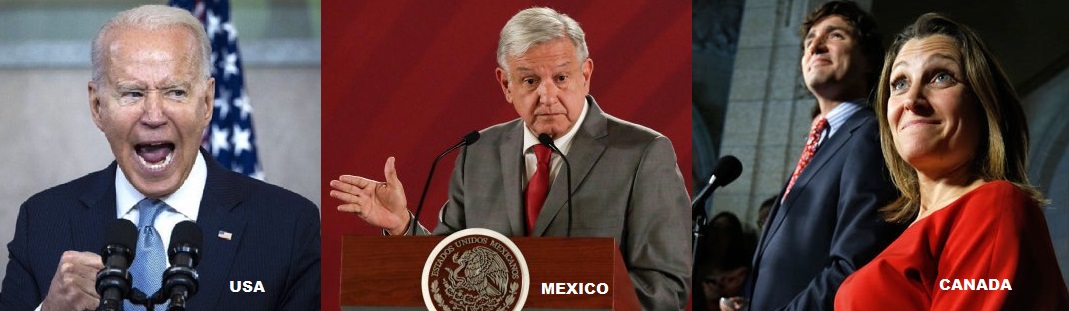
In addition to Russia, China, Iran, Brazil, South Africa, Argentina and India vociferously retaining their own economic and monetary independence, Mexican President AMLO literally blasted the program while visiting the White House and the Bank of Japan refused to join the mantra to raise interest rates.   Essentially, all of the aforementioned nations see the collective Build Back Better program for what it is, a path to poverty.

As a result of their non-compliance with the global bankers, which, not coincidentally I would point out, coincided with the assassination of Shinzo Abe, the government of Japan has been getting blasted by the proverbial ‘west’ (U.S, Canada, U.K, Europe and Australia).

Japan is attempting to deal with inflation by focusing on increasing energy production and security (the supply side); while the rest of the western group have been chasing the false promise of decreased inflation by lowering the demand side, ie. pretending not to know their energy policy is creating the increases in costs.

As a result of the distinctly different monetary approaches, the financial system has been trying to punish Japan and the financial media have been trying to point out every flaw in the Japanese economy as a result of their noncompliance.   However, as you will see in this Reuters article, the July inflation within Japan is moderating.  Inflation in Japan is 2.4% for July (year over year).

TOKYO, Aug 19 (Reuters) – Japan’s core consumer inflation accelerated in July to its fastest in seven-and-a-half years, driven by fuel and raw material prices and adding to the costs of living for households yet to see significant wage gains.

(more…)

Something is Looming Geopolitically, and We Better Start Taking It Seriously

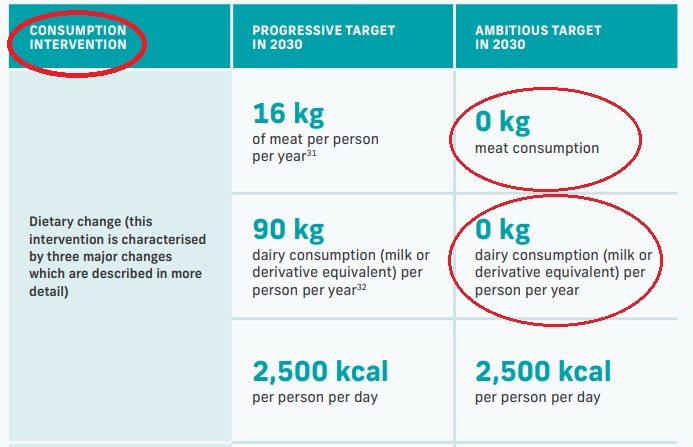
As a result of western governments’ taking collective action under the auspices of a ‘climate change’ agenda, we are on the cusp of something happening with ramifications that no one has ever seen before.

Western governments’, specifically western Europe, North America (U.S-Canada) and Australia/New Zealand, are intentionally trying to lower economic activity to meet the intentional drop in energy production.

This is the core consequence of the Build Back Better agenda as promoted by the World Economic Forum.

Anyone who says there is a reference point to determine both the short-term and long-term consequences is lying. There is no precedent for nations’ collectively and intentionally trying to reduce economic activity.

Hiding behind the false justification that current inflation is driven by too much demand, central banks in Europe, the Bank of England, Bank of Canada and U.S. federal reserve are raising interest rates.  The outcome we are currently feeling is an intentional economic contraction and global recession.

The Build Back Better monetary policy is successfully shrinking western economic activity; however, the impacted nations that produce goods for markets in North America and Europe, specifically southeast Asia, Japan and China, are not raising interest rates in an effort to try and offset the drop in demand.  China has announced they are dropping their central bank rates in a desperate effort to lower costs and keep their export dependent economy working.

Underneath all of this, is a drop in energy production in the same nations trying to lower economic activity.  The political policymakers are attempting to manage this process without informing the citizens of the unspoken goal.   Shortages of oil, coal and natural gas are self-inflicted problems, all part of the BBB agenda.

(more…)

Target Profit Drops 90% in Second Quarter as Inflation Changes Consumer Purchasing

In the second quarter of 2021 Target earned $1.82 billion in profit.  In the second quarter this year, target earned $183 million. That’s the result of inflation hitting the middle-class consumer.

Few people are buying electronics, home goods, durables or clothing.  Any retailer that specializes in the sale of non-essential items is going to feel the financial results of working-class families reprioritizing their spending.  Checkbook economics is the economics that matters.

Hopefully, CTH readers are well prepared for this phase of the Joe Biden economy. It will almost certainly get worse.

(Daily Mail) – Target reported on Wednesday that its profits plunged nearly 90 percent last quarter after it was forced to slash prices to clear unwanted inventories of clothing, home goods and electronics.

In early June, Target warned that it was canceling orders from suppliers and aggressively cutting prices because of a pronounced spending shift by Americans as inflation cuts into spending on non-essential items.

(more…)

House Democrats Refuse to Support Second Part of Manchin-Schumer Deal for Increased Energy Development and Permitting

Looks like we are going to find out exactly what Joe Manchin’s leverage was over Joe Biden, Nancy Pelosi and Chuck Schumer {REMINDER HERE}.

On July 31, According to Manchin the deal between himself, Chuck Schumer, Nancy Pelosi and Joe Biden includes his support for the current green energy spending, in exchange for two new items in future legislation: 1) Streamlined energy permitting/regulation; and 2) Increased development of Oil, Coal, Gas.  Both of these pieces of legislation have to be handled in a separate Senate bill.

According to Manchin, his agreement to the current spending bill was contingent upon a promise that: (A) Senate Majority Leader Chuck Schumer will generate a new bill for streamlined energy permitting and increased oil, gas and coal development; (B) House Speaker Nancy Pelosi will take up the Senate bill and whip enough of her House Democrat membership to join with Republicans in support of that Senate bill; and (C) Joe Biden will sign that increased energy production bill.

Here’s the important part.  Senator Manchin claimed he has leverage over Biden, Pelosi and Schumer to ensure a new bill with those priorities is created and advanced.  Manchin further claimed there were “consequences” for Biden, Pelosi and Schumer if they were to renege on the deal.  He is quite emphatic about that point if you listen to the NBC interview. (LINK)

(more…)

Neil Oliver, Think the Unthinkable and Accept That is the Better Reference Point

Neil Oliver returns from a vacation to deliver one of his best contemplative monologues to date.  Mr. Oliver rightly says that if you reset your historic reference points, and you begin to recognize that thinking the unthinkable is actually the best reference point for your current state, it is like a key that unlocks the answers.

We are the battered spouses in an abusive relationship with government. Nothing we can do is going to appease the abuser, it is the inherent state of their disposition. WATCH:

[Transcript] – It is hard to think the unthinkable – but there comes a time when there’s nothing else for it. People raised to trust the powers that be – who have assumed, like I once did, that the State, regardless of its political flavour at any given moment, is essentially benevolent and well-meaning – will naturally try and keep that assumption of benevolence in mind when trying to make sense of what is going on around them.

People like us, you and me, raised in the understanding that we are free, that we have inalienable rights, and that the institutions of this country have our best interests at heart, will tend to tie ourselves in knots rather than contemplate the idea those authorities might actually be working against us now. I took that thought of benevolent, well-meaning authority for granted for most of my life, God help me. Not to put too fine a point on it, I was as gullible as the next chump.

(more…)

Bidenflation Making Mexico Great Again, Retails Sales Up 30% in Mexico as U.S. Shoppers Cross Border to Save Money

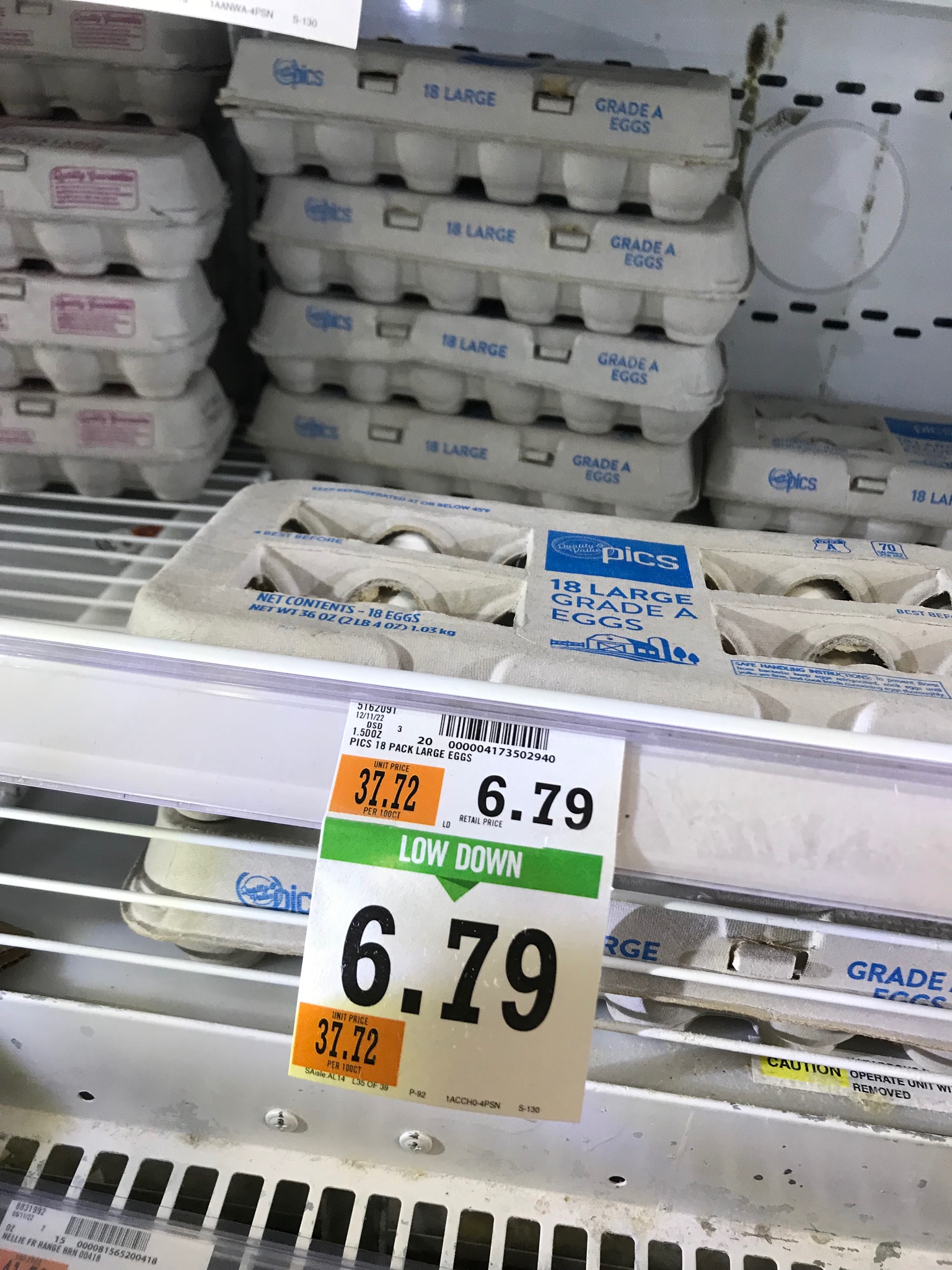
The price differential is remarkable.  In this report from NewsNation, they follow Americans who travel to Mexico for their essential purchases.  Not only is gasoline over a $1/gal cheaper, but everyday essential items are significantly lower.

Retailers in the video highlight an increase in sales of 20 to 30% from cross border shoppers. Biden’s economic plan is Making Mexico Great Again.  WATCH:

(more…)

Inflation Moderates in July with Drop in Energy Prices, But Look Closely Food Prices are About to Skyrocket

The Bureau of Labor Statistics (BLS) has released the July inflation figures known as the Consumer Price Index (CPI) [DATA HERE]. I’m not going to spend much time on the review because the big picture results are exactly what we expected, the appearance of a false inflation plateau, drop and/or moderation of inflation.

The July energy prices dropped significantly driven by a reduction in consumer demand for gasoline and fuel oil, which lowered prices.   We can expect a very similar outcome in August (report in Sept).

Most financial and economic media are reporting an “unexpected” drop in inflation, ex:

Prices that consumers pay for a variety of goods and services rose 8.5% in July from a year ago, a slowing pace from the previous month due largely to a drop in gasoline prices. On a monthly basis, prices were flat as energy prices broadly declined 4.6% and gasoline fell 7.7%. That offset a 1.1% monthly gain in food prices and a 0.5% increase in shelter costs. {link}

Most econ people will look at the price drop sectors and accept that consumer spending on durable goods and non-essentials has become a downward price point on key categories like vehicles etc.

This is the ‘stag’ part of the ‘stagflation’ (economy), or the new lingo; the ‘dis’ part of the ‘disinflation’ (consumer spending).

For the middle-class or working class, especially those families with young children, I would shake all those data points away, clear the table and look more closely at [BLS Table-2] to see where our eyeballs should be focused.

Look closely at all food group products that originate as “ROW CROPS” and/or “GRAIN”.   Just by looking at the current rate of price increase, you can easily see that all grain and row crop outcomes are going to explode in price in around 60 to 90 days.

(more…)

Second Quarter Productivity Drops Again, Companies Paying Workers More to Produce Less

The previous first quarter productivity drop of 7.4% was the largest quarterly drop in 74 years.  Today the Bureau of Labor Statistics (BLS) reports the second quarter productivity dropped another 4.6% [Data Here].

For July, companies are paying 5.7% higher wages and getting a 4.6% drop in output, resulting in a total unit labor cost increase of 10.8%.  That increase in final output cost will either result in higher prices or lower profits.

With weak consumer purchasing (low demand) already creating an inventory surplus, hence lower outputs, lower profit leads to cutbacks.  The largest company expenses are generally labor and energy costs. The more variable and controllable of those two expenses is labor.  You know what comes next.

(WSJ) – […] Rising productivity is the key to improving living standards; it allows companies to raise wages without raising prices and fueling inflation. Instead, businesses appear to be paying workers more to produce less. The higher unit labor costs suggest companies will either endure lower profits or pass on higher costs to consumers.

“The trend in productivity growth has worsened compared to prior to the pandemic, and the surge in unit labor costs makes the Fed’s challenge of getting inflation back down to its 2% target all the more challenging,” Wells Fargo economist Sarah House said in a research note.

(more…)