Quantcast

MSM Catching On, Now They Call It Food Protectionism as Hungary, Argentina, Moldova and Turkey Ban Grain Exports

Again, they are blaming this on the Ukraine-Russia conflict, but the origin of the issue goes back much further.

Last year, CTH was one of a small number of people talking about the very real possibility of food shortages due to the cumulative effects from regulatory COVID mitigation and the fracturing of the food supply chain that government intervention created. {Go Deep}
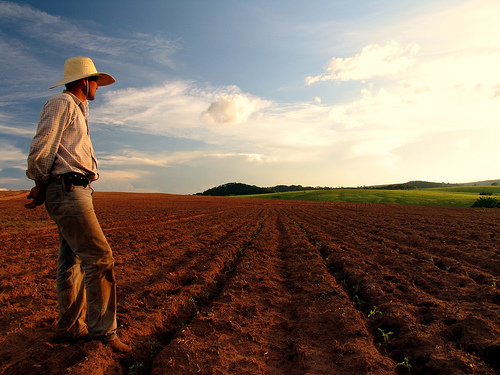
What we are witnessing now is not as much attached to the Ukraine crisis, as it is the continued ripple effects in that same supply chain.

The current grain issues are an outcome of a major supply chain disruption on the manufactured and processed food side, which is now exacerbated by higher replenishment costs and lower yields. Fertilizer costs have skyrocketed due to energy cost increases.

It is a perfect storm.

Without the Ukraine crisis surfacing, the grain (wheat, corn, soybean) and supply chain issues were already going to be a problem, and many of these current mitigation efforts -wrongly being attributed to Ukraine- would have taken placed without any regional conflict.  That’s why we predicted these issues last year, long before Ukraine-Russia was in the headlines.

The thing to keep in mind is that some smart governments, especially those nations where the government controls and monitors the food industry, can see these issues long before they surface.  If CTH could see these multinational food issues last year, you know the governments of China and Russia could also see them coming.  Some might even argue they gamed out the problem and are taking advantage of it right now. {Go Deep}

(more…)

Mark Steyn Discusses the Ukraine Conflict and Bigger Stuff, the Four Horsemen of the Apocalypse

The first white horse, pestilence (virus); the second red horse, war (Ukraine); the third black horse, famine (fertilizer shortage); and the final horse, death.

Stunningly, in this monologue Mark Steyn takes a tour reminding viewers of the past two years of western government action, while connecting the corporate mandates from the World Economic Forum.  That outline is brave considering the mention of the totalitarian shift amid New Zealand, Australia, Canada, Europe, and the United States when attached to the WEF is normally a third rail of discussion.

However, Steyn doesn’t stop at pointing out the hypocrisy of the collective west in their current drumbeat against Vladimir Putin; instead, he takes the last few years, puts in a deep breath, and then connects it… to the world’s most popular history book.  WATCH:

What I will say about this, I said last night… and I repeat it here for emphasis:

“If Joe Biden, NATO, the EU, World Bank, International Monetary Fund, Word Economic Forum and the multinational corporations in this alliance of Public/Private geopolitical partnerships, succeed in the fight against Vladimir Putin – I promise you, we are not going to like the world on the other side of their victory.”

With every fiber of my being, I mean that sincerely.

The global elite, the people and systems previously called the ‘New World Order‘, have taken a zero-sum position in this situation with Russia and Ukraine.  The construct of their approach is purposeful, intentional and provides no alternate options.  One side will win everything, the other side will be left with NOTHING.

On the globalist side, there is no one asking the question: at what cost, do we want to win?

(more…)

Senator Lindsey Graham Calls for the Assassination of Russian President Vladimir Putin, Things Are Getting Out of Control

In a public tweet tonight, Senator Lindsey Graham calls for the assassination of Russian President Vladimir Putin.

The propaganda push from the U.S. government is actually quite remarkable to watch unfold.   I mean seriously, there’s a point when you don’t go all-in because there has to be an exit option.   We are in very tenuous place, because no one is thinking about an off ramp…. it’s full speed ahead.

If Lindsey Graham, Joe Biden, NATO, the EU, World Bank, International Monetary Fund, Word Economic Forum and the multinational corporations in this alliance of Public/Private geopolitical partnerships, succeed in the fight against Vladimir Putin – I promise you, we are not going to like the world on the other side of their victory.

A few weeks ago, Canadian Prime Minister Justin Trudeau sent a clear and specific message to citizens in Canada when he sanctioned the trucker’s bank accounts.  Joe Biden, NATO and EU are right now sending a clear message to the citizens of the world, as they sanction Putin’s bank accounts and the Russian economy.

If you can’t see the connection, you are not thinking carefully enough about it.

Everything will be different now.

(more…)

The Motive for the Strategic Creation of BRICS Resurfaces in the Ukraine Conflict

The BRICS alliance is a strategic geopolitical partnership between Brazil, Russia, India, China and South Africa.  The nature of the alliance is based on trade and big picture economics.

Readers familiar with our discussions of trade and international finance, will remember the importance we previously discussed with BRICS after the 2016 election and President Trump representing economic nationalism for the first time in several generations.  In this outline, we are going to share the bigger picture of why BRICS should now be back on the center stage of American focus.

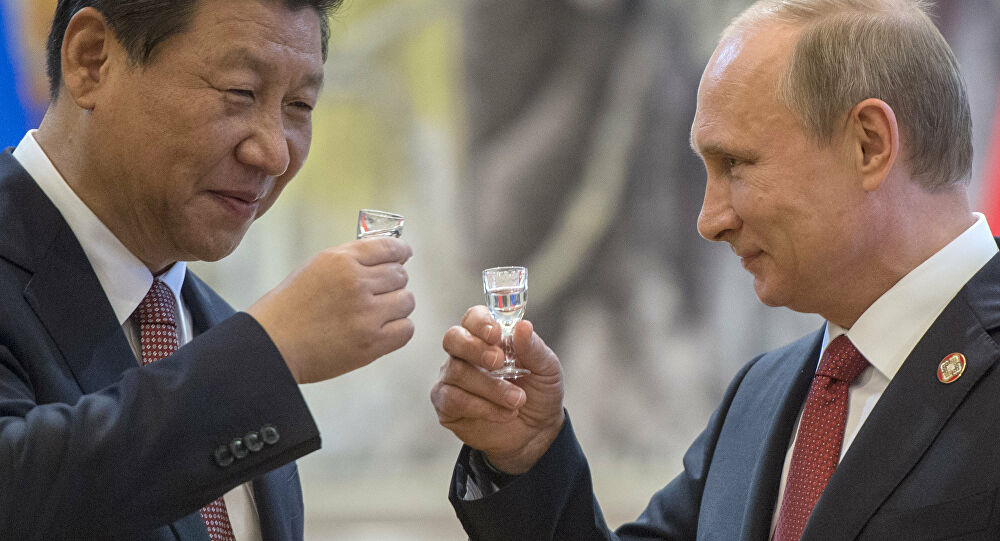
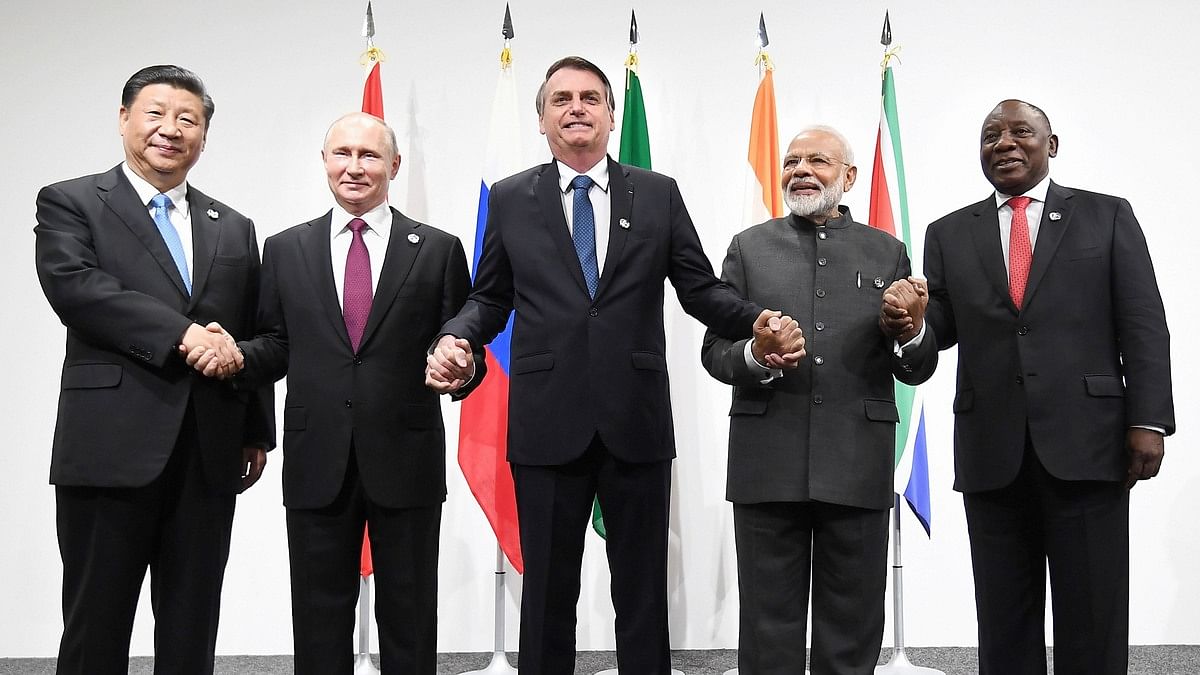
Xi Jinping (China), Vladimir Putin (Russia), Jair Bolsonaro (Brazil), Narendra Modi (India) and Cyril Ramaphosa (South Africa), the BRICS group.

The BRICS economic partnership was formed during the Obama administration.  Brazil, Russia, India, China and South Africa (BRICS) saw President Obama sub-contracting, actually giving away, U.S. trade policy to the U.S. Chamber of Commerce.  In the aftermath of the 2007 economic crisis created by the financial system, the BRICS group connected two central points that concerned them.

In the aftermath of the great housing/financial crisis, the relationships around the World Bank (WB), International Monetary Fund (IMF), EU central banking system and various multinational institutions and, more importantly, multinational corporations, merged even closer with the government.  The priorities of the Davos and World Economic Forum (WEF) crowd were now virtually indistinguishable from many national governments.

We are fifteen years downstream from that inflection point, and we are now seeing the outcomes.  The WEF is now giving direct instructions to installed politicians for government policy.  Put another way, multinational corporations are now telling government officials what to do.

Think of “The Great Reset” or “Build Back Better” or climate change, as examples.  Worse yet, those governments are doing exactly what the WEF has told them to do.

This corporate control of government is exactly what the BRICS assembly foresaw when they first assembled.  When multinational corporations run the policy of western government, there is going to be a problem.  In the bigger picture, the BRICS assembly are essentially leaders who do not want corporations and multinational banks running their government.

As a result, if you really boil it down to the common denominator what you find is the BRICS group are the opposing element to the WEF assembly.

(more…)

Energy Secretary Granholm Admits Biden Economic Pain and Gas Prices All Part of New Energy Transition

It was only a matter of time before someone had to admit what the instructions were within the Biden administration.  Today, the video surfaces showcasing Energy Secretary Jennifer Granholm making the admission.
During a U.S. Department of Energy roundtable, on February 28, 2022, launching the Biden administration’s Better Climate Challenge initiative, Energy Secretary Jennifer Granholm explained the core of the Biden energy policy.  Underneath all the blocks to oil and gas development, is the larger objective to transition away from fossil fuels to Green New Deal climate change initiatives.

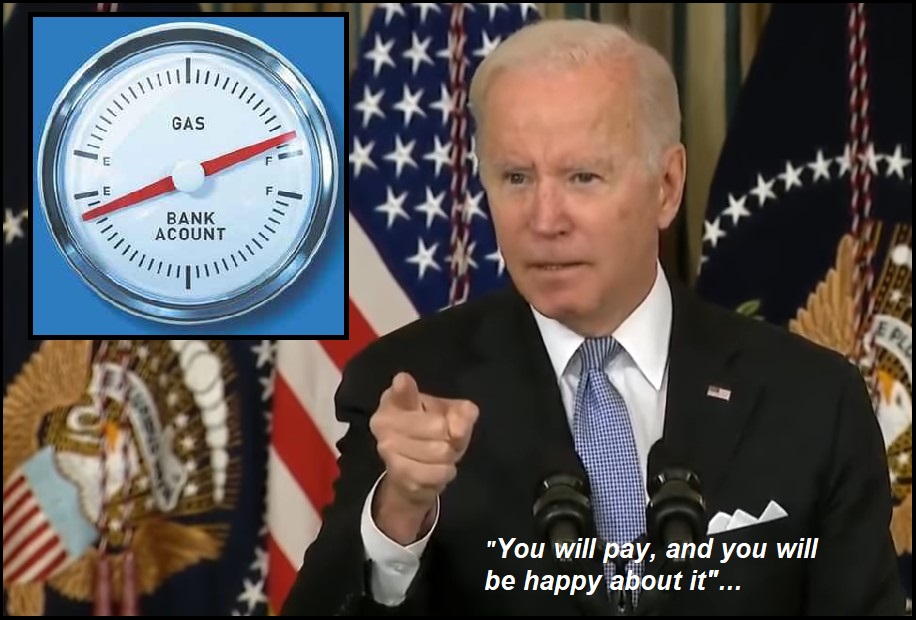
$10/gal gasoline is a feature, it is part of the plan. Rising electricity rates and massive increases in home heating and cooling costs are part of the plan. The downstream impacts of inflation inside the entire U.S. economy are structural issues to be managed.  The financial pain to the U.S. citizen is the biggest problem they need to manage.

Within this ‘transition’ process, the administration needs something they can point to as a false justification. That’s where the Ukraine-Russia conflict serves their current interests.  The Biden team need Americans to blame something or someone else, as they execute this policy.  First it was COVID, now it’s Vladimir Putin. All of this is being done on purpose.  WATCH:

(more…)

Senator Lisa Murkowski Comes Out in Favor of Even Higher Gas Prices in Order to Adequately Punish Russia

This DeceptiCon, this specific one, owned by the multinational corporate conglomerates, is one of the worst in office.

Alaska Senator Lisa Murkowski tells Politico tonight that she is in favor of higher gas prices for Americans if that’s what it takes to punish Vladimir Putin.

…”We’re going to see price increases. Nobody wants to see that. This is going to hurt. But we need to recognize Europe is in the midst of a war w/ Russia. Innocent people are dying. We have not been in as volatile as a situation as anytime in my life.“…

~ Senator Lisa Murkowski (Alaska)

Here we go with the narrative of you being unpatriotic if you are not willing to financially suffer the pain inflicted intentionally by the U.S. government.  Not willing to pay $7/gal for gasoline?  You’re selfish.  Not willing to forego a better life for your family, in order to save Ukraine?  You are a horrible person.

However, this narrative is even worse, because the NATO (aligned with World Economic Forum) economic warfare is not only a combination of ideology and corporate influence, but it is also made worse by U.S. government energy policy – which is aligned with the multinational corporations demanding the confrontation.  Effen’ FUBAR all the way around.

(more…)

Has The Great Global Food War Just Begun?

Hindsight is not only 20/20, in this case it’s a little alarming. 

Last year, we were discussing the massive increases in food and farming costs associated with increased fertilizer prices.  By the time we got to late January, the World Bank (WB), United Nations (UN) and the Davos / World Economic Forum (WEF) group were discussing it.  At first the perspective was the potential for lower crop yields creating increased global famine.

However, if we apply a little hindsight from the geopolitical world surrounding the current issues in Europe, specifically Ukraine, and then consider the background of what the Biden team were doing, while Russia, Belarus and China were stockpiling, things look a little more concerning than just lower crop yields as an outcome of higher natural gas prices – vis-a-vis nitrogen fertilizer.

As noted by Forbes last month, “Russia and China have imposed export restrictions on fertilizer. Both are, or were, big exporters of plant food. The decline in exports makes getting the vital nutrients harder across the globe. China and Russia account for 29% of world exports for nitrogen-based plant food. The two countries also have significant, albeit, smaller shares of the phosphate and potash markets, respectively, the report states.”

Now, keep in mind how Belarus helped Russia with the current military operation.

In August of 2021 the United States, Canada and the EU hit Belarus with punitive sanctions on the one-year anniversary of what they called a fraudulent election.  As noted by Politico at the time, “The sanctions partially ban imports of potash fertilizer, petrol and petrol-based products from Belarus.”  […] Targeting Belarus’ potash sector was a strategic move insofar as the country is the second largest exporter of the fertilizer behind Canada, covering 21 percent of the world’s potash exports in 2019.

In September of 2021, at the same time as China was investing heavily in the purchase of U.S. farmland, Beijing simultaneously announced a ban of export for phosphates until June of 2022.  With China banning export of the source material, the global fertilizer market now needed to look elsewhere for future purchases.

(more…)

Kamala Went Full Buttigieg Again

Kamala and Pete have been in a contest to see who can use the most words without actually saying anything.  Previously, Pete set the record during his presidential bid of 2020. However, in 2021 Kamala got serious about the contest.  Harris fired her communications team and brought in new brand image consultants to help her finally achieve that first-place status which was so elusive.

Appearing on NBC’s “Today” show with Savannah Guthrie, the additional training paid off.   Kamala Harris was asked about the U.S. economic impact of sanctions on Russia and whether stopping purchases of Russian oil was possible.  This was the opening Harris had been looking for to highlight her sharpened linguistics.

Using the communication team notes for reference (watch her eyes), for almost a minute Kamala Harris assembled 247 various words in a random sequence. The result is remarkable. WATCH: (prompted):

(more…)

Oil Prices Pass $112 Barrel, OPEC Holding Firm, Here Comes $7 Gasoline

Everything including oil, natural gas, wheat, and fertilizer is skyrocketing in price right now.  Ten- and twenty-year records are being eclipsed, as energy prices are soaring on the back of oil flirting with $114 a barrel.  Unfortunately, here comes more inflationary pain, and everything is being blamed on the Russia-Ukraine conflict.

Toward the end of last year, we warned that fertilizer costs were going to harvest costs in 2022 (field to fork, go deep), long before Ukraine came into the picture.  Unfortunately, future wheat prices reached $10.59 a bushel today, the highest since March 2008.  Additionally, corn prices have passed their highest rate since December 2012.

It may seem like those crops are not that important.  However, keep in mind that corn, wheat and soybeans represent the baseline for not only grain production in the U.S, but they are also the primary feed products for proteins: chicken, pork and beef.  We are going to feel this second wave surge at the grocery store.  Hopefully everyone has prepped.

Additionally, oil prices have jumped to near eight-year highs. Brent crude, the global oil benchmark, rose as high as $113.94 a barrel, the highest since June 2014, and has been trading around $111 for most of the day.  If you were paying $4/gal for gas, these oil rates add around another .50¢ today alone.  Yes, you read that correctly, inbound tankers of gasoline will offload at your convenience store at a rate ten percent higher than yesterday.

Making matters worse, the Joe Biden energy policy -focused almost exclusively on green energy- is making any investment in domestic oil production tenuous at best.   The major oil companies are wary of spending money for U.S. energy development in a climate where the U.S. government is specifically against that effort.

(more…)

Trade Deficit Jumped 7.1 Percent in January Setting All Time Record, While 2022 Inflation Estimates Now Double Previous Forecasts

Remember that fourth quarter GDP result that seemed manipulated?  Well, I suspect the record setting trade deficit now being reported for January is an outcome of those pesky fourth quarter trade results being intentionally skewed by the withholding of December 2021 import data.

Additionally, methinks we are likely to get some increased economic clarity about why the White House needed Ukraine to become the big shiny thing with such urgency.

Just like everything else, geopolitical dynamics –especially those surrounding entrenched ideology– are always about the economics.  Someone, eventually, always has to pay.  Follow the money; there are trillions at stake.

First, keep in mind that missing Port of Los Angeles result from December as you review the import/export details:

(REUTERS) […]  The goods trade deficit jumped 7.1% to an all-time high of $107.6 billion last month. Imports of goods increased 1.7%, led by food and motor vehicles. There were also large increases in imports of industrial supplies, capital and consumer goods. Imports of other goods, however, tumbled 15.3%.

Exports dropped 1.8%, weighed down by consumer goods, motor vehicles, food and other goods. But exports of capital goods and industrial supplies increased. Trade has been a drag on gross domestic product for six straight quarters. (read more)

That missing Port of LA December import data, now being introduced into the month of January, might just be the cause of the “all time high” noted above.  I will bet one sustainable rice cake on it.

Next up, inflation.

(more…)