In the aftermath of the 2020 election House democrats led by Nancy Pelosi directed a national pantomime from Washington DC that extremists were running amok and terrorizing congress. The January 6 Committee was intended to further establish that narrative.
Pelosi called up the national guard, put fences and barbed wire around congress then installed metal detectors, all as part of the theater for manufacturing the domestic violent extremist narrative. The media engineered the supportive narrative and the ridiculous pantomime continued throughout the past two years. However, as congress now changes hands and republicans take control, the fences are taken down and the metal detectors are being removed.
Colorado Representative Lauren Boebert highlights the return of normalcy. {Direct Rumble Link} WATCH:
However, against the backdrop of revelations from the Twitter Files where the intelligence apparatus, Dept of Homeland Security and FBI were part of the government operation to influence public opinion, the possibility of an FBI inspired and coordinated attack against the Capitol is now more likely than previous.
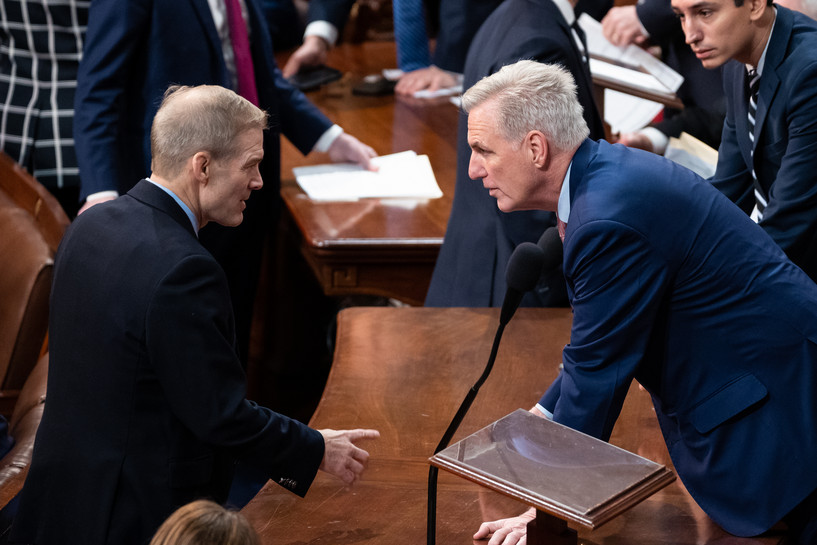
The House of Representatives failed to elect a House Speaker through three rounds of voting. Approximately 20 members of the Republican conference will not vote for Kevin McCarthy, as a result there is a stalemate. The Republican caucus requested adjournment until noon tomorrow, Wednesday January 4th.
Essentially Kevin McCarthy needs to: (1) step aside and accept he will not be Speaker, or (2) continue the House voting in futility, or (3) find a way to convince the Republican holdouts to support him.
“They’re just not into you Kevin”…
This has happened before, just not in the modern political era. The holdouts want Jim Jordan to accept the Speaker position.
Don’t get defrosted, worried or overly attached to any outcome. This is simply the way our system was designed.
The House of Representatives continues efforts to elect a Speaker of the House. Republican candidate Kevin McCarthy failed in his first-round effort on the floor in dramatic fashion. A group of conservatives blocked his path amid one of the smallest GOP House majorities in history. Democrat Hakeem Jeffries had the highest overall number of votes, but still not enough to become speaker.
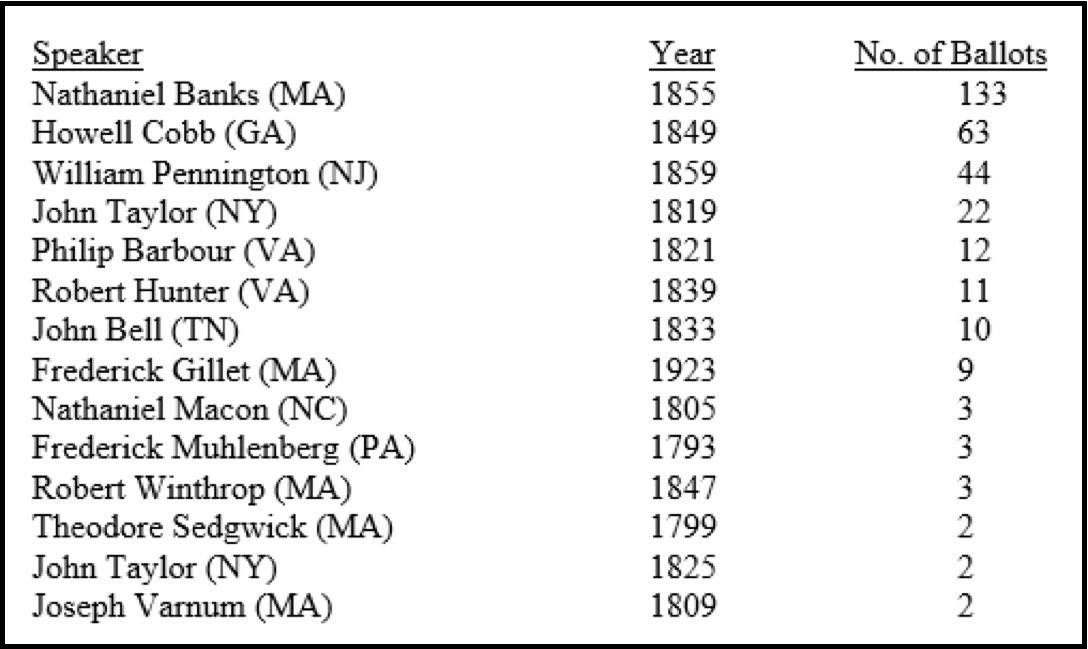
As noted by Politico, “In a stunning moment of chaos on the first day of the new Congress, McCarthy and his allies will now attempt to quell the revolt, preparing members to take repeated votes as pressure mounts from their colleagues. It will mark only the second time since the Civil War that a party will need multiple attempts to choose its leader on the House floor — with all business in the chamber, even the swearing-in of members, halted until a speaker is chosen.”
Voting continues, video below. UPDATE After Three Failed Votes, the House is adjourned until noon tomorrow:
Republican house member Matt Gaetz delivered a fiery speech in opposition to Republican candidate for Speaker of the House, Kevin McCarthy.
Florida Representative Matt Gaetz nominates Ohio Representative Jim Jordan, and then gives a blistering critique of California Representative Kevin McCarthy as a selfish, self-centered political sellout who will do anything to gain power and then undermine the Republican caucus he claims to represent. WATCH:
.
Ohio Representative Jim Jordan’s speech to the House of Representatives is below:
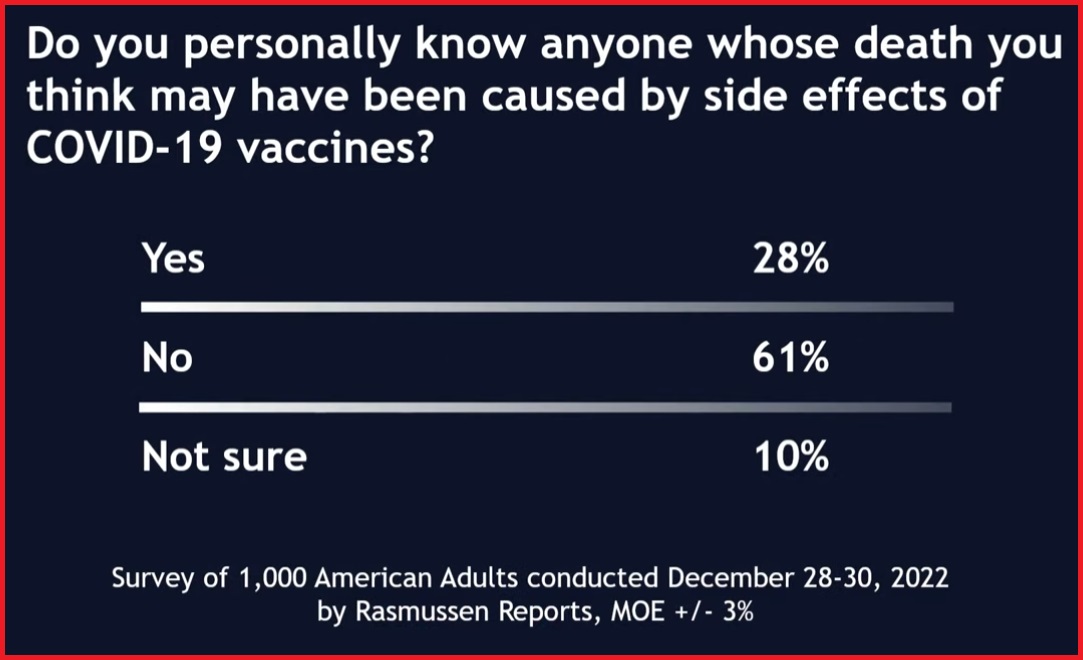
A rather remarkable poll from Rasmussen [Full Data Here] shows some remarkable public polling outcomes about the COVID-19 jab.
According to the survey of 1,000 Americans, 28% of the polled respondents know someone personally who died as a side-effect of the COVID-19 vaccination. The results cut across all cultural and political boundaries as reflected in the data. According to Rasmussen, “Twenty-eight percent (28%) of adults say they personally know someone whose death they think may have been caused by side effects of COVID-19 vaccines, while 61% don’t and another 10% are not sure.”
There have been very few surveys of Americans (or other country citizens) for their impression and knowledge of the vaccine side effects. However, this random poll is likely to trigger additional, albeit perhaps defensive, inquiry. If over one-in-four Americans believe they know someone who likely died as a result of the vaccination, that is an alarming outcome.
The Rasmussen survey aligns with a recent report that only “15% of people eligible for the Covid booster shot that targets the omicron variant have gotten it … according to a recent poll by the Kaiser Family Foundation” {link}, and would certainly explain why 85 out of every 100 people who took the initial jab have refused further vaccination efforts.
Forty-eight percent (48%) of Americans believe there are legitimate reasons to be concerned about the safety of COVID-19 vaccines, while 37% think people who worry about vaccine safety are spreading conspiracy theories. Another 15% are not sure. (more)
The head pollster for Rasmussen, Mark Mitchell, appeared with Steve Bannon to discuss the alarming survey result.
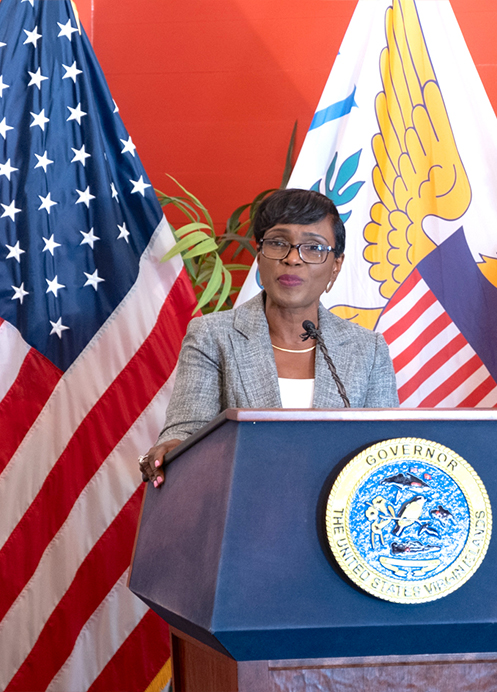
After successfully settling a $105 million lawsuit against the estate of Jeffrey Epstein in early December, U.S. Virgin Islands Attorney General Denise N. George then filed a lawsuit against JPMorgan Chase saying the “bank knowingly provided and pulled the levers through which recruiters and victims were paid.”
(US Virgin Islands) – Attorney General Denise George was terminated on Saturday after serving four years with the Bryan administration, the Consortium can confirm.
The decision by Governor Albert Bryan to fire the A.G. came just days after Bloomberg News revealed that Ms. George in her capacity as V.I. attorney general had filed a lawsuit against JPMorgan Chase — the largest bank in the United States and the world’s largest bank by market capitalization — without first informing Governor Bryan of such a major action, said a person with knowledge of the matter.
The lawsuit claims JPMorgan Chase facilitated convicted felon Jeffrey Epstein’s abuse of women and girls, alleging that the bank should have known about Epstein’s illegal activity and as part of its anti-money laundering procedures, should have reported their client to authorities.
George accused the bank of turning a blind eye to the sex trafficking operations that went on on Epstein’s private island in the USVI, Little St. James. (read more)
AG George is fired from her position as USVI AG after filing a lawsuit against JPMorgan. Where did Joe Biden go on vacation? The U.S. Virgin Islands.
The New Year brings a look of forward-looking economic perspectives from major financial institutions. Unfortunately, if the perspective of Bank of America Chief Economist Michael Gapen is reflective of the larger institutional analysis, the financial pretending is anticipated to continue.
[Side Note: Notice how they will all start talking about ‘deglobalization’ in 2023. There’s a reason for that that I will touch on in the IMF interview to follow]
Appearing on Face the Nation Gapen accurately indicates the U.S. housing market is already in a steep economic recession, housing prices falling rapidly with a considerable amount of distance to go (-30% range), and the overall housing market will likely be in this situation for around two years. On a macro level the Bank of America indicators line up with the general housing trajectory. From a lending standpoint, Gapen would have specific insight.
Beyond the housing sector, Mr. Gapen starts to get sketchy. He anticipates inflation taking 24 to 36 months to lower to the norm 2% range. That is generally in line with CTH expectations; however, nowhere in the analysis does Gapen even mention energy costs and the overall impact to the economy from energy policy. You will note this absence will be present in almost all financial punditries. Mentioning “energy policy’ as a cause of economic pain is a third rail amid his peer group; it is simply not permitted.
Astute readers will note the great financial and economic pretending that surrounds the Build Back Better and Green New Deal climate change agenda will not be discussed by anyone, ever. The massive price impacts, the supply side inflation pressures, are baked into the western global economic outlooks. It is strictly verboten to talk about climate change policy being stopped, modified, reversed or even, well, gasp, removed. WATCH:
[TRANSCRIPT] – […] BANK OF AMERICA CHIEF ECONOMIST MICHAEL GAPEN: Happy New Year as well. Thank you for having me on.
MARGARET BRENNAN: You know, a majority of voters polled by The Wall Street Journal say that the economy is going to look and feel worse in 2023. What is your forecast?
GAPEN: So I think that’s probably true. I think we’re in a situation where the risk of recession is high, may not be a deep and prolonged one. But we’re in a situation where the economy has recovered very rapidly from- from COVID, and it’s come with a lot of inflation. And the Federal Reserve is trying to slow down the economy, to bring inflation down. And in the past, more often than not, that’s coincided with some sort of recession in the US economy and the U.S. labor market. It’s not baked in. It’s not for certain. We may be able to avoid it, but I would agree that the outlook by most people who sit in the position that I do think 2023 could be a difficult year for the U.S..
MARGARET BRENNAN: So we may be able to avoid recession?
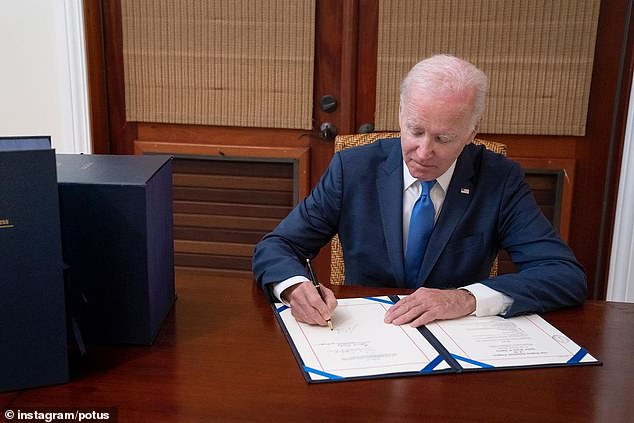
According to recent media reports the $1.7 trillion omnibus budget and legislative bill was sent to the White House late Wednesday night. However, Joe Biden and his familial entourage had already departed DC for their holiday vacation in the U.S. Virgin Islands.
However, the continuing resolution/omnibus spending bill needed to be signed by December 30th in order to fund government without technical interruption, so the White House sent the bill all the way to St. Croix for signature via Spirit Airlines.
(Via Daily Mail) – The White House flew the federal budget to St Croix for President Joe Biden to sign into law ahead of the December 30 deadline, so the government didn’t shut down over New Year’s Eve.
The 4,000-page, $1.7 trillion omnibus package to fund the government through September 2023 arrived at the White House on Wednesday evening, after it completed the legislative enrollment process. On Thursday, it was flown to St Croix, where Biden is spending the holiday week in a luxury villa owned by a billionaire Democratic donor.
The bill arrived in the US Virgin Islands via Spirit Airlines on Thursday evening around 5:30 pm Eastern time. A little over an hour later, Biden’s POTUS Instagram account posted a picture of the president signing the bill.
The caption of the Instagram post read: ‘Today, I signed the bipartisan omnibus bill, ending a year of historic progress. It’ll invest in medical research, safety, veteran health care, disaster recovery, VAWA funding – and gets crucial assistance to Ukraine. Looking forward to more in 2023.’
We accept the named legislation “Inflation Reduction Act” (IRA) is a legislative misnomer intended to obfuscate the true construct of the bill. The IRA was factually the ‘green new deal’ program packaged under the guise of an ‘inflation reduction’ premise. However, in order to discuss the outcome of the content we have to play the game of pretending around the purpose of the legislation.
Within the IRA there was a $7,500 tax credit for American made Electric Vehicles. The intent of the legislation was to provide incentives for U.S. consumers to purchase ‘sustainable’ and environmentally friendly electric cars, trucks, SUV’s etc made in America.
The Congressional Budget Office (CBO) scored the bill with this legislative intent in mind. However, the Treasury Department is now taking apart the granular details of the legislation in order to qualify foreign made vehicles for the $7,500 credit. The rules interpretation from the Treasury Dept essentially negates the CBO score, and the outcome is going to be much more expensive than initially stated.
Because the $7,500 comes in the form of a tax credit, the IRS (Treasury) is the institution making the determinations for qualification. Treasury is changing the qualifications to permit basically any EV to qualify, by parsing a difference between a leased vehicle and a purchased vehicle. Additionally, Treasury is changing the battery sourcing aspect by qualifying essentially any trade agreement as a Free Trade Agreement (FTA), saying the term Free Trade Agreement was undefined in the legislation.
As an outcome & simply cutting to the chase, EV batteries from just about anywhere, inside EV vehicles from basically anywhere, that are purchased as leases from just about any auto manufacturer, will qualify for the $7,500 credit. It’s all a shell game, with the Biden administration determining where the pea is located.
Dec 29 (Reuters) – The U.S. Treasury Department said Thursday that electric vehicles leased by consumers starting Jan. 1 can qualify for up to $7,500 in commercial clean vehicle tax credits, a decision that makes those assembled outside North America eligible.
Oh, now this is just the proverbial cherry on the fishy cake in Arizona. The results of a mandatory recount in Pinal County, Arizona, are set to be released today, December 29th, showing “significant discrepancies” from the original vote. Results favoring the republican candidates [Details Here].
Then there’s this very interesting development….
“The results of the statutorily required recount in 3 races were expected to be released on December 22nd however, inexplicably, Secretary of State Katie Hobbs petitioned the courts to have the results go directly to her office and asked to postpone the release until December 29th.”
Apparently, in her role as Secretary of State Katie Hobbs filed a motion with the court to seal the final recount result until after the lawsuit filed in Maricopa County against her was concluded. That means the Lake team did not have the results of three recounts to use in court as evidence that something sketchy in Arizona had taken place.
It appears Mrs. Hobbs intentionally did not want the recount information coming out until her lawsuit to become governor was completed.
 However, the continuing resolution/omnibus spending bill needed to be signed by December 30th in order to fund government without technical interruption, so the White House sent the bill all the way to St. Croix for signature via Spirit Airlines.
 Within the IRA there was a $7,500 tax credit for American made Electric Vehicles. The intent of the legislation was to provide incentives for U.S. consumers to purchase ‘sustainable’ and environmentally friendly electric cars, trucks, SUV’s etc made in America.