This is weirdly revealing (Hat Tip Technofog).
In a court filing today by Special Counsel John Durham [pdf here] it’s noted that previously indicted Igor Danchenko, the primary sub-source for Christopher Steele’s fraudulent dossier against Donald Trump, is now represented by the same lawyers representing Hillary Clinton’s legal interests. John Durham is asking the court to evaluate the legal conflicts:
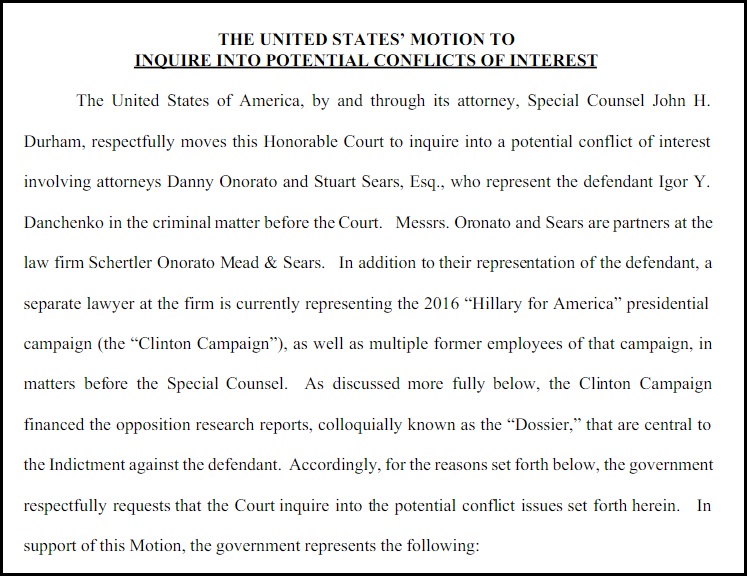
Why would the legal firm representing Hillary Clinton (to the Durham probe) step-in to represent Igor Danchenko in his criminal indictment?
The only logical reason would be for Danchenko to represent a legal risk to the interests of Hillary Clinton, likely through the direct association between Hillary Clinton and Charles Dolan, Danchenko’s collaborator and the liaison to Chris Steele from the Clinton campaign.
As a result of the Durham indictment, we know Igor Danchenko was working closely with Democrat Party public relations executive Charles Dolan to funnel the fabricated source material to Chris Steele. The Clinton team’s communication and contact with Charles Dolan would represent a legal risk to Hillary Clinton.
If Charles Dolan and Hillary Clinton were in communication, it seems like that would be the motive for Clinton’s lawyers to want to control Danchenko’s legal status and any statements to John Durham or the court. More than likely, the people in/around Hillary Clinton are the ones paying the law firm to represent Igor Danchenko.
 The issue stems from exceptionally high previous vaccination rates reported by the Centers for Disease Control (CDC) that remained static despite the same CDC reporting that vaccines continued.
 I have often used the example of making bread {
 Patrick Murray is a notoriously partisan pollster from Monmouth University {
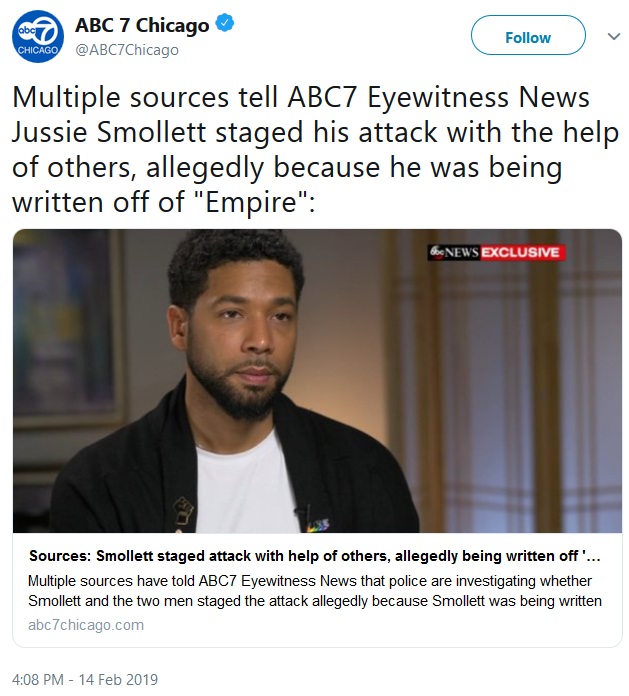 The two brothers testified to being paid $3,500 to pull-off the most transparent and goofy hate crime in recent memory. All of the witness statements align with CCTV footage, cell phone records and other evidence that showed the trio even rehearsed the late night fake crime. There is not a shred of evidence that counteracts the entire fiasco as a ridiculous hate crime hoax. Yet for some insufferable reason this case reached a courtroom.