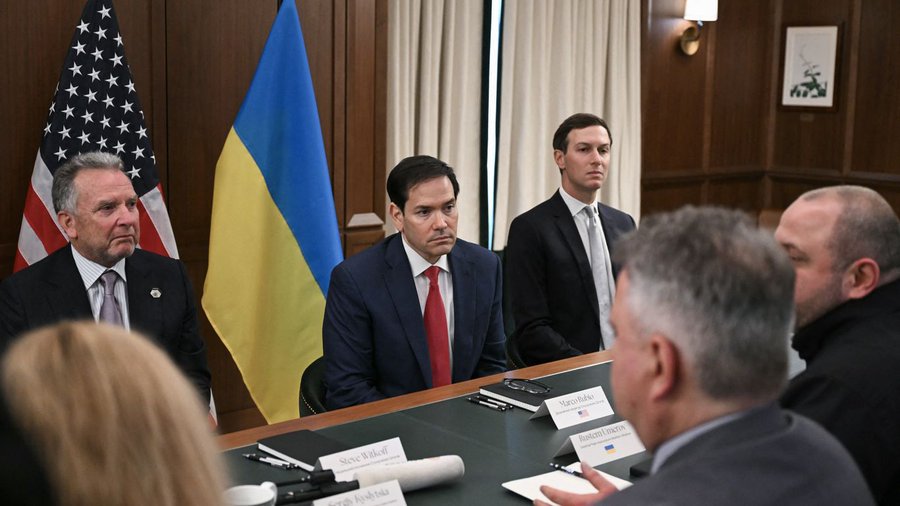
Senators Richard Blumenthal (U-DC) and Lindsey Graham (U-DC) have scheduled a delegation of Ukraine officials to come to the Senate tomorrow and help organize the pro-Ukraine narrative. The Senate is debating the anti-Russia sanctions package and key players are coordinating retention of the Ukraine payment system.
According to Politico all 100 senators have been invited to the lobbying/narrative engineering meeting, and almost all of them are likely to attend. From obvious indications, including Blumenthal and Graham supporting the recent Ukraine attacks against strategic Russian airbases, it would appear the Senate is prepared to dispatch President Trump’s efforts to organize a ceasefire.
As with all things Washington DC, to find the motive follow the money.
WASHINGTON DC – A Ukrainian delegation is set to brief U.S. senators Wednesday as lawmakers weigh a sweeping sanctions bill targeting Russia and its biggest energy customers, China and India.
Sen. Richard Blumenthal (D-Conn.) said in an interview that he organized the meeting with Sen. Lindsey Graham (R-S.C.), and noted all 100 senators were invited to attend the closed-door session.
“It’s a pivotal moment in Ukraine — and crunch time for the Senate on this bill,” said Blumenthal, noting that the legislation now has 82 co-sponsors, evenly divided between Democrats and Republicans.
Many articles are being written and much typeset is being exhausted by people talking about the recent revelations that the FBI has a designated information silo called “prohibited access” within its record keeping system. Allow me to jump this readership well into the future and give you a cliff notes summary of the logical conclusion(s).
The FBI needs a filing system for information designated “Prohibited Access” because the FBI handles extremely sensitive covert operations, including spies both foreign and domestic, within its agency. The storage of extremely sensitive national security information is not the issue.
Prior to 2007, in the olden days, the files and information were under lock and key in secure rooms, with access only available to the FBI director.
The issue is that since around 2007, the “Prohibited Access” definitions have expanded as FBI leadership began using the designation to hide information that was detrimental to their interests. The issue is the type of information hidden within the now electronic system, is evidence of activity the FBI conducts that they don’t want the American people to know about.
Jumping you ahead of the curve, there’s even a level of FBI information assembled that exceeds the “Prohibited Access” qualification. That information is transferred to CIA vaults that are available due to the same legislative authority that empowers the CIA to operate without any oversight [other than the Senate Select Committee on Intelligence (SSCI)]. The CIA is the “sister agency” to the FBI.
That puts that to rest. During a White House press briefing today, Spokesperson Karoline Leavitt was asked if Ukraine President Volodymyr Zelenskyy notified President Trump in advance of the attack on Russian nuclear-capable long-range bombers. Leavitt replied curtly, “he was not.”
Last week Ukraine presented President Donald Trump with their “term sheets,” what they require in order to accept a ceasefire. Today in Istanbul, Turkey, the Russian Federation presented the Ukraine delegation, and likely a transmission to the White House, with the Russian “term sheets.”
This further clarifies the content of the significant meetings this afternoon in the White House, where President Trump assembled his “military leadership” and likely foreign policy team.
Vladimir Medinsky, the head of the Russian delegation at the talks in Istanbul, said Russia is offering Kyiv a temporary ceasefire. Medinsky said that Russia has prepared a two-part “memorandum” proposing a ceasefire and ending the war it started. The second part of the “memorandum” provides for “variability” and “several paths”, he said.
Here are the two primary parts of the Russian terms: Section 1 “Settlement of Crisis”, and Section 2 “Terms for Ceasefire”.
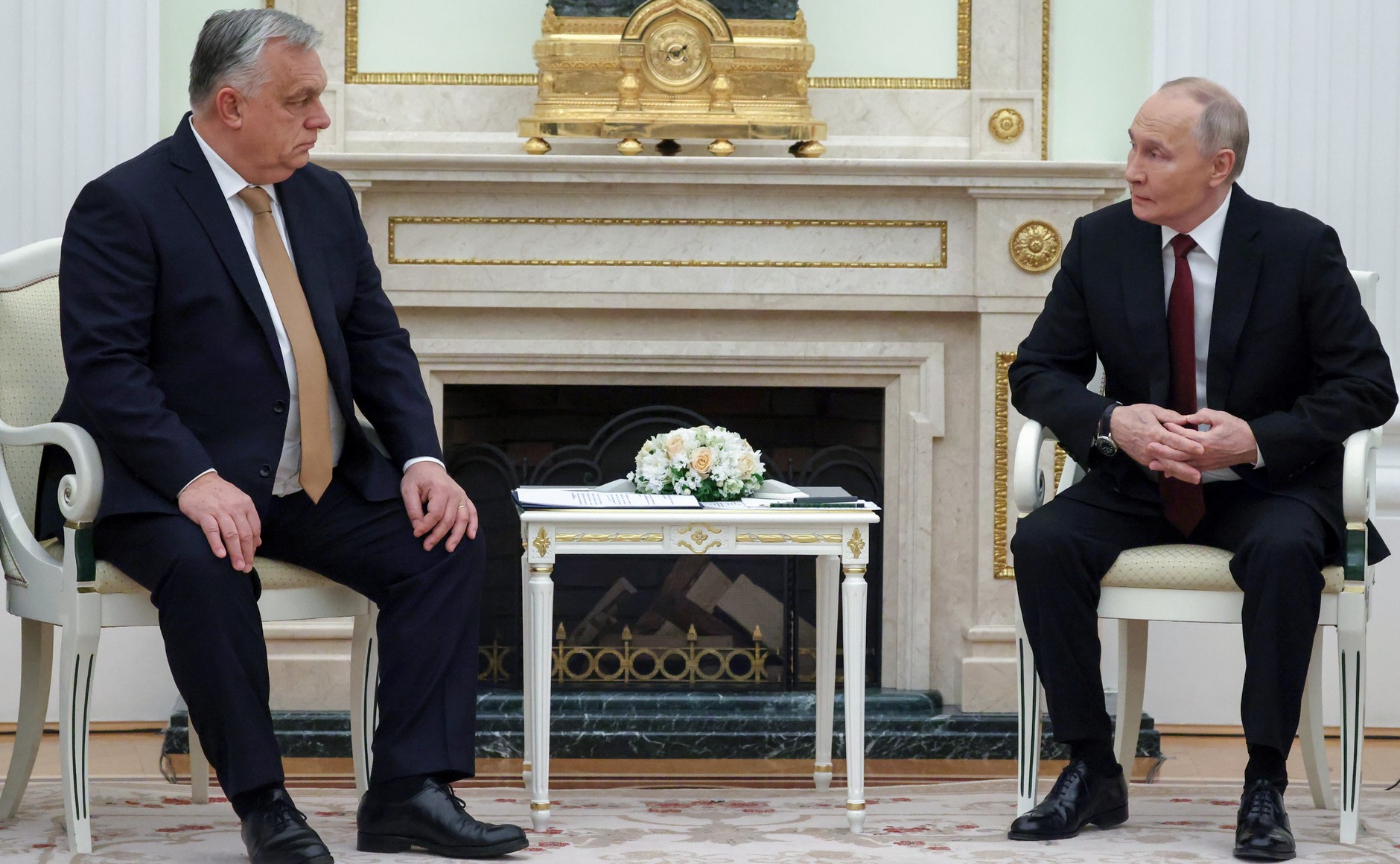
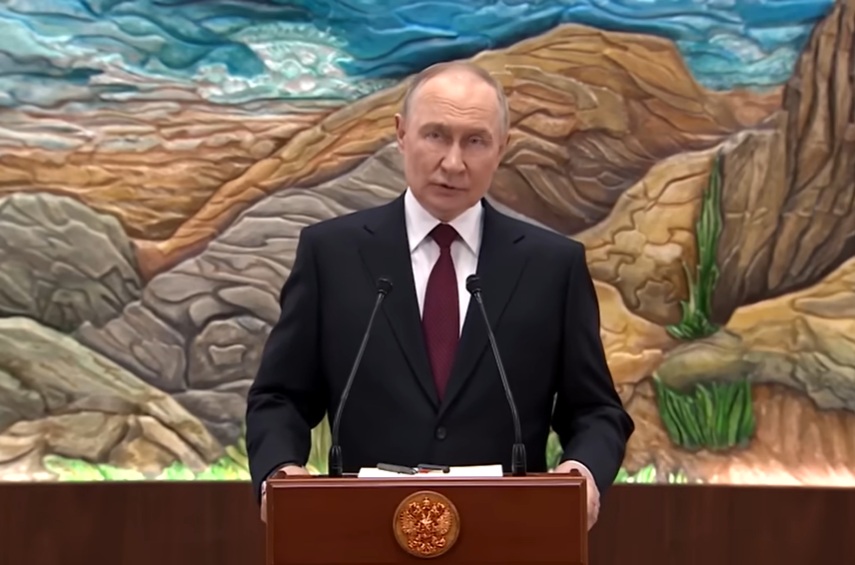
It should also be noted, the lack of a severe response by Russian President Vladimir Putin to yesterday’s attack on Russian air force bases likely indicates President Putin has what he wants. These terms and condition sheets were created prior to the Ukraine attack on Sunday. These are Putin’s conditions to stop further military conflict.
In Section II containing the “Ceasefire Conditions” (below) Russian President Putin demands Ukraine conduct democratic elections (#7, #8). Putin seemingly knows western installed President Volodymyr Zelenskyy will lose and as a consequence weaken the western influence operations. Both President Trump and Secretary Marco Rubio have previously advocated for the same.
As anticipated, based on the previous comments by White House Press Secretary Karoline Leavitt, following the significant increase in NATO war likelihood, President Trump met with military leaders today.
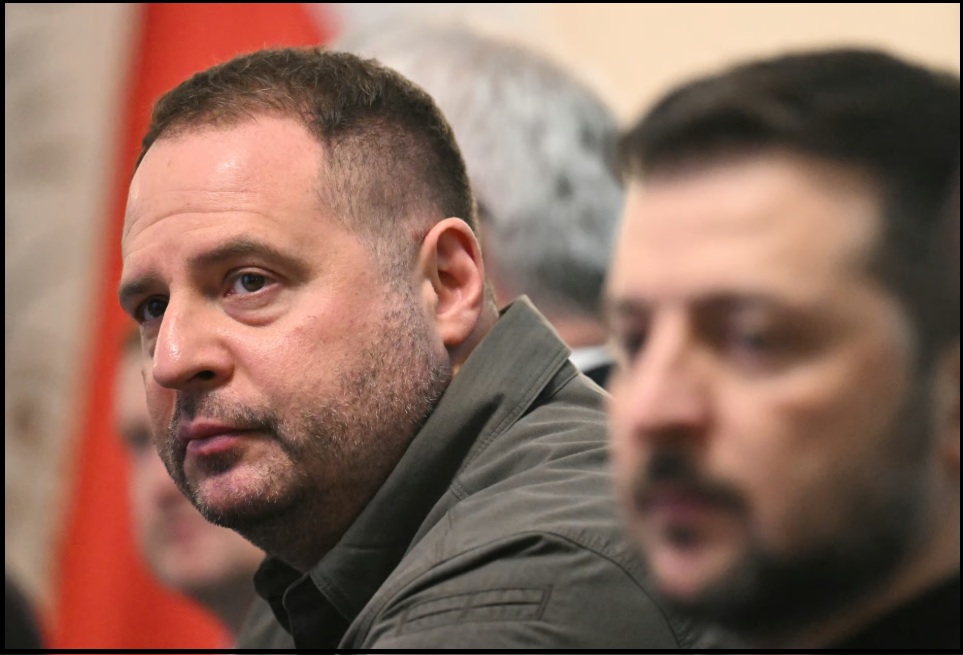
President Trump has not made any statement after Ukraine launched an attack yesterday deep into Russia targeting long-range nuclear capable bombers. Russian President Vladimir Putin has also remained quiet throughout the day today. However, Ukraine President Volodymyr Zelenskyy speaking from Vilnius, Lithuania, publicly bragged about the operation today.
According to Turkish officials (note silence from Russia & Ukraine), the previously scheduled meeting between Russian and Ukranian negotiators ended today after less than an hour. There are no details about what took place inside the Ciragan Palace in Istanbul, just that once the meeting attendees were seated and gave initial remarks, the event dissolved. Both the Russian and Ukrainian teams left the building.
White House Press Secretary Karoline Leavitt appeared full of nervous energy as she spoke to journalists outside the White House, noting that President Trump was in meetings and discussions all day while taking phone calls.
U.S. Secretary of State Marco Rubio and Russian Foreign Minister Sergey Lavrov have also remained silent.
Inside Russia the general sense is one of preparation. As I noted in my debrief from last year, the government of Russia has been preparing the Russian people for an expanded escalation of the conflict for quite some time. The Russian media are deliberately pointing to Ukraine -and only Ukraine- in their domestic reporting of the attacks. There is no mention within Russian media of EU, NATO or USA support for the events that took place Sunday; however, there were a few mentions of Great Britain as a likely assistant to the attacks.
First the cliff notes version: There’s an important detail to remember. People are laughing at the long-range Russian bombers being left out in the open, vulnerable to attack. However, the bomber visibility is required as part of several nuclear agreements between the USA and Russia (SALT and START). Our U.S. long range nuclear capable bombers, covered under the same agreements, are also visible.
Ukraine President Zelenskyy is playing with fire by targeting them, which also explains why Zelenskyy never told President Trump in advance.
The U.S and NATO have provided the means. However, #1) did Ukraine President Volodymyr Zelenskyy just exploit a vulnerability by targeting Russian long-range nuclear capable bombers? and #2) was the CIA and NATO intelligence community a willfully blind participant knowing they would benefit?
Both the Strategic Arms Limitation Treaty (SALT) and the Strategic Arms Reduction Treaty (START), call for U.S. and Russian long range nuclear capable bombers to remain “visible andobservable by national technical means of verification.” That open visibility creates a mutual vulnerability as well as a method of surveillance and verification for both the USA and Russian Federation.
Volodymyr Zelenskyy, and by extension his NATO enablers, just exploited that SALT/START vulnerability and used drones to attack Russian bombers covered by USA-Russia treaties. There are reports (and videos) now surfacing from inside Russia showing the Russian Federation moving strategic long-range mobile missile launchers into position for a counterattack against Ukraine.
This situation is obviously very fluid and let us all hope that President Trump and President Putin are in communication about this escalation as created by Zelenskyy and his enablers, even if -and probably especially if- our own intelligence agencies are part of the enabling.
Think about the ramifications of NATO enabled Ukraine targeting major Russian military assets which are vulnerable only because they are part of a previously agreed U.S-Russia negotiation to remain vulnerable. In essence, an argument can be made by Russia that NATO -and by extension us- have targeted nuclear capable missile systems, and those systems were protected by the SALT/START treaties. How would we respond if an adversary launched a strike against our strategic long-range nuclear capable bombers in the USA?
The basic outline of what took place are now a bit clearer. In what was called “Operation Spider Web” Ukraine counterintelligence operatives staged a series of semi-trucks near five strategic air bases deep inside Russia. The trucks were loaded with explosive drones, and the drones came out and attacked the bases. Most of the truck drivers and drone operators were captured by Russian military. It was a suicide mission.
According to Ukraine government officials the mission was a big success; however, the claim of 40 strategic long-range Russian bombers being destroyed seems more like a PR narrative than likely actual outcome.
Factually, it was a counterintelligence success to pull off such a well-coordinated significant operation deep inside the Russian Federation. However, on the other hand this operation outlines how Russia is more like the USA than people think as it relates to the locations of their military bases and the vulnerable proximity around them.
Most Americans think of Russia as some form of locked-down totalitarian state where every square inch is under strict surveillance. My recent travels throughout Russia highlight exactly the opposite. Russia is far more open and unmonitored; yes, even around military bases, than our own country. There is not a big matrix of surveillance around the Russian Federation at all.
Some of the five known attacks took place 2,000km deep into Russia. According to Axios, “Ukrainian intelligence agents launched 117 attack drones from trucks that have been covertly placed near Russian air bases — some of them in Siberia — thousands of kilometers from Ukraine. Around 40 Russian military planes — most of them strategic bombers — were reportedly hit in the attack. Zelensky said 34% of Russias strategic bombers were hit.”
I doubt the accuracy of that “40” hit target number with 117 drones; yet even if true, not all the targeted aircraft would be completely disabled.
According to CBS, “The drones hit airfields including the Belaya air base in Russia’s Irkutsk region, more than 2,500 miles from Ukraine. It is the first time that a Ukrainian drone has been seen in the region, local Gov. Igor Kobzev told AP, stressing that it did not present a threat to civilians. While White House spokespeople declined to comment on the attack, administration sources told CBS News on Sunday that the White House was not aware it was coming.”
President Donald Trump participates in the swearing-in ceremony for Interim USAO for the DC office, Jeanine Pirro. The media question segment begins at 8:45 of the video below and there is a lot of news within the press portion.
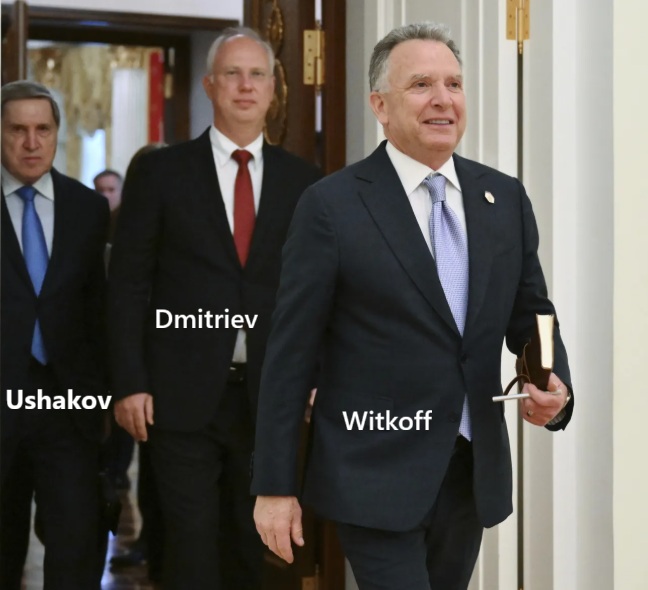
The first question surrounds Russia and the recent statements from the Kremlin. President Trump says he is not able to give opinion on the position of Russian President Vladimir Putin at the moment and will await approximately two weeks until the “terms” are received from Russia. President Trump directed attention to Emissary Steve Witkoff who is coordinating with both Russia and Hamas in Gaza on both issues.
When pushed on the terminology being used by himself and the Russians, President Trump deferred larger more detailed opinion.
Regarding the Big Beautiful Bill and the public criticism from Elon Musk, President Trump notes the bill contains some aspects he does not like, but it required some give and take to get through the House. The Senate priorities may be different from the House priorities and those details are being worked on. There is “zero democrat support” and that makes things more challenging for Majority Leader Thune and Speaker Mike Johnson.
On the subject of tariffs, President Trump states the negotiations with China and Europe continue with abundant leverage to ensure the best interests of the USA are contained within the results. As noted by Trump “it takes a number” to begin the discussion and from that point things progress.
Back to Ukraine, President Trump is willing to meet with Volodymyr Zelenskyy in Geneva, but “it takes two” and Russian participation is needed in order to get to a ceasefire. Further discussions with Zelenskyy are possible, but ultimately President Trump needs Vladimir Putin. As far as sanctions against Russia are concerned, President Trump will only consider them as part of a negotiation point if he reaches the conclusion that no other options are possible.
The second important revelation question surrounds Iran, when President Trump was asked if he warned Israeli Prime Minister Benjamin Netanyahu against taking “some sort of [military] actions against Iran.” President Trump said he would be honest and that yes, he did tell Netanyahu it would be “inappropriate” at this point of the negotiations to attack or do something provocative because he is confident a deal with Iran could be made. This will make the Israeli lobby very unhappy.
Currently there is a war of influence within the online conservative media space between the influencers who receive funding from Qatar and the influencers who receive funding from Israel. This is creating division within the base MAGA movement.
Eventually both sides have to get past the talking points and start putting demands to paper.
According to President Trump’s envoy to Ukraine, Keith Kellogg, Ukraine has put forth a draft proposal outlining their general terms for a ceasefire between Ukraine and Russia. Now the Trump administration is awaiting a similar draft from the Kremlin.
Once both drafts, what they are calling “term sheets”, are received and reviewed it appears that President Trump will reengage the process and seek to bring both parties to the negotiation table. At least that looks like the general outline.
Retired Lt. Gen. Keith Kellogg, notably an anti-Russia leaning participant in the construct (worked for Mike Pence), appeared on Fox and Friends earlier this morning to discuss the current status of the issues, against the backdrop of President Trump’s frustration. WATCH:
(Via MSM) – […] “We have received everything we need. The facts are sufficient for action. We do not need any more evidence,” Kellogg said he said on Fox News, speaking about recent developments in Russia’s war against Ukraine.
Following the first direct meeting between Ukraine and Russia since the war started in Istanbul on May 16, Russian Foreign Minister Sergei Lavrov said the Kremlin would draw up a draft proposal listing its conditions for a lasting peace, which is due to be released this week.