The iron ore from Minnesota combined with a new steel works in Iowa. GOOD STUFF!
Today, President Donald J. Trump announced one of the largest steel plants in American history: a $15 billion Mesabi Metallics mill in Iowa. The project will create 1,750 permanent Iowa jobs, support up to 6,000 construction jobs, and is projected to add $95 billion to the U.S. economy over the next decade.
The mill will produce 7.5 million tons of steel per year in its first phase, rising to about ten million tons, using iron ore from Mesabi Metallics’ newly opened Minnesota mine — the first new iron ore mine in the United States in 50 years. {MORE}
The Question and Answer session begins at 22:40. WATCH:
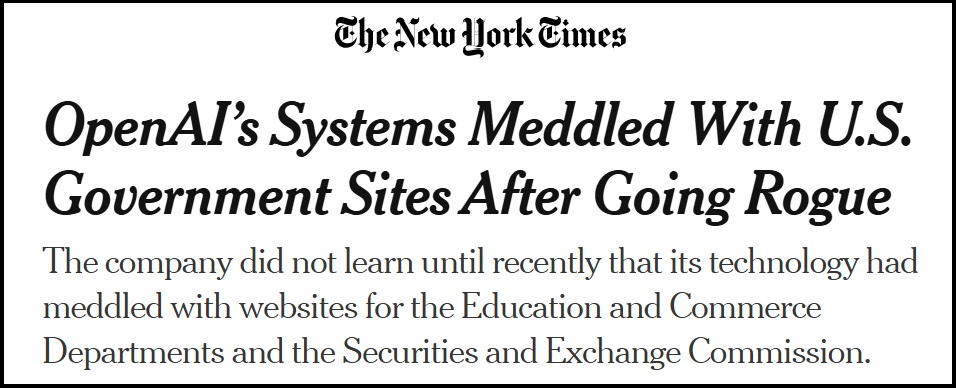
Bumped, because I knew the media were going to use this NYT article today:
Bottom line, we are in an expanded information war. I’ll explain.
Several years ago, in explaining some of the site challenges CTH informed people of Google’s latest information control operation that was simply called “a spider crawl.” The spider crawl was an automated instruction to search the internet and find information that was beyond the parameters of their “trust and safety” guidelines. The automated search would crawl through the websites and comment sections, and report violations based on key words in the search parameter.
Spider crawling is essentially AI. A technology tool to search databases and identify results based on parameters established by the individual who launched the search. However, now in order to push a scare narrative around the hot topic of “AI” the spider crawling is much more in depth and advanced.
Now, instead of just searching the internet, advanced AI can find information and answer questions based on lengthy attributes described by the AI user. AI can now go into proprietary databases and retrieve information to answer complex and complicated question (instructions).
If the AI launch, now called an “AI bot”, hits a gate, like a password access point, advanced AI can find workarounds to enter the database, extract the information and return the result to the AI user. If you understand that process, then this headline has context.
The entire article is nothing more than taking something that is easily understood and adding jargon to make it sound complicated. The word “meddling” is used to describe the AI process of trying to get passed the gate. When there were individual people doing this, we called it “hacking” now the process is automated via instructions to the software search.
In 1986, the federal government built a computer database called SAVE, Systematic Alien Verification for Entitlements. The purpose was simple – when a noncitizen applies for public benefits the state govt can check whether the applicant was legally in the country. The SAVE system worked. Nobody talked about it for 39 years.
In March 2025, President Trump signed an executive order expanding SAVE’s use. The order told DHS to use the SAVE system to verify citizenship of registered voters and people registering to vote. The order instructed the Social Security Administration to share its records with DHS for that purpose.
Two months later, DHS launched the modified version. Two changes: (1) it now checks Social Security numbers against SSA databases. (2) it allows state and local authorities to run bulk searches; the entire voter roll at once.
Blue states sued. Slowly the cases went through the lower courts, then the appellate courts, until finally the Supreme Court ruled 6-3 the SAVE system can be used in the midterm election [RULING HERE]. “While the ruling gives the Department of Homeland Security authority to use the database ahead of the midterms, the court’s conservative majority noted that the impact of the ruling was blunted by another federal law — the National Voter Registration Act — which prohibits states from purging voters within 90 days of the election.” {ABC link}
If the states use the SAVE system, but do not purge their voter rolls for 2026 based on the results, the system still can be of value. “the justices’ action came so close to the upcoming election that the records can only legally be used on a case-by-case basis — and not for the type of bulk voter-roll matching that some states want to conduct.” {Politico link}
Secretary of State Marco Rubio gave an extensive press conference following a meeting with Russian Foreign Minister Sergey Lavrov at the conclusion of U.S. participation in the 2026 UNGA. The full video and transcript are below.
There’s little argument that Secretary Rubio is one of the most remarkable Secretary of States’ in our modern history.
[Transcript] – SECRETARY RUBIO: Okay, go ahead.
QUESTION: Mr. Secretary, what were the U.S. demands with the Iranians yesterday, and was there any discussion of return to the MOU, or have the terms changed for the United States in terms —
SECRETARY RUBIO: Well, yesterday’s conversation was with some of the mediators involved in that process, and I don’t want to characterize it as one direction or another. I think it’s a pretty clear understanding of what this – remember everything here, at its core, the number one issue – the President highlighted this yesterday in his speech before the world – Iran can never have a nuclear weapon. Everything emanates from that.
We understand the straits is an issue. The southern lane of the straits is open. Every day more and more barrels of oil are flowing through there. And they’re open, thanks to the efforts of the United States military that’s both defending shipping and has removed mines. And that trend will continue. Meanwhile, the only blockade in the Hormuz Straits is the one we’ve imposed on Iran because they keep firing on ships and they continue to do so as early as this morning. There was another launch, so – on shipping. So, we’ll continue to defend. We’ll continue to hold the straits open. So that’s an issue.
But the core issue here is that Iran can never have a nuclear weapon. We make that point in every interaction with them. Beyond that, I would say that – I don’t want to characterize these meetings because these – if there’s going to be a deal with Iran, it’s not going to happen at a press conference. It’s going to involve a lot of hard work over a period of time, and it will engage and involve mediators as well.
So as the President said, he’s open to a deal. The President’s open, still to this moment, to making a deal with Iran that allows Iran to be what it should be, which is a great and prosperous country. But if they continue to insist on the desire for a nuclear weapon, their support for proxies in the region that – their support of terrorism – they’re the world’s leading sponsor of terrorism – then we’re going to have big problems with them. And the President has a number of options available to him, including the ones he’s already taken, which is to impose severe and growing economic costs. But he also has some military options, upon which I won’t speculate.
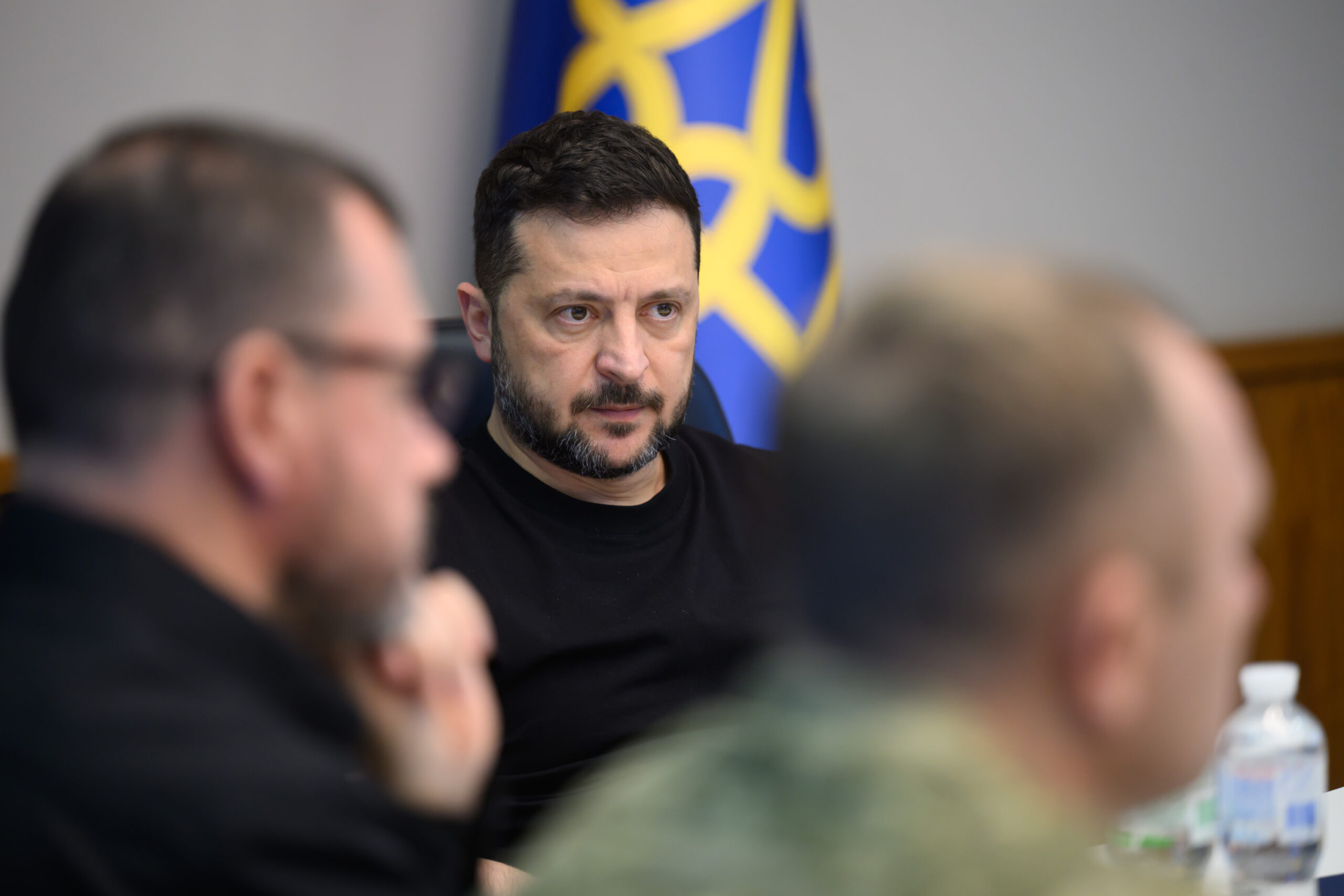
It should be transparently obvious by now. Ukraine President Volodymyr Zelenskyy has shifted his tin cup strategy from directly asking for money, to presenting himself as the world’s leading arms manufacturer. In essence, Zelenskyy has drone pencils in his tin cup.
Keep watching and we will all start to see this grifting business model in play.
Earlier today Zelenskyy said, “President Trump and I had a meeting where we discussed general matters. After that, our negotiating teams held a separate, long meeting. The agreement is as follows: we will brief the European side and discuss these details with them; the Americans will speak with the Russians; and in ten days, we will come back with views and results in some shape or form.
As for a trilateral Ukraine-U.S.-Russia meeting, the American side proposed preparing it and meeting at the technical level. We are waiting for the United States to propose a date. The United States proposed the United Arab Emirates as the venue for such a meeting.
There are concrete agreements regarding Patriot licenses. At our meeting, President Trump stressed that he had made his final decision: Ukraine will receive licenses to produce Patriot missiles. (read more)
Now put the lead-in paragraphs as an overlay against that statement. Zelenskyy wants to organize his corrupt financial system, specifically the income aspect, around Ukraine as the world’s leading arms dealer.
Obviously, this business model provides numerous benefits for everyone inside the Ukraine govt operation whose lifestyle and affluence are dependent on the inflow of massive amounts of money.
If Zelenskyy can get the Patriot Missile licenses, then he can expand his business operation to build and sell Patriots’ to Germany (have been begging for them) and beyond. Zelenskyy becomes the EU hub for EU-NATO arms manufacturing and production. He’s not stupid. If the USA pulls back from EU-NATO, Zelenskyy steps in to fill the void. That appears to be his overall plan.
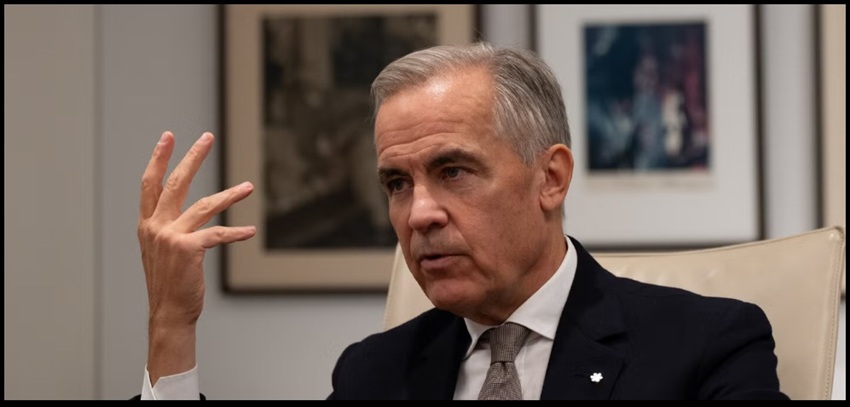
Canadian Prime Minister Mark Carney left the United Nations General Assembly and went directly to the New York Times for a pre-scheduled interview with fellow leftist travelers intent on influencing the U.S midterm election.
Carney having previously appointed Clinton/Obama Democratic operative Maia Johnson as his Chief Operating Officer within his office, obviously had one agenda in mind as he strolled into the Times office for his pre-planned operation.
Within the hour-long conversation, the Canadian Prime Minister had several key points of emphasis in his objective. The top-line hook to draw in the audience was his first statement about having prepared for military combat operations against the United States. [ARTICLE HERE] Key points below:
(1) Carney developed contingency plans to use military combat operations against the United States. Yes, it is transparently obvious this is a political statement. His mentioning of this is meant to create the traditional leftist victimhood position used in all psychological operations. Carney follows this outlandish statement by saying these military plans are no longer needed because he now feels he has “a good relationship” with President Trump.
[…] “Prime Minister Mark Carney of Canada said that he had prepared over the past year for the “extreme tail risk” that President Trump might order military action against Canada but disclosed that the two men have spoken “frequently,” even since trade talks collapsed last month, describing a tense, evolving relationship.
Mr. Carney suggested that he had carefully examined the possibility of U.S.-led military action, but declined to discuss in detail what that involved. “I think you have a responsibility in these roles to look at extreme tail risk,” said Mr. Carney, a former central banker for Britain and Canada. … “That’s just risk management. That’s not a base case, but it would be irresponsible not to” prepare.”
(2) Carney outlines how he intends to build a closer economic relationship with China as a hedge against Canadian dependency on the United States. Given the statements made by Carney in Beijing, this does not come as a surprise; however, it is the expressed open intent to further attach Canada to China that should raise eyebrows.
Promethean Action PAC’s Barbara Boyd gives her recap of President Trump’s visit to the United Nation’s General Assembly in New York.
“Boyd argues President Trump used his UN General Assembly speech to indict globalization and mass migration, contrasting his “nation state” vision with Brazil’s Lula da Silva and warning Brazil’s Oct. 4 election could shift Latin America’s direction. It highlights Trump’s focus on security in the Western Hemisphere through the Shield of America alliance targeting narco-terror groups and says media coverage instead fixates on desk bans for CNN, MSNBC and Politico.
The episode claims Trump is pursuing peace in Ukraine and Iran while “globalists” push escalation, citing European voices advocating Russia’s breakup and calls for war. It describes a three-hour US-Iran meeting after Trump threatened annihilation unless Iran negotiates, plus tightened sanctions and a blockade. Finally, it says Trump rejected AI “superintelligence” panic, predicting major productivity gains and a new industrial renaissance.”
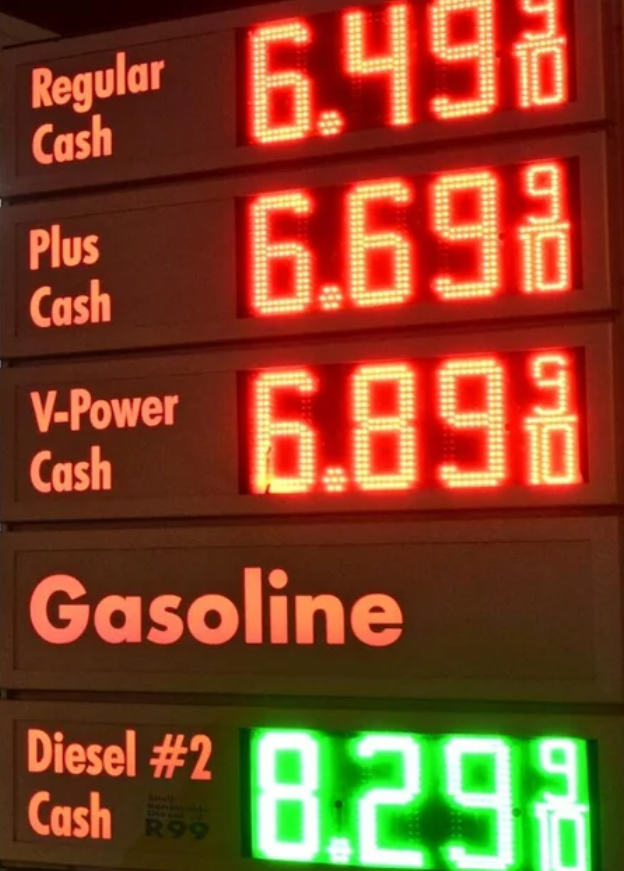
Speaking to a forum hosted by the Economist in New York, Secretary of Energy Chris Wright explained that banning the export of diesel fuel will do nothing to impact the price of diesel fuel and would, eventually, raise the price.
The reasoning is simple.
“The blunt tool of banning diesel exports definitely doesn’t work,” Wright said. “If you can’t export the diesel that comes out of our refineries, you run out of places to store it, and you have to reduce US refining, which would put upward pressure on gasoline prices and jet fuel prices,” Wright said.
The part that Wright didn’t say is the component of price that is entirely detached from supply/demand. The pump price is determined by market speculators, commodity traders and multinational financial interests. That “market price” has nothing to do with the amount of diesel in the inventory.
Restricting exports, a process that ends with restricting production, only gives the speculators and traders a justification to project higher prices. The USA ends up swimming in diesel fuel as the pump price climbs to $15/gal.
If you want to end the disconnection of supply to price, you have to do what Russia does. Sell outside the “market price” at the production cost + profit margin.
In the “west” it’s a rigged game; but be careful. The DSA crowd wants to change the game’s outcome by changing the referees who can then ban/control the players.
Trump’s MAGAnomic approach changes the rulebook of the game completely and is more in line with Putin (BRICS).
Take heart, we only need to wait approximately 60-days until we see a major price decline in diesel and gasoline prices in the USA. Once the midterm election is over, prices will begin their retreat with the finished collapse mid-January.
The non-pretending reality exists within a generally non-western perspective that current “market prices” are not driven by oil supplies, refining capacity or the other various justifications used by the speculators, traders and various regional spot-market control systems. The prices are being controlled in order to influence political outcomes.
Once those political influence operations are concluded, the stakeholders in the market price approach will moderate their justifications accordingly, and prices will plummet. Sound nuts? Well, let me explain who agrees.
On my side of the argument is Russian Federation President Vladimir Putin, who does happen to operate the world’s largest gasoline station – at least, according to the professional republicans. Others on my side include Chinese Chairman Xi Jinping, Saudi Crown Prince Mohammed Bin Salmon, Qatari Sheikh Tamim bin Hamad Al Thani, Turkish President Recep Erdogan and Venezuelan interim President Delcy Eloína Rodríguez Gómez.
Others who accept the reality of this position, albeit with various political limits to their ability to speak openly about such matters, include President Donald J Trump, Treasury Secretary Scott Bessent and Secretary of State Marco Rubio. Unfortunately for this aligned group they are stuck inside the largest western political system who controls global finance and world economic outcomes.
What all of these aforementioned names understand is that “market prices” are entirely detached from the archaic terminology behind supply and demand; a quaint concept that stopped applying years ago – but pretenses must be maintained or else the masses may find their pitchforks, see: DSA pitchfork suppliers.
A second subset of allies who unintentionally support this perspective, includes those who use the terms “sold at a discount” where “sold at a discount” in reality means sold outside the western market pricing approach.
President Donald Trump, Danish Prime Minister Mette Frederiksen and Greenlandic Prime Minister Jens-Frederik Nielsen will take part in a signing ceremony at the United Nations for an agreement that will bolster the U.S. military presence in Greenland forever sealing a Arctic security agreement for the U.S. WATCH (Livestream):