Quantcast

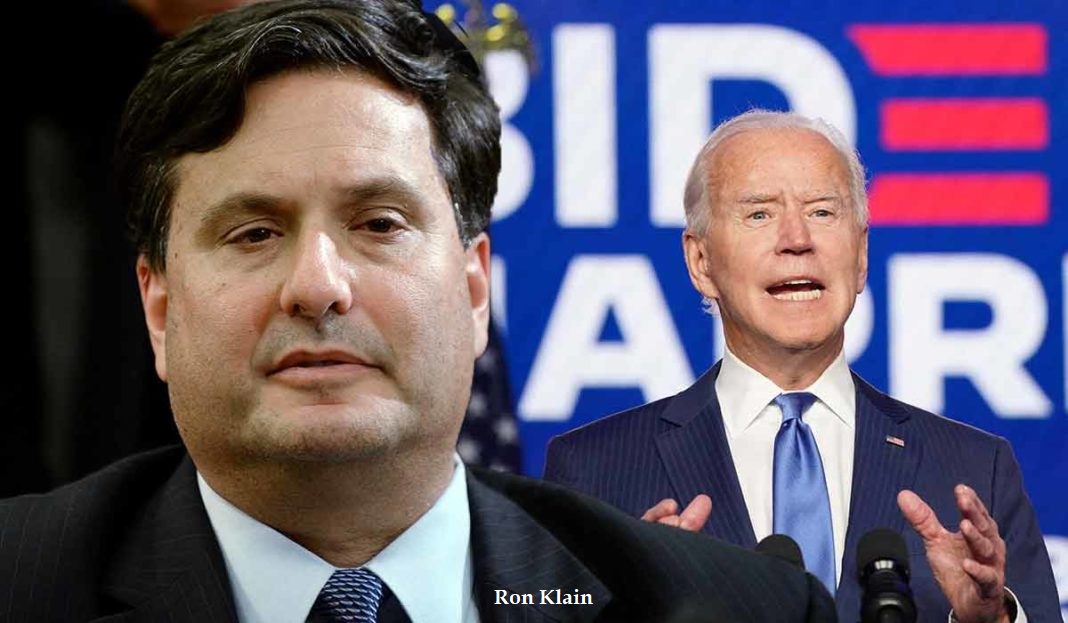
White House Chief of Staff Is Not Worried About ‘The Help’ Dealing With Inflation

If you are wonder whether the White House is concerned about the middle-class being impacted by massive increases in gasoline, high home heating costs, extreme food inflation and empty shelves…   Well, the message from White House chief of staff Ron Klain is very telling:

Apparently feeding your family and making ends meet is a “high class problem.”

The elitism and disconnect from the average American always shows up when you look at DC democrats writ large.   They always talk down to those they view as ‘the help’.

The California Version of The Green New Deal and an October 16, 2020, EPA Settlement With Transportation is What’s Creating The Container Shipping Backlog – Working CA Ports 24/7 Will Not Help, Here’s Why

Hundreds of requests for details on the specifics of the container shipping backlog.  So, I spent 3 days calling sources, digging for details and gathering information on the substantive issue at hand.  The epicenter of the problem is not what is being outlined by financial media, corporate media and politicians who have a specific interest in distracting from the issues at hand.  This has nothing to do with COVID-19.

The issues being discussed today relate to events that happened a long time ago.  As a matter of fact, it was so predictable that Amazon, Walmart, UPS, FedEx, Samsung, The Home Depot and Target all had taken actions years ago -long before COVID- because they knew this day would come.  It was not accidental that those companies showed up at the White House to discuss the issue, because there’s now a full court press to hide it.

There is one very specific regional issue driving the problem.  Read on:

The trucking issue with California LA ports, ie the Port of Los Angeles (POLA) and the Port of Long Beach (POLB), is that all semi tractors have to be current with new California emissions standards.  As a consequence, that mean trucks cannot be older than 3 years if they are to pick up or deliver containers at those ports.  This issue wipes out approximately half of the fleet trucks used to move containers in/out of the port.  Operating the port 24/7 will not cure the issue, because all it does is pile up more containers that sit idle as they await a limited number of trucks to pick them up.  THIS is the central issue.

On October 16, 2020, the EPA reached a settlement agreement [DATA HERE] with California Air Resource Board (CARB) to shut down semi tractor rigs that were non-compliant with new California emission standards:

2020 SAN FRANCISCO – “Today, the U.S. Environmental Protection Agency (EPA) announced settlements with three interstate trucking companies imposing $417,000 in penalties for violating the California Air Resources Board’s federally enforceable Truck and Bus Regulation, Drayage Truck Regulation and Transport Refrigeration Unit Regulation.

“As trucks are one of the largest sources of air pollution in California, EPA will continue to ensure these heavy-duty vehicles have the needed pollution-control equipment and operate in compliance with the rules,” said EPA Pacific Southwest Regional Administrator John Busterud. “These companies have agreed to bring their trucks into compliance and operate more cleanly in all communities they serve.”

(more…)

Jen Psaki Tells Stunning and Dangerous Lies About Transitory Inflation, Claims Price Increases Will Stop – They Won’t

I do not expect White House Spokesperson Jennifer Psaki to understand how her bosses policies are driving massive price increases; nor do I expect Psaki to understand economics and inflationary impacts.  However, the scale of her false statements surrounding inflation are not just false, they are now dangerous.

Following the release of the consumer price index [SEE table 2], in her press briefing today, Jen Psaki outlined the White House perspective on inflation, and specifically the Fed claims surrounding “transitory inflation.”

In her statements today, Psaki referenced people comparing the prices of 2021 consumable goods to 2020 and 2019.  [Video prompted below] Within the statements, the scale of falsity is off the charts.  WATCH [Video at 19:00 to 22:42, prompted]

There is not one single thing about that three minute verbal exchange that is accurate.  Fast turn consumable goods, groceries etc., did not drop in 2020 during the first year of the pandemic.  Factually, all goods but especially consumable goods increased in price throughout the pandemic, because demand actually increased and the supply chains were unable to keep up.

Example.  A loaf of bread at $2.50 in 2019, climbed to $3.00 in 2020.  That price jumped again to $3.75 this year (2021) and will likely continue rising as monetary policy driven inflation continues devaluing our currency.

Even if, as Psaki claims, inflation slows down  (not likely) – “decelerating inflation” does not mean declining prices; it means a slower rate of price increase.   Stuff still costs more, it just costs more at a slower rate.  Consumable goods will cost more in 2022 than they do this year.  The 2022 loaf of bread likely to climb to $4.00; it will never return to the 2019 price of $2.50 because the dollar is worth less.

Ask the White House: Why did Joe Biden increase food assistance benefits by 25% if inflation was transitory?

[The Consumer Price Index was released today.  The producer price index for Sept will be released tomorrow]

This massive inflation is a direct result of the multinational agenda of the Biden administration in combination with the spending spree.  Inflation is a feature not a flaw, and it has nothing whatsoever to do with COVID. The first group to admit what was obvious were banks, specifically Bank of America, because the monetary policy is the primary cause.

(more…)

Report – OSHA Sends Worker Vaccine Mandate Rule to White House for Review

Several news outlets (Bloomberg below) are noting the Department of Labor, Occupational Safety and Health Administration (OSHA), has submitted the worker vaccine rule to the White House for review prior to publishing as an ’emergency temporary standard’.

While this may be seen as disappointing by many, the moment the rule hits the federal register, it will be subject to lawsuits before implementation.  Until the DoL/OSHA rule hits the books, the mandate is nothing except a statement of intent.

Once the emergency rule is put into the register, then various state attorneys general and private sector employers or employees will be able to seek injunctions and challenge the legality. Florida Governor Ron DeSantis stated yesterday his legal team is awaiting the rule to be published to trigger his state’s legal challenge.

(Bloomberg) […] The standard implements the president’s Sept. 9 order for a regulation requiring businesses with at least 100 employees to mandate workers get fully vaccinated or be tested weekly for Covid-19. Biden also asked for the rule to provide paid time off for workers to get vaccinated and to recover from any side effects.

An emergency standard bypasses what is normally a years-long regulatory process. To do so, OSHA must establish that the vaccination or testing requirement was necessary to protect workers from a “grave danger.”

(more…)

BLS Report – 4.3 Million US Workers Voluntarily Quit Their Jobs in August

The Bureau of Labor Statistics (BLS) released the job openings and labor report for August today [DATA HERE].  The data shows that 4.3 million U.S. workers voluntarily quit their jobs in the month of August.  This is a significant jump from prior.

The “Quits” section [Table 4 breakdown] shows quits increased in August to 4.3 million (+242,000). The quits rate increased to a series high of 2.9 percent. Quits increased in accommodation and food services (+157,000); wholesale trade (+26,000); and state and local government education (+25,000). Quits decreased in real estate and rental and leasing (-23,000). The number of quits increased in the South and Midwest regions:

While this data is interesting and significant, it is only one data point within the larger U.S. main street economy.  Rather than me extrapolating on this data, I would like to hear your perspective based on your own local feeling about what is going on in your area.

Key points of reference would include:

(more…)

Stew Peters Interviews LA Port Worker To Get Ground Report on Cargo Ship Backlog

An anonymous worker from the West Coast Port of Los Angeles came forward on “The Stew Peters Show” to discuss the claimed issues around the cargo ship backlogs.  {Direct Rumble Link} As the port worker noted, based on his 18-years working there, there is no supply disruption on the unloading end of the supply chain; though they are a little backed-up, but the port is offloading at a high capacity.

The interview is interesting because the ground report contradicts the popular narrative about COVID impacts on the current supply chain.  There are ample goods flowing into the supply chain from the ports, yet there are claims of shortages at the warehouse and distribution level. WATCH

Stew Peters accurately reminds his audience that no nation generates and exports as much raw material foodstuff as the United States.   This is a key point seemingly overlooked by most media.  The U.S. exports around $73 billion in food products annually. The next closest food export nation Germany isn’t even close at $34 billion.

In very general terms, about one-third of U.S. food exports are North/Central America (Canada, Mexico, etc) exports; approximately one-third go west (Asia) and about one-third go east (Europe).   There have been no reported issues with those shipments departing the U.S.

However, one point worth noting, by the LA dock worker, is the influence of predictive orders or automated-purchases based on historic norms and patterns.  I think that overheard note by the worker was somewhat misconstrued, and a correct interpretation could explain part of the backlog of container vessels offshore.

(more…)

More Info Surfaces On Southwest Airlines Flight Cancellations and Pilot Push Back Against Vaccine Mandates

People inside Southwest Airlines are speaking out carefully and pointing out why there are so many flight disruptions.   Essentially, the background issues are what were discussed earlier.  Pilots are pushing back against vaccine mandates; and if you think about the curriculum vitae of a typical pilot, it makes sense.

A big percentage of commercial airline pilots are former military pilots.  That group of people carry a strong disposition toward the principles of patriotism, service, liberty and freedom.

It is a simple truism that upsets leftists, but it makes sense for this specifically skilled workforce group to be the tip of the push back spear.

Alex Berenson provides some background details after being contacted by a Southwest pilot: “The pilot emailed following the first Southwest post today (and provided his SWA ID to prove his identity). He asked that I paraphrase the email.

Essentially, the union cannot organize or even acknowledge the sickout, because doing so would make it an illegal job action. Years ago, Southwest and its pilots had a rough negotiation, and the union would not even let the pilots internally discuss the possibility of working-to-rule (which would have slowed Southwest to a crawl).

(more…)

September Jobs Report Badly Misses Expectations With 194,000 Jobs Created vs 500,000 Expected

The Bureau of Labor Statistics (BLS) has released the September jobs report [DATA HERE] showing a dismal 194,000 jobs added against a financial media and Wall Street expectation of 500,000 jobs.  [CNBC Apoplectic]   The labor participation rate in the worker economy overall has not moved since Biden’s inauguration, and stands at 61.6%.

Digging into the numbers, what is happening is exactly what we ¹should expect.  Outside the immediacy of private sector durable goods retailers seeing a pull back in consumer purchasing due to inflation (which we continue to point out is the critical issue); the local economies impacted by a declining tax base are key early indicators of contracting economic activity.  Wage gains are not keeping up with inflation.

Inside the data, you will note [Table B-1] a significant decline in Local Government Education of -144,000 jobs.  Obviously the collapse of in-school teaching leads to less jobs in this sector overall. However, the drop happened at the exact same time students were returning to a new school year, and this drop is also reflected year-over-year.  Schools were impacted by COVID in Sept 2020 more than schools are impacted by COVID in Sept 2021, yet this year the jobs are completely gone.  Something bigger is happening in this sector.

Additionally, healthcare services show a major drop in employment (-37k) specifically as it relates to elderly care and nursing homes.   All the sub-sectors of elder care are significantly lower in employment.

(more…)

Biden Keeps Pushing Nonexistent Worker Vaccine Mandate, A Ploy That Keeps State Attorneys General From Filing Lawsuits

Joe Biden did it again today.  A month after the first announcement, the White House occupant claimed again a Dept of Labor rule (via OSHA) is forthcoming, yet no such process appears to be taking place.  This ploy now seems very purposeful, because without an actual policy or regulation visibly in place, state attorneys general cannot file a lawsuit or request an injunction.

As long as Biden keeps threatening a DOL worker vaccination rule sometime in the future, many employers will take action to require worker vaccination.   This seems to be the actual strategy; bolstered by White House Press Secretary Jen Psaki caught off-guard last week when asked about it.

Psaki had no idea how to answer the question about any OSHA activity not taking place (link).  Obviously Psaki didn’t expect the question, but it was also obvious that no background conversation had ever taken place amid the White House communication team.

Perhaps responding to an awakening on that issue, Joe Biden gave a speech today begging people to get vaccinated and again warning that a federal vaccine mandate for all workers was coming:

TRANSCRIPT – […] The Labor Department is going to shortly issue an emergency rule — which I asked for several weeks ago, and they’re going through the process — to require all employees [employers] with more than 100 people, whether they work for the federal government or not — this is within a — in the purview of the Labor Department — to ensure their workers are fully vaccinated or face testing at least once a week.

(more…)

Perfect Storm Coming – Conagra Announces Food Price Inflation Likely to Remain Around 11 Percent Through 2022

Raw material foodstuff price contracts are expiring, and the new purchasing prices will be significantly higher than current.  As these contracts refresh, the new higher prices immediately enter the food supply chain.  CTH has been warning readers to stock up on non-perishable items as this next wave of food price increases is going to be much bigger than even the prior 8%/avg jumps; and there is absolutely no end in sight.

Also, as more large municipal regions (megalopolis metropolitan areas like New York City and Los Angeles) begin enforcing a vaccine passport to eat in restaurants, the demand for meals at home will remain high.  Supermarkets again will fill the void in the diet of consumers who choose to remain at home instead of eating out.

The current demand on retail food products is likely visible to you in the form of bare shelves and minimal inventory.

Grocery retailers operate on paper thin gross profit margins and rely on fast turns of multiple penny profit items to add up to net profit income.  Technology has helped modern grocery supply chains to be very thin.

An inventory shortage arises when demand on the retail grocery industry spikes – which is what we have seen with COVID impacts as alternative food options were forcibly closed or pressured to reduced capacity.

Conagra is one of the large food conglomerates with control over products from field to fork.  Recently, Conagra executives announced they expect food prices to climb even higher due to all of the aforementioned impacts, along with large price increases in fuel and energy.

Wall Street Journal […] Conagra said Thursday it expects gross inflation—which doesn’t take into account hedging—to be about 11% for fiscal 2022, versus its earlier estimate of 9%. The company plans to continue adjusting prices and cutting costs, and said its prices likely will rise 4% or more during the current fiscal year.

(more…)