When Joe Biden took to the microphones in October to announce, “a series of public and private commitments to move more goods faster, and strengthen the resiliency of our supply chains, by moving towards 24/7 operations at the Ports of Los Angeles and Long Beach,” the supply chain objective was to increase the productivity of the ports. However, data released for November [SEE HERE] and now December, show exactly the opposite.
Transportation Secretary Pete Buttigieg visited both ports recently. Both ports, along with Oakland, also made the arriving ships remain further offshore than when the October announcement was made. They are hiding the ships.
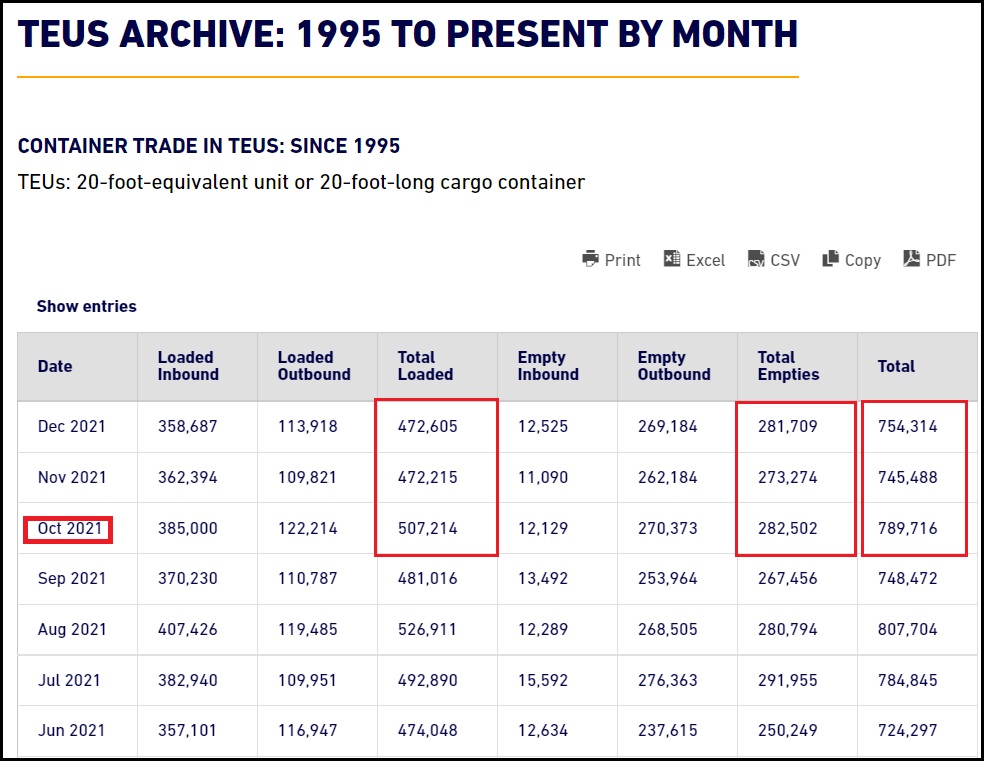
For some unknown reason the Port of Los Angeles (POLA) has delayed reporting of December; but the Port of Long Beach (POLB) just released their data {LINK}. What the statistics show is that less cargo is being handled now, than it was when the 24/7 port operations announcement was made:
The purpose of telling the ships to await their port time in a queue farther offshore is transparent. The Biden administration wants to give the illusion they eliminated the bottleneck of container ships. Out of sight is out of mind.
Operation ‘Hide the Ships’ allows the administration to make claims about port efficiencies and increased productivity that are abjectly false. The data from the two months after the announcement shows less container offloading and onloading happened in November and December than happened in the prior month of October when the new initiatives were announced.
 In October
 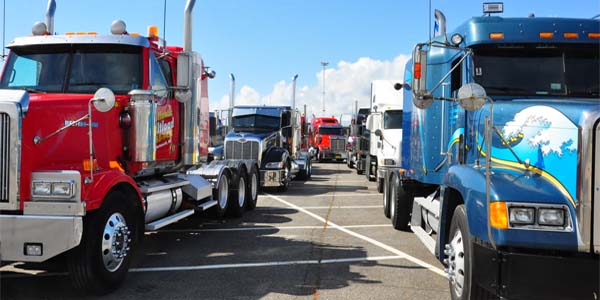 Apparently fearing the economic consequences, the Canadian government has dropped the vaccination requirement for Canadian truck drivers, and instructed border officials to permit unvaccinated Canadian truckers to cross the border.
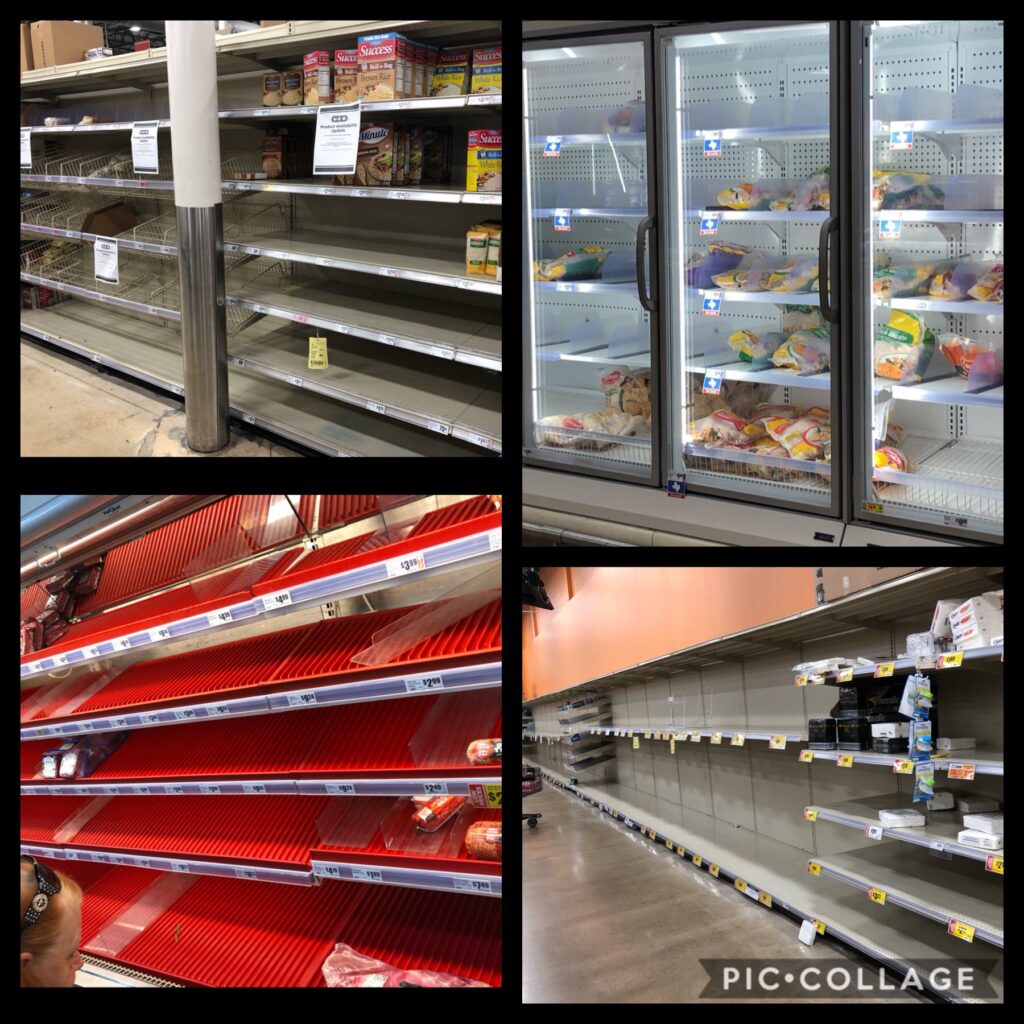 All of these #BidensEmptyShelves assumptions, which are being heightened by increased attention and social media, are leading to confusion.
 Late December, the New York Times reported {
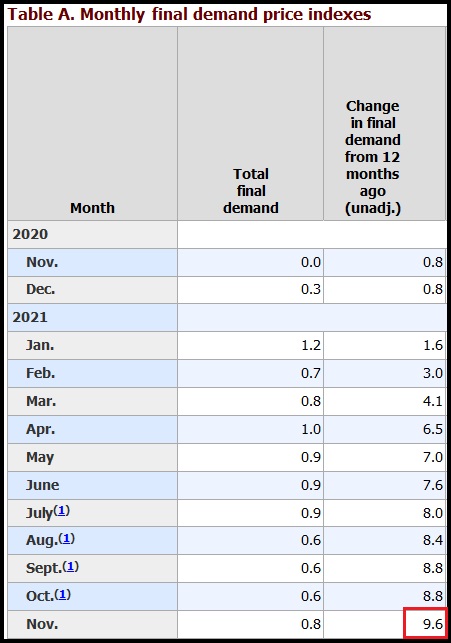 The final product inflation rate in July (reported in August) was alarming at 7.8%. However, we warned it would get worse. The Bureau of Labor and Statistics (BLS) then released stunning price data for October [