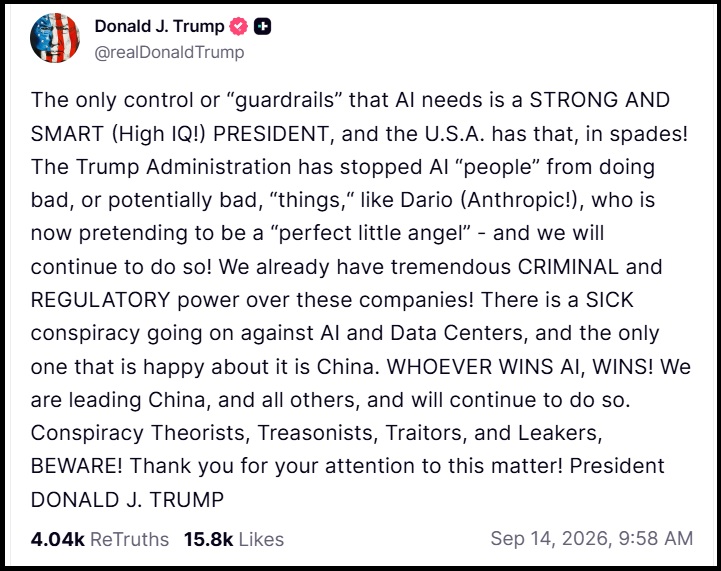
President Trump notes on his Truth Social post how the AI development overall is becoming part of a political operation within the U.S. With President Obama, Elon Musk and Dario Amodei all requesting govt regulatory capture of the AI frontiers, President Trump notes he is opposed to their “conspiracy theory” schemes.
Western financial experts have a self-interest to never explain this issue. Instead, they frame the issue as BRICS seeking an alternate currency in the energy markets. However, the currency or petrodollar is not the issue. At least it’s not the core issue.
What Vladimir Putin, and by extension BRICS, do not want is corporatism -corporate financial control over govt systems- determining prices.
To give you an example of Vladimir Putin’s argument, consider orange juice.
Why should orange juice in California or Florida cost $7/gal, when the oranges are in CA or FL?
Shouldn’t the orange juice in FL or CA be cheaper than in, say, Minnesota? Logic would say, yes.
However, that would mean the corporations who have purchased the OJ production couldn’t maximize predatory profiting, through nonmarket forces, ie. “Commodity trading.”
The same organic supply/demand rule applies to strawberries, or [fill in the blank].
What is setting the price, what the west calls the “market price,” is actually the commodity trading issue. That means Minnesota, Florida and California consumers all pay the same price. Within the energy sector Putin views this as unfair and unworkable.
To his credit, under normal supply/demand Putin would be selling oil/gas to Europe at much lower prices than “market prices” because the pipelines are in place, the proximity is near and the delivery is cheap.
However, for Europe that means the financial markets would not control energy prices. Europe wants financial control, not cheap energy.
The need for control is a reaction to fear. The financial system, the bankers and the multinational corporations, fears their loss of control.
On one hand you have Canadian Prime Minister seeking to attain “associate member” status in the European Union {SOURCE}. On the other hand, you have U.S. President Trump speaking about a “united Ireland.” {SOURCE} At first blush the stories seem disconnected, until you think about them.
Canada is a commonwealth country of the United Kingdom (UK) and seeking to achieve ‘associate membership’ status within the European Union is Carney’s way to counter the geopolitical reset currently underway by President Trump. A reset that diminishes the influence of Great Britian’s, ie. London’s. historic economic influences. One way to hit back against the scheme would be to leverage populist sentiment to take down London and Ottawa simultaneously. That approach would support the breakup of the U.K commonwealth governing structure. There’s the connection.
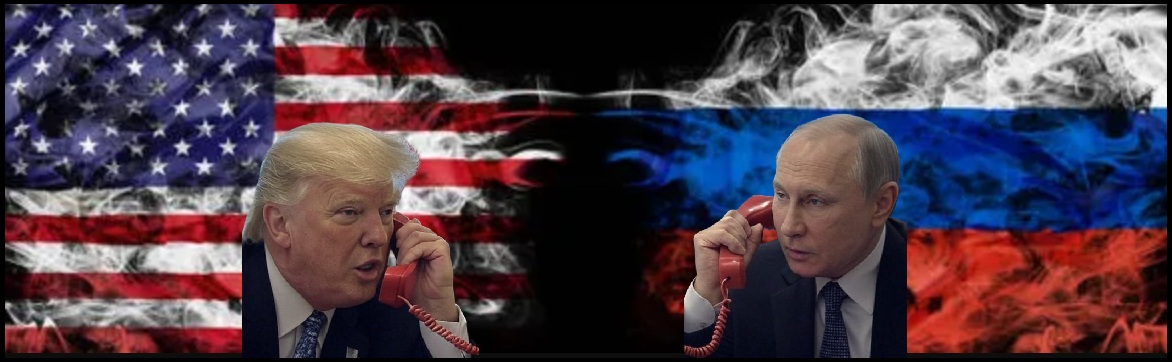
As we review the media reports, keep the U.S-Russia “strategic relationship” approach in mind.
CANADA – Canadian officials are negotiating with the European Union for closer ties with the economic bloc in response to the breakdown of trade negotiations with the United States earlier this summer, the Wall Street Journal reported on Saturday—including potentially becoming an “associate member” of the union.
Although the EU is historically not known for allowing flexible membership arrangements with individual countries, European officials are reportedly open to Canada joining as an “associate member,” anonymous officials from both Canada and the EU told the Journal.
This could mark the largest reorientation of the Canadian economy in decades—the U.S. has long been Canada’s largest trading partner, with about going across the southern border in 2025.
President Trump executes a clear foreign policy, a unique doctrine of sorts, where national security is achieved by leveraging U.S. economic power. It has been a fundamental shift in approaching both allies and adversaries; summarized within the oft repeated phrase: “economic security is national security.”
The Trump Doctrine of using economics to achieve national security objectives is a paradigm shift in American politics. Modern U.S. history provides no easy reference strategy, because until now no American president has ever leveraged this approach.
U.S. B-2 bombers struck Iran on June 22, 2025, as part of Operation Midnight Hammer, targeting key nuclear facilities.
Immediately following the August 2025, Alaska summit between Russian President Vladimir Putin and President Trump, Russia restarted Arctic-2 LNG terminals and began increasing natural gas (LNG) production for storage on ‘floating platforms.’
It absolutely did not make sense that Russia would start producing even more LNG considering the previously imposed western sanctions against them, and the fact that Russia was already overproducing LNG. As noted by analysts at the time. Russia had no market for this LNG, yet Russia began increasing LNG supply anyway. For six months Vladimir Putin extracted and stored LNG.
Two months later, on October 25, 2025, President Trump did something odd. President Trump had attended the ASEAN summit in Asia before; however, this time instead of flying West over the Pacific, he flew east to Malaysia. This put a refueling stop in Qatar, which everyone just ignored as a routine part of the travel plan.
However, upon arrival in Qatar, the Amir of Qatar came to the airport to pay a courtesy visit to President Trump. They spoke aboard Airforce One during the refueling stop.
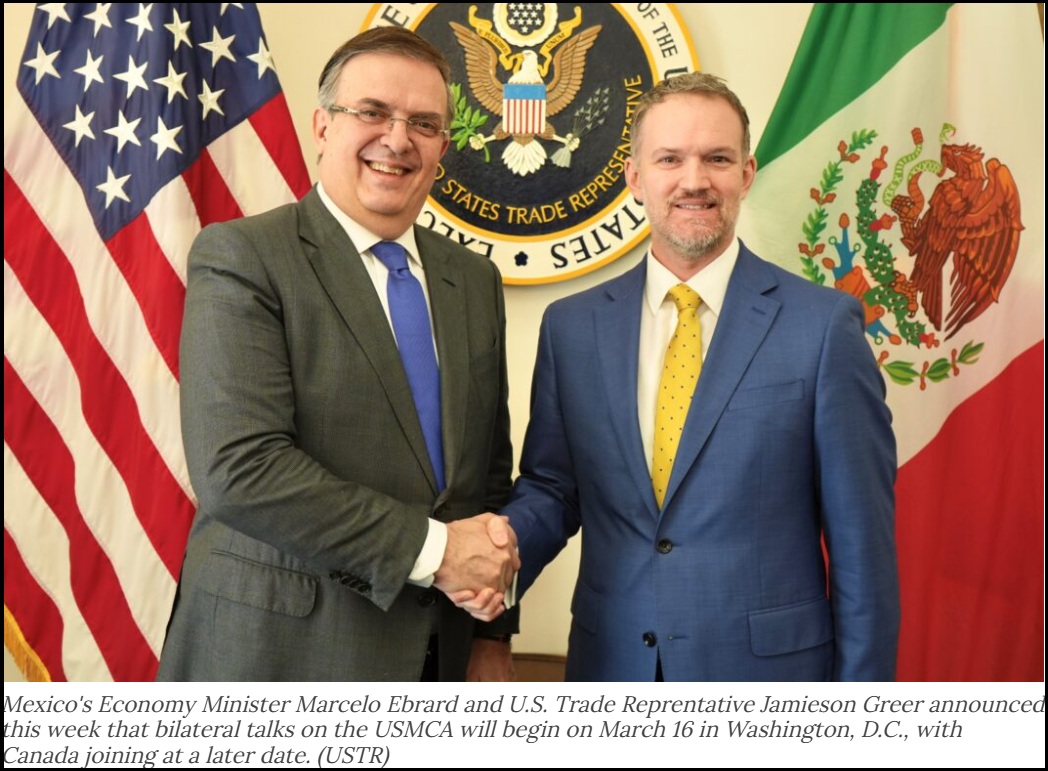
The missing aspect in all USMCA/CUSMA trade discussions is the simple fact that President Trump and U.S. Trade Ambassador Jamieson Greer would prefer bilateral trade agreements. The reason is simple and is highlighted in all the problems with the three-party USMCA.
Two countries can negotiate based on their individual interests; multiple country assemblies get complicated. Canadian Prime Minister Mark Carney and his “middle power” strategy of multiple interests assembling to create larger influence simply doesn’t work in trade discussion. That’s the bottom line.
Reuters is reporting the obvious. Mexico and the United States are racing to reach a bilateral trade deal before the U.S. midterm elections in less than eight weeks, according to six sources in both countries familiar with the talks, an effort made more urgent by the collapse of Canadian negotiations with Washington. Both USTR Jamieson Greer and President Trump have previously said the deal with Mexico would likely come first.
Mexico has played this very well. Mexican President Claudia Sheinbaum has not participated in any antagonisms toward the U.S. position; they are simply negotiating for their best outcome. The Mexican government officials don’t try to hide their U.S. dependency under the misguided premise of patriotism. They understand the nature of the relationship.
If President Sheinbaum wants to keep a strong economy, she needs the USA. Both leaders want a trade agreement; it’s business beyond politics. Canada on the other hand is playing pure politics and trying to carve out a deal for themselves the rest of the world doesn’t have. Canada wants to be excluded from the baseline tariffs applied to everyone, that’s not going to happen.
Secretary of State Marco Rubio continues to impress; however, his response to the Wall Street Journalist narrative engineer is absolutely brilliant.
Following visits to Colombia and Ecuador, Secretary Rubio is in Peru today to discuss the “Shield of The Americas”; a joint collaboration and intensely strategic partnership between the United States and Latin American countries to eliminate corruption, arrest narcotraffickers and remove all corrupt elements.
During a news conference with Peruvian President Keiko Fujimori, Secretary Rubio addressed the Peruvian people in both English and Spanish as he explained the specifics of the Shield and what the partnership entails. During the Q&A session of the press conference, a Wall Street Journal narrative engineer asked a question about sovereignty and the U.S. acting unilaterally if Peru didn’t agree to address the threat.
Essentially, Rubio responded by telling the journalist to stop working for the ‘Bureau of Imaginary Problems’. I have prompted the video at the point of the question and then provided the transcript from that moment to the end. The overall English audio-dub is not bad, so the entire presser is well worth watching:
[Transcript] – QUESTION: Vera Bergengruen with The Wall Street Journal. Mr. Secretary, you have stressed that the members of the Shield of the Americas are sovereign partners. But if one of these governments refuses to act against one of these groups that Washington deems a terrorist threat, does the U.S. reserve the right to act unilaterally, including here in Peru?
And President Fujimori: (Via interpreter) The question wanted more information about the partner of the Shield of the Americas. This will include to collaborate with the United States here in the country.
SECRETARY RUBIO: I’ll answer that question in English and Spanish. I don’t know if you guys heard it. Basically, the gist of the question is, if you’re a member of the Shield and refuse to act, does the United States – will the United States act unilaterally?
Well, if we were going to act unilaterally, why would we need the Shield? We’re not – if we were interested in acting unilaterally, we have the capacity to act unilaterally. The reason why we’re not doing it is because we want to do it with our partners. It’s the most effective way to do it. For us to confront transnational criminal groups, we need to do it inside the sovereign territory of countries, and we want to partner with those countries. It’s in their interest to do it. That is why we have the Shield. That is why the Shield exists.
People make up these problems that don’t exist. They’re getting ahead of themselves with these – these ridiculous sort of things that no one’s even contemplating. The bottom line is the reason why we have a Shield is because we choose to act in partnership with our partners. So it’s very simple. This is not very complicated; let me explain this to you. It’s a very, very simple equation. We have a country that says we want to defeat these criminals, these terrorists, these evil, despicable human beings; we want to defeat them. We want to work with America to defeat them. And so we say, of course we want to work – what should we say to them? No, we don’t want to work with you? No, we’d like you not to do anything about these groups?
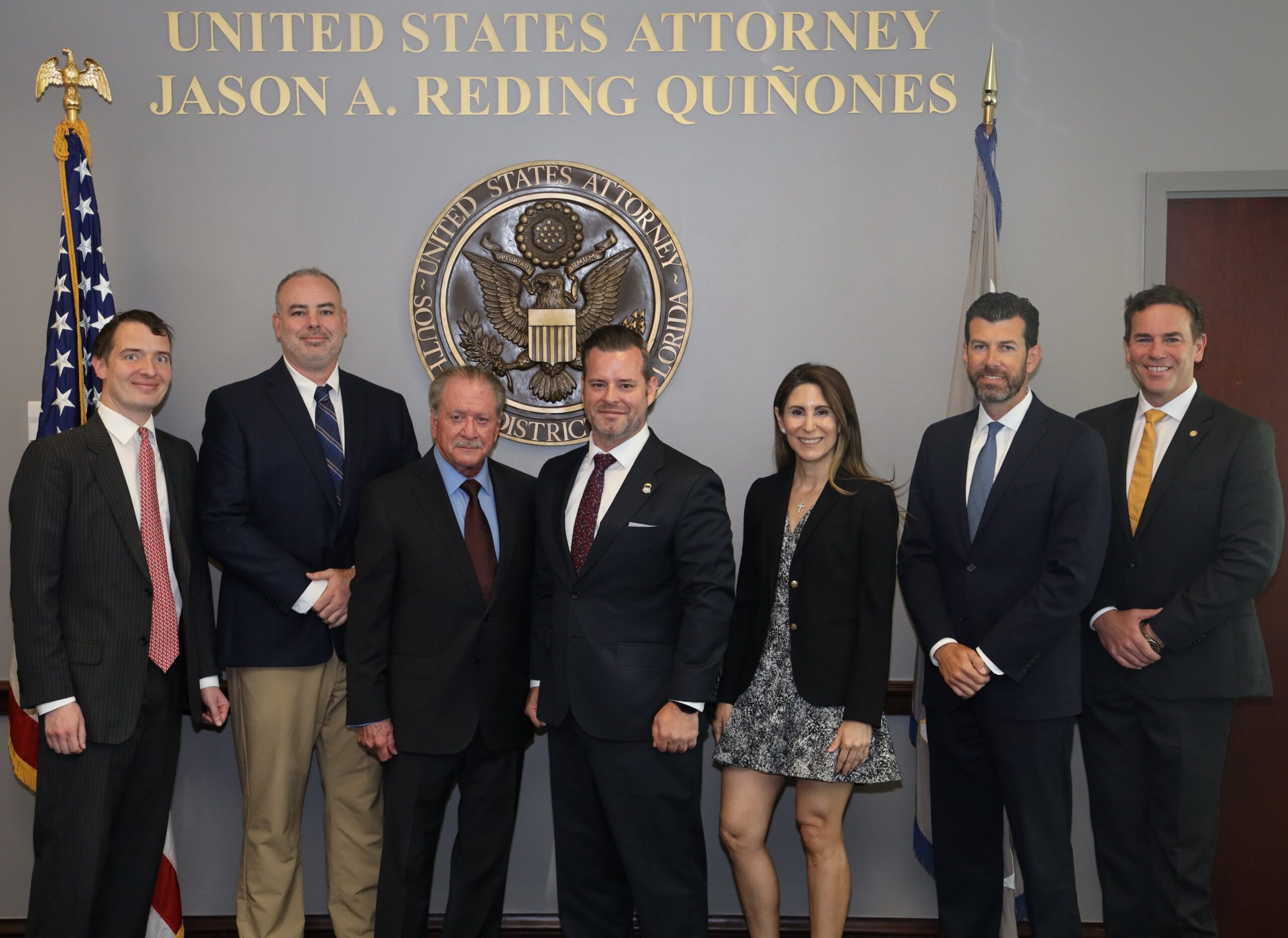
Joseph diGenova confirmed to NBC, “it was an honor and a privilege to serve the president and the department.” He declined to elaborate on the reason he’s out. “I’m moving on,” diGenova said.
diGenova’s technical job description was “Counselor to the Attorney General.”
I would frame the matter in this context, ABC previously reported that Joseph diGenova abruptly quit the investigative taskforce following pressure from Main Justice to achieve actionable results and not endless process. In part because diGenova was aligned with the Special Government Employee John Solomon approach to investigative activity; which is to say, living a life inside the process as if the investigation itself was the ends, not the means.
From experience dealing with these folks, a Trumpian level of frustration is warranted. Remember, the generally accepted DC rule is that no investigative outcome that touches on political considerations will be released within 90-days of an election. diGenova was on a clock, the clock ran out, diGenova quit. It’s as simple as that. All very unfortunate.
[VIA ABC] – A Trump loyalist who had been tapped to oversee a sprawling and controversial DOJ conspiracy investigation targeting political foes of President Donald Trump abruptly resigned Thursday, sources familiar with the matter told ABC News.
Joe diGenova submitted his resignation to Attorney General Todd Blanche amid what sources described as growing frustrations from Trump and senior DOJ officials regarding his work on the so-called “grand conspiracy” investigation based out of the U.S. Attorney’s Office in the Southern District of Florida.
Sources said diGenova had pitched himself to the president as someone who could potentially ramp up the conspiracy investigation, which thus far has resulted in no criminal prosecutions despite dozens of subpoenas issued over the past year to various officials involved in past investigations of Trump.
I’m going to stick this to the top of the page while I continue sharing today’s significant news.
Today is Day #2 at the GOP midterm convention in Dallas, Texas. President Trump will deliver the keynote address later tonight. Livestream links are below:
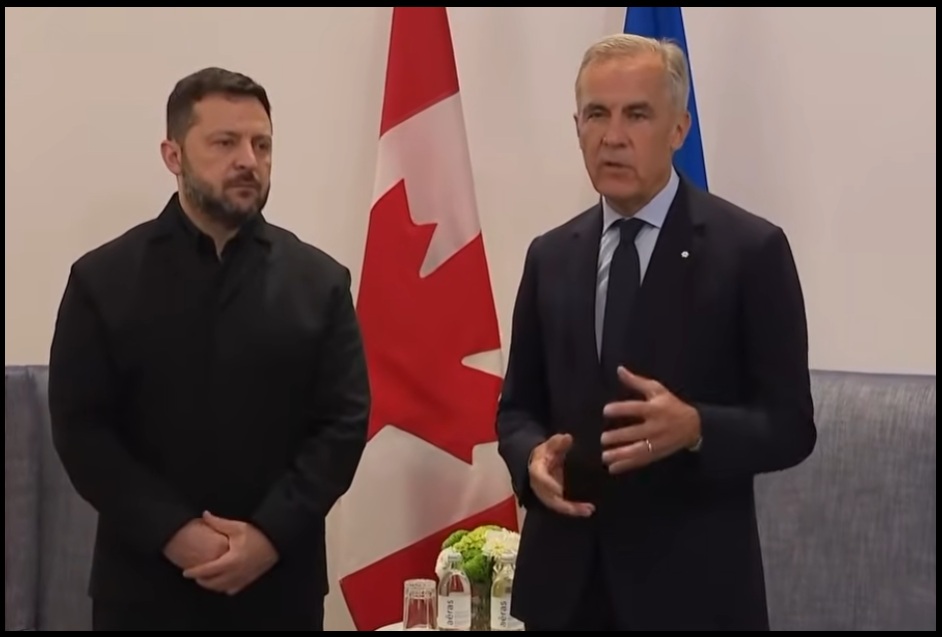
Prime Minister Mark Carney really is a globalist piece of work. As Ukraine Prime Minister Volodymr Zelenskyy arrives in Alberta, Canada, to coordinate with the latest European leader Mark Carney, the remarks said in this brief greeting and introduction video are stunning in a geopolitical context.
It is obvious that Prime Minister Carney is trying to position himself as a decisionmaker in the outcome of the Russia-Ukraine conflict by pushing Zelenskyy even deeper into intransigent positions that will only lead to greater conflict.
Carney positions Canada squarely on the side of Ukraine and in violent opposition to Russia. Not coincidentally, this is the exact opposite ¹position of the United States, and that is a feature not a flaw.
Carney really does view himself as European first and foremost. He even remarks that Canada in general, and he as the Prime Minister specifically, will ensure that Ukraine advances to become a European member state. How, exactly, does he as a North American leader expect to make this happen?
Worse still, Prime Minister Carney injects himself into the Ukraine-Russia negotiations by stating his intention to ensure that Ukraine becomes a member of NATO. Ukraine not becoming a NATO member state is a hardline for Russia, and that aspect is deeply enmeshed in the ongoing negotiations between the U.S. led discussions with Russia and Ukraine.
Carney is putting his nation and himself into direct conflict with President Trump and the goals/objectives of peace.
No one outside of Canada gives a tinkers’ damn about Canada giving more money to Ukraine; however, when Carney directly aligns his military with Ukraine and pledges to support Zelenskyy with military hardware, NORAD defense missiles, things change. Do the Canadian people really want to get pulled into this quagmire as an outcome of Mark Carney’s grand aspirations to become a protectorate of the European Union?
Carney is playing a very dangerous game, and I hope the Canadian people can see just how far over his skis he is putting them.
Watch these remarks carefully and contemplate just how much Carney is positioning Canada to be a direct enemy of the United States. This will not end well. SEE BELOW: