World Bank President David Malpass appears on CBS with media propagandist Margaret Brennan, a woman of exceptionally low intelligence, to discuss the current state of global economics and the likely consequences. I have been saying this for a year and I will repeat, the absence of food will change things.
Within the interview [Transcript Here] the status and solutions that Malpass outlines are accurate and factual, albeit couched in gentle terms acceptable to the globalists. As noted by Malpass, if a shift in messaging and actual policy for energy and finance does not take place, the outcome will be bad for food production and government stability.
The World Bank president accurately states increased production is urgently needed to avoid global shortages. However, that increase in production is only possible if the leaders of the largest economies reverse their positions on energy development and finance. The world needs oil and natural gas production to increase dramatically in order to stave off food shortages. Unfortunately, those pragmatic recommendations are falling on deaf political ears. WATCH:
[Transcript] – MARGARET BRENNAN: There are a lot of stressors on the global economic system right now, how do you describe where we are?
MALPASS: It’s a sharp slowdown, including even China. So we’ve seen the world growth fall by half since January in terms of GDP growth. But there’s also shortages, there’s inflation. And the food shortages for the poorer countries are becoming a significant concern, they already are.


 We have written about the conflicts {
 The inflection point away from representative democracy was first evident in the way COVID-19 was leveraged by “western” governments in the U.S, Canada, Australia and the European Union. Totalitarian minded leaders within those democracies, including governors in the United States, began operating without any elected representative feedback. Everything shifted from legislative representation to a system of dictatorial fiats with no opposition allowed in the arbitrary rules and regulations.
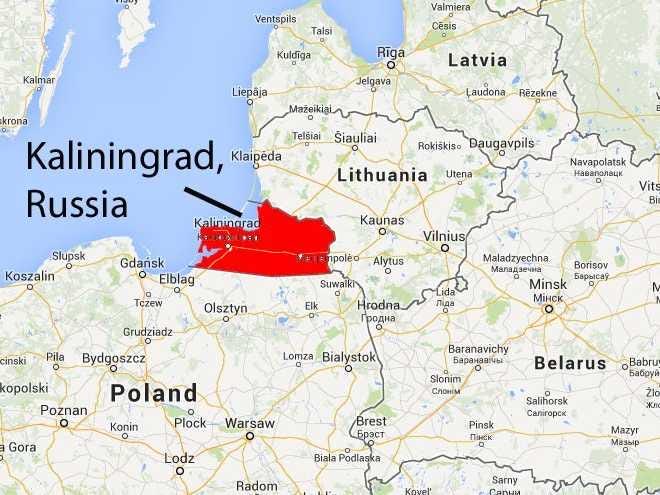 Land access for Russia to Kaliningrad is a matter of treaties between Russia and Lithuania providing transit to the Russian enclave through Suwalski gap where railroads connect Kaliningrad to Belarus.