Somewhere along the path to the inevitable dissolution of the USMCA trilateral trade agreement, reality will set in for Canada. Until then, denial is the preferred course of action from Prime Minister Mark Carney. Not since COVID-19 have we witnessed an intellectual disassociation happening over such a large sector of a population.
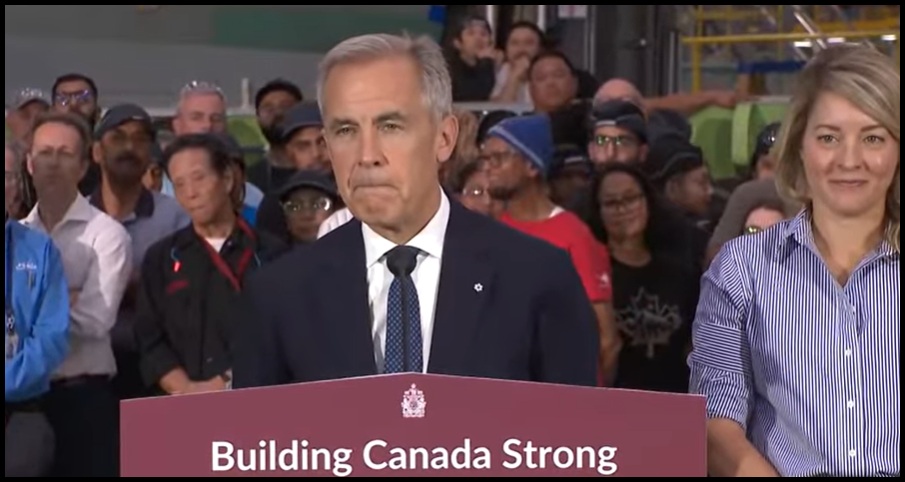
According to the latest media reports, Prime Minister Mark Carney is set to announce a new Canadian Trade Advisory Council that will strategize the best moves within each sector of the Canadian economy to deal with the United States USMCA renegotiations. Even at this latest date, the Canadian government is still under the belief they can negotiate themselves into a position where their status within the USMCA (CUSMA) will be retained.
Simultaneous to this announcement, the one best hope the Canadians have relied upon is also evaporating. However, before discussing that aspect, let’s first look at the advisory council.
CANADA – Prime Minister Mark Carney is expected to unveil a new advisory council focused on Canada-US trade relations as Ottawa attempts to salvage Canadian-US trade amidst Donald Trump’s aggressive tariffs. According to reports, the council will bring together major business leaders, labour representatives and former politicians to advise the federal government ahead of the scheduled review of the Canada-United States-Mexico Agreement (CUSMA).
[…] While the entire list of figures present on the council has yet to be announced, the Government of Canada first announced the advisory committee in April 2026, and released a partial list of members. Members reportedly include Conservative leader Erin O’Toole, former Quebec premier Jean Charest, and other representatives from sectors such as energy, manufacturing and forestry. There are also multiple high-level Canadian executives present on the list released by the Prime Minister’s office on April 21. The committee will be chaired by Dominic LeBlanc, who currently serves as minister responsible for Canada-U.S. trade and intergovernmental affairs. According to the Prime Minister’s Office, the council’s role will be to provide strategic advice and industry expertise as Canada prepares for negotiations under the umbrella of Donald Trump’s renewed tariff threats.
The creation of the council reflects growing anxiety in Ottawa regarding the future of Canada’s trade relationship with the United States. Since returning to office, Donald Trump has continuously threatened new tariffs on several major industries while pushing for tougher trade concessions from allies. Canadian sectors like steel, aluminum, automotive manufacturing and critical minerals have been most heavily impacted, while US lumber and alcohol sectors have seen massive hits due to retaliatory tariffs and restrictions from Canada. […] His government has increasingly promoted what it calls a “resilience strategy,” focused on strengthening partnerships with Europe and Asia while preparing for difficult negotiations with Washington over continental trade and supply chains. (read more)
An advisory panel to strategize retention of a system that will no longer exist.
I doubt you could define Canadian politics with a better example.
Here’s the background story that makes matters much, much worse for Canada.
 The best card the Canadians have on the issue of this agreement comes from the possibility of leftists within the U.S. congress fighting against the Trump administration’s efforts to change or eliminate the USMCA. Carney, like Trudeau before him, is relying on anti-Trump support within congress.
In 2018 it was then House Speaker Nancy Pelosi who wedged Canada back into the trade negotiations by threatening to whip her members against the U.S-Mexico agreement unless President Trump and then U.S. Trade Representative Lighthizer permitted Canada to engage in the trade discussions and the elimination of NAFTA. Before that Pelosi intervention, Trump and Lighthizer were 80% of the way in eliminating NAFTA and creating a U.S-Mexico bilateral trade deal. Pelosi saved Trudeau’s position.
In 2026, Prime Minister Mark Carney is hoping for the same level of support from Democrats, except a recent announcement reflects his strategy doesn’t hold any merit.
Twenty U.S. Democrat Senators are asking U.S. Trade Representative Jamieson Greer to structurally get a lot tougher on the trade review and directly close the USMCA loophole that permits Canada to use China as the manufacturing center of their component goods.
Democrats, yes democrats, well understand that U.S. labor unions can see the fundamental flaw that exists as long as Canada cannot factually align with U.S. and Mexico manufacturing systems due to Canadian carbon exchange rules and legislated regulations on climate change. Democrats are asking Greer to get tough.
VIA NBC – A group of Democratic senators will issue a set of demands to U.S. Trade Representative ahead of a mandatory joint review of the U.S.-Mexico-Canada Agreement this summer.
In a letter led by Sen. Tammy Baldwin, D-Wis., and shared exclusively with CNBC before being sent later Wednesday, 15 Democrats wrote to Greer to “insist that any revised agreement must deliver meaningful and measurable gains for American workers.”
[…] The Democrats are demanding new provisions on the labor front of the agreement, asking that Greer use the review to “lift all boats by ensuring that both Canada and Mexico fully comply with their labor commitments.”
The letter writers targeted seven priorities they would like to see addressed in the review. First was business relocations to Mexico. They said the USMCA has fallen short on keeping businesses in the U.S., pointing to manufacturing wages in Mexico, which they say create a wage gap that is leading to offshoring.
[…] The Democrats also asked Greer to find new ways to enforce bans on goods created with forced labor, which they say all parties have failed to enforce.
[…] Addressing Chinese investment, which also came up as an issue during Trump’s recent trip to Beijing, is also among the Democrats’ demands. […] “It is critical to address this loophole in the review of the Agreement to prevent its use as a backdoor to the North American economy by third-party actors, particularly our adversaries,” they wrote. “Combatting China’s unfair trade practices will take global cooperation, and the review can present a model of how countries can work together to counter this threat.”
Another way the Democrats suggested countering China’s advance into the North American supply chain is by introducing new rules of origin requirements for additional sectors. China’s pervasiveness in components for manufactured goods like autos has recently become an issue in Washington. (read more)
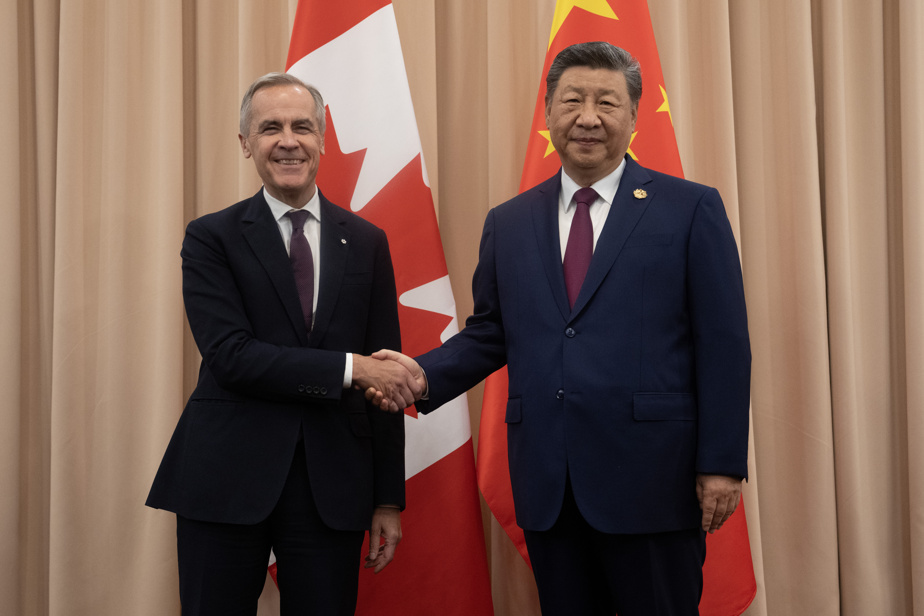 Canada has purposefully and intentionally aligned itself with Chinese industrial manufacturing because Canada’s rules and regulations on climate change and carbon compliance restrict their own industrial manufacturing systems. Canada needs China to do the dirty jobs and create the component goods that can be assembled into Canadian products. Democrat in the Senate are asking USTR Greer to address this exact issue.
President Trump and USTR Greer can now leverage this bipartisan issue against the Canadian trade delegation. Canada’s hope of having the professional political left run cover for them no longer exists. This is a very significant development.
In the December 2024 meeting between Trudeau and Trump, the issue of NATO compliance was part of a larger discussion around trade imbalances, non-tariff barriers, intellectual property conflicts and legislative hurdles that Canada uses as a crutch to retain economic benefit without reciprocity.
Prime Minister Trudeau argued in Mar-a-Lago that Canada could not change all the points of conflict, drop their non-tariff barriers, comply with NATO demands and simultaneously get into total alignment with the USMCA trade compact (CUSMA to Canada), because their climate policies and legislated carbon payment system did not support or match the heavy industrial processing capabilities of both the United States and Mexico.
This factually correct and honest admission by Trudeau, an admission he would never say to his own constituents in Canada, triggered President Trump to respond with the 51st state, notation. Essentially, Trump saying, if you cannot be a hemispheric partner with equal capabilities; and if you need to retain structural economic dependency; then you, Canada, should just become a 51st state of the USA.
Think about the reality of the Canadian position. Structurally, without using China, Canada cannot comply with the USMCA without abandoning their net-zero carbon program. This requires legislative change and a complete 180° reversal in the climate-change mindset of the Canadian people. That is very unlikely to happen.
If Canada cannot factually align with the U.S. and Mexico, then how does Canada expect to retain a trilateral trade agreement?
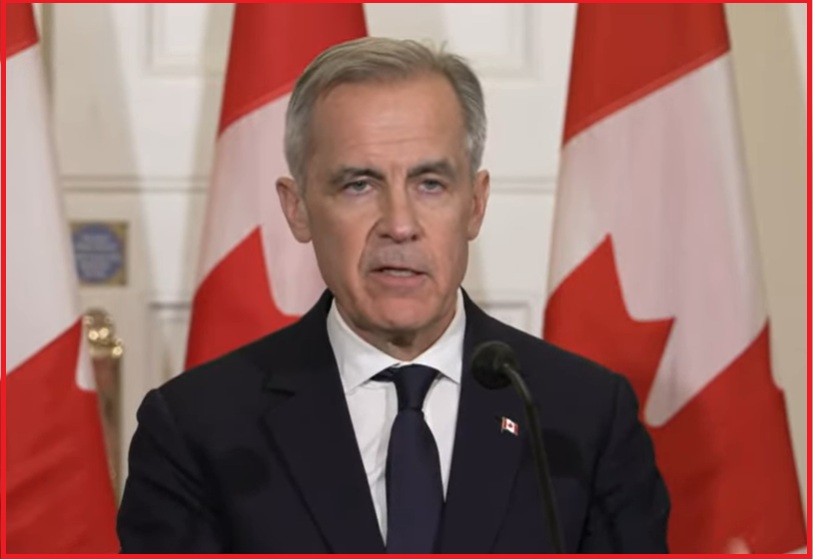
China and Senate Dems will find a way to keep Canada relevant.
If they’re going to keep their ridiculous climate policies, then we should present the choice to them as:
You can be a subordinate/cliemt State to America or China, but not both. Despite many of their dumb policies, they align much better with Americans then they do the Chinese communist party. They will bend the knee to the Don.
Question is when. Do they have time before they implode.
Their climate policies (worrying about climate change). Meanwhile they all vacation in Florida during the winter.
And still plenty of seals for the annual clubbing trips.
Both are already irrelevant.
As usual, Betsy. ✅✅✅✅
Carney was in British Columbia earlier today. He gave a presser with the BC PM Eby at his side.
And again, off he goes on ‘Climate change, Net Zero, and the importance of the Carbon Tax.
He’s not letting go, it’s a script he repeats at almost all her pressers.
And there was a mention of the upcoming USMCA renegotiation coming up.
The guy is clueless in more ways than one.
As you state about him bending the knee: I don’t think so. He’s utterly brainwashed, he thinks too highly of himself, he lies intentionally to better deceive, and he has no love for Canadians nor attachment to Canada. And he has the Canadian legacy media in his pocket.
🎯💯👍👍👍
His wife is Oxford Green. He daren’t let it go.
I agree 100% with your assessment of him. He is laughing at us while he fills his bank accounts with our money and assets!
Canadian blogger ,”mooseonthe loose”, has compiled a chart with all of Carney’s conflicting investments held in Brookfield – https://x.com/dsimieritsch/status/1968058733449375822
Carney is now planning on selling our ports and airports which will make it easier for him to force airlines to use his dopey idea of green jet fuel.
Wow! There are multiple zip codes in TX and AZ that alone supply/make more semiconductors than the entire country of Canada! What a moron!
In denial, really?
Seems like the united globalists of the world know exactly who their enemy is and are going to arrange their affairs in a way to hit the ground running after the next rPresident of the United States is installed. I recall they manufactured a fake pandemic to stop Trump once before. calling it COVID-19 is exactly how the globalists would like us to refer to it.
Shall we pretend Corney actually believes in Global Warming too? It has absolutely nothing to do with “climate change”
Lol…
You get it-:)
Like that bald skipper says in Top Gun “This thing will be over in 2 minutes, get on it”. Canada in its current form isn’t likely to survive economically for 2 more years. Without some very radical events taking place, within months of that USMCA being dissolved, Canada will implode from within.
keep in mind these globalist installs like Corney see the subjects they rule over as expendables. As long as they can blame their pain and suffering on Trump.
I have only been to the more populated areas of Eastern Canada. Mostly for fencing tournaments in Montreal and Toronto from 1980 to 2019. I definitely got a Socialist vibe from the start. None of this surprises me.
I went to Toronto a few times back in the early 90’s, what a shit hole that place was.
It reminded me of Detroit. I would never back to Canada again.
Is the Democrat Senators approach like the “Affordable Care Act” and the “Inflation Reduction Act” where they claim one thing but legislate the opposite?
Or the “Inflation Reduction” Act
“ Democrats, yes democrats, well understand that U.S. labor unions can see the fundamental flaw”
In the past I’ve read of some unions not minding outsourcing because they get dues from both domestic, and foreign factories. Anyone have factual insight on my supposition?
That Plus the union leadership had a seat at the board table. And generous Profit sharing for the rank and file. Those two items made.union leadership inside traders and rank and file pacified with profit sharing checks and retirement guarantees as they brought in seperately.contracted lower paid domestic workers.
The rank and file profited from cheap domestic and foreign workers.
There are many arrogant, stupid, entitled, narcissistic people in the world. The global rules based international order is lousy with them.
Having said that, Carney just might be the GOAT, simply because he combines all of the above with a full blown end stage delusional disorder.
I pray that the Canadian people wake up, get back in touch with reality, and take back their country.
For Canadians like Dekester who are already awake and very much aware of the disaster speeding towards Canada, I pray that you are able to find a way to get out.
In fact-come down this weekend for the Indianapolis 500. Come for the race and festivities, and stay for the revival of God-given individual liberty.
Anyone who isn’t “woke” is welcome.
“the Indianapolis 500”
May 15, 1982. RIP Gordon Smiley
When the centre of the Universe is discovered, there are going to be a whole lot of people who will be shocked to discover they are not in it.
Dunno if anyone will definitively find the physical center of the universe with it being so much bigger than the observable universe that spans more than 14 billion light-years in every direction one can look.
I can tell you where the spiritual center of the universe is, that is in the prime mover that spoke everything into existence, beginning with “let there be light”.
I don’t know if anyone is still looking, RF. I’m not a gambler, but I’d make an exception in this case and place a bet that the Carneys of this world consider themselves grander than anything Almighty God has created. That is, if they think of Him at all…
Yes sir…
Let there be Light!!
Unrestrained ego has destroyed many a man. Might be hope for them if they could humble themselves.
Pride, before a fall.
The deadliest sin.
and the original one.
12 step recovery programs acknowledge a higher power….the understatement is that it ain’t us.
Good for mortals to remember the basics.
Yes many will
Once upon a time I saw a very old bronze marker in the pavement in Kathmandu. It said that it was the center of the universe. It was quite nice, but in the middle of the road. I think it was close to the building in which the godess lives. I had to leave on the Delhi bus so, so it goes. I left it. Not sad. Guess it’s still there…anyone know for sure?
Anyway, the city and country are vastly different now. Who knows if the centre can hold or not?
Trudeau only spoke half truths about not being able to meet carbon requirements. The more important half was that Trudeau, Carney and the entire leftist cabal running Canada are all fully financially invested in carbon zero industries, affiliates, NGO’s and everything in between that is making all of them wealthy. The net zero, carbon credits, global warming hoax is nothing but a huge money making scheme for those perpetrating the lie. They’re all afraid of losing their money plain and simple. Canada has a wealth of natural resources and could be running steel and aluminum mills, timber is abundant, minerals and mining, you name it and they got it.
The reason why Donald wants it .
Carney unwilling to walk away from the Net Zero Nuttiness is beyond belief. He cannot be that stupid, but he must be that stupid.
It is incredible there are 20 Democrats that care about American jobs? Can that be true? Canada will be a failed state full of human trafficking and drug trafficking.
Carney is not stupid. He knows exactly what he’s doing in terms of the Net Zero Nuttiness. He’s following the orders of those who installed him.
Blindly following orders…yes he is stupid.
Carney is a vain man. Therefore, his legacy is important to him. Stupid people hit the brick wall, intelligent people don’t.
Yes Terry, I think I had a moment of shock when I read about “caring Dems”. No matter what the words are from anyone, actions speak louder.
I think the 20 Democrats only wrote that letter because they believe they are going against Trump.
Then again, the Unions do Donate only to Democrats, so there is that.
There aren’t 20 democrats who still care about American jobs. Those were the old democrats.
These goofy senators went down into the bowels of the DNC headquarters basement, found a 50 year old letter that sounded good, had it re-typed with current date and signed their names to it like they wrote it.
PM Mark Carney
The personification of a DELUSIONAL fool .
57-year-old from Scarborough Ontario. I grew up in a middle class to upper middle class neighbourhood and you can’t recognize it now it’s all gone.. It’s all Indian and Pakistani and boarded up store front windows.
Nobody’s buying anything nobody’s building anything houses aren’t selling. It’s a complete disaster up here and our damn Prime Minister is worried about carbon for God sake..
We got Mr. Burns as our Prime Minister instead of being the Prime Minister of Canada, he’s acting more like he’s still the CEO of Brookfield.
He wasn’t elected a majority of seats, but his slime ball tactics and back room deals, lured enough “conservative“ members over to the liberal side. That’s right, not not only do we have to put up with Commies and and Marxist Gun Grabbers for the last 10 years, but our own conservative members of Parliament are crossing the damn floor to give Mark Carney, a majority..
We got Indian bands, doing land claims, we got stupid liberals doing land acknowledgements before everything they do. There’s no more protesting, there’s no more voting our way out of this. Carney is here as a British Agent to mess with you guys. He’s “Canadian”, apparently that stopped in long enough to become Prime Minister and let us know that apparently our relationship with the US is over.
I have nothing but contempt for this little man and his bag of bones wife. She has a Thick English snotty accent to go along with the knot in her face. Canada has already fallen. It’s just that too many brain dead liberals up here don’t know it yet.
35 year Steamfitter and I’m looking to get a green card.
Sask truck driver and recrational target shooter here….. Don’t get me started on Carney…..
Please pile it on, I’m enjoying it
interesting combination.
What a strange looking man. He looks like a human bobblehead. Is he even a human?
Here is Carnage with wifey. Supposed economist and “climate policy expert”. Even in flat shoes she is slightly taller than hubby. Name is Diana Fox, more like a schnauzer to me.
Hang in there; change is coming. Read Elizabeth Nickson.
Thank you for sharing Elizabeth Nickson’s name. I had not heard of her.
I just listened to a podcast cast with her. So down to earth, knowledgeable, and insightful. It was such a pleasure to hear some sanity coming from another woman.
I am so embarrassed by the crazy blue haired liberals constantly screeching in the streets. I will be so happy when this color revolution fails. And fail it will!
Sam Cooper, an investigative journalist, aptly described Canada as a failed state, run by drug lord, BC as the epicenter for fentanyl exporter ww & money laundering: Canada Launders $1 Trillion ft. Sam Cooper. The massive import of the pajeets just add up to this once beautiful country’s demise, talking of cultural enrichment which is a completely alien concept to them when open air defecation is their cultural norm : https://rumble.com/v6x5n9c-canadian-east-indian-defecates-on-wasaga-beach-ontario.html?e9s=src_v1_s%2Csrc_v1_s_o&sci=9ed5d425-15d7-42e7-90a3-ab88fe5ca4c3
💯 🎯 re Elizabeth Nickson and Sam Cooper. And to understand the mind-boggling scope of Carney’s sprawling web o’ grift with Brookfield and others check out the Moose Chart.
Links to all 3:
https://elizabethnickson.substack.com/
https://thebureau.news
https://miro.com/app/board/uXjVIgUjvog=/
I wish you luck on that green card.
I know several Canadians, some are not fooled by the bait and switch with Carney (wef stooge)
He’s placed to wage war and burn down North America
Some others just prentend and are weak and brainwashed to complain. The 2% should just say no. And put the commies in the ground. Its got to happen there , here, everywhere
Covid accelerated the great awakening and reset
FILTHY LIBERALS
I’m not your typical “Canadian” I never apologize, I’m SORRY, I was just born this way.
We need a reckoning, these FILTHY LIBERALS have turned Canada into a Broken Sewer. I’ll summarize like that Short Goalie, Mark Carney. “6 Points”
If I ran for Prime Minister my Slogan would be:
WOLVERINES!
Canada51
You nailed it.
Good luck with the green card!!
Well Carney just had a meeting with Obama. Apparently he was promised that Congress would stop NAFTA from being eliminated. Barry will just “wave his magic wand”. Hehehe, there’s no honor among thieves.
Obama traveling the world, telling all the idiots to “Just hold out until Trump is gone”
Fools…..love to hear themselves talk….idiots make it worse by listening.
Sounds like a permanent 5 on 3 power play and Canada has pulled their goalie
Hockey metaphor….Nice!
But they’re shooting the puck into their own empty net daily, hourly every minute
Definitely the leader in the clubhouse in terms of own goals.
Canada can’t even meet their NATO defense obligation….Give me a break with these ‘Free Loaders’…
It makes their “elbows up” quote about fighting just seem comical.
It’s funny, but it ain’t funny……but it’s funny.
more like ankles up
Just remember, Canada is in Norad. A whole lotta generals inside Cheyenne Mountain. And their personnel.
Now remember that October 7th was an inside job in Israel. Intentional dropping of the guard, not just lazy or sloppy. A cockroach doesn’t shit near the border without being detected. They were blinded at a strategically critical moment. An inside job Canadian strategy could similarly blind us to an incoming strike of some kind.
And then remember that no Israeli general or personnel who allowed 10/7 to happen ever faced severe consequences. They got their freebie and what they wanted.
Remember this about Canada and how they could 10/7 blind us like the anti-Israel insiders allowed Hamas in.
Blame Canada. Matt & Trey were right.
He’s gonna need to name Chris Angel or Jesus Christ to this advisory council because he’s gonna need a magician or miracle to help them through this! I have a feeling PDJT & Co, have a special level of pain prepared for this carnival barker, circus clown aka carny (Carney).
Hope so!
Nothing to fear, Canada has ZERO leverage otherwise they wouldn’t be organizing a brain trust to come up with a plan. As SD points out, they’re hope/need intervention from US Congressional Dems in order to have any negotiating position of consequence. Last I checked “hope” is not a strategy.
Some call him ‘Carnage’.
100 % TARIFFS
as POTUS TRUMP
Promised .
The DEATH NAIL
They are as confused as a goat on astro turf.
☝️This is even funnier if you read it in Senator Kennedy’s voice. Try it. 😂
Snoooo-more
Carney is willing to, indeed is GOING TO, let the USMCA collapse in order to rule over the ashes.
Carney and the WEF’ers are less concerned with wealth — they already have quite a bit so what difference does a bit more make? — than they are with putting the peons in their place.
What is the point of being an elite, or a billionaire, if the average person doesn’t GAF who you are or what you have because they can hop into their own car and buy anything they need, and their homes even have indoor plumbing, something no European King ever had…?
If they can’t lord it over average people, who don’t GAF about their title, then the only solution is to grind the peons into dust.
Which is exactly what Trump should do to Canada. Close the border. Expel diplomats, visitors, vacationers, take the phone off the hook when Carney calls. Freeze all of Carney’s personal and business interests in the US.
Grind this f***in’ country and its collectivist government into powder. Canada will collapse in 3 days.
Many years ago a smart fella told me that there is no such thing as “rich or poor”, there are only different levels of poverty. Thank you, Paul.
I do not underestimate the macchiavelian bastards in the GOP working to aid Canada given the culling of Massie et al. I think this time though Trump is ready and Canada has no cards to play.
Last gasps of the dying Bushite republicans. Once Paxton thumps Cornyn in TX, the rest of them won’t be able to raise a dime from big donors. Their options will be retire, or lose in their next primary.
If or when Canada turns into an absolute, economic basket case, it won’t be pretty. I often remind people here that we share the longest international border in the world with Canada (5,525 miles), and that 90% of Canadians live within 100 miles of that border. That’s just a two hour drive by car.
I don’t know how this feud is going to end, but the last thing we need is a flood of economic refugees.
We’d shut down the northern border full stop if that were to occur. It’s doubtful since the liberal loons up there actually believe they’re in control & on the right side of history. That’s what happens when you have state controlled media feeding you nonsense on a daily basis.
You pronounce canada as follows.
can a duh with the accent on the duh!😂
Mary Carney’s new Canadian and Trade Advisory Council should be renamed the Rosie Ruiz Council of Persistent Delusions, in honor of the fraudster who claimed to win the 1980 Boston Marathon woman’s title after jumping into the race near the finish line. Hours later, she was disqualified.
Carney’s persistently delusional mindset is admittedly impressive, but he can still learn much about denying reality from the example of Ruiz, who claimed to her dying day that she won the race!
But reality bites and the reality is she lost…and so will Mark Carney!
“Farjess Inc. and Royal Canadian Steel Inc. avoided duties owed to the U.S. by knowingly misrepresenting to CBP that the country of origin of certain flat-rolled steel was Canada or the U.S., when in fact they knew the true country of origin was China, Indonesia, Italy, Turkey, or Vietnam.”
That seems like an important development, to have 20 Democrat Senators taking a position that actually favors workers in their states!
That’s the kind of position that could widen into a rift within the UniParty… or signal that the Dems are growing more willing to shut down their Green Economy op (even if only because they see where the money is going to be in the near future).
They can always wait and unionize robots once we get the asteroid mining going strong.
Democrat Baldwin & Co. see the handwriting on the wall. They will try to take credit for ending this one sided bad deal. This is positioning for their union boss supporters to credit Democrats instead of Trump & Republicans for improved jobs in the USA that will result from the end of
NAFTACUSMA.You saw it right away.
Ronald Reagan always said, you can get a lot done in Washington if you don’t mind who takes the credit for it.
maybe I’m biased, but the picture of Carney and the people next to him, seem like leftists, I know the look, … and do you know the look too.
It is a different mindset and feeling set. We all see the body of these people, but are you sensitive to looking at the imprint the SOUL makes on the body?
It is a skill that can take years to develop, little kids 3-5 years old, still can see the SOUL of a human, that is why “dark souls” don’t like animals or children (there are exceptions, they like some animals that can be taught to be cruel and mean-spirited. Anywhy, you can learn to see and hear the SOUL, it does take practice, and you have to learn to drop a lot of stuff you learned from “dark souled teachers/bosses. 🙂
There really isn’t anything additional to add beyond what Sundance has outlined. The entire planet is realigning to the new reality, and those that don’t. It’s pains me to have to include Canada in the latter.
I don’t feel that ccp Con-man carney has any intention on negotiating any deal with the United States!
Carney, arranging deck chairs on the Titantuc
It’s much worse than that. Carney’s not a deck hand, he’s the captain.
Key questions:
Is Carney simply pouring out pablum for his useful idiot brethren?
Does he have a plan?
Is he really counting on someone to ride over the hill and save him?
Article 34.6 of the USMCA permits any Party (the United States, Mexico, or Canada) to withdraw from the agreement by providing written notice to the other Parties. 6 months notice is required. The mid-terms are in November, but the next congress won’t be sworn in until January 3rd. As long as President Trump provides notice to withdraw prior to July 3rd, our withdrawal will be finalized with a republican controlled congress, regardless of what happens in the mid-terms.
You can count Massie out. Spit
He is already beginning to show the wisdom of his state’s Republican voters.
Imho: i think the dems will say they demanded certain things in the next trade agreement and take credit for it that PDJT would have required on his own.
Obama needs to stay out of it.
https://theconservativetreehouse.com/blog/2026/05/09/prime-minister-mark-carney-celebrates-europe-day-by-meeting-with-barack-obama-and-alex-soros-during-toronto-strategy-session/
Don’t we have a Logan Act anymore?
Yes, but it has not ever been prosecuted sucessfully. That might change if the DOJ charges Pramila Jayapal with violation of the Logan Act vis – a – vis her defiant admission in helping the Cuban regime resist the Trump administration’s oil embargo.
More on the decline of Canada:
“Mr. Worf, get us out of here.”
Sundance, your reportage on Canada is drawing me to the dark side… 🙂
The most vivid comparison is the Trump Administration clubbing baby seals.
You want to look away in horror, but for some reason, you just can’t.
He’s going to have to keep pretending until something gives. Like EU is pretending that night is day, right is left and up is down. Delusional
Was the reason for Osama’s trip to Canada to undermine PDJT ?
I think he spends every second of every day thinking of ways to undermine President Trump. The idiot should have just sailed off into the sunset like every other former president. Instead, he has an OCD version of TDS that is truly pathological.
This narcissistic and pathological evil he possesses is why he should be the first President to stand trial for sedition and treason. His list of crimes is long and keeps getting longer
Cannot think of any other reason. 0bama still has contacts within the government.
Carney is cartoon figure, a caricature of a leader.
Reminds me of the cartoon character by Tex Avery – Droopy
first animated cartoon
He does have that Bassett hound/hangdog look about him.
Writes Sundance: “Think about the reality of the Canadian position. Structurally, without using China, Canada cannot comply with the USMCA without abandoning their net-zero carbon program. This requires legislative change and a complete 180° reversal in the climate-change mindset of the Canadian people. That is very unlikely to happen.”
Don’t be so sure. The realization that the Climate Delusion was a hoax is spreading faster than you think. I doubt most working Canadians, proud of their industrial and developmental history give a minute’s credence to any of the CO2 fear-mongering, and few outside of the urban elites will support the oppression of the economy and their way of life by the ‘climate’ rules.
Agree. In the real world, ordinary Canadians are—happily—creative at bypassing the intrusive environmental regulations that make their lives more difficult and ridiculously expensive.
Perhaps urban climatards will panic, but Canadians in general aren’t fond of the daily humiliations required by Mother Gaia’s priesthood.
Are there any based business owners, big or small, trying to make a smidgen of profit in a country so out in left field because of this ridiculous insistence on climate catastrophe?
If so they may want to clue their politicians in that their position is untenable.
They won’t because they sell their wares to the average Canadian, who are experiencing a mass leftist psychosis of the worst kind.
Yesterday Sundance said he doubted that 1 in 100 Canadians are conservatives. I’d say 1 in 150-200 of which Dekester is one, and I know we have a few more.
My lefty BIL is living on St.Maarten chasing his hippie dreams rehabbing an old sailboat. Wife is back in Canada because of an injury but is usually with him.
They are unrepentant leftists but don’t realize they don’t want to live in a repressive “democracy” like Canada!
I can’t believe that the Canadians actually believe in all that green new deal crapola they’ve been clinging to. More likely, they have not yet seen a way to break out of it.
The green new scam, as our President so plainly calls it, is really about various holdings and investments.
Canada must be heavily invested in the scam. Would somebody -anybody- kindly hand them a pencil eraser so they can amend their outmoded business plan and get with the program?
Once the globalists realize they cannot possibly implement massive AI world surveillance systems without harnessing unprecedented energy requirements, their convoluted “environmental” concerns suddenly evaporated like so many chemtrails.
“Prime Minister Mark Carney is set to announce a new Canadian Trade Advisory Council that will strategize the best moves within each sector of the Canadian economy to deal with the United States USMCA renegotiations.”
Wondering how this squares with the groundswell of support the people of Alberta are showing towards their move to independence from Mother Canada and the Crown. Without Alberta, Carney’s trade plans run out of gas in a hurry. Oh……wait…..I forgot, they’re solar powered. /
The Council will be left holding the bag. Carney will blame them.
And Trump.
I was going to reprimand you but you caught yourself, LOL.
O Canadough….obfuscate and delay… “the new Canadian Trade Advisory Council” is just another full time propaganda or professional liars council .. pretty much sounds like a demonic entity…
HT ACDC: Highway to Hell..
Livin’ easy
Lovin’ free
Season ticket on a one way ride…
My friends, I think it should be clear by now that the neoconfederate secessionists formerly known as the democrat party will unleash a barrage of lawfare against anything PDJT47 proposes, including this agreement. I’ll be surprised if all the lawsuits have been resolved before PDJT47’s term is up.
Before anyone begins to type a long detailed response of how it’s legal, it’s within PDJT47’s power as President, etc. None of that matters, because the legal system is glacial.
Loved Sundance’s open letter to Canadiens on X.com.
My prayer is that there are many good Canadians with good common sense who will affect the actions of the country.
I’m entirely certain that there are millions of Canadians who would throw off the “Green Shackles” in a heartbeat, if any of them could screw up the courage to actually do it.
Concept: “Make CANADA Great Again!”
You have to be the LEMMING who says, “Hell, No!”
If we want / need Chinese components and finished products, we can deal directly with China. Does anyone seriously believe that the feckless Carney can negotiate better deals with the Chinese than DJT? lol
Besides, we don’t need a Canadian middle-man to both skim off of the top and take the jobs that Americans could otherwise perform! Canada currently brings very little to the table.
Frankly, Canada is already so far down the path of managed decline, that I’m not confident that they are capable of bringing anything compelling to the table; at least not in my lifetime. They have drunk the Kool-Aid and they are too wedded to the religion of Marxist / Globalism.
I’m sure that topic was discussed last week with Xi. I’m sure PJT put him on notice to Carneys play and what will happen.
Wondering if there is a version of the “mentally fit” test in Canada as there is in the US? If not, there is most likely another “Auto Pen” issue going on here as the “Carney” has apparently lost whatever “mind” he ever had.
I have family (cousins) in Canada, now elderly. Praying for them I am.
Au contraire mon ami. 😉Carney is as sharp as a tack, unlike Justine Sparkle Socks. That’s what makes him so dangerous.
But unfortunately for us he’s also the ultimate WEF-puppet psycho-lizard Satanist, hell-bent on becoming a billionaire at any cost, and regardless of consequence to Canada.
His chosen vehicle is the green grift because his fortunes are tied to Brookfield which is a global investment leader in every level of that grift. Every single initiative he announces includes massive profit opportunities for Brookfield.
In order to stay in power he has to execute the directives of his puppet masters, WEF and CCP. These include optimizing the Canadian financial infrastructure for CCP money laundering and control, completed when he was Governor of the Bank of Canada.
Next up was similar outcomes but including EU ties, achieved during his time as Governor of the Bank of England.
Now he’s charged with facilitating the complete handover of financial and military power in Canada to the CCP so that President Trump’s existential threat to the New World Order can be eliminated.
There’s no mechanism left here to rein him in now that he’s bought his majority. The entire MSM is bought and paid for by the Liberals, and most of the courts are Liberal-leaning. The RCMP is controlled by the CCP.
And even if there were, up to now the majority of voters have such ingrained TDS that they’d continue to vote for him anyway.
Other than that, all good. 😉🤯😭🤮🤬
If Alberta becomes #51, will Canada be able to meet it’s new lower 2% of GDP? What is 2% of nearly nothing?
Perhaps Carney thinks that selling British Columbia to the Chinese will improve his GDP.
GenX’re here. Majority of born and raised Canadians (west coast anyways) despise Carney.
We were raised to be hard working and resource based. Corrupt government sold most of it out, but we persist.
Bad politics changed economics policy to a “service” industry standard (tied to GDP). brought in minimum wages jobs and way way too much subsidies etc.
Our elections are rigged- if we even get one!
And we have a huge (increased) influx of immigrants.
Don’t get me started of big pharma and the (very related) opioid crises ripping our families and kids apart.
Lots of guys, gals my age are very much Trump supporters, and even though we know it will cause pain short term, are grateful to him for what he stands for and is doing.
Our news and media is also very controlled and is basically disguised propaganda. We have become more divided between the “lefty’s” and common sense folks.
More awareness / awakening now though, than a few years ago. Too bad the imports screw the statistics.
> Building Canada strong
Excuse me, but what language is that?
Carney is just manipulating Canadian citizens into thinking the crumbs taste just as good as the cake.
Liberals stay in power.
Darker days ahead for Canada.
Hey, whoa, wait a minute. Mark Carney said back in November 2025, that trade relations with the United States had ended. He, and the Canadians have become the enemy of the United States because President Trump finally stopped the trade abuse Canada was enjoying for the last thirty years. Now, they have their panties in a wad and are striking out at us. Unfortunately for them, we haven`t notices. We are busy bringing in trillions of dollars in foreign investments into the United States while Canada is slowly dying. Does that about sum it up?
It’s what leftist “victims” do. Lash out at others when their nihilistic pipe dreams are crushed
Mark Carney and his communist regime are like the Democrat Communist Party in the United States, they destroy everything they touch, the literal kiss of death. They never build anything to help the People or the Country, only destroy because it is all they know how to do. Yet, they are puzzled as to why their insane policies fail. They will never admit they fail or take responsibility for their destructive actions, but will project their failures on others.
To hell with Canada and Carney! This country is only concerned about carbon, it can’t even meet its NATO defence obligations.
We’ll essentially be happy with trade cooperation with oil-rich Alberta alone. Let’s make Alberta the 51st state!