Previously, Mark Carney and the Canadian govt famously fired Air Canada’s CEO because he shamefully didn’t speak French. This week he hired American, Maia Johnson, as his Chief Operations Officer (COO), she also doesn’t speak French and the Canadians are perplexed.
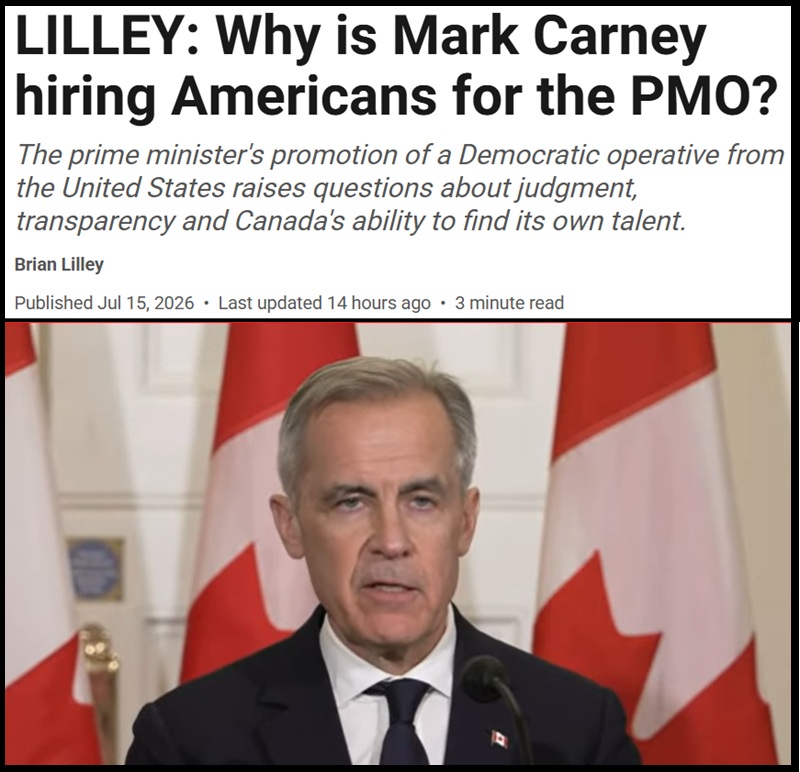 Hired by Prime Minister Mark Carney, the role of Democrat party operative and former Michael Bloomberg associate, Maia Johnson, seems directly related to the strategy of leveraging U.S. Democrat resistance against the CUSMA (USMCA) termination.
[Note: Mark Carney and Michael Bloomberg connect through their banking and finance network with prior associations. This relationship also connects to U.K Mayor Andy Burnham who is likely to become the next U.K Prime Minister to replace Keir Starmer.]
Readers to CTH likely remember in 2018 former Prime Minister Justin Trudeau leveraged Democrat House Leader Nancy Pelosi to regain position in the USMCA negotiations (NAFTA elimination) with USTR Robert Lighthizer.
It appears that Carney is attempting a similar maneuver through the connections of Democrat operative Maia Johnson.
Specifically, because positioning American resistance to the CUSMA (USMCA) termination is a key part of the Carney strategy, a COO from U.S. Democrat politics is the best strategic approach. A Canadian in that role would be of far lesser value.
TORONTO SUN – […] This week, it was reported that Carney was promoting a woman unknown to most Canadians to the position of chief operating officer in the PMO.
It appears to be a first for Canada to have a COO in the PMO, but it’s who the woman is that is truly interesting.