Quantcast

Kroger CFO Notes More and Faster Food Inflation Coming in Next Several Months

This is not a surprise data-point for readers here.  However, it is good to see honest statements from corporate executives on what to expect with food inflation.
As noted by Kroger Chief Financial Officer Gary Millerchip in a call with financial media, we can expect to see even more rapid inflation in food prices overall in the next several months:

MSM – Cincinnati-based Kroger Co., which had $132 billion in sales last year, says inflation is running hotter than management previously anticipated and that expectations are now for prices to rise 2% to 3% over the second half of this year.

Kroger is “passing along higher cost to the customer where it makes sense to do so,” said CFO Gary Millerchip on the company’s second-quarter earnings call on Friday. (read more)

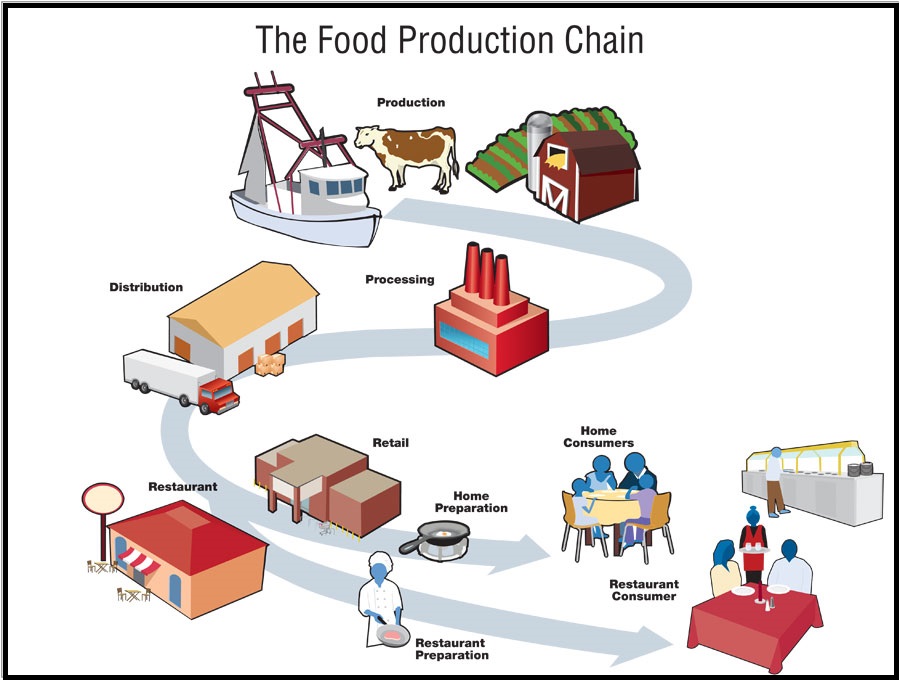
The reason for more inflation is not too difficult to understand.  Fresh foods show fast price increases immediately because they have almost no pre-existing inventory.  Fresh foods go from field to fork the fastest, and price increases show up immediately.  The same applies to restaurants.

However, processed foods and shelf stable foods have a deeper inventory, the turns on that inventory take longer, and as a consequence, it takes longer for the price increases to show up.  Millerchip is simply saying the total supply chain price increases are going to hit, and they are going to hit even harder than the last few months, as the new processed inventory carries a higher cost.

(more…)

August Producer Price Inflation Shows Highest Increase 8.3% Since Tracking Began, Previous Record Was Last Month

The Bureau of Labor and Statistics (BLS) released the August review [DATA HERE] of producer prices for last month.  August rose 0.7% with cumulative results now showing an 8.3% increase in prices; the largest year-over-year jump in prices for final demand products in the history of tracking. The prior record was July with 7.8%.

Inflation is skyrocketing for consumer goods at all levels of production: Origination (commodity/raw material), Intermediate (Mfr/Wholesale) and Final products (retail).

In part, the extreme upward cost pressure from escalating fuel and energy costs are accumulating throughout the supply chain and surfacing in the prices of the finished products. We are all witnessing this in the prices at stores; especially in the quick turning products, like groceries (fast turn consumable goods), which reflect price increases the fastest.

Final demand prices moved up 0.7 percent in August, 1.0 percent in July and 1.0 percent in June. The year-over-year inflation rate on final demand products now stands at 8.3%.

MEDIA – […] “The data comes amid heightened inflation fears fed by supply chain issues, a shortage of various consumer and producer goods and heightened demand related to the Covid-19 pandemic. Federal Reserve officials expect inflationary pressures to ease through the year, but they have remained stubbornly persistent, with Friday’s numbers indicating that the trend likely will continue.

(more…)

JoeBamaNomics – Consumer Confidence Plummets, Spending on Durable Goods Drops, Inflation Dominant Factor

The latest measure of consumer confidence [Data Here] reflects a continued trend, and the index drops well below expectations.  The Consumer Confidence Survey is a monthly report detailing “consumer attitude, buying intentions, vacation plans and consumer expectation for inflation, stock prices and interest rates.”

The index now stands at 113, a drop from last month when it was 125.  The decline in confidence is an outcome of workers and consumers feeling the impact of massive inflation from Joe Biden economic and monetary policies.   With gas and food prices climbing rapidly, it should not be a shock to see consumer confidence begin dropping; however, the financial analysts were caught off guard by the unexpected size of the drop.

According to Marketwatch, “Economists polled by The Wall Street Journal had forecast a reading of 123.1”, a drop to 113 is a much more severe change in consumer confidence than expected.   The economists who get this stuff wrong repeatedly are inside the echo-chamber of Wall Street and the financial class.  There is a disconnect between those analysts and the real economy on Main Street; that’s why they are always surprised.

(more…)

Marjorie Taylor Greene Confronts Senate DeceptiCons and Outlines Corrupt Infrastructure Bill

Representative Marjorie Taylor Greene (GA – CD14) appears on Steve Bannon’s War Room to outline the issues with the Senate infrastructure bill.  MTG is the first House republican who has directly confronted Mitch McConnell’s 19 DeceptiCon members.

As MTG notes, she will personally campaign to primary any House republican who votes to support the infrastructure bill.  {Direct Rumble link} First segment Video:

SASSPAC.COM Link

Segment #2 is below:

(more…)

Consumer Spending Unexpectedly Collapses in July as Essential Purchases Become Primary Focus of Working Class, Inflation is The Underlying Problem and It Will Get Worse

The U.S. Census Department releases retail sales data today showing a strong contraction in consumer spending for July [MSM LINK].  The out-of-touch financial pundits were looking for a 0.3% decline; however, the drop was four times greater with a contraction of 1.1% in spending.

“The slide in retail sales comes after Friday’s preliminary consumer sentiment report from the University of Michigan showed one of the largest drops on record, leading some strategists and economists to warn of downside risk to the sales data.” (link)

This should not be unexpected for those who read here.  Massive price inflation on essential goods is eating up wages.  Food, fuel and energy price increases are changing consumer spending habits.  Non-essential purchases have stopped….. they haven’t slowed, they have stopped. ←Emphasize this because it is not showing up yet in the data lag.

The data reflects that auto sales were the primary contributor to the decline in spending (-4.3%).  This should make sense to people because auto purchases are the largest general consumer purchase outside of home purchasing.

When purchase decisions are made by families; and food and fuel prices are skyrocketing; replacing a vehicle is not essential.  Auto sales are a key indicator of consumer confidence and income.

Overall inflation is the primary driver.  Real wages are declining (wages – inflation), and disposable income is dropping quickly.  Americans need to start talking very deliberately about what is about to happen.  CTH predicted this and has been walking through the visible outcomes as each set of new data surfaces {SEARCH BOX}.  Nothing happening right now is unforeseen or not easily understandable.

(more…)

Biden Sends 1,000 Emergency Evacuation Troops to Kabul as Intel Agencies Now Say Afghan Capital Will Fall Within 72 Hours

In July, Biden said Kabul would never fall.  Four days ago Biden said it would take more than 90 days for Taliban to reach Kabul, if at all.  Today, Biden sends 1,000 more additional troops to Kabul as it is expected to fall within 72 hrs.   That is correct.  By Monday the Taliban could control all of Afghanistan.

The AP is reporting that emergency evacuations have sped up the timeline to avoid the most embarrassing optics for the Biden administration.  An additional 1,000 troops from the 82nd Airborne are en-route to support the previously announced 3,000 U.S. troops handling the evacuation.  That is a total of 4,000 new military troops sent to Kabul to support the previous 1,000.  Keep in mind the original Afghan withdrawal was 2,500 troops in total.

(VIA AP) – The Latest developments on Afghanistan, where a weeklong Taliban offensive is now approaching the outskirts of the capital, Kabul, after the insurgents captured most of the north, west and south of the country, just weeks ahead of the final pullout of all U.S. and NATO troops:  “WASHINGTON — A defense official says President Joe Biden has authorized an additional 1,000 U.S. troops for deployment to Afghanistan.

That raises to roughly 5,000 the number of U.S. troops to ensure what Biden calls an “orderly and safe drawdown” of American and allied personnel. U.S. troops will also help evacuate Afghans who worked with the military during the nearly two-decade war.

The Pentagon said earlier that 3,000 troops are being sent to Kabul to join the nearly 1,000 already there. Biden’s statement on Saturday didn’t explain the breakdown of the 5,000 troops he said had been deployed.

(more…)

An Honest Explanation About Joe Biden Inflation, and It Has Nothing to do With COVID

Repost from June by Request – Several people have written to CTH for an economic review of our current status. Below this post are two primary precursor articles [Primary One and Primary Two] which outline the economic dynamic in play, and how we can look forward with accuracy to what is likely to happen. Despite the deflective talking points by the professional financial pundits, this massive spike in inflation is entirely predictable due to Biden economic policy and Biden monetary policy.

Keep in mind, the FED already said in April they would “support inflation”, that’s because – while they will not say it openly, they know there’s no way to stop it. The massive inflation is a direct result of the multinational agenda of the Biden administration; it’s a feature not a flaw, and it has nothing whatsoever to do with COVID. Also keep in mind the first group to admit what is to come are banks, specifically Bank of America, because the monetary policy is the cause.

There’s no way around this. Despite the pundit and financial class selling a counter-narrative, home prices will crash and unemployment will go up. I know this is directly against the current talking points, but the statistical reality is clear. CTH was the first place that said months ago that new home sales will plummet, that is starting to happen right now. There’s no way for it not to happen, the big picture tells us why.

You might remember, when President Trump initiated tariffs against China (steel, aluminum and more), Southeast Asia (product specific), Europe (steel, aluminum and direct products), Canada (steel, aluminum, lumber and dairy specifics), the financial pundits screamed at the top of their lungs that consumer prices were going to skyrocket. They didn’t. CTH knew they wouldn’t because essentially those trading partners responded in the exact same way the U.S. did decades ago when the import/export dynamic was reversed.

Trump’s massive, and in some instances targeted, import tariffs against China, SE Asia, Canada and the EU not only did not increase prices, the prices of the goods in the U.S. actually dropped. Trump’s policies led the largest deflation in consumer prices in decades. At the same time, Trump’s domestic economic policies drove employment and wages higher than any time in the past forty years. With Trump’s policies we were in an era where job growth was strong, wages were rising and consumer prices were falling.  The net result was more disposable income for the middle class, more demand for stuff, and ultimately that’s why the U.S. economy was so strong.

(more…)

China Works With Biden Administration to Target Former America-First Trump Team With Sanctions

One of the most significant aspects to President Trump’s administration was the trade and economic team he assembled to drive the “America-First” Main Street resurgence we saw on display throughout the four years in office.  Readers will note, there was no turnover of personnel in the trade and economic team, because they were the priority, the fulcrum of the Trump Doctrine. One of the key people driving the America-First agenda was Commerce Secretary Wilbur Ross.

President Trump’s trade and economic team were laser focused on bringing back domestic Main Street economics as the foundation of our economy.  That approach put Wall Street multinationals at a policy disadvantage.   No-one without an interest in U.S. economic security was allowed a seat at the Trump table.

Policies and practices that supported made in the USA domestic manufacturing and industry were the prism through which all actions taken by the Trump administration were viewed.  The massive growth in U.S. jobs and wages was a result.  We also had an unprecedented period of deflationary pricing.  Things were, well, economically astoundingly good for American workers.

As a direct consequence China, Europe and ASEAN partners who had their foothold in the U.S. economy were weakened.  This made the U.S. (Wall Street) multinational corporations -who rely on outsourcing, offshoring and raw material export- very angry.  The exfiltration of American wealth was halted by Trump.  There were trillions at stake, and many enemies were made because of the America-First agenda.

(more…)

150 Multinational Corporations, The Wall Street Crowd, Urge Congress to Take Over U.S. Elections

There Are Trillions At Stake…

Here we go again, 150 multinational Wall Street corporations write a collective letter urging congress to pass the stalled legislation that would trigger a federal takeover of U.S. elections.  [Reuters Article Link] I’m not going to post the article directly, because it is the same group of characters, the same motives and intentions that we previously wrote about [HERE].

[Please note: all leftist media call them “corporations” when the narrative is purposed to attack capitalism (ie. ‘Occupy’), and then the media switch to the term “companies” when the narrative engineering needs to support the same corporations they previously attacked.  The Alinsky wordplay is part of the design.  Democrats say “corporations bad” to their woke sheep, so when they need to hide their alignment with the same businesses, the media switch words to call them “companies.”  I point this out because it is actually a useful tool to help people wake up and spot the manipulative and purposeful hypocrisy of the leftist ideology.]

At the heart of the issue, we are yet again back to the familiar battle, Wall Street -vs- Main Street.

Remember in April when 100 multinational corporations held a conference call to organize messaging on state election laws?  Well, this is the same crew only now with targeted messaging toward congress.

Additionally, I guarantee you the G-20 discussions about a “global minimum corporate tax” are being leveraged by the White House against these U.S. Multinationals in order to get them in line supporting the federal election takeover.  I guarantee you backroom deals and carve-outs, collusion between government and corporations, are being made.

Their commonality of purpose.  The multinationals need the federal takeover of elections because Wall Street needs globalism in order to continue advancing their financial objectives.  Main Street nationalism, or economic patriotism, is antithetical to their income statements.  The current White House and the Multinational Corporations have a common enemy, Main Street.

(more…)

Jobs Report Shows Good News for Service Sector, Bad News for Manufacturing and Construction

CTH has said repeatedly the road to serfdom is cemented with the catch-phrase “a service driven economy.”  The June jobs report from the Bureau of Labor statistics [BLS LINK]  highlights the JoeBama economic policy exactly that way.

Approximately 850,000 jobs were gained in June; however, simultaneously the number of long-term unemployed increased by 233,000 to the current state of four million.

While we should expect to see the leisure and hospitality industries as well as education rebounding from the various COVID-19 shutdowns, and indeed they did ( +343,000 and +155,000 respectively), manufacturing was flat (+11,000), and construction was down -7,000.  The details inside the data are not as great as the top-line would presume.

CTH looks at alternative data connected to the overall economy; empirical data and sector specific trends inside industry.  The biggest domestic issue is inflation, stunningly large increases in prices for fast-turn consumer goods like food and fuel.  Inflation is one of the primary reasons we have stated home values and home sales have peaked on a MACRO level despite the massive amount of real estate investment purchasing underway by financial institutions.

When we look at durable good production, we focus on the primary drivers of higher cost middle-class or working class products.  Seeing construction jobs decline by 7,000 at the same time real-estate values are increasing only points to the problem of working class not being able to afford new home purchases.  In the real estate sector this is unsustainable; it is simply a matter of math, income stability and wages.

(more…)