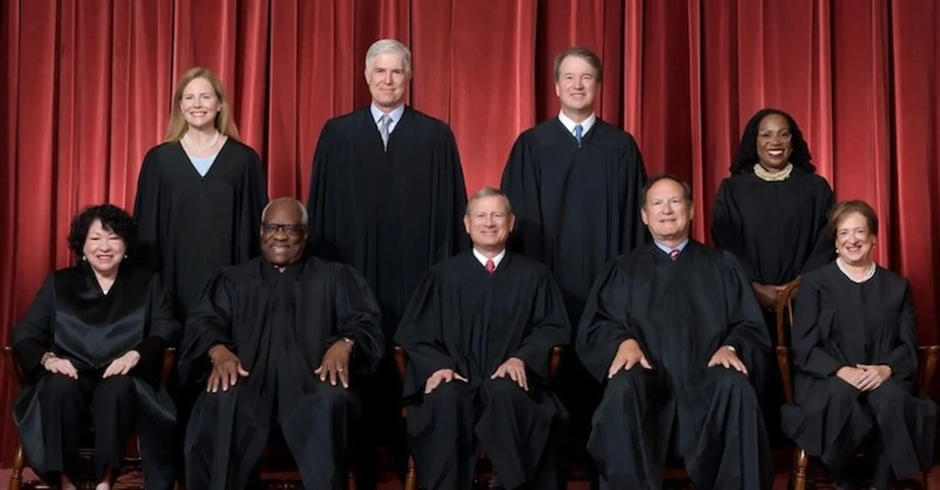
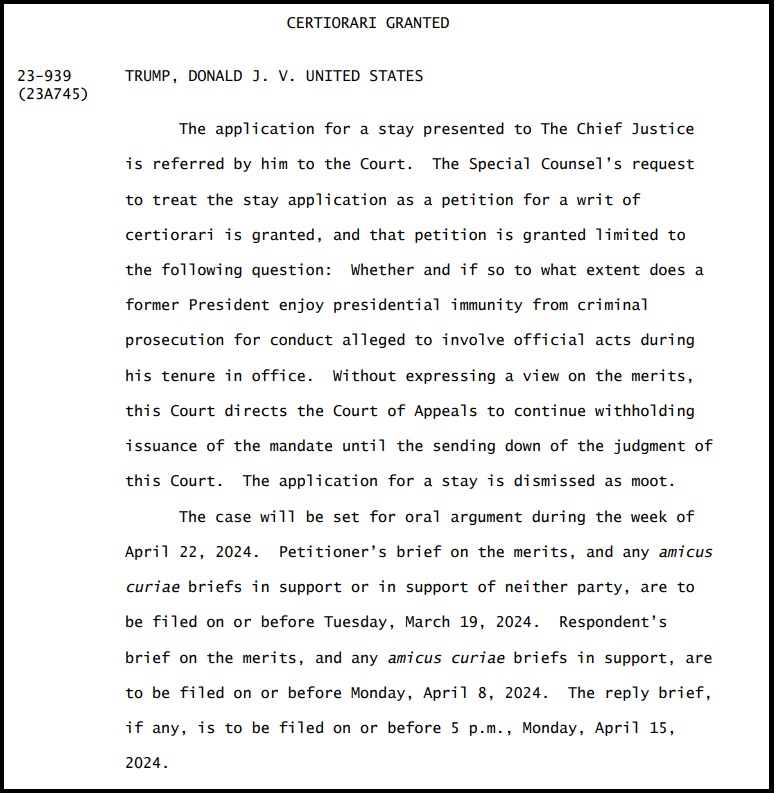
The overall prosecution attempt by Jack Smith was fundamentally deconstructed when the Supreme Court ruled mostly in favor of President Trump carrying ‘presidential immunity’ for officials acts while in office. The ruling meant Smith had to go back to Judge Tanya Chutkan’s court and work through a process of outlining what is and is not an ‘official act’ according to the DOJ.
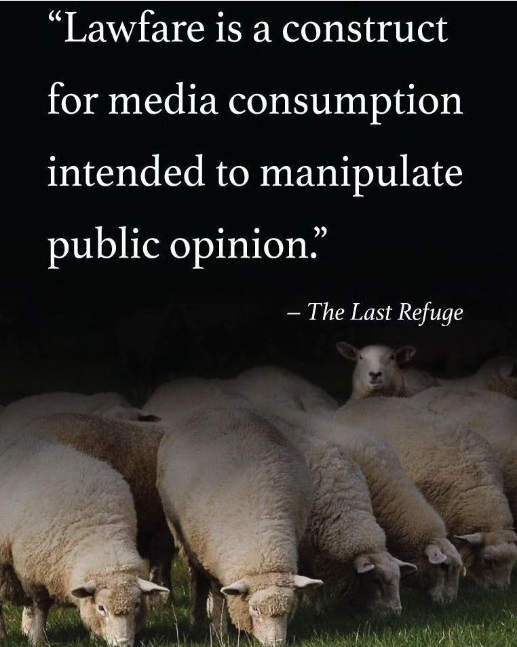 The result of that approach was made public yesterday, when Judge Chutkan revealed a new 165-page indictment [SEE HERE], essentially a list of evidence the DOJ claims as proof of “unofficial acts” allowing them to jump the hurdle of “official acts.” However, the reality of Jack Smith’s filing is a story without much legal value. Instead, it is a 165-page Lawfare story created for media promotion.
Many followers have accepted that Jack Smith is not necessarily the person constructing the legal filings. There is a solid argument to be made that Andrew Weissmann, Norm Eisen and Mary McCord are the Lawfare allies tasked with writing the material. When you read the filing, the manipulation of legalese to shape a narrative story is clear.
As former DOJ Asst AG Jeffrey Clark has noted, the filing attempts to obfuscate the legal requirements of “state of mind” by projecting what President Trump must have thought, as expressed by the opinion of unknown advisors. Jack Smith says President Trump thought this, without actually providing any evidence of what President Trump thought. Additionally, this Lawfare approach toward including redacted quotes amounts to written testimony, which would never pass muster in any court.
The accused has a right to confront witnesses; however, in written text that questioning becomes impossible. In essence, Jack Smith violates the principle and stated purpose of the sixth amendment. This is one of the ways you can tell the filing itself is not intended to outline evidence, but rather to outline a story. The claimed “evidence” is simply a story the Lawfare team want to deliver in October of an election year.