♦ Five days ago, President Trump reduced the 50-day ultimatum to 10-12 days for Russia to stop bombing Ukraine and come to the negotiation table.
♦ Four days ago, Dmitry Medvedev (July 28) issued a statement that Trump’s “ultimatum game” with Moscow amounts to a threat to Russia and pushes the United States itself closer to war. “Each new ultimatum is a threat and a step towards war,” said Medvedev, currently deputy chair of Russia’s Security Council. “Not between Russia and Ukraine, but with his own country.”
♦ President Trump responded today – “Based on the highly provocative statements of the Former President of Russia, Dmitry Medvedev, who is now the Deputy Chairman of the Security Council of the Russian Federation, I have ordered two Nuclear Submarines to be positioned in the appropriate regions, just in case these foolish and inflammatory statements are more than just that. Words are very important, and can often lead to unintended consequences, I hope this will not be one of those instances. Thank you for your attention to this matter!”
“In order to approach the issue peacefully, it is necessary to conduct detailed conversations. And not in public, but this must be done calmly, in the quiet of the negotiation process.” ~ Vladimir Putin
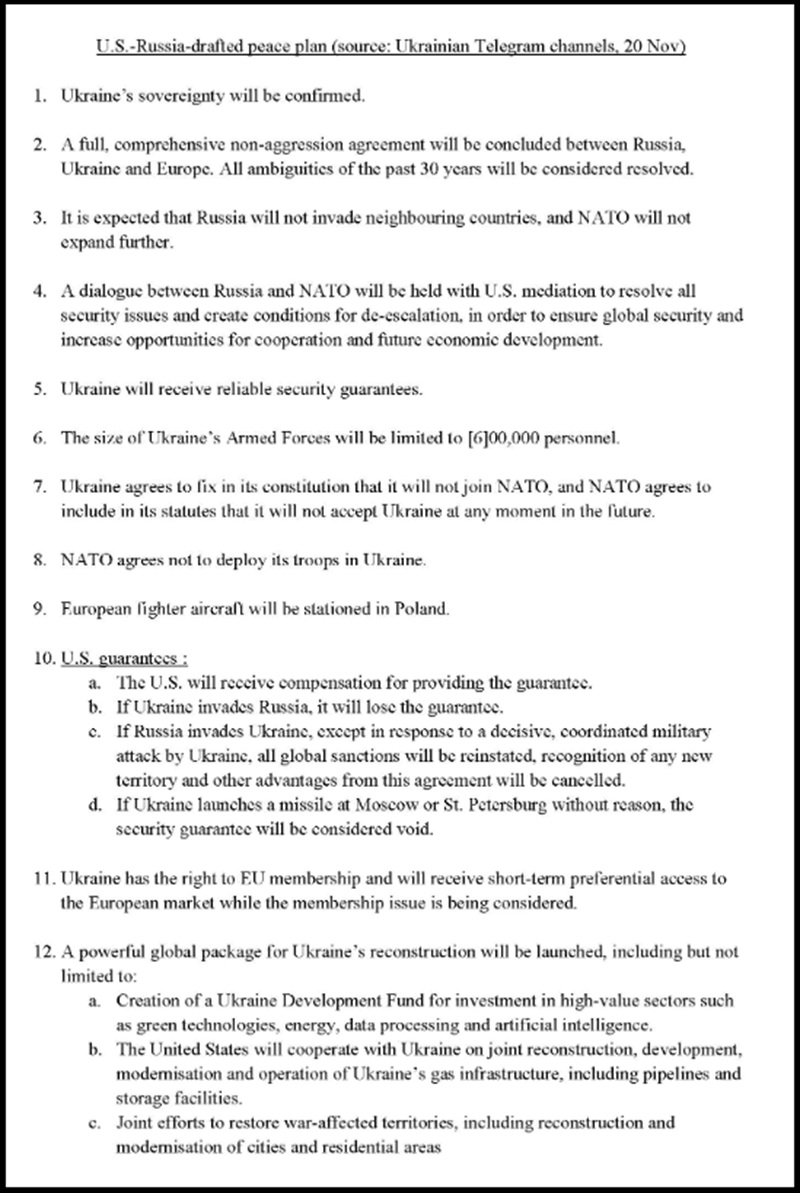
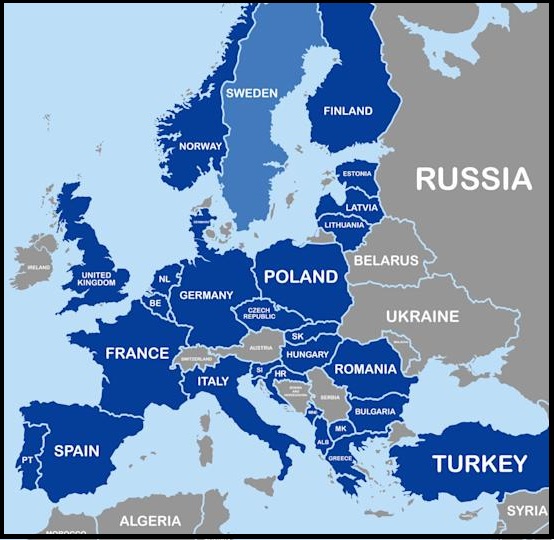
As expected, no one in the media pool asked the key question. If Ukraine is not a NATO member, and Russia is not a NATO member, then why is NATO even involved? Not a single media outlet cared enough to even ask the brutally obvious.
LET US NOT PRETEND. There is good news and there is bad news within the outlined strategy. More good than bad, despite the spin room narrative engineering being immediately spread by U.S. media.
First, President Trump is giving Russian President Vladimir Putin 50 days to finish his strategic military operations in Ukraine, before a 100% tariff rate is executed against the Russian economy. With direct U.S. trade with Russia already not happening, the tariff would likely be applied toward any country purchasing any goods or resources from Russia (specifically India, China, Iran, etc.).
Second, despite Lindsey Graham and the EU leaders discussing the confiscation of Russian assets held in EU/USA bonds, neither President Trump nor NATO General Secretary Mark Rutte mentioned it. Again, the media never asked that question. Thankfully, President Trump seems to realize if such a confiscation took place, the financial credibility of the entire western finance system would be compromised. No nation would want to put their national wealth at risk by buying U.S. and EU treasury bonds.
Third, the part the MSM will focus on. In the interim of the 50 days, NATO will be both purchasing and moving offensive and defensive weapons systems into Ukraine. On the defensive weapon side, Germany will likely send Patriot missile batteries, and NATO will replace them with new U.S. purchases. In addition all NATO states will provide increased offensive weapons and purchases will be made from U.S. stockpiles. Those new offensive weapons will likely be held back until the end of the 50 days, giving Putin something to think about to bring him to the table.
Summary. Putin has 50 days. In the interim NATO is approved by Trump to ship offensive and defensive weapons into Ukraine. The Senate sanctions package will continue to be assembled, perhaps approved, but not deployed until after the 100% tariffs are executed if Russia is non compliant in getting to the table.
The carrot is the 50 days to get finished. The stick is all hell will break loose on Russia, including new and powerful offensive weapons, if Putin doesn’t end the conflict prior to the 50-day deadline.
CNN state media narrative engineers (think State Dept. in all things CNN) are running with a story to promote a new book by Josh Dawsey (Wall Street Journal – Author), Tyler Pager (New York Times – Author), Isaac Arnsdorf (Washington Post – Author) where they write about an audio segment by candidate Trump telling NY donors how he threatened Russian President Vladimir Putin and Chinese Chairman Xi Jinping.
The leaked audio is essentially unremarkable as President Trump has told this story several times. However, the background context is more interesting when we consider the motives of the WSJ, NYT and WaPo. Here’s the segment:
The WSJ is against President Trump based on economics; WSJ representing Wall Street. The NYT is against President Trump based on DHS/DOJ domestic opposition from within DC. The WaPo is against President Trump based on the CIA position and larger intelligence community. None of the motives within these outlets are challenged by the intellectually honest political observers.
Some thoughts on what I would call ‘modern warfare’ for citizen preppers. Some of this experience may pertain to urban areas, some perhaps pertinent overall.
Dimitri’s wife is grabbing her purse to go to the grocery store, when he casually says “it’s 5:45.” She just as ordinarily replies, “I’ve got cash.” Dimitri sees the slightly puzzled look on my face and flippantly notes, “they turn off the internet at six thirty now,” shrugs, and goes back to reading his paper.
Perhaps similar to London life during the blitz. Various municipal govts coordinated the shut down of lights and people wait. Others got about doing what they needed to do, sirens notwithstanding.
There is a familiar life amid modern drone warfare, and with the similar control of electricity comes the need to add internet.
When the drones are coming they turn off the internet.
As I contemplate the contrasts in social resilience, my most familiar reference point is life after a hurricane. In Florida when we are dealing with the aftermath of a hurricane, no power, no water, no internet, etc., you adapt to life without modern technological conveniences.
If you’ve ever lived amid the aftermath of natural disasters, you understand the need for a plan and quick adaptation. Do it a few times and adaption becomes ordinary. Horrible in ways, yes; awkward, certainly. But you take things in stride; overcome, figure out the optimal solution and keep moving. However, not everyone is prepared to consider a disruption an ‘inconvenience’ and many people who need consistency to retain stability end up in panic. I think long term readers well understand the reference.
As Dimitri goes back to the paper my mind shifts to stuff I’ve heard in bits and pieces but never given context before.
I think about this U.S. ‘Space Force’ thing, and now realize there are people who have gamed out modern warfare more than we discuss as a western technological society.
If my data alignment points are accurate, now that the BBB is passed through the Senate we are likely to see some very major geopolitical changes come rushing to the surface.
Keep watching and let’s see if things happen the way we expect.
WASHINGTON DC – The Pentagon has halted shipments of some air defense missiles and other precision munitions to Ukraine due to worries that U.S. weapons stockpiles have fallen too low.
[…] In a statement following the publication of this story, White House Deputy Press Secretary Anna Kelly said that the decision “was made to put America’s interests first following a DOD review of our nation’s military support and assistance to other countries across the globe. The strength of the United States Armed Forces remains unquestioned — just ask Iran.”
Included among the items being pulled back are missiles for Patriot air defense systems, precision artillery rounds, Hellfire and other missiles that Ukraine launches from its F-16 fighters and drones.
The losses will surely be felt on the ground as Ukraine continues to beat back fresh assaults by Russian forces. (read more)
In related news not getting attention, French President Emmanuel Macron had a two-hour phone call with Russian President Vladimir Putin today. [LINK] Also, Volodymyr Zelenskyy called the president of Azerbaijan today, an ally of Putin [LINK]. Azerbaijan is to Russia as Mexico is to the United States.
Presidential envoy Steve Witkoff deserves a great deal of credit for what followed in the aftermath of President Trump’s final elimination of the Iranian nuclear threat. Throughout the 12-day war, Witkoff maintained a diplomatic connection to the Iranian delegation in order to position a ceasefire upon conclusion.
The Trump administration is now taking a more firm stance toward who in Iran they will accept negotiations with. As noted by Secretary Rubio, the use of intermediaries has exhausted its usefulness. While Qatar may play a role as an interlocutor to bridge the two sides, the time has come for direct face-to-face discussions with Iranian officials.
With the potential of a peace agreement and increased stability throughout the region, there is an opportunity for an expanded investment and economic zone throughout the middle east, not just in Iran. As CTH noted regarding the threat to close the Strait of Hormuz, technically it is not the Iranian government who closes the strait, but rather the maritime insurance companies who refuse to underwrite an enlarged risk. The same concept applies when the absence of conflict becomes the norm. Steve Witkoff draws attention to this background context within his remarks.
An ancillary benefit in the Russia-Ukraine conflict comes from a very public display of FAFO outcomes. None of the principle characters within NATO, the EU, the U.K nor Ukraine or Russia want to face the Godzilla FAFO strategy that President Trump is willing to deploy.
The reason why the NATO partners responded with great deference to President Trump in the Netherlands is no global observer wants to face Godzilla in FAFO mode, militarily or economically. Even before the dust settled from 70 tons of massive ordnance detonation deep underground in Iran the leaders of the world knew things would be different now.
President Trump will be delivering remarks and answering questions as he departs the NATO summit in Netherlands. The anticipated start time is 9:30am ET / 3:30pm Local. Livestream Links Below.
If you assert the U.S. strikes on Iran’s nuclear sites at Fordo, Natanz and Isfahan were taken exclusively to remove the capacity of Iran to create a nuclear weapon, you are likely missing a key point. However, if you recognize the strikes were not only about eliminating Iran’s nuclear capacity but also about taking Israel’s “Iran has nukes!” card off the table, then you begin to understand the after action message from the Trump administration.
Essentially, by removing the Iran nuclear threat, the overall influence from Israel on President Trump’s foreign policy objective is also lessened. Within that dynamic you will see why President Trump, Secretary/NSA Rubio and the inner national security circle are so strongly emphasizing the “totally destroyed” message. WATCH:
The inverse of the successful Iran strike narrative is also true. If the strikes against Iran are defined as not eliminating the nuclear threat, then a continuance of national security influence on behalf of Israel is maintained.
Unfortunately, for the deepest part of the U.S. intelligence apparatus, maintaining the usefulness of the Iran nuclear threat is aligned with their interests. Hence, we begin to see why the intelligence apparatus immediately began trying to diminish the effectiveness of the strikes with leaks to CNN [SEE HERE].
President Trump and his national security team held a meeting with NATO Sec.-Gen. Mark Rutte during the 2025 NATO Summit in the Hague, Netherlands, and took questions from the media.
Interestingly, NATO Secretary Mark Rutte emphasizes the new commitment from Canada repeatedly. As one of the worst offenders to adhere to their NATO obligations, and against the backdrop of tariffs and targeted trade negotiations, obviously Canada is trying to position themselves against the Trump economic agenda.
Secondly, the emphasis is again on the damage assessment from the U.S. bombing of the Iran nuclear facilities. This is critical for President Trump to break free of the intelligence community control over U.S. foreign policy expanded in the next outline. WATCH:
Hungarian Prime Minister Viktor Orban is not known as a man who pretends. Orban speaks plainly, directly and without pretense. During his open media segment at the beginning of the NATO summit the media demanded to know if he thought Russia was a threat and how he felt about Ukraine President Volodymyr Zelenskyy being present at the assembly.
Orban being Orban delivered the response the Europeans did not want to hear. Trump is great. Russia is not scary. The biggest threat to the EU is their continued slide away from competitive economics. As to Zelenskyy, NATO has no business in Ukraine. WATCH: