During my trip to DC in the summer of 2020 there were a myriad of disconcerting datapoints assembled; revelations that made sense of the madness and disappointments found everywhere. However, one of the key notations for future reference was to watch the political evolution of DHS and spot the jump where the ideological outlook turns into specific government action.
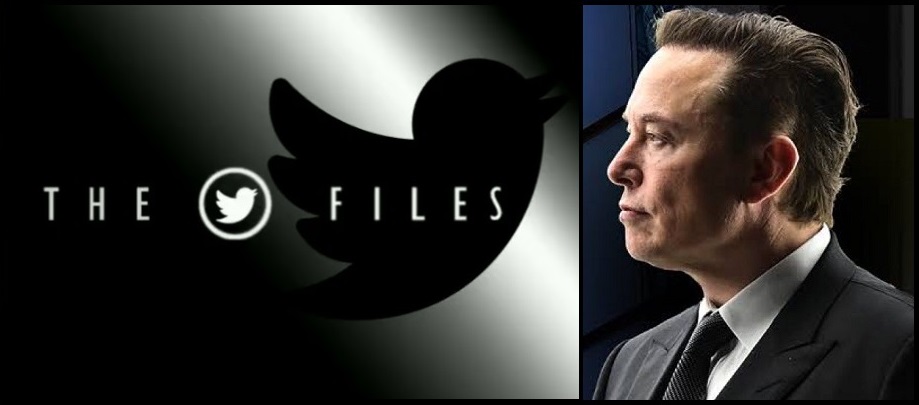
With the DHS/FBI portal within Twitter, and likely within all social media, now being openly discussed and mainstreamed, it’s worth revisiting an August 2021 tripwire crossed by DHS and then contemplating how that was influenced by a much larger ideological agenda.
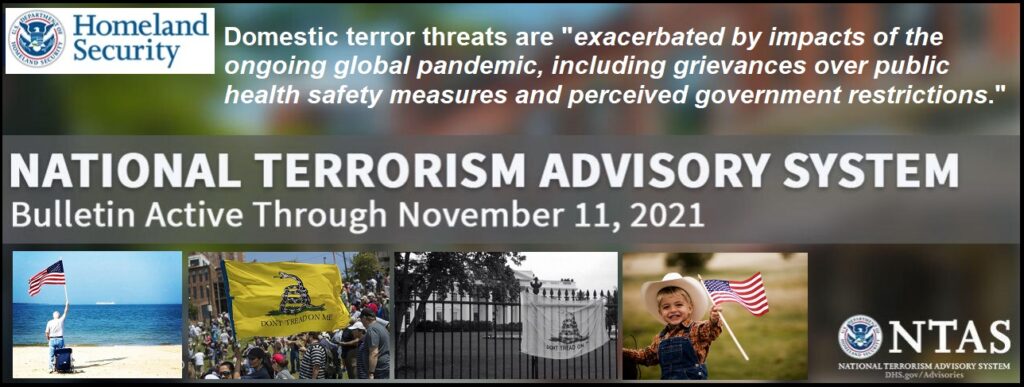
The United States Department of Homeland Security made a quiet and alarming announcement on August 13, 2021, creating the official position of the United States Government under the Joe Biden regime. [SEE DHS STATEMENT HERE] According to the statement if you questioned the orthodoxy of government mandates, or COVID-19 responses from the U.S. government, you were -effective immediately- considered a “terrorist”, specifically a “Domestic Violent Extremist” (DVE).
Most people missed this remarkable development, yet it seemed to underpin a tenuous, unstable and fragile disposition of the current administration. Within this continuation of the Obama-era initiatives the Department of Homeland Security (DHS) seemed rather paranoid in their need to label anyone who would question the COVID-19 response.
Considering the polling at the time, more than half the country would be defined as dissidents and domestic terrorists within our homeland. Think about that.
DHS – The Secretary of Homeland Security has issued a new National Terrorism Advisory System (NTAS) Bulletin regarding the current heightened threat environment across the United States. […] These threats include those posed by domestic terrorists, individuals and groups engaged in grievance-based violence. […] Such threats are also exacerbated by impacts of the ongoing global pandemic, including grievances over public health safety measures and perceived government restrictions. (read more)
Notice the wording of that introductory paragraph. The government-imposed mandates, mask and vaccination requirements were only “perceived government restrictions.”
The chains that bound your expressions of liberty and freedom were essentially being defined as mere figments of your imagination. The rules and denials of activity that we are forced to live by, under the auspices of “public health and safety measures“, were described as perceived demands.
(more…)
Posted in 1st Amendment,
Big Government,
Big Stupid Government,
Big Tech,
Conspiracy ?,
DHS,
FBI,
Fourth Branch of Govt,
Joe Biden,
media bias,
Professional Idiots,
propaganda