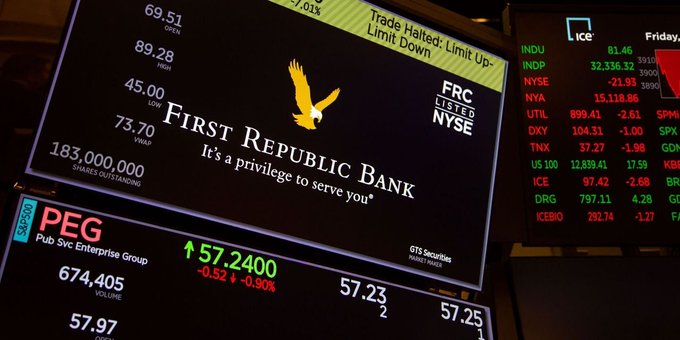
Gary Cohn is connected to the banking and finance industry, well connected. In this interview with Face The Nation earlier today, Cohn is discussing the current status of First Republic Bank, another big player in the California banking system that is about to collapse. Cohn notes something at the 1:15 mark that just seems obvious yet is undiscussed in most outlines of the FRB discussion.
Six weeks ago, in an effort organized by the FDIC, $30 billion was pushed into FRB by eleven larger banks to stabilize it. However, the only thing that infusion of capital did was allow institutional depositors time and ability to withdraw their funds. A complete racket. Once the at-risk group exits, suddenly the collapse is back on the tee. WATCH:
[Transcript] – MARGARET BRENNAN: We want to turn now to Gary Cohn, who is the vice chairman of IBM, former Goldman Sachs president and a former Trump administration top economic adviser. Good morning to you. Lots of titles, Gary, Lots of experience. That’s why we like having you here. I want to ask you about what’s happening with First Republic. It’s been under pressure. We know they’ve been looking for a buyer, the FDIC, the government is looking to arrange, moving it into government control and then maybe selling it. What are you hearing about how this would roll out?
GARY COHN: Margaret, thanks for having me. I think you’re portraying the situation as we find ourselves again on a weekend. As we closed business of Friday, the FDIC was in a process of looking for acquirers or bidders for the assets over the course of the weekend. I think the FDIC has asked potentially three banks for their final bids for the entire bank. The FDIC would prefer to sell the bank in its entirety than the pieces. What will most likely happen is the FDIC will seize control and then simultaneously resell the asset to the successful bidder. I think that will happen sometime later this afternoon before the markets open in Asia this evening.


 “This is no small thing, to restore a republic after it has fallen into corruption. I have studied history for years and I cannot recall it ever happening. It may be that our task is impossible. Yet, if we do not try then how will we know it can’t be done? And if we do not try, it most certainly won’t be done. The Founders’ Republic, and the larger war for western civilization, will be lost.”