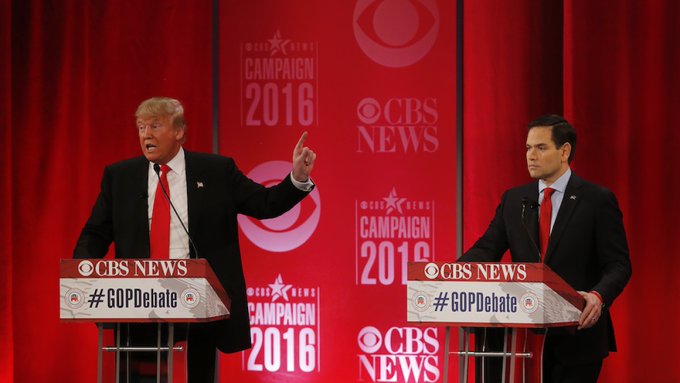
President Donald Trump has endorsed Florida Senator Marco Rubio for re-election. This has angered many MAGA supporters who view Rubio, correctly, as a DeceptiCon establishment figure. However, there is a pragmatic political approach evident that should be considered.
 First, it must always be remembered that the Republican party is a private club. The RNC is part of that private club. Both the Democrat Party and the Republican Party are private clubs. There are no federal, state or local election laws or rules that require club participation in order to run for elected office. The clubs exist to facilitate the infrastructure of a process that is guided by inside rules made by club members.
Second, within the MAGA community there has been a recent argument about the Republican party that essentially boils down to this: (A) President Trump should start a new party; a new club; and/or (B) President Trump should reform the Republican club from within, removing the establishment elements.
Within the club President Trump can influence the rules and agenda, but the club itself must support them. As we saw in 2016 there is a significant portion of the club who do not want Donald Trump within it. Thus all moves to influence the club should be cast against this reality.
President Trump endorsing a club member should not be a surprise to those who have advocated for Trump to take-over the republican party. Rubio has enough support within the club that a non-endorsement, or Trump’s support for a primary challenge, would exhaust a lot of political capital and ultimately result in a fight within the club.
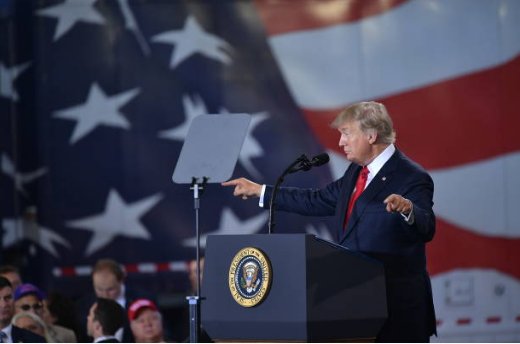 Attendees include: Former Secretary of State Mike Pompeo, Florida Governor Ron DeSantis, South Dakota Governor Kristi Noem, House Minority Leader Kevin McCarthy, and Senators Marco Rubio, Tom Cotton, Rick Scott, Lindsey Graham and Ron Johnson.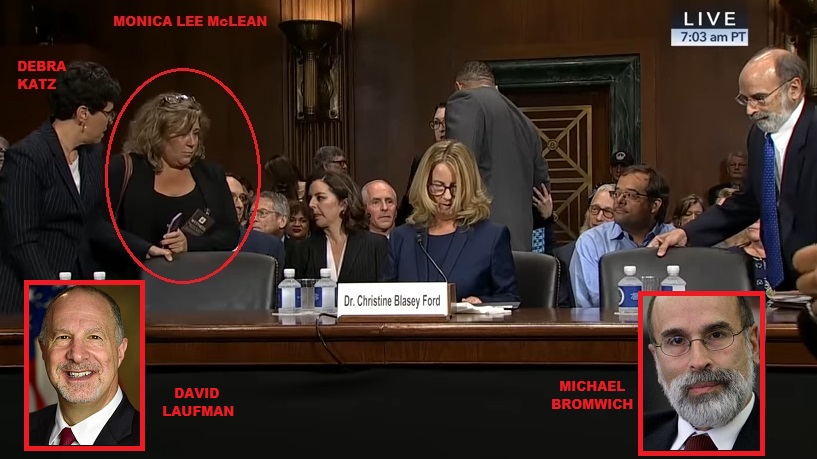
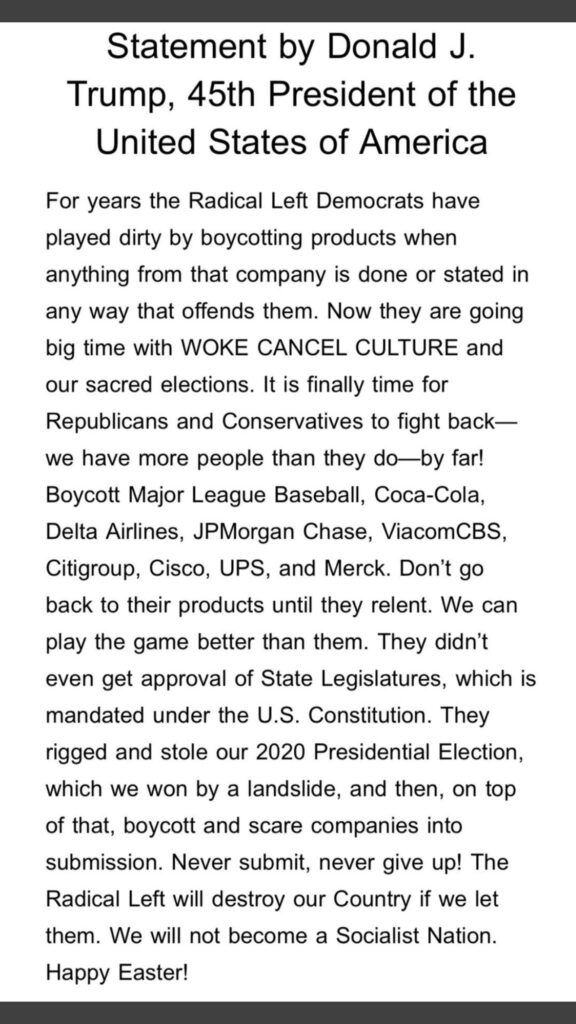 To evidence the majority opinion, today Rasmussen reports on a poll of over 1,000 voters to ask the key questions [
 Last week President Donald Trump asked for a

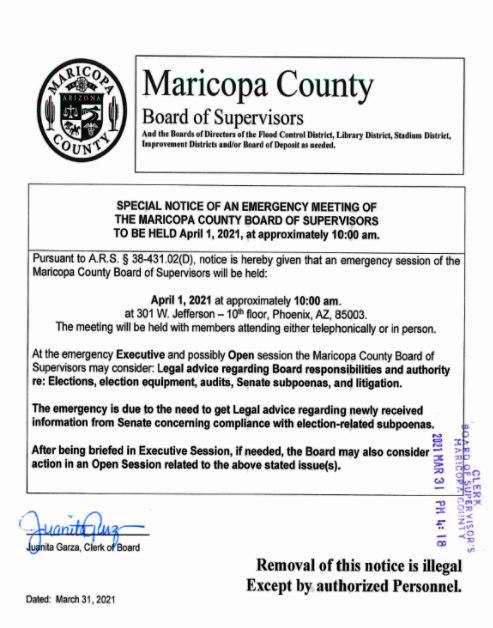 A few weeks ago a judge agreed with the republican Arizona senate that an audit of Maricopa County ballots was justified. The judge agreed with the Arizona Senate that subpoenas were validly presented, there was information that supported the suspicion behind that ballot audit request, and the state had authority to reach into the Maricopa county election system and audit everything, soup-to-nuts.