Many people are discussing who President Trump will appoint to two positions: (1) Director of the National Security Agency (NSA); and (2) The Director of the FBI. Without actually realizing it, both of these positions are fundamentally tethered.
The NSA Director is the librarian of the Intelligence Community. The NSA gathers, collects, intercepts and stores the metadata of every electronic transmission, including communication. The Director of the NSA is in charge of that massive responsibility to protect and guard the library.
The FBI Director is the chief customer of that library. On the domestic investigative side, the intelligence side, and the counterintelligence side of all FBI operations, their access to exploit that metadata has become critical. The urgency of that need underpins the motive to continue reauthorizing FISA-702. When we remove the pretending, 702 reauthorization means surveillance access without warrants for all American communication.
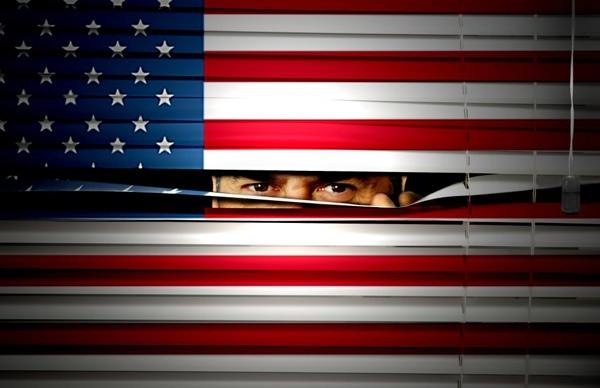
The Fourth Amendment has been destroyed by legislative permission, and a complete lack of accountability for violations of law. Americans are no longer “secure in their persons, houses, papers, and effects, against unreasonable searches and seizures,” and “reasonable cause” warrants are no longer needed.
It should not be too much to ask for an FBI Director who respects the Fourth Amendment. Alas, in the real world of the Patriot Act, pragmatically we are well aware that every sub-silo and contractor within the FBI toolbox has access to this unlimited surveillance library.
Perhaps unbeknownst to most, the people advising President Trump on his next FBI Director also hold a vested interest in making sure the nominated candidates for NSA and FBI will continue to allow exploitation.
I prefer an FBI Director who does not support FISA-702 warrantless searches of U.S. citizen data. Unfortunately, everyone in the orbit of President Trump providing the advice and recommending the candidates, do not hold the same view. Not a single one.
(more…)
Posted in Big Tech,
Decepticons,
Deep State,
Domestic Terrorism,
Donald Trump,
FBI,
Fourth Branch of Govt,
media bias,
NSA,
President Trump,
Uncategorized


