There are a few that ankle bite about President Trump focusing on trade agreements as if it is foreign policy and not economic policy for America that is the #1 factor in our future. I do not see value in such nonsense. Economic security is national security – period.
After a day of Canadian government officials pushing a twisted narrative about their position regarding U.S-Canada trade, President Trump puts forth a simple truthful statement:
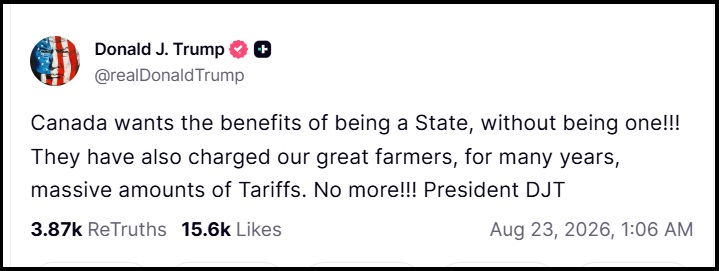
Additionally, U.S. Trade Representative (USTR) Jamieson Greer talked to the New York Times about the current issues that created the fracture in negotiations. I will outline those aspects below.
CTH readers will note that in 2025 and again earlier this year, our prediction was the USMCA (CUSMA) would dissolve in/around early July, and the U.S. would ultimately end up withdrawing completely in/around August of 2026. I would be remiss if I did not note current events are following a very predictable path.
Trade issues with Canada are irreconcilable against the entitlement that underpins the Canadian economic mindset. You will note these “friction points” do not exist with Mexico; there is a cultural and brutally factual reason for this.
Canada feels entitled to maintain a trade relationship with the USA as if they are a state in our union. However, just like the abusive mentality in any toxic relationship, Canada refuses any reciprocity. Canada maintains protectionist tariffs, non-tariff barriers, quotas against U.S. goods and one-way restrictions on banking, finance, intellectual property and media. The latter part they call “cultural” protection.
Here are the distilled points noted by USTR Greer as explained to the New York Times:
 […] The United States had offered to reduce its tariffs on steel, aluminum and autos, and eliminate a recently imposed tariff on Canadian lumber, before negotiations suddenly collapsed last night, Jamieson Greer, the U.S. trade representative, said Saturday.
In an interview with The New York Times, Mr. Greer detailed previously confidential and unreported elements of the U.S. trade offer to Canada, saying those measures would have given Canada the most preferential treatment of any trading partner.
[…] over the following days, and particularly late into the night Friday, that consensus crumbled. It fell apart over a series of issues that, individually, may have seemed small but collectively represented a big division over issues of importance to both sides.
[…] Mr. Greer said that the Trump administration had pledged to eliminate the 10 percent tariff on softwood lumber that Mr. Trump imposed last year using a provision known as Section 232.
The United States had also offered to reduce a 25 percent tariff on cars that Mr. Trump put in place last year. But because Canada qualifies for a further reduction when the cars contain any amount of U.S. content, the automotive tariffs could have gone as low as 7 percent, he said.
The United States also offered to lower tariffs on metals, one of Canada’s most important priorities.
“The United States was prepared to reduce the tariff on steel from 50 percent to 25 percent for the majority of steel Canada sent to the United States,” Mr. Greer said. Steel would be subject to what is known as a tariff-rate quota system, in which only a certain amount of steel imports would receive that lower tariff.
On aluminum, the United States had offered to reduce its tariffs to 25 percent from 50 percent without such a quota limitation, Mr. Greer said.
For products made with steel and aluminum, like golf clubs and beer cans, the United States offered to cut those tariffs by anywhere from 10 to 25 percentage points, with the lowest tariffs set at 15 percent.
Mr. Greer said that the United States had also offered to suspend the 50 percent tariffs that it brought into effect early Saturday morning on Canadian dairy, wine, hockey sticks and others goods.
“Obviously, we would completely suspend the 50 percent Section 338 tariffs that we were going to apply to 5 percent of Canadian exports,” he said, referring to the tariffs that went into effect Saturday. (Source)
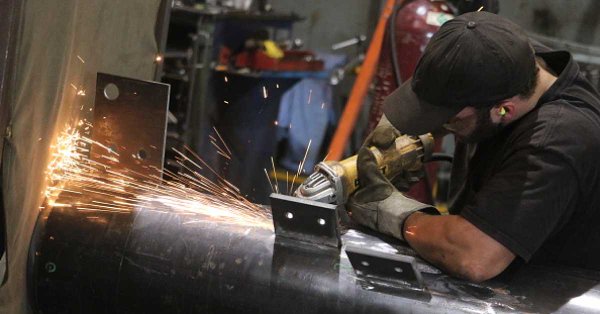 You will note that “metals” are of keen interest to Canada. That is because Canada relies on imported metal product, rolled steel, aluminum ingots etc., as an outcome of their energy policy.
Canada could not/would not promise to stop Chinese steel being transshipped into auto parts & then into the U.S. market. Why? Because the U.S. requires a strict “melt and pour” rule.
Steel and aluminum must be melted and poured in North America to qualify for preferential treatment. This stops Chinese steel from entering Canada, getting light processing, and crossing the border as “North American” content to evade tariffs.
Why is this a problem for Canada specifically (not Mexico)? Well, steel and aluminum cannot be made without coal and gas (heavy carbon emissions), because the core issue is heat (joules) for the melting. You cannot make molten metal from renewable energy, (ie. windmills and solar farms) you need massive heat (oil, gas, coal). It’s simple science, you need joules.
Canada’s energy policy, climate change stuff, is about the creation of electricity and non-carbon emissions. They have decarbonized their industry, and as a consequence have disconnected their ability to melt metal. That’s why they import rolled steel and cast aluminum ingots from China.
Their choice to decarbonize is exactly why Steel and Aluminum tariffs against Canada are structurally irreconcilable.
♦ So, what’s going to happen?
Last year and earlier this year I pegged August of 2026 as the likely USMCA (CUSMA) termination and then ultimately withdrawal date. Think about it, if Canada refuses to reject ‘climate change’ and Canada refuses to accept tariffs, well, there is no option for a USMCA renewal.
Yes, it really is that structurally deliberate.
If I was to update my predicted schedule, I would now say President Trump is waiting for Canada to announce their retaliatory measures. It doesn’t make sense to wait until Canada announces retaliation and then just go up a notch from 50% to 75%, then they hit again and you go from 75% to 100% etc. etc.
It just makes more sense to call it quits, make the announcement and withdraw completely from the USMCA. That would tell Carney the six-month clock is now ticking. Then go back and finish a bilateral agreement with Mexico.
Eventually the reality will set in for Canada, and the collapse of the Canadian dollar (CAD) will begin as predicted by the Bank of Canada.
“A cascading series of events could cause a sharp loss of investor confidence and lead to a spike in demand for liquidity or rapid asset sales. Funding markets could come under pressure, and stress could spread more broadly.” {source}
Additionally, Lori Turnbull, a political scientist at Dalhousie University in Halifax, Nova Scotia, previously said that reopening the USMCA or trying to structure a bilateral deal to replace it reflects the impossibility for Canada of fully or even substantially replacing the United States as a trade and economic partner.
“Canada is going to have to find a way to deal with this, and the American are still going to put on the tariffs,” Professor Turnbull said. “We’re in the weak position and they can call the shots.” (link)
As a consequence, when Canada crawls back to the table for their bilateral discussion, they will end up with the exact terms they just rejected.
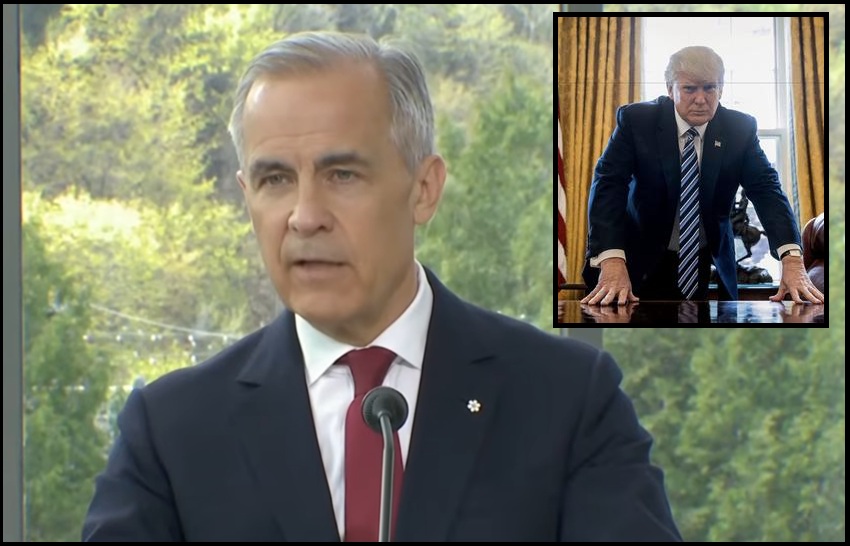
Thank you, Jamieson Greer and Sundance for fighting the good fight.
In the end this is very much a fight of freedom against slavery.
Chinese (and global) forced labor is a big part of what Canada is attempting to benefit from. You are helping to put a big dent in it. TPTB will make us all slaves if they can.
Slave labor can only be stopped by making it unprofitable. Thank you.
Okay, get the Canada thing but in the scale of problems can we get Ukraine and Iran done first? 🙄
It’s all connected…
TCT readers, don’t underestimate how much of Canada is under the control of, or strong influence of, the CCP.
You want egg rolls with that USA….ha ha.
Beholden but not controlled. The collapsing 1 square mile of London- the remnant Satanic Oligarchy – is in control… of Carny and Canada.
But from the higher perspective , Trump is in control.
They – Pierre Trudeau – allowed the CCP-PRC to conduct war exercises to practice in the snow!
Does Chyna not have snow of their own?
Yes they do, and so does their next door neighbour NK. And the friend and nextdoor neighbour russia has the same arctic environment that Canada does. What’s up with Canada letting them in.
USA & canada have a defense system under NORAD. I don’t hear it mentioned since 9/11.
Underground Norad commands in colorado and in North Bay ontario.
Forward air force operating bases across north alaska, northern canada, and Labrador (NE coast)
dozens of advanced radar/comms sites north coast alaska, north and north east coast Canada.
How could canada be allowed to have chinese troops training in Canadas north.
Was that under Obama?
I think so, there was an astonished canadian driving down a country road who videod the column of chinese troops as he drove past.
Monroe Doctrine should apply to the british empire in the north
I think the NORAD facility in North Bay has been deactivated. Maybe fellow Treeper Bob Of The North can fill us in, he lives there.
I think you mean China-da
Sundance, do you honestly think Trump will withdraw from USMCA before the midterms? I suspect he’s going to want to settle things down before the midterms. But as soon as he’s past that point (late November or December), I think he does it. The screams from Canada are going to be epic at that point.
Nope. The Art of the Deal says press your advantage when it is obvious/evident to both parties.
Canada is in for yuge changes.
I don’t understand why we’re waiting any longer but I don’t think it’s midterms. JMO
Canadians can’t vote in US elections.
Full speed ahead!
When you pull the trigger on a gun and shoot yourself in the foot, you damn well know you’d better change your aim before firing again. A limping Mark Carney might claim he’s done that, (maybe with the pistol he got from Erdoğan), so he’s hoping for a better result…problem is it’s now aimed at Canada’s head!
BANG!
To say Canada’s near-term future will be catastropic is a massive understatement!
Less than 20 years ago the Canadian dollar could buy $1.06 US on world money exchanges and now it buys 70 cents!
That’s before the coming hyperinflation that will crush what remains of Canada’s middle class exactly as it did in Germany’s Weimar Republic in 1923, when most of the Fatherland’s prosperous merchant class descended into poverty overnight!
And where will Mark Carney and his trade advisor, Maia Johnson be when that happens?
Mark Baby will probably in Germany, waiting to take delivery on those submarines Canada can no longer afford!
And Maia? She’s an American citizen and a registered Democrat so what happens to the Snow Mexicans is no skin off her nose!
Ready! Fire! Aim!
The difference is the USA has no desire to bankrupt Canada. Eventually smarter people will take office there and they will align with the USA and proper again.
They don’t have time for “eventually.”
That’s funny…
About as likely as the Democrats over time having smarter, more reasonable people in their ranks.
Leftists don’t give up. They will drive the ship harder until they are completely underwater, raising fists saying they will win.
When they come back to the table, give them 20% worse terms.
The must BEG for us to talk to them.
So…..
The Territory of the Great White North?
Monroe Doctrine.
You might take White man Canada but expect a lot of scalps lost if you try and take the Indigenous lands
Canada was British long before the United States was created!
Is that why Canada and Britain act like dogs and sniff each others asses?
I’m a Canadian, for now, from Alberta. I’ve been reading this website daily since the bush years. Learned a lot about politics and the ways of the world, probably more than anywhere else. I say this to establish that I appreciate this source of insight and respect SD for providing it.
That said, the amount of anti-Canadian commentary lately is beginning to sound hateful. I’m not going to dispute the truth of it or point fingers at specifics posts/posters as that’s not my point. My point is that those who form the government of a country do not always reflect the best or even the majority of that country. Please recall that the U.S. was governed for 12 of the last 18 years by Obama and Biden. Should Texas and Florida be stirred into the same pot as California and Illinois and judged the same?
I’m old enough to recall what Canada once was as a country and contrast that with what we have become and worse, where we’re headed. That’s bad enough without reading about how we deserve it. Compromised elections and ignorant electorate are not exclusive the USA.
You seem to have drunk the kool-aid labeling free speech as hateful.
You Canadians would do well to get busy focusing on electing. people who care about Canadians.
You now have a CCP- partner central banker at your helm running your country into the dirt.
Did I stutter?
Agree. A country gets what they deserve when they vote.
Except cheating at the polling place has caused some massive problems. Why do we think Canada doesn’t have the same problem?
+ 1000
Does LA deserve Ramen Noodles or the Basura again? Especially when Ramen Noodles got a statistically impossible boost for 2 weeks after the election from a couple of square blocks in downtown (homeless) LA? We saw the cheating. So, no, I don’t think all of LA deserves the destruction that is coming from a fraudulent primary.
For the love of God, I hope the US isn’t overrun by liberals in November. I wish Brian Mulroney had a son to run Canada.
Canadian fed elections thoroughly rigged by the parties. The conservative candidate selected (Rigged) to Stand are under complete control.
Harper and mulroney seemed like great guys. in hindsight they where 100% globalist, ushered in all the climate change nonsense.
In a photo op conservative party get together for the voters a guy went up shook polieveres hand and asked him about the killer climate change treaty, poliviere brushed him off saying he never read it.
They use a system that has been adopted in alaska cause it presents 100% opportunity for tptb to select the candidate.
Well hateful is what we’re hearing out of Canada and have been for some time now. I mean your Prime minister just said Canada is at war with the US. Words have meaning! Words count and thinking that we are going to turn the other cheek forever is just not realistic.
Obviously Alberta is a different animal. You people have been getting screwed by your National government as long as the US and by that I mean before Twinkle toes and Carney. You have every reason to be as angry at them as we do. Why aren’t you?
“Twinkle Toes”? Ohhh, you mean “Sparkle Socks” Justina Truedope. Katy Perry’s cuck.
Inevitably the tendency is to paint things in black and white. It frequently seems as though 40% of the people have their heads screwed on straight whether in Canada, the USA, France, UK, and corresponsingluy 40% are lefty goofballs or worse, yet in these countries the elections are often dependent upon the remaining 20% who seldom pay attention to reality, who can be swayed by lies and bought off by promises. That seems to be reality.
I suggest a thick skin. In the USA people are wont to pile on California for the utter harmful craziness that it foists upon its own citizens and the rest of the country, yet Donald Trump received almost 40% of the vote in California. You’re situation is similar. You are among the 40% of Canadians that suffer because of the other 60%. All of Canada, like all of Iran or all of Somalia or all of New York or for that matter all of the USA gets painted by its
majority.noisy 40% winners who managed to get the other 20% of the vote to give them the powerful megaphone that goes with its control the force of government. You have my sympathy. Your side has been on the outs in Canada for too long.Canadians are openly hostile to our elected American President. Do you think we Americans should happily accept such abuse? President Trump is correct. Canada has NOTHING we need.
I think we should close the northern border completely based on Canadian hostility.
The government of Canada controls the culture and speech of Canadians. Canada thinks tyranny is just fine and dandy. Why do Canadians accept abusive control by their own government?
Theirs is a government that FEARS free speech by its own citizens and does everything in its power to prevent free speech.
Canada is one great big culture of abuse with the victims cheering their abusers as if this behavior is normal. This is SICK. This is group mental illness.
Of course we are hostile to this dangerous mass delusion. This is an entire country faithful to its own ruthless captors !
Yes. And the US has millions upon millions of its own citizens who are hostile to your elected American President. What is your point?
😉 I thought the same until it was brought to my attention
that we import 60% of the heavy crude oil from Canada that
we need and use. 😳
We were able to get the Venezuela stockpiles when Maduro
was taken. Venezuela cannot pump out the amount we need
and use fast enough 🤷♀️
Then I found out about the amount of electricity that is exchanged
between our countries….. 🤷♀️ 😳
Products like dairy, wood and lumber…no problem.
Electricity and oil…..most people know those are some of the
big ticket items being discussed in the trade talks.
Well said. Without President Trump the US would look a lot like Canada. The midterms will determine how we proceed.
Let’s separate out the Canadian people, who are pretty nice in general and just want to be good people and have good lives, from the government, which is taking its marching orders from London and not the people. I personally like the Canadian people a lot. My hope is that Canadians will join forces with Americans and fight the powers that be.
Right on Joe Joe. There are some ridiculous and petty posts today.
getting their orders from the WEF, same as the UK is much more likely
Fights within a family have a way of turning really bitter and personal.
You are demonstrating precisely the problem we’ve got.
You come here to our American website and then complain about Americans doing what it is that Americans do- which is why we’re not in the place that you are- and you then have the audacity to call us hateful and then try to explain why you feel that way by further criticizing us- you clearly love to use our freedom of speech here in this way and you expect a whole lot of tolerance from us as you complain about us here at our own place.
Now lets flip this around.
We’d never be hanging out at any Canadian websites.
First of all, we’d not be there because we’d not even be allowed to be at some, we’d never comply with the rules, and we certainly wouldn’t be free to lay out the criticism that you just gave us all- we couldn’t go there and do this to you all.
Canadians love to come to the US and and then are rude enough to use our own Liberty against us to insult us and our President, our way of life and everything else they can think of- but yet you’ve all voted your own ability to do this in Canada away.
So what goes on here regularly is that Canadians come to America and then go on a bender of a whole lot of bad acting- which is why we don’t tend to like them a whole lot. They do all this because they can- and that right there is the worst part of it all.
You quite like the freedom we extend to you- to turn around and act like jerks to us.
You want to use this site for information, to learn from, you readily admit that, but then look at what you say to us for just being what we are.
This is precisely as President Trump explained: you want all you can get from us, as if you are a 51st state BUT YET you don’t want to reciprocate on all that at all.
Just exactly like I can’t go hang out at your website and do what you just did here.
The relationship America has with Canada is NOT a two way street at all and this is precisely the problem.
Wow! That escalated quickly. I had to go reread what I posted to try to find where you got all that from what I said. I guess I didn’t express my point as clearly as I might have but some people got it well enough.
To NHnative, “You come here to our American website and then complain about Americans doing what it is that Americans do- which is why we’re not in the place that you are…” From my perspective, the reason you’re not in the place I am is Donald Trump. One man saved your country and it’s not a done deal yet. Did you notice someone of that caliber running for elected office to your north?
I’m very well aware of what a large voting block of Canadians are like. We vote on October 19th to hold a referendum for national divorce, but the fix is probably already in, there are plenty of signs of it.
To those that understood my meaning, thank you. Divide and conquer is one of the go to weapons of those that would rule us. One last point is that, as usual, the real leftists are not quite as many as they would have us believe, not in Canada or the USA. The actual overall vote up here, even with assumed cheating was within a couple of points. Not that it would have changed the country to USA Lite if the conservatives would have won, but pretty sure we wouldn’t be doing the retarded and corrupt stuff that’s happening now.
Thank you for confirming ‘what a large block of Canadians are like”- this was my point.
“From my perspective, the reason you’re not in the place I am is Donald Trump. One man saved your country”
Again, the insults just flow out of you. You are here and then belittle us. I’m pointing this out to you, not escalating anything.
I’m showing you that you are a Canadian doing what it is that Canadians do and this right here is why we’ve got the issues between our countries that we do.
Donald Trump didn’t just fall out of the sky and land in our lap with a magic wand.
It’s taken a tremendous, historical amount of work on all of our parts to get this man over the finish line- this has been decades in the making, we’ve voted three times for him and many of us feeling the wrath each time for supporting “Orange Man”.
A movement needed to be built before he even came along to lead it.
We’ve had to overcome voter fraud, election theft, crooked courts, dirty money buying dirty tricks from all over the planet, the deep state and literally everything they’ve got to get this done- then we’ve watched our President endure assassination attempts and the non-stop actual abuse of him, of us.
We needed to do what we’ve done- but it’s a brutal time to walk through.
People have lost jobs, gotten divorced and had their entire families destroyed and broken up over all this.
He hasn’t done anything alone, to think that one man did all this is nuts, there is an entire army in all states and even the blue ones that are trying to do our best to get the most done that we can.. to try to be agents of change in whatever way they can.
It’s taken mountains of time and money.
So again, to think that one man did all this is ridiculous, this is a massive movement and it’s been long and arduous work and yet apparently you are blind to all of this even though you said you’ve read here for years.
Apparently you’ve learned little -and there is the other problem.
I wish you luck in your efforts to secede, I hope you can get it done.
Well said NH.
I’d like to add that movement you speak of started in 2009 – the Tea Party. How pleased I was to be a participant.
I have noticed a different tone, also, and have been disappointed with it. I don’t believe it’s coming from the names I’ve seen here since the obama years, but, perhaps, newer people?
There but for the grace of God go we. We’re still not where we need to be here in the USA.
I believe I heard of this site from a few over at valorguardians.com. Sadly, they seem to be no more, at least presently. I know more than a couple commentators there referenced and linked CTH in their replies.
The “Bush” years?
“We need to run a psychological operation against the US”
Ms. Freeland from Canada
The ” hate” you talk about comes from the North.
Are you old enough to remember Gordon Sinclair, old guy, radio and tv broadcaster. Used his show to give a talk on Americans kindness generosity greatest neighbours why canadians need to appreciate.
They made a 45 vinyl record disc out of it.. best seller. I think pres Nixon gave him a medal at whitehouse in appreciation.
There was not so much anti usa propaganda then as now.
Correct me if i am wrong, there were about 50,000 canadians who served in us military in vietnam.
Decades later they could not get recognized as veterans in Canada. Debated in parliment.
Well said, provocative rhetoric is not helpful, and is no substitute for thoughtful analysis.
Nobody hates the Canadian people. We do hate the gov’t. Same as how embarrassing it was to have Bammy & Slow Joe as “leaders”.
Doesn’t this seem pre-planned from Canada?
It is like Z coming to sign an agreement but attacking Trump instead.
I can’t imagine why they think this is best for them, but then they have been doing things that are bad for them for quite a while.
Canada is like a drowning swimmer who thought they didn’t need a life preserver as they swam away from shore, and then gets tired.
Whoops.
From AI:
Vermont is the national leader in pure maple syrup production, supplying over half of the United States’ maple crop, and it is the largest producer of milk in New England, providing approximately 67% of the region’s milk.
The state also produces distinct consumer goods and durable products for the national market, including world-famous craft beers (such as those from Hill Farmstead and The Alchemist), award-winning cheeses (like Cabot Creamery), hand-knit socks (Darn Tough Vermont), and wooden furniture.
Other significant manufactured exports include granite and marble from Barre and Rutland quarries, which are used in major national and international landmarks, as well as hockey sticks, paper products, and specialty foods like chocolates and baked goods.
Make Vermont Great Again!
From AI…and for America, from Massachusetts:
Massachusetts produces and sells a diverse range of goods, ranging from iconic consumer brands to high-tech industrial exports.
The state’s manufacturing sector is a major economic driver, with computer and electronic products ($7.1 billion) and primary metal manufacturing ($6.5 billion) leading the way in industrial output.
Food and beverage products are a significant part of the state’s commercial identity, featuring:
AND: Yankee Candle
Make Massachusetts Great Again!
Freeport Maine: Make LL Bean Great Again!
I know all about Vermont, I live right across the river from Vermont.
It’s a deeply dysfunctional one party failed state that ran all their Republicans out long before it was a thing- they tried to pay people to move there and that didn’t even work.
They don’t have enough Republicans to vote their way out of this mess very easily.. it’s going to take flipping MANY Democrats and in Bernie’s state with the motto “Keep Vermont Weird”, well Aggie, it’s not looking good.
Yup! I’m originally from Massachusetts, then Vermont. It’s crazy that right now Maryland feels more conservative, but then I hang with TLM Catholics and friends!
MA if more far gone than Vermont is if we’re being honest here.
The problems MA has are just far greater in scale.. 7 million people vs 640K, two totally different situations, the same but yet different because of the scale.
Vermont did just break their super majority strangle hold the Democrats had upon them, but they still have a long way to go- we’ll never see this happen in MA.
You need 100k conservatives from New York to move to Vermont to change the political culture.
No, actually this is what the problem has been.
A NY conservative is a Democrat trained RINO.
So no, that is not what we need.
I grew up in Vermont in the 50’s and early 60’s when it was a rural, agrarian and conservative state. Then the interstates opened it up to Boston and New York libs who enjoyed the expanding ski areas. They ” loved ” the cute idyllic state. Bought or built expensive second homes and slowly changed the demographics eventually making Vermont the TDS socialist culture that it is. Right down to the drab. No make up. birkenstock shod and On Golden Pond hat uniforms.
Yup, I know all about it.
We can’t stand new outta towners and there is plenty of reason to feel this way.
Throw in Woodchuck Hard Cider.
I would note that Trump’s negotiation style is to lead with the best offer. If Canada refuses this, the likely outcome is just delay and a worse deal for Canada.
There was definitely something off about the provinces I have visited for fencing tournaments which were Ontario and Quebec. This is going back to the mid 1980s and my last visit was in 2019. I always sensed a strong presence of Socialism. My guess is that TDS and anti MAGA America First is in strong force in both of the those provinces. Personally I have decided to not to visit any Commonwealth Country. That might change if I see a change in direction but honestly I don’t see it happening.
The long term Canadian tariffs itemized.
you can cut the stupidity with a dull knife
Back during the Trucker Strike, I kept hoping that MP Pierre Poilievre would step forward and help turn the ship of state in a different direction than it was going but that did not happen.
Who is actually “The Opposition” right now in Canada who will make a positive stand FOR Canada and Canadians, that selling out to China is not a move FOR Canada and Canadians?
No one. Polly was all in on the vaxx and lockdowns.
We have been captured completely up here.
Sadly…..this is the case.
Canada Cannot Win a Trade War. It Needs a rational honest Strategy.
The prize in Canada’s confrontation with Washington is continued access to the world’s largest economy, sitting directly next door. The United States is a roughly $32 T market. China may be the second-largest economy, but it is far away and cannot replace the commercial advantages of geography, common infrastructure, familiar legal practices, and deeply integrated North American supply chains.
Canada cannot win a trade war with its largest trading partner. It can defend itself, impose focused costs where it has leverage, and negotiate hard. But it cannot plausibly inflict equivalent damage on an economy many times its size while remaining so dependent on access to that market. The U.S. still takes roughly 72 percent of Canadian goods exports.
That is why the objective should not be performative escalation. Broad retaliatory tariffs may satisfy an understandable desire to hit back, but they raise prices for Canadian families, increase input costs for Canadian firms, and risk making Canada a less attractive place to invest and manufacture. Tariffs can be a temporary, targeted negotiating tool; they are not an economic-growth strategy. Trade wars end at negotiating tables, not through successive announcements of measures that harm one’s own economy.
The reaction from much of Canada suggests that the country has not yet absorbed the seriousness of its predicament. The instinct has been to demand visible defiance, treat retaliation as proof of resolve, and turn a structural economic challenge into an emotional political contest. That is backwards. Performative policies helped bring Canada to its present position; more performative politics will not get it out.
Canada’s vulnerability is not solely the product of Trump Hamiltonian economic strategy. It reflects decades of domestic neglect: weak business investment, stalled productivity, regulatory complexity, barriers to internal trade, delayed infrastructure, and economic policies that too often favour subsidies and protection over competition, capital formation and globally competitive firms.
The consequences are increasingly visible. Canada’s investment per worker was only 85 percent of its 2014 level by 2023, while business research-and-development spending of roughly 1.8 percent of GDP lagged both the OECD average and the United States. These weaknesses did not begin with the present dispute. But the dispute has exposed them.
Emotional responses should not become national strategy. Anger at Washington, and the temptation to reduce everything to hostility toward one American president, obscure a more durable reality: U.S. trade policy is increasingly tied to national security, industrial policy and geopolitical power. That shift will not disappear with one election or one negotiator.
Canada needs firmness without fantasy. But it must also accelerate energy, transport and trade infrastructure; Canada needs to deregulate, improve investment competitiveness; lower internal barriers; strengthen productivity; diversify exports; and restore fiscal discipline.
Canada needs time it’s does not have. Canada needs finesse. Not what has been on display recently.
Canada cannot replace the American market overnight. The task is to secure access to it while fixing the domestic weaknesses that have made Canada so exposed. Decades of neglect are coming home to roost.
Alternate link:
https://nitter.poast.org/DanielViv_1/status/2091318200105304345#m
These people in Canada don’t still get it.
We don’t *need* anything from Canada at all- and they treat us with dishonesty and hostility, the border is an issue- there are many issues.
YET They want to Trade with us- it doesn’t work this way.
All of the market’s tribulations that caught our attention this week were really downstream of the high stakes poker hand between @POTUS and @MarkJCarney that just went to showdown, captured in @josh_wingrove’s post below.
After the Supreme Court struck down the IEEPA-based tariffs earlier this year, the @WhiteHouse signaled on June 10th that it was not looking to renew the USMCA and wanted to renegotiate a new deal.
Side Note: this implies the U.S. felt it was in stronger bargaining position in 2026 than when the 45th administration originally signed the USMCA deal in 2018. In case you missed it the first time, that’s an important read.
On July 19th, @POTUS then *raised* the action with a credible threat to impose a 50% tariff on select Canadian goods under Section 338 of the Tariff Act of 1930 when he signed three proclamations covering Canadian alcohol, dairy, and motor vehicle exports to the U.S. That in itself is a tell to where we are, now that the Executive is back to using Hoover era tools!
The original start date for those Section 338 tariffs to go into effect was 12:01 A.M. this past Wednesday (August 19). A further proclamation suspended collection for three days — to 12:01 a.m. ET on August 22 (which just lapsed)– while negotiations continued.
All of the jolts in markets the latter half of this week — the $USD trend break, the rising sovereign debt yields that prompted @SecScottBessent to steady the ship on Wednesday with the buybacks commentary, the liftoff torque most evident in gold, Bitcoin, and biotech — were downstream repercussions of this U.S.-Canada bilateral trade negotiation. This trade deal is the straw that stirs the drink.
As the deadline lapsed without a deal and the tariffs go into effect, Carney’s play tonight goes down as calling what he thought was Trump’s bluff. With a deal failing to come to fruition, both sides will now show their cards and let their respective economies and financial systems sort it out.
It will also be interesting to watch for signs of which countries/bodies lean into assisting Canada in the coming weeks and months (China, Mexico, … EU?) in what almost everyone will unanimously agree is a fight with an opponent of a higher weight class. This goes without saying, but any foreign help will not be taken lightly by the @WhiteHouse.
Last, tonight’s events reveal exactly why Mark Carney — former Bank of England governor, former Bank of Canada governor, former Brookfield Asset Management chairman — was anointed the 24th prime minister of British North America in the big picture sense: this all comes down to protecting the business franchise that supports the power and capital faction that backs him.
He will definitely have his hands full with a lot of boardroom discussions in the weeks and months ahead.
Alternate link:
https://nitter.poast.org/LeveredUSTs/status/2091021431291486419#m
USA must stop “enabling” Canada brats by giving in to their tantrums with reductions! This achieves nothing. End the parenting! Canada needs to stand on its own.
Many of us are busy panning the Canadians. We may be writing about the Urban Canadians who are probably not that different from Urban Americans. It also depends on the age group we’re writing about. My guestimate is that most Treepers and Conservatives are generally over 40 and do not reside in large metropolitan areas.
If a person is a naive leftist:
The more likely they;
Live in a large city
Live in a University town
Government worker including teaching
Work for a large corporation
On government assistance
Never married
LGBTQ+
Only watch MSM sporadically.
How could the media stay silent when they knew Kamala was totally unqualified to be President in every way? Same with President Biden’s mental state. They also legitimize AOC, Mandani, Sanders, etc. without the hint of concern for their ability to
govern or tell the truth.
Our judicial system, education and information must be reformed
Thank you, sir! All this talk of the chick AOC being the front runner for the nomination of president is utterly delusional. Every four years it gets worse with what the Democratic Party wants to do and who they put up for president. They can criticize Trump all they want, but not a damned one of them has a net worth of $6 billion EARNED.
Today at Wegmans grocery I bought some corn on the cob. When I got home I noticed it was imported from Canada. We have lots of corn farmers here in Northern Virginia. Why is Wegmans getting it from Canada?
BTW, it tasted awful.
Wegman = Democrat donors. $25,000 to Hochul. also donate to Schumer, Gillibrand, etc.
I saw some fresh ears in Florida marked as “produce from Canada”.
Plenty of corn in the USA.
I passed.
Canada is placing their chips on the Democrat taking Congress in November.
“The deals get worse from here!”
Tees them up like a golf ball then POW! 350 yards!