Keep in mind the background issue of Germany supplying Ukraine with weapons and material to keep fighting Russia, while the Merz administration triggers policy to force increased German military troop levels.
Facing crushingly high increases in energy costs, last Monday in Marsberg, German Chancellor Friedrich Merz criticized the U.S. approach to Iran, saying Washington was being “humiliated by the Iranian leadership” and demanding the conflict end “as quickly as possible.”
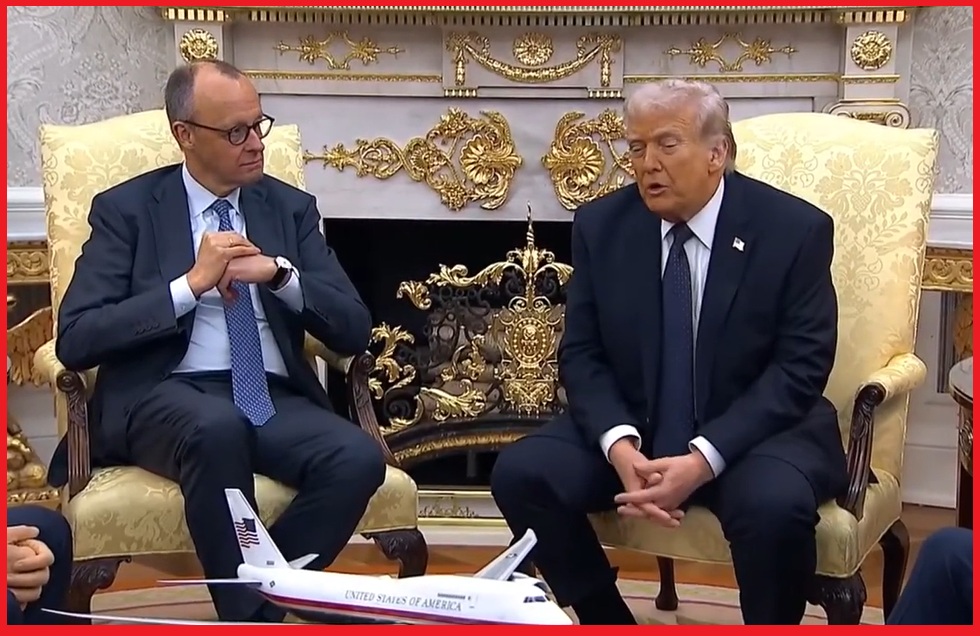
Germany is facing a perfect storm of economic consequences following their decision to chase the climate change agenda (Build Back Better) and eliminate their coal and nuclear power plants. Combine the German/EU policy to stop purchasing cheap LNG and oil from Russia, in addition to skyrocketing energy costs from oil/gas flows from the Middle East, and the outcome is rising manufacturing costs leading to massive layoffs.
The German industrial economy is the heart of the EU economy, and President Trump is now hitting them both right where it hurts.
Today two announcements hit an already vulnerable Germany directly. The first is: “The Secretary of War has ordered the withdrawal of approximately 5,000 troops from Germany,” chief Pentagon spokesman Sean Parnell told Fox News Digital. “This decision follows a thorough review of the Department’s force posture in Europe and is in recognition of theater requirements and conditions on the ground.” {source}
The second announcement is even more brutal for Chancellor Merz:
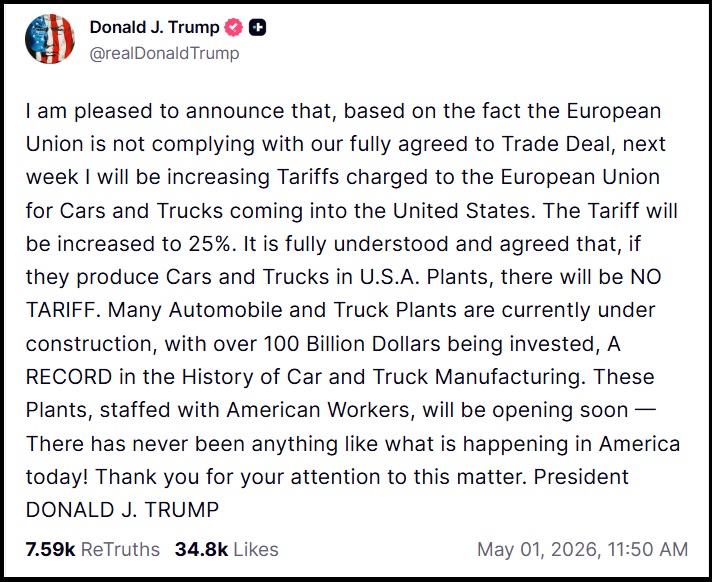
[SOURCE]
While the EU auto tariffs do not mention Germany specifically, it is the German auto industry (BMW, Volkswagen, Mercedes, Porsche, Audi) that will be impacted the most. A 25% tariff on German vehicles destined to the USA will severely hurt the German auto industry. This is a massive hit to their already weakened position.
Chancellor Friedrich Merz is already facing serious political issues within Germany as the economy continues to contract. The political opposition parties are on the rise and Merz is in a very precarious position. President Trump is exploiting this vulnerability by apply further economic pressure on Germany.
One of the outcomes of this pressure in combination with the internal friction Merz is facing, will be a demand by the German people to stop providing support for Ukraine and focus time, effort and energy on getting the structural economy back on solid footing. This can have an ancillary benefit to President Trump as he seeks to have Ukraine come to the negotiating table with Russia to end the conflict.
There are multiple facets within this geopolitical positioning, and it is worth watching it play out closely.
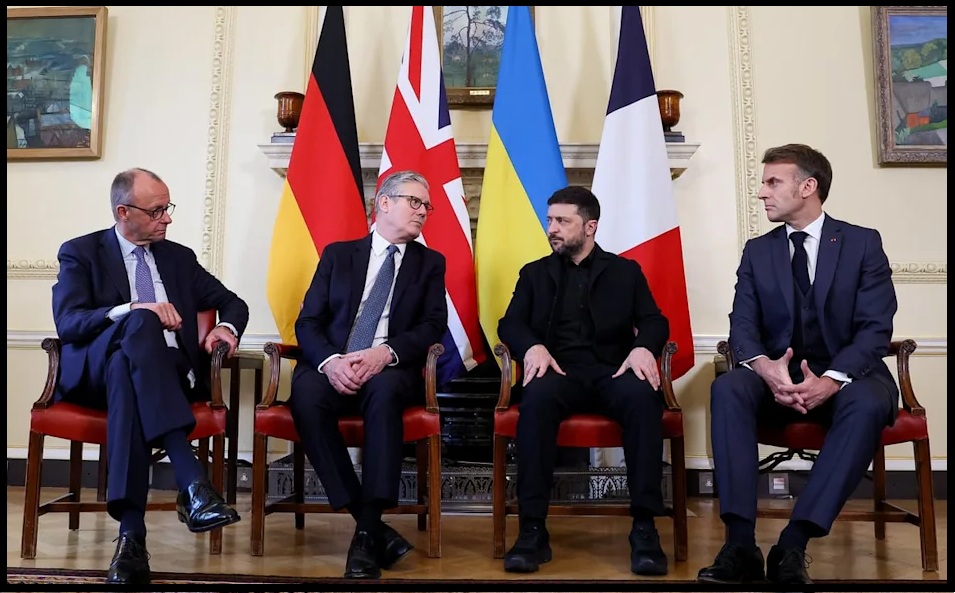
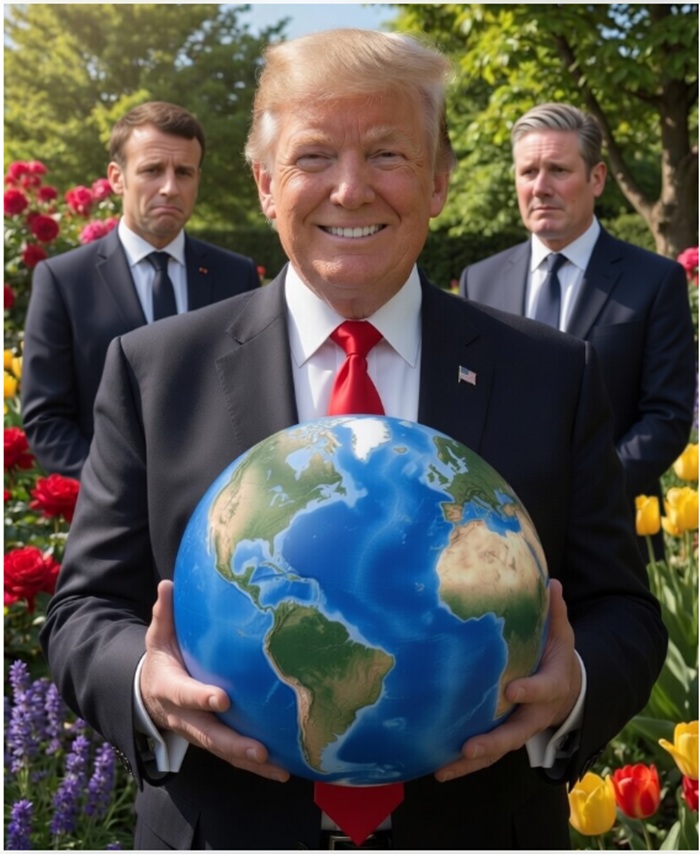
Merz surely isn’t the operator of his pocket calculator. What a knucklehead.
Sundance forgot what Putin did!
He served Germany a dish best served cold!
Oil from a k-stan country will be cut off May 1st!
No he’s not, but whoever that is just dropped a big deuce in Merz’s bonnet.
Europe is make believe, All of it.
@UncleGrumpy “Europe is make believe, All of it.”
Excellent point Sir! And I add, so is the American Democrat Party. They are completely anti-Democratic!
‘They are completely anti-Democratic!’ Anti-American as well.
My Dad and his parents were all “FDR Democrats” because of the 1930’s.
Dad *mostly* gave up on the Democratic Party because of Jimmuh Cahtah.
In recent years, what was left of the Democratic Party has been taken over by the neo-Marxist and grossly mis-named “Working Families Party”, which is basically the old “ACORN” neo-Marxist agitation/schemer group.
Remember “ACORN”? “Association of Community Organizations for Reform Now”
Here is a list of some of the crimes committed by ACORN people:
Voter registration fraud by employees: In multiple states—including Nevada, Washington, Missouri, and Pennsylvania—former ACORN employees pleaded guilty to submitting falsified voter registration forms, often fabricating names to meet quotas and receive payment.
Embezzlement cover-up: Dale Rathke, brother of ACORN’s founder, embezzled $948,607.50 from the organization in 1999–2000. National leadership concealed the crime for years, failing to inform the board or authorities, which damaged ACORN’s credibility when revealed in 2008.
Tax and labor law violations: A 2009 House Oversight report stated ACORN committed investment fraud, submitted false IRS and Department of Labor filings, violated the Fair Labor Standards Act, and falsified records under ERISA.
Undercover scandal: In 2009, videos were released showing ACORN employees offering advice on how to conceal illegal activities like tax evasion and human smuggling. The videos led to loss of federal funding and contracts.
The former ACORN leaders and their ilk from other NGOs now rule the Democratic Party, via the “Working Families Party”.
Like Terminator 2, they shape-shift and adapt to continue destroying everything in their way.
We need to take that problem seriously.
Yes, I remember ACORN, and I also remember who their biggest cheerleader was: B. H. Obama.
Yes
That said, Europe is all about the European elites (politicians and the extreme wealthy). The regular people…not so much.
America is the same, but maybe not to the same extent.
Yeah, I know opinions are like…..
Sounds good.
Thrilled to hear US Troops leaving Germany. I don’t know how many are there, but 5k is a good start for our exit. It’s been far too many decades we’ve been protecting and propping up this country.
Exit NATO now!
Merely shifting them to another NATO country like Poland or elsewhere, the likely action, isn’t the answer.
I spent 4 years in Germany while serving in the Air Force and I will tell you that the Germans had no appreciation for us whatsoever and made it very difficult for us being there at every turn. While we have pumped billions into their economy, they acted and act like we owe them. Thankyou President Trump for telling them to stick it up your ass!!
You meant their ass.
It is correct as is.
About 35k troops in Germany. I say bring them all home.
Absolutely. And 5000 of those were an increase under Autopen. So ZERO net difference vs Trump’s first term.
I had a neighbor from Germany, who retained her German citizenship. Her son returned there for college cuz the tuition was so low, 400 euros/yr (15 years ago). In return, he was required to perform 2 years of “military service”. She admitted he basically performed the duties of a mall cop. No firearms training, never even held a gun.
Extensive social net, heavily subsidized health care and education. Why not? Uncle Sugar picks up the defense tab, and our troops take the risks.
Bring ‘em all home. We have long borders to protect.
I believe I read that we have ~36,000 troops in Germany.
Let’s make it ZERO.
My thoughts exactly? Pull them all out, close the bases and all the ancillary businesses propping up up the bases. It is past time they fend for themselves.
I would suggest dismantling those bases to deny any resources they didn’t pay for.
I don’t think the troop movements amount to much.
Well, perhaps except for their waiting families, for those who might get a well-deserved break.
Its actually means a lot. IMHO
Everyone was waiting for your review of this matter,not really.
Mississippi river, mighty and wide, formed by many tiny rivulets, brooks and creeks.
We need to embargo LNG exports to Europe. Use the gas to produce fertilizer and lower prices for Americans. It’s not like Europe is grateful for us supplying them with energy. With Hormuz closed they can’t get LNG from Qatar and they refuse to deal with Russia.
I like the idea… but how much excess gas-processing refinery capacity do we have here in the USA to increase fertilizer volume?
Since when, “With Hormuz closed”
The green parties are against farming because it’s mean to animals not just because they’re killed for meat. But exploited for their eggs and milk. Crop farming is also against against the green movement. Green movement is a combination of destructive Marxism and old fashioned pagan nature worship. Even before the pagans created their human like gods. Just primitive nature worship. Trees rocks sacred mountains. The movement is strongest in Germany. Just as the 1970 80s Bader Meinhoff Marxist anarchisms were. Upper class over educated pampered people like Angela Merkel who never had a real job in their lives..
I am all about taking our troops out of Germany. There are military families that have been stationed in Germany for so long, that they probably identify as German! 5K is too low. Let’s bring our military home and build bases where it matters in out hemisphere and along the Northern Pole (Greenland anyone?) According to some distant family members, Germany and Italy are considered plum reward assignments. There is absolutely no reason other than reward/assignments for the USA to have 34,000 troops stationed in one European Country! Does anyone know the total across all of Europe?
I knew an Air Force Colonel who spent most of his career there. Raised his family there. His children all ended up marrying native Germans.
Who are now obedient little leftists with dual citizenship and vote in our elections. I only make this comment because I know such a person: spawn of a US serviceman, speaks both German & English fluently without an accent, served in the US Air Force for 14 years (that’s a whole other story), obtained her law degree in the US, and practiced law in the US working as a federal prosecutor. She’s as hard left as they come & she votes in US elections while currently living in Germany. 😣
Cuba is awful nice this time of year !
Glad you brought that up because many of We The People anticipate that Cuba will be a higher-priority focus just as soon as this little matter in Iran is resolved … where any Trump-driven Cuba focus might start even before Iran is wrapped up.
If such is the case, Leftist heads are going to explode … so much so that they might even want the Iran affair to continue or at least not to finish so quickly.
One way or the other, I’m not sure it’s going to matter: global affairs as of late are moving at the “Speed of Trump” … which seems to be far more quickly than my little brain can think them up and type them out.
We shall see … where, in the meantime, my only prediction is that the Left is not going to be happy.
Ever check how many closed ,mothballed, bases we have here,”build bases where it matters”
Enough for some of them to be used as immigration processing centers and temporary housing for illegal aliens
I reckon
What we are witnessing is a culture of Satanic Hate. People get so caught up in their emotions that they willingly surrender all critical thinking skills and common sense with their openness to, and apparent love of, Satanic hate. My old name for Democrats was ‘Sheeple’. I have rebranded them ‘WOKETARDS’. The leftist cult literally believes its own lies! Anthony Hudson for Michigan Governor!
Hear, Hear! Phil Faustman, You see the truth completely! Well done and Amen!
I affectionately refer to them as DemonRats!
Meanwhile Fred Fleitz said today most Americans support NATO. Dumbass. Libs don’t know what NATO is or does, and the rest of us who do hate it as much as the despicable UN.
If you drive a MB SUV it was made in Alabama.
MB has a huge campus halfway between Birmingham and Tuscaloosa..
It has more than enough room for one or two more assembly plants and there are Euro Suppliers sprung up all around for the parts, also made in Alabama.
MB could nearly relocate all operations to Alabama and they wouldn’t miss a beat.
Most late model MBs and BMWs are overcomplicated and over-computerized crap, no matter where they are being made.
That includes current S Class and 7 Series models from the Fatherland. Overpriced bling-covered money pits that require constant service. An old Chevy truck is more durable (provided you keep up with the rustproofing).
Just ask the owners of the older big Germans (and some of the older Swedes, too) made or designed before 1995 that are still going strong. Regular basic maintenance, and they run forever.
We own all of them in various forms, so I speak from experience.
If the governments would get off the automakers’ backs with their nonsense, and let them build simpler vehicles again, we wouldn’t have such a ridiculous car market today.
Some of the newer smaller sub’s are made in Germany but you are correct, they could add the production here. Engines and trans are still made in Germany.
Return to the drivetrains of the late 60’s & early 70s. You’ll never have a maintenance problem, ever, again.
Right. You can’t beat that Fordo-matic 2-speed auto /sarc
The C6 was a fine tranny back in its day. Drove on several of them in the 60s and 70s.
Crawl under them, and you could firm up the shifts to your personal liking with a screwdriver turn either way on the vacuum modulator.
Back when trannies stayed in the car, and out of the ladies toilet.
How can we track you people with out all of the computerized crap in and on the vehicle?
And tell you when to drive….
Germany’s obsession with progress was never really about progress. It was about permanence, the belief that excellence in a specific domain, achieved at a specific historical moment, should confer indefinite competitive immunity. That’s not progress. That’s aristocratic thinking in an engineer’s lab coat.
Dieselgate in 2015 wasn’t an anomaly. It was the logical endpoint of a culture that had so thoroughly conflated engineering reputation with national identity that fraud became preferable to admission of failure. They did not cheat because they were corrupt in the ordinary sense. They cheated because being wrong about diesel was metaphysically unacceptable.
The same mechanism operates in American progressive politics. When your self-image is built on moral superiority rather than technical competence, being wrong isn’t an error; it’s an identity threat. Democrats don’t lie and cheat because they’re cynical; they do it because they’ve pre-absolved themselves through the nobility of their cause. The good people, by definition, can’t be the bad guys, and that belief is more dangerous than ordinary corruption, because it’s sincere.
If you drive a MB SUV it was made in Alabama.
What’s an ‘MB’ ?
Mercedes Benz
Schadenfreude!
Four of the world’s biggest losers in that pic.
Merz is a sauer-kraut.
The knock he got from PDJT couldn’t have been wurst.
Good ones!!!! 😂
Thank you Mrs. Feeling. I’m glad to bring a smile. Sometimes the jokes write themselves. They are right there for the taking.
Franco German disagreement? From Cross of Lorraine !!
The Warsaw Pact has been gone for decades.
IMHO, Merz wanted the USA to cut off the spigot of our war expenditures in the Iran conflict so we could continue funding their Ukrainian war through (in part) German weaponry/technology.
Germany can’t skim off the top what goes to Iran when it’s not in their purview of acceptable war(s).
Arrogance just cost Germany dearly.
astute
European leaders are doing what their owners tell them to do. And that is to destroy their culture, economy & identity by any means necessary as long as they can.
And also to prolong and or expand the war as much as possible.
This is what I think of when I think of Germany:
“Now is ze time on Schprockets venn ve dance …”
They’re not our allies. They’re a blast from the past with better food, beer, and sometimes better engineering, but that’s where the similarities end.
What many people don’t understand is that Germany’s never had a constitutional conservative tradition like the Anglo-American one rooted in individual liberty and limited government. What gets labeled “conservative” there is socialism cloaked in conservative language. The CDU and CSU, its Bavarian sister party that literally goes by Christian Social Union (go figure, right?) — are Christian socialist parties — religious socialism dressed up as conservatism.
As Hayek and Madison understood, true conservatism means constraining state power (violence, actually, if we want to be honest) in defense of the individual. Germany’s framework has always been different: the state and/or the German ethnicity come first. So the ideology being packaged as conservatism isn’t conservatism at all. It’s socialism with ethnic nationalist and identitarian characteristics. The vocabulary is borrowed, but the substance remains unchanged. The same is true for the AfD or France’s Rassemblement National, the National Rally. These are national socialist parties that cloak themselves in “conservative” language.
I guess what I’m getting at is they’ve had eighty years since WWII to adopt our version of conservatism and didn’t. They’re dead weight — but a reliable source of excellent immigrants, since those who won’t tolerate their socialist slacker societies at home tend to make helluva citizens.
Germany feudalism to socialism in o e generation. The unification of Germany wasn’t until 1871. Actually not the leadership of most Germans But the leadership of. Just another conquest of the other countries duchies city states by Prussia. And Prussia did not abolish serfdom until 1879!!!! Prussia was always the most totalitarian least urban least industrialized with the tiniest middle in Europe. Just aristocrat landowners and their submissive tenant farmers.. Germany didn’t even care much about the reformation. The local lord decided Catholic Calvinist or Lutheran. And the submissive Germans just said yes sir, whatever you decide. Except for the Munster incident early on . That alleged reformer thought he was Jesus and commanded his followers to slay the antichrists the people of Munster
The core idea, I guess you can call it your core thesis, compressed transition from agrarian feudalism to socialist politics, is actually pretty interesting and has real historical support.
“Germany didn’t care much about the Reformation” is difficult to sustain. Luther was German, Wittenberg is in Brandenburg-Prussia, and the Thirty Years’ War, fought almost entirely on German soil, killed a third of the German population. That is not indifference.
Jan van Leiden proclaimed himself King of Muenster and claimed divine authority… Well, messianic, yes, but “thought he was Jesus” is a stretch. The violence was real but the framing of him ordering the slaughter of the city’s own population is inverted; the brutality came primarily from the siege forces outside.
The Prussia-as-uniquely-backward argument has only merit if you consider eastern agrarian provinces. That said, by unification, the Rhine Province and Berlin were among the most industrialized regions in Europe. So “least industrialized” does not hold for Prussia as a whole.
Prussia did not abolish serfdom in 1879? The Oktoberedikt of 1807, which was a part of the Stein-Hardenberg reforms, formally abolished serfdom. Various labor obligations and dependencies lingered, but 1879 as the abolition date is off by ~70 years.
In Europe the word Christian in a political party title is just code for “ we are not a communist front”
True, but they’re colluding with the Left and radical environmentalists (so called “green” parties). It’s really hard to think of anything more cynical than a party called Christian Democrats spending 16 years governing the Green agenda while calling it conservatism.
When the Greens gained traction, Merkel didn’t fight them. She ate their platform.
The Energiewende is the clearest example. She accelerated the nuclear phase-out after Fukushima, not because Germany was at risk of a sudden uptick in seismic activity, but because the public mood changed. A physicist who understood baseload capacity made a purely political call.
“Wir schaffen das” wasn’t CDU language. It was post-68 left moral vocabulary, adopted wholesale to strand the center-left vote around her instead of letting it consolidate elsewhere.
She didn’t beat the Greens; she rendered them irrelevant by hijacking their platform and dismantling the crony, socialized, yet still functioning legacy industrial economy.
Exact same playbook in the UK. The party of Thatcher ended up enshrining net zero into law, banning new ICE cars, and pushing some of the most aggressive climate targets in the developed world, all while calling itself conservative.
Cameron set the tone early with “vote blue, go green.” It wasn’t a policy position; it was a rebranding exercise. The Tories had lost the culture war on environmentalism and decided co-optation was cheaper than resistance.
Loser May locked in the 2050 net zero commitment with almost no parliamentary debate. Johnson supercharged it, wrapping it in post-Brexit “Global Britain” framing as if exporting green regulation was a form of sovereignty.
The green neo-Marxist moral framework became the operating system.
Genetics at play–Germans have a biological proclivity to wanting things/ putting things “in order.” The how of establishing a very “ordered” society is accomplished by each of them in their daily lives, and it is illustrated in the kind of government that Germans either seek or will tolerate–authoritative, uncreative, suspicious (of change). That an East German, born under the yolk of Soviet rule, was the united Germany’s leader for 16 years says a lot about the German mindset.
Let the seven-headed beast with ten horns take care of Iran . (Daniel 8)
President Trump demonstrates time and time again that he is always two steps ahead of his adversaries. Now, that is a great President to support and keep.
“He’s got the whole wide world IN HIS HANDS!”
If that 5,000 troops is a Brigade Combat Team … this will cause some real squirming among those in the EU who have created the Russian Boogieman.
This would hit EU-NATO right where the EU Members have been freeloading … Combat Troops.
In Germany there is an Armored Cavalry Regiment, Combat Aviation Brigade, and Sustainment Brigade, plus an Air Force F-16 Fighter Wing.
Good.
I always liked European cars until I owned one…. then I realized they were good looking overpriced garbage that has built in problems by design.
Overall, Japanese cars are probably the best when it comes to longevity,
……. cost of operation, reliability, Honda, Toyota, Lexus.
So in actuality, only less than a 10% draw down. Better than nothing!
What part of reliable and inexpensive energy as crucial to a thriving economy do European “leaders” fail to understand?
President Trump is making making the world shrug, ayn rand is looking down from above.
Merz humiliates me, a German-American.
Note: Mercedes-Benz vehicles sold in the USA are assembled in the United States.
Since 1995, Mercedes-Benz has also produced vehicles in Tuscaloosa, Alabama. There, the company makes the GLE, GLS, and ultra-luxurious Maybach GLS.
Since 2022, production at this facility has expanded to include electric SUVs, including the EQS and EQE.