The background story behind Jack’s Magic Coffee Shop takes an interesting twist today, as a whistleblower deep inside the Twitter technology side of the platform begins to outline what CNN calls, “a threat to its own users’ personal information, to company shareholders, to national security, and to democracy.”
This discussion is where it becomes critical to remember the nature of stakeholders in media.
CNN is the national media firm protecting the interests of the U.S. State Dept. The Washington Post is the national media firm protecting the interests of the U.S. intelligence apparatus. The latest Twitter whistleblower information originates in,.. wait for it… “an explosive whistleblower disclosure obtained exclusively by CNN and The Washington Post.”
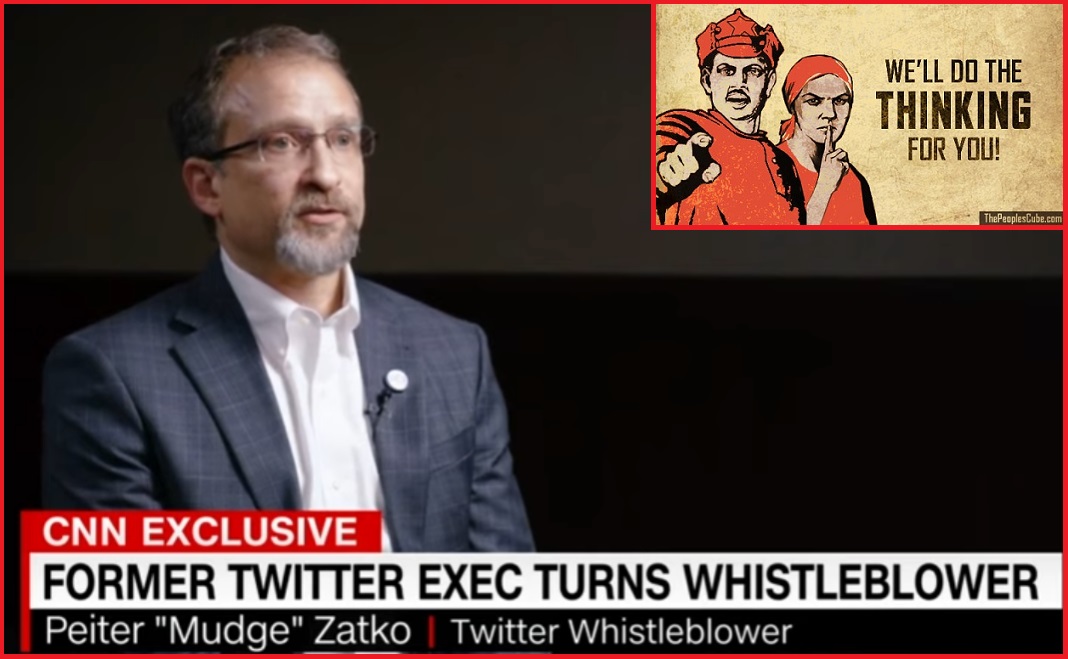
The whistleblower is a former technology expert who came from within the research farm of DARPA, the Defense Advanced Research Projects Agency. Peiter “Mudge” Zatko, is a well-known cybersecurity expert who left government work, entered the public world, and eventually became the head of Twitter security, reporting directly to the CEO.
Peiter “Mudge” Zatko is now saying the background technology of Twitter is vulnerable to manipulation. I’m not going to go into the granules of what Mudge is outlining, instead I prefer to focus on the bigger picture, a scenario we have been outlining for quite a while that could, emphasize *could*, become very explosive, especially considering the legal challenges between the social media platform and Elon Musk.
The nub of the bigger story is essentially that the database of Twitter, and likely other social media platforms, is integrated with the U.S. intelligence system. The database of Twitter is not necessarily vulnerable to hacking by outside entities, although that is the framework used by media reporting this whistleblower issue.
The bigger risk to the surveillance state is discovery that Twitter and the U.S. intelligence community are in a public-private partnership. The Dept of Homeland Security has access by design, not flaw. How the stakeholder media are reporting on the issue shows the nature of the risk, (emphasis mine):
(more…)
Posted in 1st Amendment,
4th Amendment,
Big Government,
Big Tech,
Decepticons,
Deep State,
DHS,
Domestic Terrorism,
Election 2022,
media bias,
Professional Idiots,
propaganda,
Spying,
Uncategorized,
USA,
White House Coverup
 Canadian Prime Minister Justin Trudeau gave us a great example of that when he weaponized the power of the Canadian government to target the protesting truckers and those who support them. You might remember Trudeau’s government locked down bank accounts, froze assets, denied loans, blocked mortgages and generally confiscated the wealth and incomes of his political opposition without any due process; all because the people were challenging his totalitarian COVID dictates. {
 This ‘surveillance system‘ has been of great interest to CTH for several years, in part because it is a key aspect of the domestic intelligence system now operating as a functioning part of the Fourth Branch of Government. The overwhelming majority of the investigative resources within the Dept of Homeland Security (DHS) are used in this whole of network monitoring system.
 Republicans created the Patriot Act, the Dept of Homeland Security (DHS), and the Office of the Director of National Intelligence (ODNI). The same agencies that Barack Obama later weaponized with the creation of the Dept of Justice National Security Division (DOJ-NSD).
 In the latest datapoint assembly, a solid dive
 CTH has predicted the people within the BEA research group [