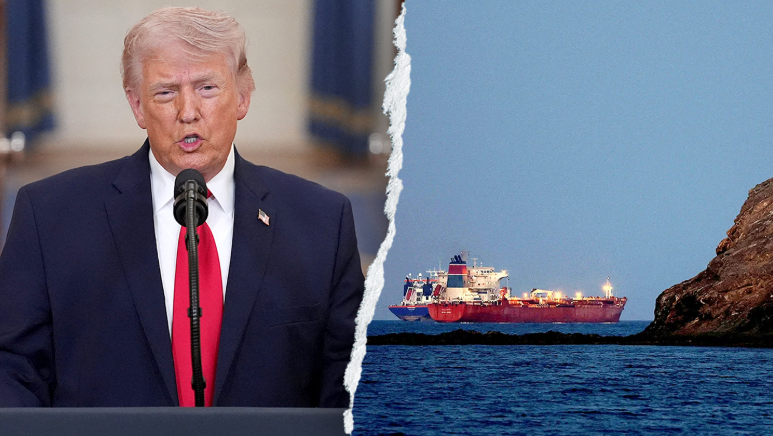
Treasury Secretary Scott Bessent gets it. When asked about the Strait of Hormuz, Bessent notes that yes, things will likely never return to the way they were before; however, there is a distinction that must be applied.
Even if Iran completely acquiesced to all of the most stringent terms and conditions requested by President Trump, they will never again recapture the position they held with the Strait of Hormuz as a chokepoint.
Capital markets respond to risk in the medium and long term; risks are always mitigated. With the Strait now identified as a strategic risk, the emphasis will be on forever neutralizing that risk and avoiding the issue in the future. As a consequence, Iran’s strongest point of leverage is disappearing now and will continue to disappear. WATCH (prompted):
As further explained by James Thorne on X: “By repeatedly signaling its willingness to disrupt the Strait of Hormuz, Tehran hasn’t strengthened its hand, it has accelerated the market’s exit. Capital does not tolerate chokepoints; it routes around them.
Saudi Arabia is expanding its East-West pipeline. The UAE has already built out Fujairah as a bypass. Iraq is revisiting overland export corridors. Every marginal dollar now flows toward redundancy, not reliance. What was once a geopolitical lever is being engineered into irrelevance. Bessent gets it: markets don’t absorb coercion; they arbitrage it away.
Energy markets are not static, and they are not sentimental. The shale revolution already diluted OPEC’s grip. LNG has globalized gas. Now infrastructure is doing the same to maritime risk. Once these pipelines are built, they don’t get unbuilt. Volume shifts become permanent. Pricing power follows.
Tehran’s miscalculation is classic: overplay a scarce asset, and the world invests to make it abundant. The more Iran rattles Hormuz, the faster it erodes the very leverage it seeks to exploit.
In the end, this is not deterrence. Its substitution and substitution, once funded, is irreversible. Iran is underwriting its own marginalization.“
A 40-year generational problem is being resolved forever!
Yesterday…
I watch Sal as well. Have for some time. No disappointmant.
Sorry……
but in todays world of drones……
moving pipelines, ports, and refineries…..
to friendly territories……will just…..
move and expand the battle field……
Maybe an out of this world threat…..
will bring world peace….????
I thought Marco Rubio was the Secretary of State. 😎. I guess he finally has too many other jobs that we had to take one away to start stacking them up on Scott Bessent.
Nah. Hegseth is the guy you reach out to in order to kill people & blow stuff up. In this role Bessent is who does the part of blowing up someone’s economic life and kills their schemes. He’s an executive agent like Hegseth, just with a different toolkit.
President Trump:
Thank you for all you do…. just as you said you would how refreshing.
A real man that loves America just what we voted for.
MAGA
Becky
👍💕
He’s just plain beautiful to me!
We need to get busy blowing up the economic life of the muslims invading America. Their mosques are springing up all over our country like dandelions in the spring. If something isn’t done that is harsh and swift, we may end up with our granddaughters walking around with burquas on.
when you have a mosque in Fort Pierce, Florida you’re in trouble. thank you for pointing out that fact.
Better than tattoos and piercings….jus’ sayin’.
There’s well over a billion Muslims in the world. They’re not the problem.
It’s the people who are a) bringing them to the West b) subsidizing them c) encouraging them to behave badly.
Guess what? It’s the same people promoting trannies in women’s bathrooms, BLM, homeless encampments, and COVID madness.
They want us at each other’s throats, as they trash our way of life.
Nah, they’re both equally bad, both representative of alien ideologies trying to colonize our culture.
They’re not the whole problem, but they will remain a problem as long as they continue to profess the Mohammedan ideology. Their medieval and early-modern predecessors certainly did not need the encouragement of outside agents to raid, invade and otherwise harass Christendom for centuries on end.
💯 🎯
If we blow-up Muslim countries you’ll only guarantee that they will move here!”
..AND THEY ARE CHANGING AND WILL CHANGE WAY OF LIFE HERE IN THE…… US CORP…….SAAAAD…
Every mosque in America needs to be burnt to the ground let the crusade
Begin
That is really well worded…..and accurate.
He learned his $kill under the watchful eye of George Soros.
Proof that the Iran war is first and foremost about economics (Bessent) not diplomacy (Rubio.)
Bypassing Hormuz for Fujairah takes care of Asian markets. Now they have to decide about both ends of the Red Sea, with the Bab al Mandb and the Suez Canal to consider.
Pipelines Bypassing the Straits of Hormuz…
The rush to build and expand oil pipelines bypassing the Strait of Hormuz is driven by a massive, concerted effort by Middle Eastern producers to de-risk their energy exports following severe maritime disruptions and conflict in the Gulf.
Prior to recent disruptions, roughly 20% of global oil (around 20 to 23 million barrels per day) flowed through the narrow waterway. With maritime transport through Hormuz heavily constrained or halted, major producers are fast-tracking new pipeline infrastructure and maximizing existing overland networks.
Active & Expanded Bypass Routes –
Saudi Arabia (East-West Pipeline / Petroline): Saudi Arabia has been the biggest beneficiary of existing bypass infrastructure. Its 746-mile Petroline runs from the Eastern Province oil fields to the Red Sea port of Yanbu, capable of moving up to 7 million barrels per day (bpd) overland. Riyadh is currently evaluating further expansion of this corridor.
United Arab Emirates (Habshan-Fujairah Expansion): The UAE already operates the Habshan-Fujairah pipeline, which carries crude to the Gulf of Oman outside the Persian Gulf. To double its bypass capacity, the UAE is constructing a second, parallel 252-mile pipeline directly to Fujairah, targeting a total overland capacity of 3.6 million bpd.
Iraq (Syria & Jordan Corridors): Iraq has been hit hard by the Gulf chokehold. It recently struck a deal with Syria (backed by international energy interests) to rehabilitate a pipeline connecting its northern and southern fields across Syria to the Mediterranean. Additionally, construction was greenlit for the long-delayed Basra-Haditha pipeline system, aiming to funnel crude toward Aqaba, Jordan, as well as Mediterranean outlets.
Kuwait, Qatar, & Bahrain: Kuwait and its smaller neighbors, which historically relied almost 100% on Hormuz, are in active talks with Saudi Arabia and the UAE to interconnect into their overland pipeline networks.
Iran (Goreh-Jask Pipeline): Interestingly, Iran attempted its own bypass years ago—the Goreh-Jask pipeline—to export crude outside the Persian Gulf from the Gulf of Oman. However, due to ongoing sanctions and unfinished terminal facilities, its actual throughput remains negligible.
cpec
China-Pakistan Economic Corridor (CPEC) is a multi-billion-dollar mega-project linking China’s Xinjiang region to Pakistan’s Gwadar Port through a network of roads, railways, and pipelines. Launched in 2015 as part of China’s Belt and Road Initiative, it aims to boost regional connectivity and economic growth.Key Components and RouteRoute length: Roughly 2,700 to 3,000 kilometers.Endpoints: Kashgar in China’s Xinjiang and Gwadar Port on the Arabian Sea in Pakistan.Core sectors: Transport infrastructure (highways and railways), energy plants (coal, solar, hydro), and industrial zones.Strategic access: Provides China a direct, shorter trade route to the Middle East and Africa, bypassing the Strait of Malacca.
transports iran energy via that
This is also true for the US. When you use countless sanctions and bullying you get breakaway groups like BRICS and then the financial markets dump you as well. It works both ways Scott.
👎👎👎👎👎👎👎👎
Ditto.
Is BRICS effective
Maybe Lloyds of London can insure the pipeline ? Lol
So I guess all of you that think the BRICS is smart are buying up Brazilian, Russian, Indian, Chinese, and South African Currencies instead of dollars? As poorly managed as we are the others are worse, much worse. What kind of currency do you think the Iranians and Ukrainians are holding? If you said as many US Dollars as they can find you would be correct.
They need us more than we need them…Bullying or leverage works one way when you’re top dog my lost racoon 🙂
How has that worked out so far? The U.S. is still the dominant player. The U.S. Petrodollar is still the standard for the oil transactions.
BRICS is an economic jalopy compared to the USA. BRICS creates a mere fraction of the wealth created in the USA. Our success has nothing to do with sanctions or bullying and everything to do with our can-do attitude.
It’s a big jalopy. From Brave AI…
Key Comparisons (2024/2025 Estimates)
Idiotic comparison. The US is one nation. BRIC is herding cats with different interests.
their interests are conjoined in BRICS my friend. you said it yourself.
Just like the EU?
“BRICS is an economic jalopy compared to the USA”.
The Boss made the comparison. I wouldn’t call him an idiot.
lol, I think that noise I heard in the background was someone slapping themselves in the forehead. facts don’t discriminate-that is one of the primary reasons people come to this website-no malarkey.
I’m talking about wealth – like corporate profits and per-person wealth. Not GDP, or I would have said so. NO country comes close to the USA’ ability to create wealth. And certainly not this group of second-rate economies. Check with Prof. Joel Litman of Valens Research if you have further doubts.
And this, also from Brave AI…
In summary, while BRICS represents a massive share of global population and PPP-adjusted output, the USA retains superior economic profitability, financial dominance, and per-capita wealth.
Wealth is defined as PPP? Mr. Valens has his own metric framework and his business is to promote it. Do you have a specific article that breaks out his definition of wealth? I’m not going to read through a pile of references and articles. I agree the USA has the ability to create the most wealth. My problem is that your summary of the BRICS nations as an “economic jalopy” is poor by any metric.
So please do define a nations wealth.
I’ll keep it simple, so you won’t have to do your own research, or pay Prof. Litman’s substantial subscription fees (from which I have made a bundle).
A nation can produce to its heart’s content. But if it can’t turn a decent profit, like the USA, then GDP is entirely irrelevant. Economic profits, financial dominance a per-capita wealth are the components of wealth, as stated above.
In all fairness, it seems you have a rather poor grasp of macroeconomics.
Financial markets’ risk considers the new oil supply also such as Guyana, Venezuela and the improved US. Avenues that lessen the dependence on OPEC and thus lessen the risk of oil market disruption. Trump foreign policy, especially what he has done with Venezuela, has opened up new supply in the oil & gas market. Remember Maduro had threatened to annex Guyana’s oil producing region. Trump stopped that and has allowed Guyana to now become the number 2 oil producer in South America. People forget Brazil is currently the largest oil & gas producer in South America. Now Trump has to solidify his oil & gas policy so a new US administration does not reverse it. OPEC and London’s dominance have been curtailed in the oil& gas supply and insurance risk markets.
And currently the biggest SA country trying to gain wealth through socialism. How’d that work for the last guy that tried it? VZ leader in US Prison and the country is poor. The other guy, Cuba, can’t keep the lights on. But Brazil will make socialism work? Right.
On the other hand, this could prove enough of a distraction to quell their enrichment lust for quite some time.
Like the man said, “…underwriting its own marginalization.”
Yeah, not really. When you have the biggest economy on the world and produce the most oil, bullying is your wheelhouse.
Iran has a problem: nobody will bank with them.
Because of sanctions, no normal bank in the world will help Iran move money. If you’re an Iranian bank and you try to wire dollars through the regular system, the transaction gets blocked. So Iran built a workaround. They call it the rahbar system. Everyone else calls it shadow banking.
Here’s how it works.
Iran sells oil illegally, through sanctioned companies. The buyer pays. But that money can’t go straight back to Iran, because it would get frozen the second it touched a real bank.
So instead, the money goes on a tour.
An Iranian bank called Shahr Bank has front companies. One in Iran, one in Dubai. Those front companies work with two currency exchange houses in Dubai Titan Exchange and Alps International. Those exchange houses have shell companies scattered around the world, mostly in Hong Kong and Singapore.
Now here’s the trick, and this is the part that matters.
When money needs to move, the operators pick a shell company from their list. Then they print an invoice on that company’s letterhead making it look like a legitimate business transaction. Then they run the money through that shell’s bank account.
To anyone looking at it, it’s a normal trade payment. Company A bought something from Company B. Here’s the invoice. Here’s the wire.
Except Company B doesn’t do anything. It’s a name on a piece of paper with a bank account attached. And the “invoice” was manufactured that morning by a guy in Dubai who picked the letterhead out of a folder.
One of those exchange houses, Alps International, moved hundreds of millions of dollars this way in 2026 alone.
What the Treasury Department did today.
They sanctioned the whole chain. The exchange houses. The shell companies in Hong Kong and Singapore and Dubai. And four individual people.
Three of those people are the ones who make the invoices and coordinate the payments.
The fourth is the IT guy.
His name is Amir Hendi. His job was keeping the computers running at Titan Exchange. Not a banker. Not a financier. The tech support.
They sanctioned him too. Because if the servers go down, the money doesn’t move.
That tells you how deep this goes. They’re not just going after the money men. They’re going after the plumbing the people who keep the lights on.
Now the part that should make you sit up.
One of the Iranian bank employees was working with VTB Bank a Russian bank that’s also under sanctions to convert currencies.
Think about what that means. Iran can’t move money. Russia can’t move money. So they’re helping each other. Two sanctioned countries pooling their workarounds.
That’s what happens when you cut people off from the financial system. They don’t stop. They find each other.
And here’s the thing most people will miss.
Today’s action was the eighth one this year against this same Iranian network.
The Treasury Department listed them out in the press release. First they hit the Iranian banks and their front companies. Then the exchange houses. Then the people who ran the exchange houses. Then the big financiers. Then the importers and exporters who used the whole system.
Eight actions. Each one going a layer deeper.
That’s not eight separate investigations. That’s one target being taken apart floor by floor. You raid the top floor, you find the paperwork that tells you who’s on the floor below, you go there next.
Every arrest produces the map for the next arrest.
And it’s the same pattern I’ve shown you all month.
The sham charity in London that funneled money to Hamas it took photographs of the aid deliveries but cropped out anything showing where the goods actually went.
The Mexican cartel laundering money through tequila distilleries. Real distilleries. Real tequila.
The ring in Spain that opened bank accounts with forged passports and split four million euros into nine thousand two hundred tiny transfers to stay under the radar.
The 230-year-old Swiss bank convicted last week for processing money from an Uzbek extortion network.
And now Iranian operators printing fake invoices on borrowed letterhead.
Every single one of them uses the same weapon: paperwork that looks real.
They don’t hide in the dark. They hide in the filing cabinet. The invoice, the charity registration, the distillery, the bank account, the shipping manifest all of it legitimate on paper, all of it fake underneath.
Which is why the enforcement looks the way it looks. Nobody’s kicking down doors. They’re publishing lists. And once your name is on the list, no bank on earth will touch you, and the whole thing collapses without a shot being fired.
The Treasury Secretary said it out loud today: Iran’s shadow banking system is “buckling,” and the regime is “running out of ways to move money.”
Eight actions. One network. Taken apart one floor at a time.
Maybe we should have did this in the first place before dropping bombs. Squeeze the mullahs so there is no money. No money, can’t buy arms or pay people.
Explain your squeeze play.
Can there be sanctions without war?
Sanctions is declaring financial war!
Omitted is the cash market is very difficult to sanction.
Obtaining large amounts of physical cash is harder to do without paying a premium or taking a discount since everybody knows what you are doing.
Dropping bombs is showing power.
shaking up the leadership structure was a good way to understand the iran situation via their adjustments.
it all bought time, and made china kneel just enough to back off of us
Of course there are sanctions without war! 🙄
childish thoughts right.
nato not helping us openly was a significant reason of the bombing.
How do you know he wasn’t?
If you listen to Bessents talks you will hear him say this was planned a while ago.
Now he can work on ANTIFA and the never ending Protest Industrial Complex!
And the China cancer.. maybe Bessent has got his eyes on that too.
The whole Iran operation is just one component of PDJT’s China containment strategy.
bingo. every thing he has done has been targeting Only china
So this plan you speak of… how’s it going?
Bad! Really bad! We all shall die.
People on Bluesky are missing you!
We need to do BOTH. More of both until they buckle.
It may be that we already are, but they are not talking about it….
Look at what they have done in the neighborhood with their severely reduced capacity–no ships, no planes, a small percentage of missiles and drones–and add to that radioactive dust at 60% of weapons grade and there would have been carnage in neighboring countries making life in the middle east unbearable. The first objectives of the war were to take away any nuclear threat and their ability to project power (military strikes) beyond their borders. First blow up their weapons, then take away their money.
in the end, I’m confident the president’s broad plan will work. You know he spent four years thinking all this through and it shows.
Without dropping bombs the economic sanctions wouldn’t hold. Too many countries would sneak in to bypass the sanctions. Every time the US has put sanctions on Iran in years past the Europeans would sneak in, India would sneak in, China would sneak in.
Bombs frighten the sanction-violators away and stiffens their resolve. Now Indian merchant ships are getting sunk by Iran. Now Europe knows it is in range of Iranian missiles. Now the Belt and Road railway link to China got bombed as a valid military target.
President Donald Trump opened the Iranian bombing with using the USA B-2 bomber to destroy Iran’s Nuclear Bomb making facility.
As to the ‘Why’ of dropping of bombs on Iran, please read, TheConservativeTreehouse, >A Pragmatic Perspective on the Iran Conflict< Sundance, April 12, 2026.
From the excellent article: “It’s the Iranian nuclear threat that’s the problem. It’s the Iranian nuclear threat that has always been the problem. This time, President Donald J Trump is trying to deal with that threat once and for all.”
“All of these various regional players have their own individual nuance to retain influence and power. However, on the issue of nuclear weapons they all agree – Iran must never have them, because Iran would represent the biggest threat in the entire world to using them. [Name a weapon that Iran has never used.]”
“None of Iran’s allies – not Pakistan, not Russia and not China – would ever fathom giving Iran a nuclear weapon, because the leadership of Iran is sketchy, unstable and, well, potentially batsh!t crazy enough to use it. The Iranian Revolutionary Guard Corps (IRGC) are just as zero-sum minded as the Islamic clerics they protect.”
******
******
fisheggs, this is me GGHD. It’s impossible to ‘squeeze’ a suicide bomber, or a suicide driver of a car, intentionally driven into of a crowd of people.
As said at TheConservativeTreehouse, ‘This time, President Donald J Trump is trying to deal with that threat (nuclear bomb) once and for all.’ … Even a ‘fissile’ bomb of radioactive material would be a disaster if ‘exploded’ in a major American City with a port receiving international shipping. … All bombs do not need to arrive on a missile.
As said often on this site, we need to pray that the USA is successful in preventing the ‘Islamic extremists, religious zealots, fanatics’ never obtain a nuclear weapon. … To the Iranians, the USA is the big satan, and Israel is the little satan.
Sunlight…
Bright, burning, disinfecting sunlight.
Scott Bessent, genius.
Betsy….I think you’ll find this illuminating from a totally different POV….. ( GCC insider/advisor…. ex al-Qaeda terrorist turned MI6 double agent likely Asperger genius ) Aimen Dean of Cruickshank & Dean Global Intelligence.
https://podcasts.apple.com/us/podcast/conflicted/id1443491069?i=1000779810273
HIS CO-host, a prissy US ex pat anglophile living in Britain …..
Just a quick read to get the flavour, Clayton. This one calls for coffee and some think time.
However, in general I believe it is a fool’s errand to try to second guess President Trump. I find myself doing it on occasion before coming to an abrupt halt. Remembering he is the master of. deception and the use of publicly telegraphing false signals…or real ones. Who can tell which.
The old “I might do it; I might not; I might have already done it” Playbook which he authored and uses to great effect.
Thank you for thinking I would find it interesting, my friend. You were right….I do.
Coffee brewing….😎👍🏻
Maybe there’s a spot for you w/ C&D….as you presciently predicted some of Aimen ‘s talking points …..👍🏻🥂
Love ya for making my day better…😘
Your wish is my command……😉
Thank you, kind sir 😊
yes sweet Betsy,
President Trump has an awesome cabinet.
huggs
Becky
Where it counts, he chose well, Becky…
Secretaries of State, War, and Treasury…
A Trifecta of competence, knowledge, and intelligence which for the jobs to be done, I’d say, count the most.
I’m glad that you’re happy with his performance. I’ll wait for the results before I celebrate, Betsy.
Based on results up to now. You’ve been waiting all your life to celebrate. What’s a few more years?
Yep! ⏰️
As you’ve documented many times these are the equivalent of kinetic action; like when you hit the <Enter> key. As we learned from the gents who ran down Hunter Biden’s trail, Scott Bessent has guys & gals who are the Seal Team Six equivalent of forensic accounting. And they live for this shit.
Scott Bessent has guys & gals who are the Seal Team Six equivalent of forensic accounting. And they live for this shit.
Now that is music to my ears!
None of this would be possible without Trump’s foreign/military policy in the middle east that facilitates cooperation with Treasuries edicts.
started in 2016 admin sword dance and the spy globe ball given
Everything iran needs they can get from china.
china cant get it from them
thats the freaking point
👏🏼 👏🏼 👏🏼
Iran wishes that Janet Yellen was the next in charge.
Incredible!
The fraud in the US vs Iran. Shut it all down. Secretary Bessent hopefully has DOGE working the US side. Yeah it’s only money. Root of all evil in this world. Spit
President Trump is playing the long game while everybody else is playing the short game.
So this is not about pandering to Jews???
🤣 Give it some time. Slick will find a way to stab our Lion again when he’s done with the Limited Hangout posts.
Why is removing the major funding mechanism of terrorism throughout the world ‘pandering to Jews’???
Everything is the Joooooos!!!
Then, you don’t have to think, just ‘find the jew’! voila!
It’s always the Shoes.
I wish us Scots could have as prominent a footprint on the world map 😞
When you’re a hammer everything looks like a nail.
When you’re an anti-Semite….
🎯
When you’re a Zionist, everything looks like “antisemitism.” 😉
I am as sick of that as it’s stepbrother, “wasaycist”.
Too true. Just another magic word intended to shut down debate, like “racist,” “sexist,” “homophobe,” “islamophobe,” “transphobe,” etc, etc.
Like those other neologisms, though, its power is quickly eroding, thank God.
Siri, use neologism in a sentence…
It is interesting how when you read older books, none of those terms is ever used. People were more sensible before the propaganda got to everyone.
Joooos living rent-free in the doc’s mind. 🇮🇱
Guessing that’s not a PhD for brilliance. Chiropractor?
Why would President Trump pander to a group that consistently votes 90% against him and Making American Great Again? 🙄
he was sarcastic
Love it; President Trump is playing Bridge while everyone else is play ‘Go Fish’
That’s why he keeps saying he is in no hurry. This is a modern version of the siege where a fortified city was surrounded so no one goes in and no one comes out. If you are under siege and no one is coming to your aid, it’s just a matter of time.
I wonder how long it will take to totally make it irrelevant. Hopefully very soon so the world can fly to middle finger to the mullahs.
Aren’t new pipelines vulnerable to sabotage?
The arrogance of Iran despite it’s current condition seems to underscore how important it was to keep them from developing nukes.
It worked in Ukraine.
That’s why they are laying their piping underground.
Sad that it took 40 years and thousands of innocent lives to finally find a workaround.
It’s actually criminal.
Especially during Obama I, II, and III. Those people colluded with the mullahs.
Repub admins just wished the Iranians would go away.
The Globalist Republicans loved having Iran as the global gadfly with their very well funded gangs to keep the whole world in a state of perpetual fear.
They made billions from it.
It is becoming urgent to resolve the crisis triggered by Iran on behalf of one of the United States’ closest allies.
Iran has published updated conditions.
https://t.me/Middle_East_Spectator/35791
Iran’s Supreme National Security Council:
‘Until America corrects its behavior, the Strait of Hormuz will not be opened.
Correcting behavior means:
1. Never threaten Iran with any language nor insult the sanctities of this nation.
2. End the war and aggression against Iran and its allies in Lebanon, Palestine, Yemen, and Iraq permanently.
3. Lift the naval blockade and withdraw U.S. naval and air forces from the area surrounding Iran.
4. Pay the damages for the two aggressive wars imposed against Iran.
5. Lift the cruel and illegal sanctions against the Iranian nation.
6. Release the frozen and stolen assets of the Iranian people unconditionally.
These are the demands of the Iranian people who have been relentlessly present in the squares and streets for 160 days.
The Supreme National Security Council will never back down; whether in war or in negotiations.‘
@Middle_East_Spectator
Know Your Enemies Well
I’m guessing that none of the Supreme National Security Council members actually reside in Iran presently… or, if they do, they haven’t left their bunkers in the last six months.
Their strategy is to simply stay in their bunkers until a day after the November election in three months.
+ 2 years wouldn’t you say
you wouldnt know if we are just publishing that bullshit as we have them knelt already and are just roleplaying this war to reshape our commerce
They might as well have written a, ‘List of things that are really hurting the Regime’.
It also reads as a list insecurities, note the language about the ‘sanctities of the regime’ come before lifting the blockade and demands for reparations, as do the concerns for their proxies. Must be tough keeping a check on the majority of the country, who would tear you apart at the slightest opportunity, with a group of unpaid thugs.
Clocks ticking for the regime, before the operation, now only faster. The MSM, courtesy of the IC, might have bought the them a shiny new carriage clock, inscribed with the words, ‘Hang on till November, help is on its way’, but the hands are still stubbornly refusing to tell a different time.
Maybe the Supreme National Security Council will receive a “roof knock” real soon. If it were me, I would knock real hard with at least a bunker buster.
Now to mitigate Israel’s grip on the U.S.
How about we deal with the very real Red-Green alliance that has already taken over the Democrat party and is hoping to seize power across the Nation before we go after Israeli boogeymen.
Geee you forgot to give Mrs. Sunshine the memo this morning … she does not agree that Israel has a grip on anything.
You might find this interesting: https://www.malone.news/p/israel-is-trying-to-stop-taking-our?utm_source=post-email-title&publication_id=583200&post_id=210213013&utm_campaign=email-post-title&isFreemail=true&token=eyJ1c2VyX2lkIjoyNzUwMjkzNSwicG9zdF9pZCI6MjEwMjEzMDEzLCJpYXQiOjE3ODYxODU0MTAsImV4cCI6MTc4ODc3NzQxMCwiaXNzIjoicHViLTU4MzIwMCIsInN1YiI6InBvc3QtcmVhY3Rpb24ifQ.xW5CmrqDCmrAeyZqz41onM3oPfFHAyKVkZBgUpvAtRg&r=gdhef&triedRedirect=true&utm_medium=email
The Senate version is worse.
I spotted my Jew neighbor patrolling the street with an attack yorkie. He’s clearly surveying the place for eventual takeover.
Yep. That’s my President. 🫡🥰 Ever the brilliant tactician. Scott Bessent is the perfect pick for this job.
was going to post this in the Presidential thread but will put it here.
Yesterday, Treasury Secretary Scott Bessent, the Dept. of Treasury issued this press release, which has links to further resources, titled “Treasury Continues to Follow the Money in Minnesota to Eliminate Fraud””
https://home.treasury.gov/news/press-releases/sb0597
I remember many complained about Scott Bessent being nominated to become Treasury Secretary due to his past experience of working within the Soros Foundation and thought then, what better person to have than someone who knows how the other side operates, and would bet President Trump was considering that same thing. If someone knows the system then they know how to dismantle it.
This man has turned out to be a beast when it comes to balancing broadstreet vs. main street.
At this point it might be wise to consider Bessent for the next president. He seems to be working much like President Trump.
Are you ok with having a 💅 President and First Gentleman?
keep it hidden
for now
Patience friends. Trust in President Trump and his team.
Scott Bessent is brilliant. One of the many really sharp Cabinet members.
Tehran is not miscalculating, they’re playing their only option — keep the spot market price for oil high to at least November in hope that Democrats can repeat their success in 2025 with “affordability”.
Spot market price is not dictated by Iran. It’s dictated by the City of London.
I didn’t see any oil wells in London the last time I was there.
What street are they on?
Lloyds of London control the oil shipping and required insurance. This allowed them to always make money and control the oil market without touching a drop of oil.
Lloyds of London is the exact kind of Capital Market Bessent and SD are referring to as a corrective pricing mechanism.
People need to stop drinking the LaRouche
Kool Aid.
So that .50 to 1.50 per barrel for insurance controls the cost? When the risk is too great you cannot get insurance. That is the only time lack of insurance controls oil.
Preach
You’re not too bright but perhaps that’s jaut me
Maybe it is jaut you! 🙄
Mostly it is dictated by Supply and Demand.
That’s exactly the strategy.
Success is no mistake.
Lloyds of London is going to take a massive hit.
Sal speaks of insurance, related to shipping, in my posting What’s going on with Shipping…its a no win for the ship owners.
Yes, yes they will. Good times.
Hoping from a hellfire….
They have insurance for that.
While Scott Bessent may not be the most ‘fluid’ speaker, he is a financial genius, IMHO. His description of what will happen with Hormuz is accurate. And his input into Economic Fury is probably as important, if not more so, than the military actions.
VSG
Very Stable Gay. I mean Guy 🤵🏼♂️. My how the tables have turned since GWB and the 2004 convention.
It’s impressive what is being done both kinetically and financially to diminish Iran’s world position. Can it be accomplished by mid-terms or will they be successful in running the clock out on President Trump? What and where are the Arab countries on helping end this. I really don’t know.
.
What a breath of fresh air to watch a local, professional journalist in action vs the national hacks.
Thank you, Mark Curtis!
Iran will be a threat to any workaround the markets invent until neutralized. Plus, I doubt any workaround will have enough of an effect on the markets to help defeat Democrats/Globalists/Socialists/DSA types in November. But I could be wrong about that. We’ll see.
Bomb the Mullahs on the way out.
Markets abide by Adam Smith’s economics. Choke the strait and pipelines will make waste of Iran using its oil for Islamic terrorism.
Next, Taiwan. Reroute shipping away from the Taiwan area. Move semiconductor production out of Taiwan. Problem solved (for the world) and maybe even Taiwan.
How do you move electric and water intensive semiconductor industries to the United States when people here are freaking out over data centers? It’s not logical!
Give them a call and ask them
https://www.tsmc.com/static/abouttsmcaz/index.htm
That’s one chip factory and people here are already nuts.
no one gives shit beyond yapping.. if its needs to happen it will
Everything you use today runs in a datacenter already. Your phone, computer, your bills, your income, your investments etc. People should stop freaking out.
Agreed! It’s mostly enterprise computing by Fortune 1000 companies using data centers instead of having their own computers and data storage.
Punctuates yet another reason to put Iran in our review…enough.
All of this is partially a result of a brilliant military plan with an existential flaw.
The Plan:
Take Iraq, build bases.
Take Afghanistan, build bases.
Perform the classic ‘Pincer’ move on Iran. Hit from both sides and meet in the middle.
The Flaw:
Islam.
Both Iraq and Afghanistan were NEVER going to be stable partners.
They are muslims. They kill infidels. It’s what they do.
This plan was begun by George Bush the younger but I wouldn’t doubt that the plan had been in place for some time. Maybe even the Reagan years. It is a classical military plan. But a plan conceived with blinders on (to the nature of Islam) is an unmitigated disaster with far reaching negative consequences.
Think harder…and longer.
What’s strange is Iranians are Persian not Arabs. The two have never gotten along. Why would Persians watch the destruction of their own country for Palestinians when most of the Arab World couldn’t care less what happens to them? 🙄
Somewhere I read Supreme Mullahs are Azerbaijanis
BTW this is a pretty strategic error on the part of Oman.
Hitching your wagon to the mullah train is not a long term positive plan.
If I understand the excerpt from James Thorne, this has been done before.
Columbus went west to get to the east because the mohammedans had done the same thing with the eastern
spices. They controlled the product, the routes, the ports, and anything else associated with it.
If it’s a fair comparison, I’m told that BetaMax and VHS had the same dynamic; Beta wanting more control
and VHS selling licensing like a representative selling votes. Who knows how many other examples there are.
Can Bessent find a way to make California’s leverage irrelevant too?
The Long Game in action. Slowly suffocating the stone age hot heads that kill their own people and overestimate their place on the world stage. It was always going to be a long game. I doubt surrender was ever even considered an outcome in the planning.
Irrelevancy is permanent.
They’ve been played. Alternate pipelines and sources (Gulf of America comes to mind) are being constructed and there is not much at all they can do. No nation will join them, the curtain is closing.
Dang, I love this administration!
Isolate and contain Iran -why there is no need for boots on the ground or bombing Iran back to the stone age. Nicely played, Mr President
Saudi Arabia is expanding its East-West pipeline. The UAE has already built out Fujairah as a bypass. Iraq is revisiting overland export corridors. Every marginal dollar now flows toward redundancy, not reliance. What was once a geopolitical lever is being engineered into irrelevance. Bessent gets it: markets don’t absorb coercion; they arbitrage it away.”
Nor was there any need for boots in previous misadventures over there
If you’ve been paying attention ( like CTH readers have) you understand where this is going. This article wraps it up. Thanks Sundance
Trump has been a complete failure. He couldn’t have put the country in a worse position.
And you all eat it up.
👎
he fabricated every weakness so he can control the timing of its removal
That’s an interesting screen name, Rosie.
Cool seeing Mark Curtis getting an interview like this here in AZ. He’s married to our friend’s sister and is a good local reporter.
Commonsense is ruling the day. Finally.
Iran a problem, make them uselessly irrelevant.
Iran says we have oil. So does everyone else to varying degrees and amounts. And then there is the untaped amount around the world. All commonsense.
Question is, what does Iran have to offer but oil? Nothing but death to the world. That is a stupid dangers philosophy/religion, that says the only way to peace and ultimate happiness is through death. IRAN you are now IRRELEVENT!
Captain Conrad’s opinion piece was most accurate.
https://gcaptain.com/the-hormuz-hypothesis-what-if-the-u-s-navy-isnt-in-a-hurry-to-reopen-the-strait/
The market reset was always to goal and to make Iran irrelevant
Trump is putting a stop to a forty year problem? There was never any problem before we went and bombed Iran. What am I missing here?
You have a search engine. Use it.
You’re missing the forest because those dang ol trees be in the way.
The problem is tel aviv
Until thats fixed this forth year (more like 80yr) problem cant be fixed
It will be a never eneding series of escalations until israel has complete control of the region and beyond
The joooooos. Getting old and boring
Not Jews. Israel.
Are you still self medicating….?….this is so far beyond the pale….
that person doesnt understand we are targeting where china gets energy.
they dont understand tbis doesnt have a damn thing to do with iran
We do too because the oil we produce we can’t use so it’s mostly a swap.
Wow. Just sad really
Sad 1979. I suppose you never knew or were taught
Did you have a problem with the Traficanti’s business model? Just give them what they want and it all works out. Where do you get your news as it sure isn’t here.
Our brilliant president didn’t let a second go to waste when he was getting ready to come back into office.
Many of these things have been orchestrated, planned, strategized in between holding rallies to continue hope.
I can think of no words to explain just how brilliant all this is and that we’re able to see it!!!
Thank God.
✝️🇺🇸❤️🦅🙏🤗💥
“A 40-year generational problem is being resolved forever!”
Thank you, Sundance!
Yes! Brilliant strategy.
w/in the last 24, the largest Iranian crypto exchange has been sanctioned with several enforcement measures. fines, and also banks are apparently liquidating from crypto holdings with that exchange.
the reason? Iran has continued to use this exchange to facilitate SOH “tolls” from a variety of shippers. also it appears that this exchange was being used to “wash” illicit gambling funds from other prediction market and gambling venues that were not adhering to “know your customer” laws (the US isn’t the only country that enforces KYC laws). And lastly, there was a significant amount of money at this exchange that was directly associated with the IRGC.
While this latest decision is mostly limited to US jurisdiction, there is a high likelihood that other countries will also join in the effort to making it very hard for Iran and it’s trading partners to use this exchange.
you can read more about this here
https://home.treasury.gov/news/press-releases/sb0598
also noting: there is presently NOTHING being done to prevent Iran from simply using other exchanges…and we should really take note that they have already been investigated for using binance to wash money…
it IS frustrating to me that President Trump for reasons unclear and has not made any reasonable public comment to pardon Binance founder Changpeng Zhao, which he did last year. Why he did so remains opaque. Zhao plead guilty to violating anti money laundering laws in the US AND violating sanction laws. none that should have happened without a fullsome explanation other than “he was convicted by the biden administration”.
https://www.timesofisrael.com/liveblog_entry/us-justice-department-probing-irans-use-of-crypto-exchange-binance-to-evade-sanctions-wsj/
https://www.aljazeera.com/news/2025/10/23/trump-pardons-binance-cryptocurrency-founder-changpeng-zhao
God Bless America
God Bless America
Am I missing something? How does re-routing crude from moving tankers to fixed location pipelines and pumping stations improve resource security? Unless the pipeline is buried an appropriate depth to withstand missle/drone attack Iran is still a threat to disrupt the world’s oil supply and resulting instability.
shifts to terrain control less favorable to iran.
it also detroys the entire effort china did to use iran energy.
china is the target not iran.
iran is a story. already won
Meanwhile, Tousi TV is reporting IRGC members’ bank accounts have been completely frozen and that the ghouls are putting out the info that the cardboard ‘Supreme Leader’ Jr. is dying/close to death. Many believed he departed into eternity weeks ago. If not yet, Sheol {Hades] is on standby.
I was soooo looking forward to Bridge and Power Plant day.
mark curtis… sold his soul long ago…. so called journalist new anchor… reports the bs they tell him say… lies upon lies… that’s all I have to say about that…
Just watched Tousi TV expound on this same subject. (Maybe he reads CTH too!) Also released the Islamic Regime’s latest statement re: straight of Hormuz…. “There will be no deal with Oman.” They also stated that they will not re-open the SoH until the US changes its behavior! This is their wish list… 1. The US must stop threatening Iran. 2. End the war against the IR & its proxies. 3. Lift the USN blockade. 4. All US military personel removed from the middle east. 5. Full reparations to IR. 6. Lift all sanctions. 7. Release all frozen IR assets, unconditionally.
In the end, this is not deterrence. Its substitution and substitution, once funded, is irreversible. Iran is underwriting its own marginalization.“
A 40-year generational problem is being resolved forever!
Hold onto your horses. Ceding control of the Gulf of Hormuz to the Iranians permanently removes a slew of American military bases from the Persian Gulf. It may not be militarily but the chinese will sail into the vacuum America leaves behind. You can bet your bottom dollar they will take advantage of the leverage the Iranians have over the Gulf States to promote the yuan over the dollar. That may not get as far as ending the $$$s role as the world reserve currency, but it will go a long way toward that. The chinese will also use the Iranian’s leverage over the gulf states to force the Arabs to buy chinese armaments instead of American armaments. They’ll take over the gulf construction industry as well. The Gulf States won’t be able to buy treasuries because the yaun will be on its way to becoming the currency Persian Gulf oil is purchased with. America went to war and lost control of the Persian Gulf. Bessent is putting lip stick on a pig but that won’t turn the devastating loss of control over the Persian Gulf into a victory. Hormuz has been closed but it is Persian Gulf that was lost.
T y.
Larry C Johnson’s nukes Scott Bessent’s Hormuzian pipeline bypass solution this morning on Judge Napolitano’s Judging Freedom show.
transcript
“Oh, okay. Hello, Mr. Bessett. Secretary of Treasury. News flash. Guess what? You
got liquid natural gas coming out of the Persian Gulf. You got sulfur coming out of the Persian Gulf. 35% of the world’s
supply of sulfur. 35% of the world’s supply of ura. 44% of the supply of helium. None of those are going through pipelines. You idiot. I mean, good god.”