An interesting report from Bloomberg following a survey conducted by KPMG of Canadian manufacturers. Keep in mind this is a survey of companies within Canada that do traditional manufacturing of products; this is not a survey of companies that assemble foreign goods for export – there is a substantial difference.
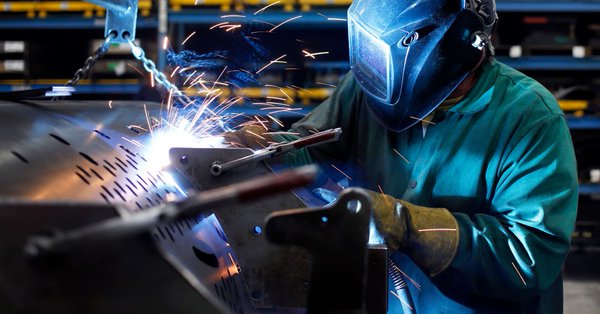 As noted within the report, approximately 10% of Canadian GDP comes from Canadian manufacturing. Within that sector there are multiple companies now planning or considering moving out of Canada into the United States.
Many will claim the trigger for the consideration is based on the potential elimination of the USMCA (CUSMA) trade agreement, and there is truth to that aspect. However, the systemic issues within Canada -including energy policy, regulation and corporate tax burdens- represent the larger problem; the termination of the USMCA is the straw that breaks their back.
The domestic hurdles to manufacturing, are the bigger issues that cannot be negotiated away in U.S-Canada trade agreements. Specifically, the low-price and stable energy policies are the core consistencies that are no longer present in Canada; that fundamental cannot be easily fixed.
BLOOMBERG – […] KPMG Canada said on Tuesday that 42 per cent of Canadian manufacturing companies indicated they have or are considering moving production to the United States. Of those considering relocating, 77 per cent expect to make the transition within the next two years.
[…] the issues go beyond the trade situation though, with Canada needing to create a competitive environment for manufacturers to grow.
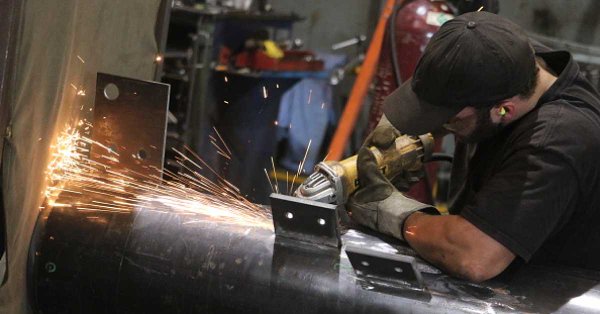 “This survey clearly shows that manufacturers need to feel more comfortable and see some action from the government in order to continue to produce and invest and grow in Canada,” she said.
“Some of the key factors that companies have cited are more certainty around interprovincial trade barriers, they need more tariff certainty, they want to see lower corporate taxes, they want better access to capital and cheaper energy.”
The survey also found 57 per cent of manufacturing firms have paused, reduced or cancelled capital investment projects. Thirty-six per cent said they have scaled back investments, 12 per cent have paused their plans and nine per cent have cancelled planned spending. (read more)
This survey is further evidence of the scale of leverage President Trump and USTR Jamieson Greer carry toward the Canadian trade negotiations. Quite simply, despite their unwillingness to accept reality – Canada is economically dependent on the United States as the customer for any export.
Without the USMCA (CUSMA) trade agreement Canada is structurally incapable of economic growth.
The Snow Mexicans will be sneaking across the border and claiming illegal immigrant status before long …
More like snow Venezuelans–that is, victims of communism.
Forever to be known as The Carney Effect.
Meanwhile
Wheres the money coming from?
Canadian PM Mark Carney says Canada and Turkey will begin negotiations on a new free trade agreement and have already signed new defense contracts
https://nitter.poast.org/Osint613/status/2075272568395677719#m
A premade video done 1 month ago? Where is the real-time Erdogan-Carney talking about beginning negotiation and signing new defense contracts?
An AI generated video can easily dupe viewers with something that did not happen .. and this premade video before the actual summit?
Wow! Turkey. Canada will make 100’s off that deal. Carney is a genuine mastermind
Fyi, the Oil and Gas Journal posted last week the following North American rig counts.
Imho, Carney is fulfilling CCP’s request for more oil and gas.
At the same time, Carney will make Alberta happy and improve the outcome of the October 9, 2026 vote. Carney DOES NOT need an Alberta-style BREXIT.
We normally don’t pay attention to Canada’s rig counts but these are important. You can figure the percentage increase on your own.
Then 6-days ago Carney sent a message to western Canada, especially Alberta who has a major vote October 9.
https://www.pressreader.com/canada/the-weekly-voice-9xyr/20260703/281586657344506
The below quote is from the OGJ:
“”Of the 190 rigs working in Canada this week, 130 were oil-directed, down 7 from last week, but up 28 from this time a year ago. There were 58 gas-directed rigs working in Canada this week, unchanged form last week, but up 9 from this time in 2025.””
https://www.ogj.com/drilling-production/news/55388575/north-america-rig-count-unchanged-as-us-gain-offsets-drop-in-canada?utm_source=OGJ+Daily&utm_medium=email&utm_campaign=CPS260625050&o_eid=8561F6701201G1M&rdx.ident%5Bpull%5D=omeda%7C8561F6701201G1M&oly_enc_id=8561F6701201G1M
He will try. I’d like to think that a sufficient number of Albertans realize at this point that there’s no good reason to continue living under Ottawa’s thumb forever.
We’ll see, I guess.
Wonder if Bell Helicopter will leave Montreal? Really doesn’t make sense for them to stay there, though I’d bet Carney would gladly tax the citizens more to try to keep them. Mesa, AZ would welcome them. It’s already where most major servicing is done.
Blackberry / QNX should consider relocating to USA.
“Without the USMCA (CUSMA) trade agreement Canada is structurally incapable of economic growth.”
Based on many of the comments I’ve read, I might be a bit of a contrarian here, but I have reservations about seeing an exodus of what little manufacturing Canada has down to the US. I would prefer to see a strong, vibrant Canadian economy that the US can prosper from by way of good trade agreements. A Canada without vibrant economic growth is soon to become a welfare state. That leaves us with two choices. Either the US can be the ones picking up the tab supporting Canada, or the Chinese will do it. I would rather not have or neighbors to the north under China’s economic thumb. If that did happen, then how long would it be before the Chinese military is supporting Canada too? What’s next in this chain of events; China running military exercises in Canada, within shouting distance of the US border? And how would our illustrious politicians handle that, Bay of Pigs on the St. Lawrence Seaway anyone?
💯🎯 But I fear China is already most of the way there. See various articles by the redoubtable Sam Cooper:
https://www.thebureau.news/
Who wouldn’t prefer a strong Canada that worked with the USA? But will Canada see the light is the question. Canada will most likely see the slow bleed that California and New York have been seeing for the last few years. With the exception of the big car plants that will leave as soon as they see there will be no trade deal.
Chinese military supporting Canada?
And the Canadian $ worth 0.60 by end of next year; if not sooner?
years ago a Canadian visitor asked if the candy machine took Canadian quarters. I told him probably, but he would only get 75% as much candy.
You wrote: “I would prefer to see a strong, vibrant Canadian economy that the US can prosper from by way of good trade agreements. ”
I would as well.
Are you familiar with the phrase “hoist by one’s own petard”? It means to fall into your own trap. It describes an ironic situation where someone’s malicious scheme or trick backfires, causing them the exact harm or embarrassment they intended for someone else.
IMO, this is what is happening with Carney. The problem is, everyone in Canada is getting hoisted right along with him.
💯 🎯
Sorry, I can’t help myself. This is literally the one thing I learned in both History and French at school in 1970 🤪 :
A petard was a small, conical or bell-shaped explosive device used in siege warfare (primarily 16th–17th centuries) to breach gates, doors, or walls.
It was typically a metal (or sometimes wooden) container filled with 2–5+ kg (4–11+ lb) of gunpowder, with a slow-match fuse. Soldiers would fix it against a target using beams, hooks, or a madrier (a heavy wooden board), light the fuse, and retreat—though the short, unreliable fuses often led to the engineer being “hoist with his own petard.”
Etymology: French pétard, from péter (“to fart/break wind”)—a cheeky name for something that made a big, noisy “bang.”
You’re welcome. 🤣
“”What’s next in this chain of events; China running military exercises in Canada, within shouting distance of the US border?””
Trudeau allowed it.
https://thegunzone.com/did-chinese-military-train-in-canada/
Genocides committed by the Turks in the last 200 years
https://westernarmeniatv.com/en/news_en/genocides-committed-by-the-turkish-state-in-the-last-200-years/
Canada, the 51st state of the United States.
No thanks. The winging would never cease.
Meanwhile, Ottawa shells out taxpayer dollars for glitzy TV ads assuring Canadians that the the Feds are
cuttingtemporarily suspending certain taxes and (allegedly) raising wages, lowering costs and utilizing the “Canadian Advantage” to position the country to benefit from “a world rushing towards green energy.”Unbelievable…
Some things can never be explained…
++
Carney Gets High Marks on Economy Despite Recession Talk, Poll Says
Excerpt:
Canadians support Mark Carney’s approach to managing the economy, even though he’s presided over the worst first year of growth for a prime minister since at least 1963.
A Nanos Research Group poll for Bloomberg News shows 60% of Canadians think Carney has done a very good or good job of handling the economy. That compares with 24% who think he’s done a poor or very poor job.
https://archive.is/URIHC
However there may be some clues. 😉
Influence over national pollsters is a key component of the Liberal government’s propaganda coupled with their control of mainstream media.
https://nitter.net/vesperdigital/status/2072490244125884713#m
Grok:
“Nanos Research ranks among the more prominent Canadian pollsters receiving federal government contracts for public opinion research and related services.
These contribute to steady revenue alongside media partnerships (e.g., CTV, Bloomberg) and private clients.
Nanos stands out due to its volume of public-facing and government work, leading to criticism from opponents who view it as creating perceived closeness to the government (especially when its public polls trend favorably toward the governing party).”
Thank you for all that you do.
Why are the “top shadowy figures” at the top of the globalist food chain still showing their puppet nations to destroy themselves on schedule while the US continues to rise? Are they assuming the next “operation” will be successful and the US will rejoin the globalist takeover? Do they assume if they wait Trump out that the next election will be favorable to their interests again?
Thanks to the world cup’s foreign visitors sharing their experiences back home, air conditioning for all, ranch dressing and very large drinks are now US tourist points of interest. But also a political position where lots of video from Europe show people saying “we don’t need air conditioning. it won’t kill us.” WTH?
Will that further convince the European men to stand up and say enough? Hope so but not expecting it.
In the most recent version of red dawn, the scenario was that NATO had dissolved and the USA was on its own. We’ve satisfied that aspect of the plot for the most part. NATO exists but they won’t help the US when called on.
Canada is screwed and it seems increasingly obvious they all know it and only disagree about whose fault it is. The CanExit of some provinces hasn’t stopped as far as I know. I haven’t heard anything but I think it’s part of the show walk process designed to make it unlikely to complete. Meanwhile Canada’s national government isn’t changing policies to convince them to stay and drop the idea of leaving.
If they are smart, they will abandon the parliamentary system when they exit in favor of a US style constitution with guarantees and protections of rights under God. It’s not a guarantee the break away provinces would become US states or territories. But if for some reason they might return to Canada (history, heritage, family, moose and squirrel, Dudley Dooright…) A U S style constitution for them would be a hard thing to undo.
“Canada is economically dependent on the United States as the customer for any export.”
Apparently
https://www.instagram.com/reel/DVekyRgEtT4/?hl=en
Hey Canadians. Stay on your side of the border
We see a moment of extreme unpredictability in the US. It seems a dumb time to invest in relocation.Maybe put some energy into dumping the Libs, instead?
I just bought a FIFA souvenir cup with my meal at McDonalds. On the bottom of the plastic cup in tiny, tiny print it says, “Made in CAN with materials from USA.” Yet another product assembled in Canada with materials from another country! :o)