Three months ago, I was in Vietnam reviewing just how expansive the positioning of Chinese investment was in the concurrent communist nation. The short version is Beijing’s footprint in Vietnam was already huge.
 As an outcome of the 2018 tariffs against China, which coincided with a President Trump visit to southeast Asia, multiple companies shifted manufacturing operations from China to Vietnam.
Beijing saw the move and slowly increased their own strategic footprint.
In the subsequent years as COVID-19 took attention from all other matters, and with Trump removed from the equation in 2020, China increased the scale of their investment and the outcomes in 2025 are very visible.
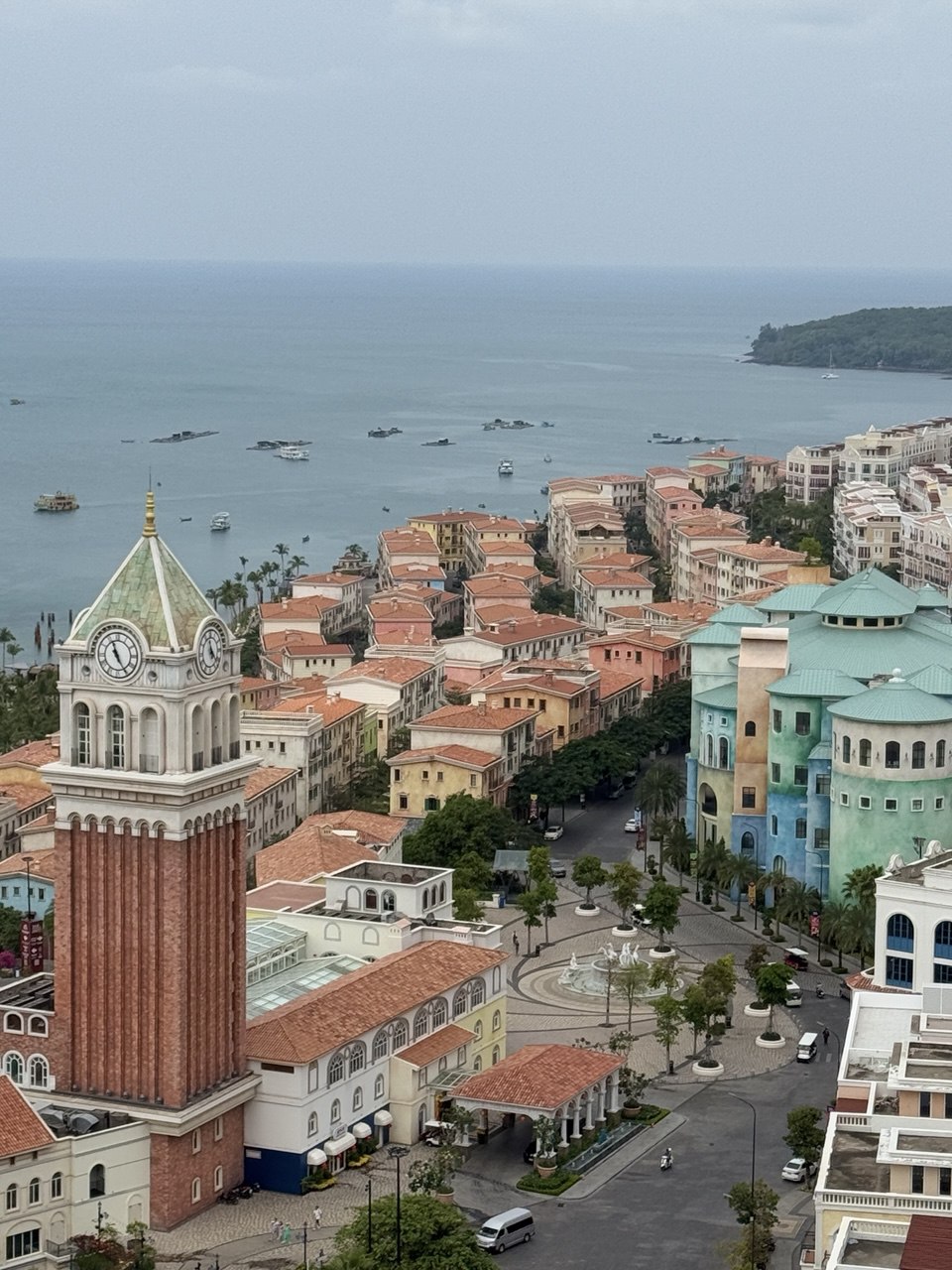
China even built this massive Disney type village in Phu Quõc (it’s nearly empty).
The people who live in Vietnam do not have money, they are a very poor nation. The baseline poverty level, in combination with their communist regime politics, essentially eliminates their consumer power to purchase western goods and makes trade agreements between the U.S and Vietnam somewhat moot. However, as a proxy manufacturing nation Vietnam is a valuable resource for China.
Essentially what can be seen in Vietnam is how Beijing spends money there for influence. The U.S footprint is negligible in comparison to the visible influence of China.
Chinese Chairman Xi Jinping is in Vietnam right now making trade deals with the allied communist government. At this point with so much Beijing influence money already in place, China can request very strategic terms.
HANOI, April 14 (Reuters) – China’s President Xi Jinping on Monday called for stronger ties with Vietnam on trade and supply chains amid disruptions caused by U.S. tariffs, as he attended the signing in Hanoi of dozens of cooperation agreements between the two Communist-run nations.
The visit, planned for weeks and part of a wider trip in Southeast Asia, comes as Beijing faces 145% U.S. duties, while Vietnam is negotiating a reduction of threatened U.S. tariffs of 46% that would otherwise apply in July after a global moratorium expires.
“The two sides should strengthen cooperation in production and supply chains,” Xi said in an article in Nhandan, the newspaper of Vietnam’s Communist Party, posted ahead of his arrival on Monday. He also urged more trade and stronger ties with Hanoi on artificial intelligence and the green economy.
After he met Vietnam’s top leader To Lam, the two countries signed dozens of cooperation agreements, including deals on enhancing supply chains and on cooperation over railways, footage of the documents reviewed by Reuters showed.
Chinese and Vietnamese state media later on Monday reported that 45 agreements were signed.

Xi Seeks to Win Over Allies as Trump Pauses Some Tariffs
https://archive.is/shqlu
What a wonderful aircraft carrier Phu Quoc makes floating there in the Gulf of Thailand.
I was told by a trusted source that IKEA furniture is manufactured in Vietnam. I don’t have proof, but this person was speaking to me as a friendly extension of describing his friendship with some very successful business people in Vietnam. Just passing along another nugget of information which came my way about 8 months ago.
China looks to be better today at playing the game the US itself created with regard to global(ist) influence.
Don’t hate the player but the solution is to be better and smarter at the game. Historically not how things worked when the US was the only viable world player in the house (hegemon)
The Duran folks have mentioned the world would be moving again to a system based on spheres of influence.
From that point of view it makes a hell of a lot of sense for Vietnam to be in China’s sphere and for Ukraine to be in Russia’s sphere and such. A heck of a lot more sense than a country 6000 kms away to be in the US sphere.
Just as Panama is now being yoinked into the US sphere of influence.
Christmas we looked at gifts and where they were made. Eddie Bauer has a good amount from Viet Nam.