Many CTH readers know I have been involved in hurricane prep and recovery as a longtime member of a civilian emergency response team. I have physically been through four direct hurricane impacts and responded to recovery efforts in more than fifteen locations, often staying for days or weeks after the initial event.
Through the years I have advised readers on best practices for events before, during and after the storm. In this outline my goal is to take the experience from Hurricane Ian and overlay what worked and what doesn’t work from a perspective of the worst-case scenario.
Hurricane Ian was a worst-case scenario.
Let me be clear from the outset, I am not advising anyone to put greater weight on my opinion or ignore local emergency officials or professionals in/around the disaster areas. What I am going to provide below is my own experience after decades of this stuff, against the backdrop of Ian, and just provide information that you may wish to consider if you are ever faced with a similar situation.
Hurricane preparation can be overlaid against other types of disaster preparation, there are some commonalities. However, for the sake of those who live on/around the U.S. coastal areas where hurricanes have traditionally made impact, the specifics of preparation for this type of storm are more pertinent. I’m going to skip over the basic hurricane preparation and get into more obscure and granular details, actual stuff that matters, that many may not be familiar with.
Let me start by sharing a graphic that you may overlay with the information you may have already seen from national media coverage. The graphic below shows Hurricane Ian in relation to Southwest Florida and points to locations that you may have seen on the news. The context of understanding Ian is going to be critical when contemplating preparation, so it must be emphasized.
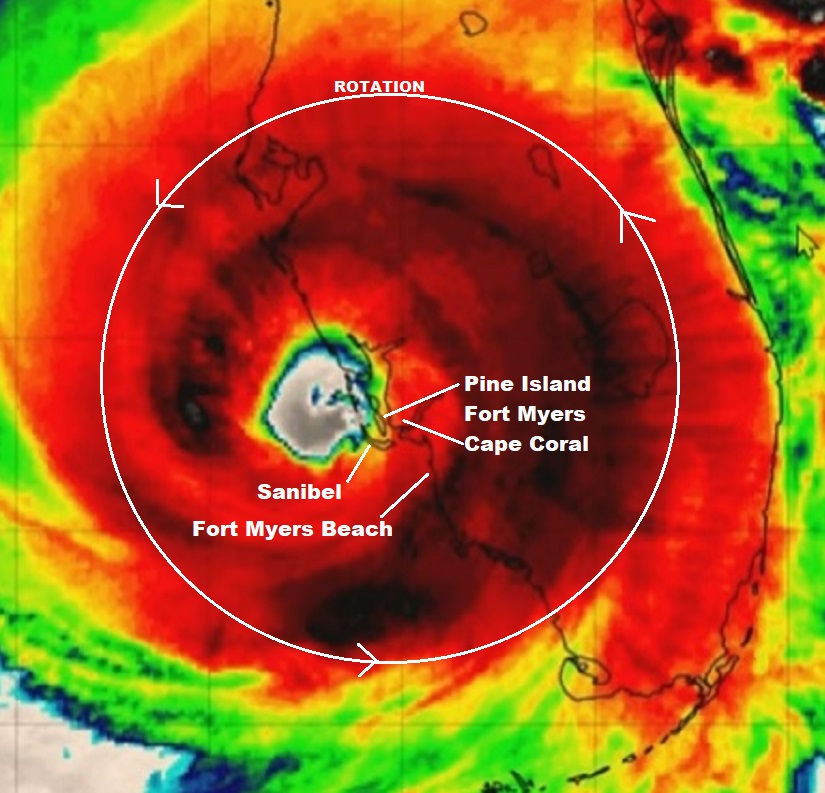
This satellite image was likely taken around 4 to 7 pm on the evening of September 28, 2022, approximately three hours after Hurricane Ian officially made landfall at Bokeelia, a small community on the Northern end of Pine Island. All of my discussion below is from the ‘major impact zone’.
 “This is no small thing, to restore a republic after it has fallen into corruption. I have studied history for years and I cannot recall it ever happening. It may be that our task is impossible. Yet, if we do not try then how will we know it can’t be done? And if we do not try, it most certainly won’t be done. The Founders’ Republic, and the larger war for western civilization, will be lost.”
 Our Father, who art in heaven, hallowed be thy Name. Thy kingdom come. THY WILL BE DONE, on earth as it is in heaven. Give us this day our daily bread. And forgive us our trespasses, as we forgive those who trespass against us. And lead us not into temptation, but DELIVER US FROM EVIL.


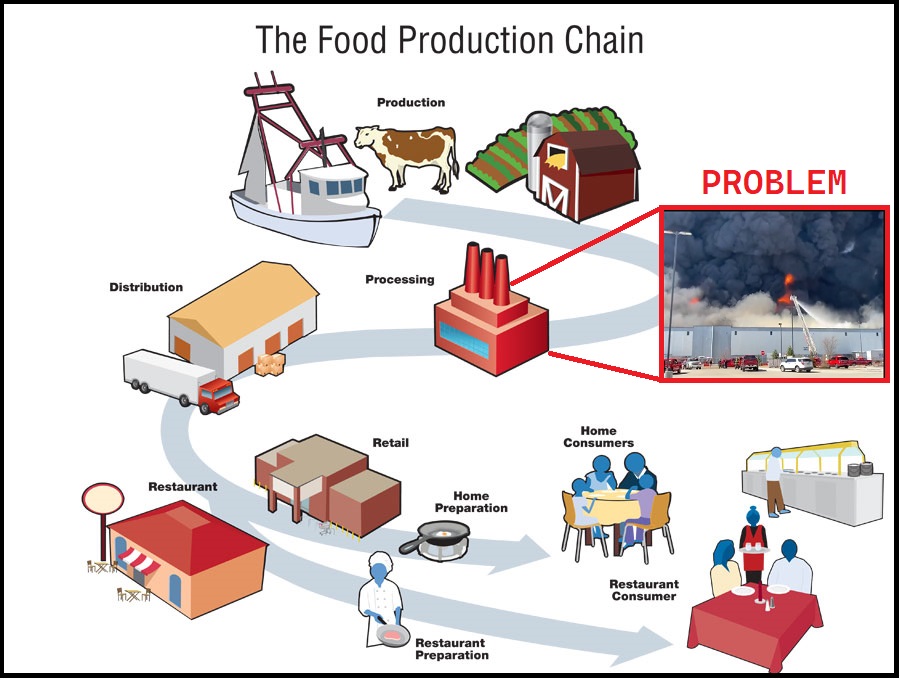 Within the U.S. retail food supply chain (350+ million people), manufacturing CPG products relies on a system of staying one to two harvest cycles ahead of demand. However, when restaurants and fresh food venues were closed, very quickly frozen, bulk stored and siloed U.S. food storage systems, the storage needed for CPG products, were emptied.
