One of the fascinating comparatives about the Nvidia storyline is the parallels to the way the media scripted the Russiagate story. Leaked information based on “people familiar with the matter” etc. that then drives congressional outrage.
The second aspect that triggers the familiar nerve is how both wings of the Uniparty have stakes in the matter. For Democrats it’s the power of the singular govt regulated AI. For Republicans the AI issue hits on the lobbyist money, or lack thereof for regulatory compliance. Two wings, again in synergy.
The parallels don’t stop there. In 2016 the construct was Fusion GPS => to Bruce Ohr => to the FBI (gov) => to the New York Times to drive the storyline. In 2026 the construct is Anthropic => to ¹Alberto Martinez (lobbyist) => to the NSC (gov) => and then to the New York Times to drive the storyline.
 But wait, it gets even more familiar. In 2016 we had a paper trail around which a narrative could be built. That document was called the ‘FISA Application‘ and sat at the heart of the justification for the Russiagate investigation of Donald Trump’s campaign activity, and the subsequent collusion with Russia associated with the White House.
For over a year the media spoke of this seemingly odd new Title-1 search warrant that underpinned the FBI investigation and people needed to get their arms around exactly what a FISA warrant was all about. Of course, 18-months later we discover the media had the FISA application all along (March 17, 2017, leak by James Wolfe), and the New York Times demands for it to be made public were in concert with congressional demands to see it. The false information within the Steele dossier was part of that narrative dependency as built out.
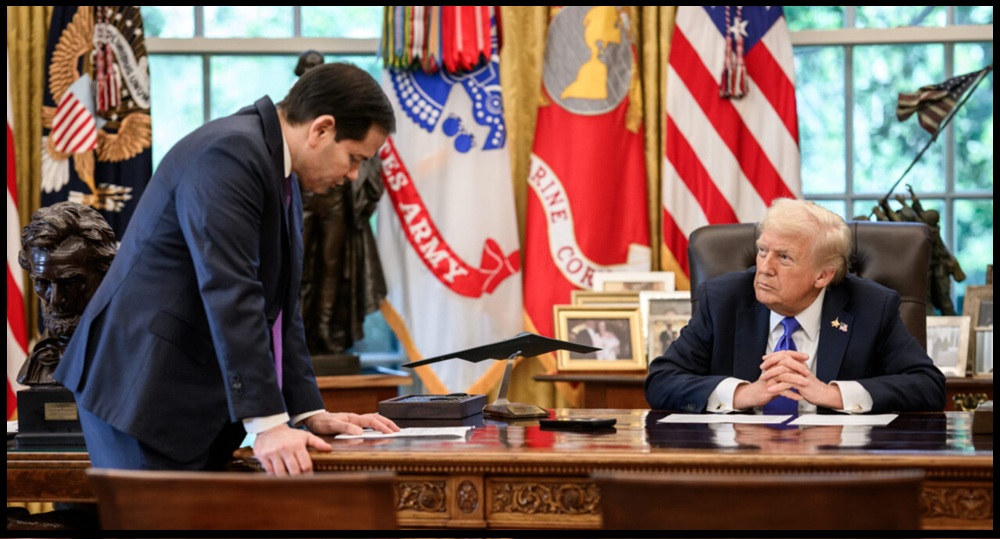
In the 2026 Nvidia storyline, again the NYT and congress on the hunt for another paper document, the Marco Rubio memo about Nvidia and a potential Chinese spy called Alice Huang. The “Rubio Memo” frames the core justification for the October 29, 2026, New York Times article; as did the FISA Application frame the core justification for the New York Times to narrate Trump colluding with Russia as an official line of inquiry from the FBI a decade earlier.
What the FISA application was to the 2017 narrative, the Rubio Memo on Nvidia is to the 2026 narrative. I hope I’m not the only one who can see these rather easy to spot parallels and how this media narrative structure is being created.
NYT […] a highly classified March 30 memo overseen by Marco Rubio, the secretary of state and national security adviser. That memo described Mr. Huang’s relationship with Ms. Huang, and hers with Chinese intelligence services, according to people briefed on it. The congressional intelligence committees have requested a copy of the Rubio memo. {citation}
Let me tackle this ‘Rubio Memo’ part first, before reviewing exactly how the New York Times is following their familiar pattern.
According to public filings, Anthropic AI paid $750,000 to Alberto Martinez, Continental Strategy, for lobbying services on their behalf. {citation} Martinez is Marco Rubio’s former Senate chief of staff. Within the required filing Anthropic AI reported to have lobbying contacts with the National Security Council (NSC). In his position as National Security Advisor, Marco Rubio is the chairman of the NSC.
So, putting that information together Anthropic was lobbying the NSC, likely through Alberto Martinez’s relationship with the head of the NSC, Marco Rubio. Nothing about this Occam’s Razor likelihood is too challenging to understand.
Now, remember, inside the NSC each intelligence agency has a desk, some of them several. Each desk is assigned to a person from the intelligence agency who represents them on the NSC. The CIA has a desk; the NSA has a desk; the DIA has a desk; the ODNI has a desk; the Pentagon has desks, etcetera.
The NSC is made up of analysts, advisors and experts in each of the intelligence equities and their job is to analyze events or issues and formulate analytical reports up the chain of command to the National Security Advisor and ultimately, if requested, to the President.
The NYT narrative began their October 29 Nvidia ‘spy expose’ using a leak from inside the government that outlined how Marco Rubio modified an interpretation of a CIA analysis of Alice Huang, Megaspeed and ultimately Nvidia and Jensen Huang. According to the narrative, the CIA didn’t identify anything specifically troublesome, but Rubio modified the CIA analysis to elevate the concerns inside the White House.
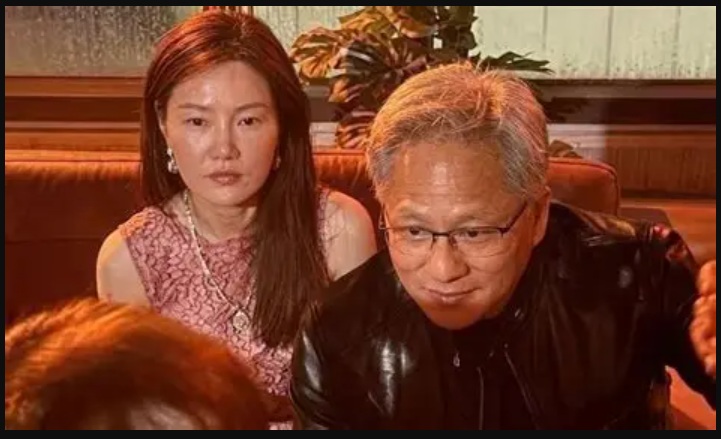
That’s how the NYT framed the “Alice Huang might be a Chinese spy” angle, and that triggered the story that Jensen Huang was having a romantic relationship with Chinese Spy Alice Huang, who was leveraging that relationship to get Nvidia data-processing chips to her company, Megaspeed. Then it was off to the races.
The main point here is the NYT justified the drama over Alice and Nvidia through a warning memo that Rubio is said to have authored, according to those who leaked the story to Nvidia.
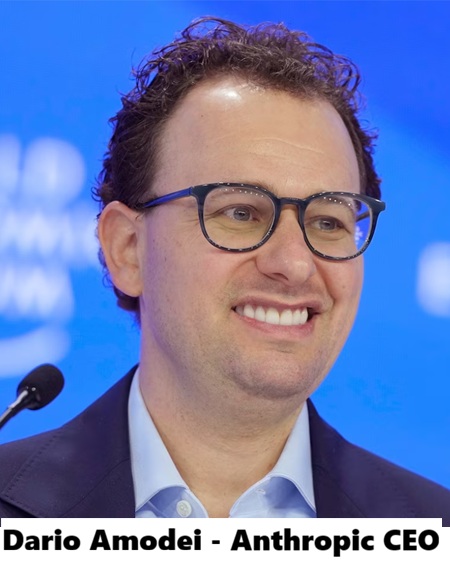 Now, we don’t yet know the details of who leaked the story -and those details will likely point to motive- but there is a better than average likelihood given the timing and subject matter that someone associated with Anthropic was their tipster, and the NYT then set about finding an alternate confirming source.
Anthropic would know of the NSC matter as a consequence of information from their paid lobbyist, likely Alberto Martinez (discussion with Rubio); after all, Anthropic are paying Martinez $750,000 for something, right?
That’s the basic outline that appears from how the NYT has pushed the “Rubio Memo” aspect. That push has now ended up with the familiar demands from congress.
The summary looks like: Anthropic leaks to NYT, who frame a narrative, that creates drama around a document, that congress now demands to see.
All of this was happening in the lead-up to Anthropic AI conducting an Initial Public Offering (IPO) of their stock shares. Those stock shares rise and/or fall based on the likelihood of “closed-source” Anthropic being the preferred AI provider for a govt regulated and controlled large AI model. Nvidia and Jensen Huang are advocates for and leaders in “open-source”, unregulated, diverse and bespoke models of AI, and as a consequence against the interests of Anthropic.
If it sounds like corporate espionage and stock manipulation, that’s because through this prism it is an operation of corporate espionage and stock manipulation.
Downstream from that origin, the UniParty aligns with the Big Govt regulated AI and President Trump aligns with independent, open-source AI; letting states decide on regulation. That’s the current dynamic.
OUTCOME: Executive Branch/Nvidia ~VERSUS~ Legislative Branch/Anthropic
The legislative branch now demands to see the Rubio Memo, so they can write legislation to put Anthropic back into a winning position after President Trump and the executive branch just put Nvidia back on solid footing.
Now, look carefully at the source for this NYT update:
NEW YORK TIMES – A day after President Trump publicly proclaimed that Jensen Huang was not a national security threat or facing criminal prosecution, U.S. officials provided a tempered account of the intelligence at the heart of the Nvidia scandal in a briefing for Congress on Tuesday, [¹]people told about the briefing said.
The briefing, for staff members of the House and Senate intelligence committees and aides to the leaders of both chambers, outlined in broad terms some of what intelligence agencies have collected on Alice Huang, the Chinese woman whose affair with the Nvidia chief is at the center of the episode.
The U.S. intelligence officials told the aides to the lawmakers that they still do not fully understand the role played by Ms. Huang, who helped to run a Singapore-based data center firm, Megaspeed, that is suspected of diverting advanced Nvidia artificial intelligence chips to China.
The briefers, who included officials from the F.B.I., C.I.A. and the Office of the Director of National Intelligence, explained the contacts between Ms. Huang and China’s Ministry of State Security, according to people briefed on the meeting. The intelligence officials told the group there was no evidence she was directed by that agency to initiate an affair with Mr. Huang, though they did not dispute that she passed intelligence back to the agency after the affair began.
[…] The briefing did not include the most sensitive intelligence that the U.S. has collected about Ms. Huang, nor did it include a highly classified March 30 memo overseen by Marco Rubio, the secretary of state and national security adviser. That memo described Mr. Huang’s relationship with Ms. Huang, and hers with Chinese intelligence services, according to people briefed on it.
The congressional intelligence committees have requested a copy of the Rubio memo.
The New York Times reported last month that the U.S. government had collected intelligence showing that Mr. Huang, an ally of Mr. Trump, was having a close relationship with Ms. Huang, who U.S. officials believed was an asset of Chinese intelligence services.
The Times reported on Sunday that people briefed on the U.S. intelligence said Ms. Huang was in contact with the Chinese spy agency from the spring of 2025 until the fall of this year, covering at least part of the period when she was having the affair with Mr. Huang. (read more)
[¹] “People told about the briefing” told the New York Times. That’s third or fourth-hand sourcing. Is that familiarity bell ringing again? It should be. That’s the exact same approach previously used in Russiagate.
Here we go again….
Last point. What I find increasingly interesting is the absolute silence from Marco Rubio right now.
Happy Thanksgiving!
[SUPPORT CTH HERE]
Oh how I hope this is the biggest set up for the”people briefed in the matter”…
Jennifer Jacobs is one of the straighter down the middle type of journalists. Here’s her report:
…”inside Trump’s secret push to get Jensen Huang back at Nvidia: He and Vance spoke repeatedly with Huang, board members, their legal counsel. But not all top admin officials knew this was happening. Marco Rubio was particularly angry when the news of Huang’s reinstatement broke Monday morning. CIA’s John Ratcliffe and Commerce’s Howard Lutnick were also not involved in the weekend’s strategizing.
Trump was privately concerned about the broader implications for the U.S. economy should Nvidia’s value collapse.
Huang had privately shared with the White House that he felt the board wanted to bring him back, but would need to be assured that the U.S. government didn’t think he was a national security risk. AG Todd Blanche was comfortable saying that.
But what about Alice Huang, the board wanted to know? The White House made it clear their assurances didn’t extend to her.
ODNI’s Jay Clayton had conducted a deep dive into U.S. intel related to Alice Huang. Clayton was also consulted by the president and others in the administration for his expertise in corporate governance matters. And he helped connect admin officials with the Nvidia board.
On Sunday, Jensen Huang met with the board for hours. Afterward, members called the White House. The language the two sides had gone over – that Mr. Trump’s post on Truth Social would hail the decision and say Nvidia should cooperate with continued probes into Megaspeed and chip exports – was finalized.
Nvidia is likely to continue to draw scrutiny as the FBI and Justice Department’s National Security Division examine potential export control violations involving Megaspeed and another company, Super Micro Computer. They’re looking into who knew what and when.”
Jensen should sue the NYT and get discovery. I bet it will show coordination ie conspiracy.
Yup crickets from Marco.
Wonder what Rubio’s calendar will show re meetings or calls with Martinez?