In the modern world of AI and subsequent datacenter buildouts, the number one priority surrounds the singular term “compute.” A massive, seemingly unquenchable, need for expanded computing power.
In order to attain these levels of compute, hardware containing large numbers of data-processing microchips are needed. That’s where Nvidia and Jensen Huang comes into the picture providing the chips comes in.
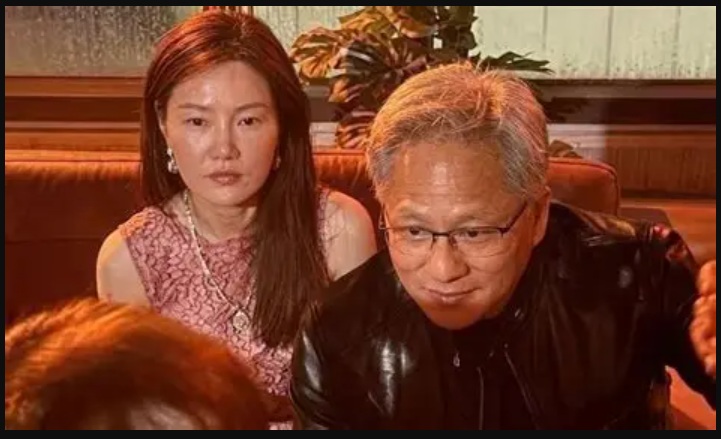 The US intelligence community discovered that Taiwanese-American Jensen Huang, CEO of one of the largest companies in the world, was involved in a romantic relationship with Alice Huang, a suspected Chinese spy and an executive at Megaspeed, a Singapore-based AI/cloud infrastructure company.
According to media and federal investigations Megaspeed is likely a Chinese cutout, helping Chinese companies locate and access AI chips and circumvent U.S. export controls. (NYT and Bloomberg)
The US intelligence community concluded that Alice Huang’s goal was to convince Jensen to lobby the U.S. government to loosen export controls on advanced AI chips. According to the Financial Times, the intelligence community relayed this information to “a small group of top US government officials” earlier this year.
Over the last year, Nvidia CEO Jensen Huang has lobbied the U.S. government to loosen export controls on advanced chips via the U.S. Dept of Commerce, Bureau of industry and Security (BIS). The BIS has permitted the export of H200 chips to China and has not enforced stronger export controls that would have required a license for exports of the most advanced Blackwell chips to Megaspeed and Southeast Asia.
Although the Commerce Dept leadership (Howard Lutnik?) was presumably briefed on this relationship by the U.S. intelligence community, The Bureau of Industry and Security has seemingly taken no actions to tighten controls on Megaspeed or Southeast Asia.
Megaspeed remains a preferred cloud partner of Nvidia and continues to receive Nvidia Blackwell chips despite employing an alleged Chinese spy, Alice Huang, who is reportedly romantically engaged with Nvidia CEO Jensen Huang.
Tens of billions of dollars’ worth of AI chips have been exported to Southeast Asia, and both Malaysia and Singapore represent two of the four largest importers of AI chips in the world.
♦ All of that said, it may be worthwhile pausing for a moment to overlay the fact that trillions are at stake in this AI race and both foreign and domestic stakeholders want to see the U.S. AI advancement and Datacenters paused to allow China, Europe and the U.K to catch up.
Is this a significantly real background story and concern, or is this concern being boosted and influenced by stakeholders against the American AI leadership position and Datacenters overall? We don’t really know yet.
Congress is now asking for information from Jensen Huang about this issue. Three committees have asked him to come to congress for a ‘closed’ (non-public) briefing on the matter.
(VIA NYT) – The Republican leaders of three influential House committees on Thursday asked Jensen Huang, the chief executive of Nvidia, to voluntarily appear for a closed-door briefing on his interactions with an executive at a Singapore-based company, who American officials determined was funneling information to Chinese intelligence.
The request came from Representatives Brian Mast of Florida, chairman of the Committee on Foreign Affairs; John Moolenaar of Michigan, who leads the Select Committee on the Chinese Communist Party; and Rick Crawford of Arkansas, who leads the Select Committee on Intelligence.
The New York Times reported last week that Mr. Huang had a close relationship with Alice Huang, a top executive at Megaspeed, a company that the U.S. government suspected of helping China evade U.S. prohibitions and gain access to Nvidia’s artificial intelligence chips.
The House leaders asked Mr. Huang to appear on Nov. 18 and discuss his interactions with Ms. Huang as well as Nvidia’s security policies for guarding against espionage by a foreign adversary.
“It is vital Congress determines the extent to which U.S. national security has been placed at risk,” they wrote.
John Rizzo, a spokesman for Nvidia, declined to comment on whether Mr. Huang would appear. “Our chief executive has an outstanding security team that accompanies him where needed,” Mr. Rizzo said in a statement.
The request represented a shift for Republican congressional leaders, who have largely followed President Trump’s lead in taking a hands-off approach to the technology industry. Mr. Huang has developed a close relationship with Mr. Trump over the last two years, and the two often speak about technology issues. (read more)
Suspicious Cat remains, well, suspicious of all the interests that attach themselves to this story.

“It is vital Congress determines the extent to which U.S. national security has been placed at risk,” they wrote.”
Since when is Congress concerned about US national security?
in before the ARGLE BARBLE DATA CENTERS something something.
blaming a nondescript building full of computers you don’t understand for the surveillance state is like blaming guns instead of the people who keep pulling the trigger -the same people we keep holding our nose and voting for – in other words, consenting to be governed by.
The Eight-Year Influence Operation – Sayer Ji’s Substack