It’s not Mexico that needs a trade deal with Europe, it’s the opposite.
For almost two decades Europe has been investing heavily inside Mexico, particularly noted in the auto industry, as they positioned themselves to take advantage of NAFTA and later the USMCA as an entry to the U.S. market.
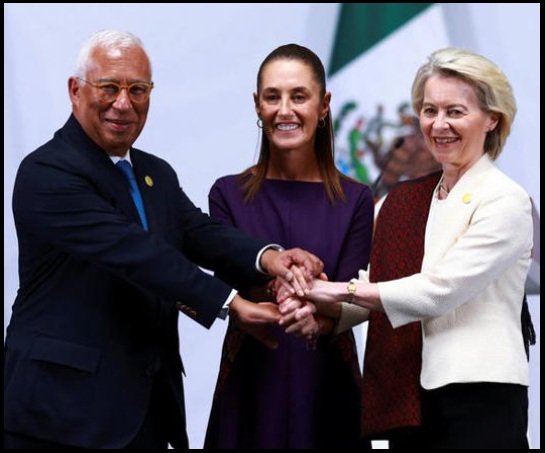 European auto companies spent billions on assembly plants in Mexico, where they could ship EU manufactured component goods to be assembled into NAFTA/USMCA compliant vehicles. As President Trump and USTR Greer begin focusing on eliminating the USMCA trade agreement in favor of two bilateral deals (U.S-Canada and U.S-Mexico), Europe now needs to protect prior investment.
The prior Mexico-EU trade agreement has existed since 2000 (NAFTA timeframe). In 2025 they agreed to a revised Free Trade Agreement (FTA) and finalized the terms and conditions yesterday.
MEXICO CITY, May 22 (Reuters) – Mexico and the European Union signed a long-stalled free trade agreement on Friday as they seek to decrease dependence on the U.S. and partially insulate themselves from U.S. President Donald Trump’s tariffs.
The accord, which they reached broad agreement on in 2025 but have delayed signing, expands a Mexico-EU trade accord from 2000, which covered only industrial goods. The new pact adds services, government procurement, digital trade, investment and farm produce.
Mexico’s President Claudia Sheinbaum, European Commission President Ursula von der Leyen and European Council President Antonio Costa are to sign the deal in Mexico City in their first summit in over a decade.
“This agreement is a true geopolitical statement,” Costa said on Friday, shortly after signing the agreement. “With the modernized global agreement, we are better prepared to face the challenges of our time.”
[…] Mexico’s economy ministry estimates the new agreement could increase Mexican exports to the EU from around $24 billion a year to $36 billion by 2030. The EU exports around $65 billion in goods annually to Mexico.
Trade between Mexico and the EU has increased 75% in a decade, dominated by transport equipment, machinery, chemicals, fuels and mining products.
The new deal provides duty-free access for almost all goods including farm products such as Mexican chicken and asparagus and European milk powder, cheese and pork, albeit with some quotas. (read more)
I love how Reuters uses the term “transportation equipment” to cloud the actual content, EU vehicle components for auto assembly. Sometimes you just have to snicker at the silliness of it all.
In essence, in order for the EU to retain their investment status, they are telling Mexico they will import more chickens, pork, dairy and row crops. All of it subject to “quotas” established as an outcome of analysis about what bureaucrats in Brussels will tell EU farmers they have to accept.
A conversation akin to, ‘we’re going to buy more vegetables in order to keep our auto manufacturing systems in place.’ However, once those EU vehicles like BMW are assembled in Mexico, then what? It’s not like Mexican workers are going to be running to the showrooms to purchase exotic cars.
All of these maneuvers are designed around one central strategic intent, keep the auto assembly close to the USA market and then pay Mexican officials through roots and vegetables to negotiate the best bilateral trade agreement with the United States that keeps European investment alive. Europe needs Mexico to think about -and represent- their interests when Mexico is negotiating a bilateral with Trump.
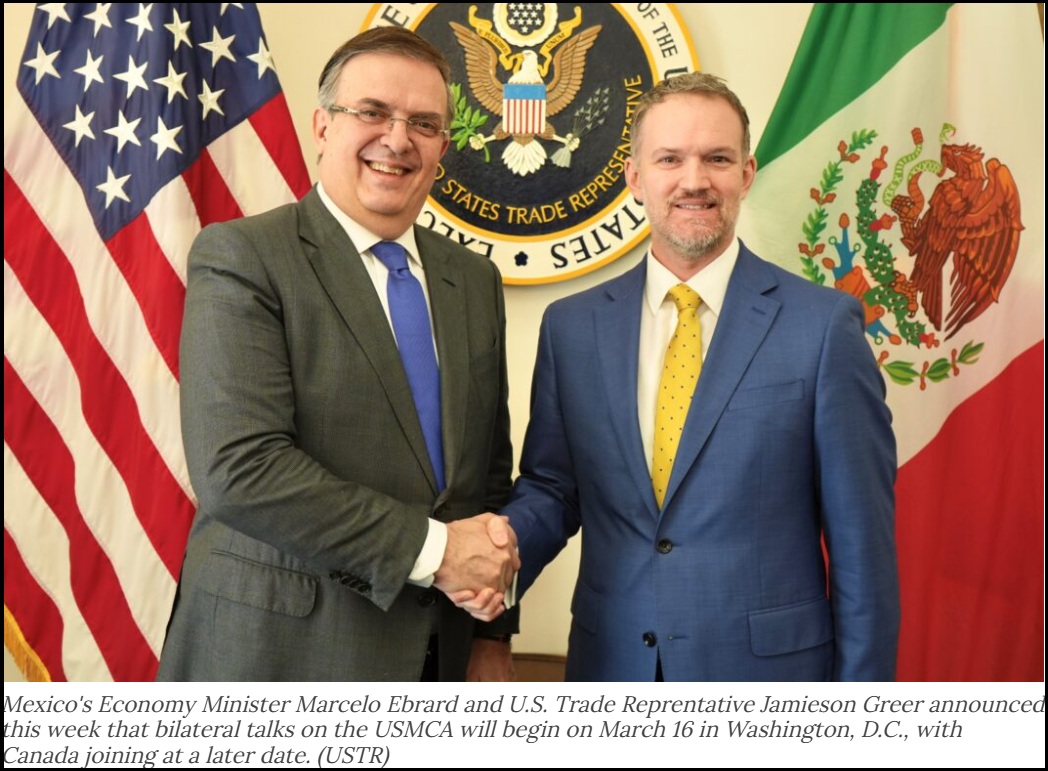
Oh dear God what next from these idiots
Because Trump is so brilliant, he makes everyone else look really stupid.
LMO!!
LMAO !! (Correction)
European Union is akin to a parasite. Just pay your fair share for once.
EU are socialists, so never going to happen
Akin to the Somalies decades and still on the dole
Socialist PARASITES.
Enjoying American taxpayer dollars since WW II. Well past nut cutting time. Many of the EU Member Nations are financially bankrupt. Europeans yearly summer vacations just ended. The Socialist Nations are collapsing. Trump has played this brilliantly.
America was there for them in WWI as well.
They cant. Their economies are vrippled by their green zero carbon suicide pact.
President Trump sees through the stupid games the EU is playing.
“The only winning move is not to play”
Such an underappreciated movie!! (And growing up in Seattle, it is a wondaful look back at the once beautiful Emerald City, that I loved so much and was such a great place to live!)
I miss the old Seattle as well, I’m thankful though that I grew up here – it’s hard to watch the destruction. Unfortunately corruption has been with us a long time, it’s just very noticeable now.
Seattle was always a socially libertarian leaning City and that didn’t bother me – it was well-run fiscally, clean, and always felt very safe, even when I was a dumb teenager running around Pioneer Square or Cap Hill.
Now, unfortunately, it has been destroyed by Decades of one party rule at both the state and local level. The people that are in charge now have zero common sense, no business experience, and are determined to implement the same policies that have failed time and time again, except on they appear to be on steroids now!
And don’t even get me started on the massive fraud…🙄
I’m old enough to remember the Monestary.
Yep, those were the days.
I remember that place – not one of my haunts but it was just around the corner from 13 Coins, which was open 24 hrs a day and had great food at 3AM…
You brought back some memories.
We would go to the Aquarius to listen to bands and then head to the 13 coins for something to eat.
It was a wonderful time then.
I also lived in Ballard at the time.
Sounds like they should change the name to West Baltimore and be done with it.
Sounds exactly like CA.
Compelling look at California Retirement System Investments funding public employees retirement:
https://www.calpers.ca.gov/documents/annual-investment-report-fy-2025/download?inline
Note foreign debt investments.
For some reason not able to up vote you…bill
🤔
In the 70’s We managed apartment building top of Capital Hill could see the space needle. Left our autos unlocked if anyone wanted in. Great access to downtown and UofW. Not the same today.
Yeah, the streets were well maintained and traffic was non existent other than at “rush hour” which was nothing back then. I lived in Ballard and it was a 15-20 minute drive to almost anywhere in the city.
If even I can, President Trump sure as hell can! LOL
Thank you, GOD, for this president. 🙏💕🇺🇲
Americans are done with the free-loading lopsided deals. Time for the others to carry their own weight! When do “we” start getting those benefits??? POTUS is becoming the equalizer! Food and gas prices are escalating yet! My time running around has seriously diminished! Summertime is here and I’m dead tired of this loooong winter!
Thank the democrats and rinos for kicking the iran-nuclear-threat down the road for so many decades. President Trump is the only one who has the courage and the know-how to pick that threat up and deal with it. And he STILL has to fight the democrats and rinos tooth and nail, every day!, to be allowed to solve the problem!!!
Dead is the operative word. … A lot of countries and financial institutions need both the Great President Donald J Trump dead, and his policies eliminated too. … Our MAGA coalition depends on the life of one man.
We should all be praying for the safety of Donald Trump. … When the left-wingers erroneously call Trump another Hitler, the left is calling for their loons to assassinate Donald Trump.
He’s in our daily prayers.
Donald Trump is NOT in this fight alone! And most of us pray for our Country and PRESIDENT Donald J Trump whenever we can. Believe,me this fight ain’t over till it’s over!
So the EU has been shipping their industrial production to places like Mexico (de-industrialization), which surely has not made European industrial workers very happy, but a lot of money comes back to the elites who control all of that. And now, to protect that “investment” and keep the money flowing, they are going to start importing many farm products from outside Europe. They are already doing all they can to reduce the amount of farming because of their lunatic “climate” obsession, which has been enraging farmers all over Europe, but especially in western Europe, and now they are going to hurt and enrage those farmers even more!
Europe is in serious decline by every meaningful metric, and all their “leaders” can do is push even more decline! This is all just really brilliant. The real decline in Europe, driving all the rest, has been in the quality and intelligence of their leaders. Nothing but dummies.
The Europeans are forcefully shutting down farms so as to sieze land to build towns for the millions of their imported muslims. It’s all part of the globalist agenda.
Well, yes, of course. But they cannot mention those particular imports, so it is Climate! Climate! Climate! all the time. Cannot have all those cow farts messing up the ozone layer or whatever.
What are all those Muslims going to eat when there is no land left for food production?
Europeans?
I grew up in SW france in the 60/70’s. it was a rich agriculture land then growing corn, grapes, vegetable of all sorts etc…..in fact most of the students in school had parents farming. i was only a few without parents doing that. I went back about 10yrs ago and most of the corn fields were replaced by solar panels everywhere. i wanted to cry…and they have the audacity to call that farms…solar farms., so sad.
Starving their own is nothing new.
The English did it to the Irish during the Potato Blight 1845 to 1852 but the English manufactured the Irish Famine by confiscating all the Irish food production. We actually believe the Irish ONLY ate potatoes? Guess again. These Euro monsters are all to happy to do it again to their own populations. It is going to be on a much bigger scale this go around. Maybe Ireland was the test case.
“They are already doing all they can to reduce the amount of farming because of their lunatic “climate” obsession, which has been enraging farmers all over Europe, but especially in western Europe, and now they are going to hurt and enrage those farmers even more!”
Clearly those silly simpleton farmers simply don’t know what’s best for them. All of that farming and industrialization leads to *cough, cough* “global warming.” So…..bear with me here, since Mexico already has a much, much warmer climate than does the elite’s blessed Europe, it just makes sense to move all of the heavy industry and farming to the already globally warmed Mexico! (/)
The EU leaders are getting exactly what they want. They want ‘decline’. Their ultimate aim is to ‘BuildBackBetter’.
When I hear that phrase, ‘Build Back Better’, I think of Lenin, even more than Obama and his “transformation”. The aim is to tear down a society, overthrow it when it is weakened enough, and then build it back the way they prefer it to be. Lenin’s view of that was massively totalitarian, repressive and brutal in the extreme, and ultimately a failure. But of course these fools who want to do that to us think they can do better than Lenin and his followers did with the USSR. Perhaps that is what the “better” part of the phrase was really meant to imply?
In the 60’s I lived in Munich for 5 years. 4 marks to the dollar. Not interested in visiting even for the Christmas markets…bill
1970 on reforger 4 marks to 1 dollar 1971 reforger 5 marks to 1 dollar
These are reflexive and not proactive moves by the EU. I think the Trump administration is already several steps ahead. It’s entertaining to see it unfold.
“Si, senor Gringo! Just pay $40,000 for this pile of fruits and vegetables and we will throw in the German transportation device for free! It’s like a luxury shopping cart!”
FTA:
“As President Trump and USTR Lighthizer begin focusing on eliminating….”
Greer?
Greer the honey badger.
The EU will wind up paying the Chi-Comms to build German cars in Mexico so that they can get carbon credits in Brussels.
Gee, might need to change that adage about “tangled web” we weave…to destroy the world.
Great punch line or picture at the end. Thank you Sundance
Bet all those Muslims over there will enjoy the increase in pork. One can never have too much pork.
After the (not-produced-in-USA) BMW tariff, that Geländewagen produced in Alabama won’t look so bad in comparison.
What a horrid trio!
They seem to be getting a bit too close to our backyard! Wait til all the cartel thugs decide it’s time for a new set of wheels!
First Mexico and the EU are for suprise come June. 🤣 in July Con-man Carney get to open his Surprise 😮 what is this the Donald strikes again!😎
3 stooges. More windmills for sure. The kind that when they malfuction they just abandon. Dumb, dumber and dumbest.
This will be another EU blunder.
in college i had a place in playas de tijuana, bout a block away from the bull ring on the ocean
because of mexico’s ‘austerity program’, citizens weren’t allowed to own or license any ‘luxury’ vehicles.
no caddys, beemers, benzos – nada
if you did happen to see a high dij car sporting a mx plate it was best to give that hombre a wide berth
Look at them, grinning like three retards eating bugs. The US is not obligated to agree to anything the globalists want. Putting off any deal for a year or two might be just the thing to force our domestic globalists to move manufacturing back into the US.
Globalists colluding together
I’m curious to read/hear some deep analysis of how this changes Mexico’s bargaining position (and goals for) when they sit down to negotiate with the USA.
I’m also curious who benefits most from this deal: the auto industries of Europe, or financial interests in Europe?
My best podcast fodder question would be: who has more influence over the drug/human trafficking cartels in Mexico–Sheinbaum, or European globalist enforcement agents?
Now that the gloves are off and masks have been dropped, the early picture I’m getting is that the EU is hustling to bracket the US geographically and establish counter market presences within Fortress America.
That’s a totally amateur take, but symmetry (replacing Cuba with northern & southern border antagonists) almost always indicates design & function with some intent.
These are the same questions I’ve had in my own mind. I too think the globalists are attempting to encircle and isolate America as an interim economic and political strategy until their UniParty globalist minions can regain power in the DC Swamp.
The plan in not working in South America. The Southern Cone has gone right, and only Brazil is a hold=out. The other nations are veering right, rapidly. In Central America, Mexico and Nicaragua are outliers, and have generally always have been such. Encirclement from the south is not in the cards
by FAR the controlling influence of the cartels is enormous. And for reasons most don’t fully understand.
we know they are hyper violent, so there is the fear factor. everyone understands this, but it also goes well further than direct threats. it’s the chilling effect, the unspoken obedience to the underworld bosses who runs most cities and regions. Even if you are not trafficking drugs, you give those cartels business and resources and deals. so this pushes normal business out of whack.
then there is the reality that most of all of Mexico is really a no go zone for foreigners whereas otherwise would actually have a significant revenue from tourism. That is effectively shut down because everyone knows there are certain places where you really should not visit or even travel. This has an enormous impact of the economy of Mexico.
then you have innovation and tech. It only exists if the cartels allow it. Cartels are not solely in the business of trafficking drugs and humans for sex and labor, but they operate classical mafioso type skimming and protection money. It criminal all the way down.
then you have the so called police. Compromised by direct threats and the same for prosecutors and judges. this is really why mexicon doesn’t arrest and charge cartels members with crimes. fear…The US does this and they benefit from it. We spend billions of dollars each year on the war on drugs and arresting and extraditing and killing cartels operators because Mexico does not have the fortitude or the clean record to do it themselves…this places the justice system at the control of the cartels.
then you have education and growth. Cartels do not prefer an advanced modern society. Too many intellects are not good for a economy directed by criminal enterprise. So there is a major intellectual drain that is put into place. Anyone who has ambitions to get ahead leaves mexico. this has been the case for decades. Or they go work for the cartels and get paid handsomely as long as what they are doing is bringing in more revenue.
then you have money laundering…and this is really probably the biggest problem facing Mexico. So many ordinary businesses are simply money washing operations. And it’s all up and down the scale from the mom and pop to the corporate. Money received from drugs have to be routed through ordinary businesses to make it look legitimate and to cover the tracks of where this money actually came from. This means that those businesses by fear mostly are cooperating with and benefiting from cartels enterprise levels money laundering.
I guess what I am describing is basically a criminal state. Institutionalized criminal enterprise. That would be Mexico. That would be our closest southern border.
Now if you happen to wonder what would happen if the same kind of people and culture were allowed to cross a border and not even present identification…..well, that is now, and this is here.
You can thank Joe malarkey aka autopen and the Jesus from Chicago before him.
You can also thank President Trump for taking action to thwart this clear and present danger. You can also consider ANYONE who resists the removal of illegal migrants from our country as public enemy number one.
God Bless America
Now please do the Northern border.
Will Mexico join the EU and send money to Ukraine?
Sheinbaums main contribution and responsibility to United Globalists International Inc. as per their agreement prior to her installation, is to flood the US with low info and impoverished Hispanics. Displacing the native populations and culture as much as possible. Because it worked so well in Canada and Western Europe. Now that Trump has blocked that effort and the clock is ticking, its time to stop pretending.
I mean, thats what I see, and there is no war in Ukraine.
We all want Trump and our nation to have powerful allies abroad but in order for Trump to make America Great Again, he has to stop other nations from ripping us off and none of them will agree to that if they can join forces and wait it out. The other thing to consider is that many of the global leaders have been installed by the Globalists and everything that the US and MAGA stands for is their enemy.
Wow. They are so clever. I bet that PDJT’s Trade Team won’t even pick up on what they are doing.
Part of the US-MX trade deal should include MX being forced to take back all of their citizens (and anchor babies) from the USA and putting them to work in all of the factories that are being built in MX.
Oh yes, yes, YES. But it’s only a wonderful dream, for the dems in our country will never let their slaves go.
Yep playing a pawn or two.
It takes a pillage.
Globalists doing a number on their citizens and every citizen of every country they deal with………….if the EU is allowed its parasitic terms in trade deals.
All of these maneuvers are designed around one central strategic intent, keep the auto assembly close to the USA market…”
And wait and hope and maneuver until the democrats manage to cheat…er, ram another democrat President onto the USA. Then the floodgates to US dollars will open up again to them, just like Minnesota…
What the heck is von der Leyen wearing? She looks like a TOS Romulan fleet captain.
Good, will this make Mexicans now stay home and go back home? We have a lot of extras to send back how draining out huge tax dollars in California and destroying our schools. . They need to treurn and make Mexico great again. Arriba.
No automobiles from China, Canada, or Mexico will be the new state of our Nation. All manufacturing and parts will be done in house. If the EU wants to pedal any of their stuff it will have to come from them and with the 25% tariff. I wonder what kind of ripples that would create?
Claudia is covering her bases…
I see massive inventories of unwanted BMWs piling up in San Luis Potosí and Toluca until they find a market to get rid of them.
Maybe the Sinaloa Cartel can buy them?
Yes pay Mexican officials and also American officials.
Perhaps Volkswagen will ship all the automobiles they make in Mexico back to Europe?
So much for Fahrvergnügen
So does the EU think this trade agreement will just be included in a bilateral agreement with Mexico/US? Or is this like a borrow from Peter to pay Paul agreement between the EU and Mexico?
I suppose the EU intends to outlast MAGA.
only 18 1/2 years left.
USA just needs to
stop buying any European cars.
No matter where they are built.
Reading a different meaning to article … 2026 and 2028 are pivotal elections.
Anybody but MAGA compliant candidates winning means the USMCA is resurrected per the existing USMCA provisions and renegotiated on the spot, after January 2029.
This is the same strategic message pushed by Barrack Obama in 2016, when he made his infamous farewell tour as president and same message delivered to his (SAME) Think Tank – Obama Foundation CLIENTS at the time (Iran, the EU, China Inc., North Korea, etc).
Human interest story,
Nashville Titans diet change:
https://gridironheroics.com/robert-saleh-titans-seed-oil-ban-nutrition/
Mexico is like 7th in the world for seed oils.
Well, good luck, brits and EUsters.
As an example of what the future might hold, I would refer you to formerly reliable Kenmore appliances historically purchased and guaranteed by Sears, until the operation was moved to mexico.
The result? Not. Good.
My first hand knowledge and experience include such delights as cook stoves with features like exploding glass or run-away heating elements that can result in spontaneous self-cleaning oven mode locking you out of your oven in the process of cooking Thanksgiving dinner and thereby setting your house on fire.
And warranty coverage that must have been written by gangsters.
So caveat emptor, trade partners.
I avoid buying products made or grown in mexico.
My Kenmore vaccuum lasted one year before a circuit burnt out (could literally smell the electrical fire inside). Of course it lasted until just slightly out of warranty, as I am certain it was planned to.
I AM NEVER BUYING A KENMORE ANYTHING EVER AGAIN AND NEITHER SHOULD YOU.
Kenmore was just a brand name stuck on stuff made by whoever got the contracts.
It wasn’t always the case.
Kenmore appliances were solid, reliable products for many years.
Porque no mas, por que hecho en mexico.
No more Kenmore products for me.
My ‘top of the line’ vacuum cleaner developed an ear-splitting whistle the first time I cleaned the filter and nothing I tried made it go away.
It wasn’t even out of warranty. But dealing with the so-called service reps was a lost cause, so I bought a better product from a reputable dealer and moved on. It’s the model they use in the White House and works really well.
I found some helpful youtube videos that have enabled me to address some of the defects in my cookstove, and I’m hopeful I’ll eventually find one to help salvage that screaming vacuum cleaner. It works fine other than its deafening noise pollution.
Purchased a Black & Decker washer & drier from Amazon. After one year the drier goes out. B & D customer service could not send me a new heating element. They couldn’t even give me the part number. They said contact your local hardware store!? Made me laugh. Knew I was corresponding with foreign folks. All new purchases I make include the 3 year warranty. My 2012 heavy duty Maytags continue do the heavy lifting. Did I mention no one would work on the B & D? Ross Perot’s “giant sucking sound” was more than just jobs leaving the country. America has lost much of its greatness. I blame our elected officials. Gutless wonders wont give us a budget, won’t stop spending, won’t give us election integrity. I could go on. We should be screaming our heads off even peaceful protesting at Thune & company. There WILL come a day of reckoning or our great land will end up in the dust heap.
Amen.
What I wouldn’t give for a 1962 O’Keefe & Merritt range.
I don’t see a down-side here. More European money flowing into North America. Mexico grows and diversifies its economy. The US adjusts trade policies accordingly. Win-Win-Win!
I’ll take TWO SCOOPS with this news! 🙂
Yes, and illegal law breakers return home!
Isn`t that a picture to behold, the EU and Mexican President Sheinbaum holding hands while on the deck of the Titanic, while President Trump is the iceberg that they are not taking seriously. We will see how this plays out.
President Trump’s third term expires January20, 2029. You may have seen the ending scene in the 1975 film “One Flew Over the Cuckoo’s Nest” where Nurse Ratchet says, “The best thing we can do is go on with our daily routine.”
How did we get here I wonder?
Guatemala Civil War, from 1960 to 1996
Salvadoran Civil War lasted from 1979 to 1992
Nicaraguan Revolution 1977–1990
Mexico 80% peso devaluation 1982
Mexico 15% Peso Devaluation 1994, included a 50 Billion dollar IMF bailout.
NAFTA 1994
That’s a brilliant analysis.
“President” Von de Lying and ” President Costa? Who the hell are they? I never voted for them.
Lying is self explanatory and Costa is a chain of Italian coffee shops in Britain.
OH well nothing changes.