This is an interesting potential shift in energy position for the European Union. There has been zero investment by the EU nations in oil refining capacity. Simultaneously, Europe is now realizing they need diesel and jet fuel.
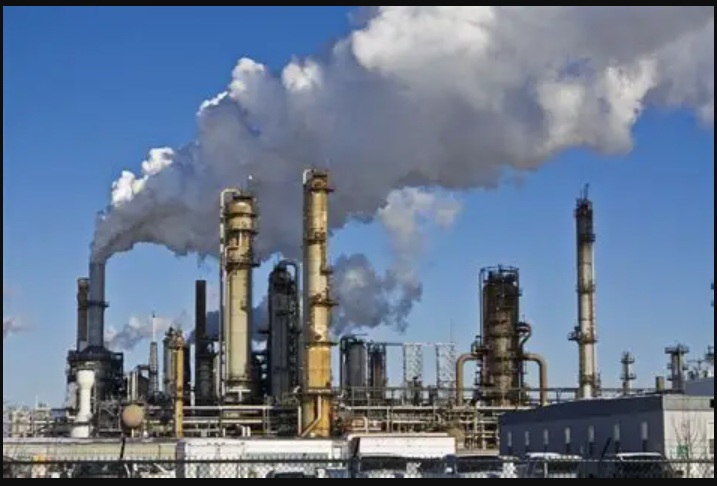 Under the EU Emissions Trading System (ETS), refineries have an ever-diminishing cap on carbon emissions, and they receive fewer ‘free’ pollution allowances over time.
This means oil refining costs go up steadily, increasing the cost of operating the dirty carbon facilities, while these same refineries must adhere to stricter environmental rules and pollution limits under the Industrial Emissions Directive (IED). The entire regulatory system was created to eliminate gasoline, diesel and eventually jet fuel.
As the EU is now discovering, their climate change policies have been executed but the global and EU drop in demand has not occurred at the same pace. The EU is now in a position where the percentage of their own oil refining production is lower than their needs. More energy dependency has been created.
With the EU energy analysts now saying they don’t have the fuel capacity to support the political demands for a war with Russia, in combination with President Trump continually affirming the U.S. will not get involved in any expanded conflict, the European Union is now reevaluating how to increase domestic fuel production.
EUROPE – Over the past couple of decades, Europe has pursued some of the world’s most ambitious clean energy policies, aiming to become the first climate-neutral continent by 2050. Hardly surprisingly, Europe is now further along the clean energy transition compared to its western peers, with renewables accounting for roughly half of the continent’s power mix compared to about 26% by the U.S. However, Europe is now being forced to reckon with its decision to ditch some of its fossil fuel assets as yet another global energy crisis unfolds just years after the 2022 energy crisis.
[…] the continent has been forced to rely more heavily on imported refined products, exposing it to geopolitical risks. The Iran and Ukraine wars have led to a spike in oil and gas prices, with EU Energy Commissioner Dan Jørgensen terming geopolitical instability and the prolonged diesel squeeze a “wake-up call” for the bloc.
[…] Central European nations like Poland, Czechia, and Slovakia have been pressuring the European Commission to establish a long-term protective strategy for Europe’s oil refineries. They have called for refineries to be protected from carbon leakage and given access to EU funds to upgrade.
[…] now, Brussels is looking to rethink its long-standing approach to the domestic oil-refining industry. On Wednesday, the European Commission launched the first High-Level Dialogue with the European oil refining sector. Co-chaired by Dan Jørgensen (Commissioner for Energy and Housing) and Andrius Kubilius (Commissioner for Defence and Space), the forum discussed Europe’s energy security, industrial competitiveness and defense readiness amid recurring geopolitical disruptions. Participants mapped out short-term responses to supply disruptions stemming from ongoing conflicts in the Middle East, noting that EU refineries currently supply approximately 70% of jet fuel and 85% of diesel consumed across Europe. (read more)

This makes me wonder if the [blob / Rothschilds et.al. / globalist high table in Europe] have been forced to give up their original plans to fire sale Europe and relocate operations to the Middle East or Türkiye. Maybe they need a viable Europe again to play their long game.
Trump and Bessent have certainly presented those areas with a much more hopeful vision of the future than hosting the “top of the parasitic food chain” permanently.
Maybe they’ve become like the ol’ boll weevil, “jus’ a lookin’ for a home.”
“…the European Union is now reevaluating how to increase domestic fuel production.”
I have a novel idea, why not also reevaluate their interest in war.
Logical human beings would.
But their handlers and script writers are determined to play the long game of someday gaining criminal access to Russia’s resources. Maybe the Trump Administration has reset the time table on that game.
Reevaluate the entire failed EU and dissolve is better
For my next trick, I’ll make the EU restore refining capacity and abandon climate taxes.
— Magician Trump
Obama must be tired of watching President Trump’s magic wand getting it done.
Obama will spend his golden years living out the rest of his life in Kenya.
Hanged is ‘mo better’
LOL
I’m green, my electricity comes from that thing in the wall. I’m green, my fuel comes from that country that doesn’t like me.
I’m green too! My food comes from the supermarket.
noting: the total number of migrants to the EU states is roughly 65 million. This number includes those adults and their children who migrated to the EU states, those children of migrants born in the same 20 years in the US states plus those born in one of the EU states, but who are now home to a non EU state (about 18 Million in that group)
my general opinion is that the vast majority of these “new people” do not significantly contribute to the EU GDP.
imagine what the energy situation would be IF the EU states had decided taking all comers was wrong headed economics?
just some stray thoughts.
and yes, the autopen has caused similar problems for the US. But fortunately, the US elected a smart President Trump who restored oil and gas production not only to offset and prevent catastrophe but also to guide the US as a primary global leader in export.
the EU does not have this capability, even if tomorrow they decided to roll back their green new deal bridges to nowhere policies. (which they never will).
so what Is the solution? can you see it coming? enforcing migrants to contribute or get out? possibly.
the other more practical and expected solution is to fire up those coal fire energy plants.
AND MAKE DEALS WITH THE US.
today feels like winning
I feel we are closer to seeing a close to this insane war in Ukraine. That’s got to be part of the deal with the US. Broker a deal with Russia, based on global energy market making capability, this was always the answer, no made clear and obvious to everyone with half a wit in the EU, particularly with the people who are bearing the costs of this war and its own leadership who are stuck on stupid.
God Bless America
God Bless America
so what Is the solution? can you see it coming? enforcing migrants to contribute or get out?
It’s why the globalists fear the AfD. They don’t want to lose their replacement voting bloc and know well the Germans have a rich history when it comes to deporting undesirables.
Yeah, except you can’t just turn refineries back on.
People are stupid, especially the annointed ruling class. The average person has no idea how narcissistic, detached, low intelligence, greedy, arrogant, and compromised the leadership class actually is. We would be well-served to do the opposite of everything they tell us.
The EU has purposefully put themselves in a downward spiral.
Their elimination of the solution, energy, makes it a slippery climb out.
For those in the back of the arena who could not hear, he was right about EVERYTHING!!!
“Wow! I could have had a V8!!”
DUH!
It’s about long or maybe long-ish term decisions. But not the decisions you think they should be. The left makes decisions on what political vehicle assures me the longest term in my present bureaucratic gig. Which policies do I support that’s going to assure my high lying career in government. They don’t care about anything else. If their decisions are abject failures it doesn’t matter they are simply no different than the industrial monopolists they demonstrate disdain for. They simply want to continue their monopoly.
Elections (and stupidity) have consequences…..too many immigrants drawing down strategic reserves of available fossil fuels to make molotov cocktails……🙄🙀
Go Green Weenies!!
I’m a nut. And I really don’t know how much of this I believe. But let’s play along.
Some claim we are watching actors play the international villains. That much of this ‘ conflict ‘ around the world is to wake up normies. And a ‘ scare ‘ event is coming of a ‘ potential ‘ Cuban Missile ‘crisis moment, to wake the world up, but it’s staged to then expose all the evil. And this is a move that doesn’t make sense, unless the good guys are already making corrective moves so as to not have economies totally collapse.
Scare event requires it seem real. All EU countries mail out Emergency PREPAREDNESS GUIDES, U.S. Dept of War declares all military installations need to be self sufficient for 90 days. Here’s an interesting one. Did any of you see this post last week.
Like I said, I don’t believe some of this. But, we are sure living in wild times
Oh Sundance you are a world treasure!
Watching the wheels come off the EU clown car, while the clowns pretend they are in complete control, is manna from heaven.
I sleep well at night knowing it’s only a matter of time before they get a very large boot 🥾 in the Posterior from the people of Europe.
Bravo 🙌 👏 🙌
The EU has no energy, no AI, no manufacturing, no GDP growth, open borders, unlimited welfare for migrants and now riots.
When do people demand the EU disband?
https://x.com/directorblue/status/2116615907288191313
Now the E.U. is F- CKED!!!!!!!!
The EU is a cancer which has been destroying every member state since its beginning.
It has been in the business of destroying Western/Christian Civilization for decades.
Now ruination is on Europe’s doorstep and has been given the keys to its entire house… through its godless, unnatural obsessive genuflecting to its goddess Gaia, as well as the rejection of its duty to preserve Western traditions, cultural inheritances, and spiritual obeisance to God in favour of barbarians and their well advanced proiect to conquer, then erase centuries of those irreplaceable foundations.
There have been terrible, inhuman costs forced upon Europeans by their unelected power mad EU rulers.
There will be many more to come.
Sisyphus has more chance of pushing his boulder all the way to the top of the hill than does the EU Commission (of which traitorous Tusk was once president) than reversing the destruction of Europe in a timely fashion…and perhaps never.
The EU as a legal entity must meet its inglorious, predictable end.
Individual countries must at all costs reclaim their sovereignty.
That way survival lies.
The soonest this happens , the more chance everything worth preserving will not be lost forever.
Reactive, hypocritical, arogant, liars.
All one needs to do to understand their current playbook is to read the Club of Rome’s 1991 publication “The First Global Revolution”. Chapter V – The Vacuum clearly laid out their strategy…followed-up by puppet Al Gore publishing his fiction novel Earth in the Balance: Ecology and the Human Spiritrly in June of 1992.
Nothing they do is clever, and often the playbooks in plain view (i.e., Rules For Radicals – the leftists’ bible).